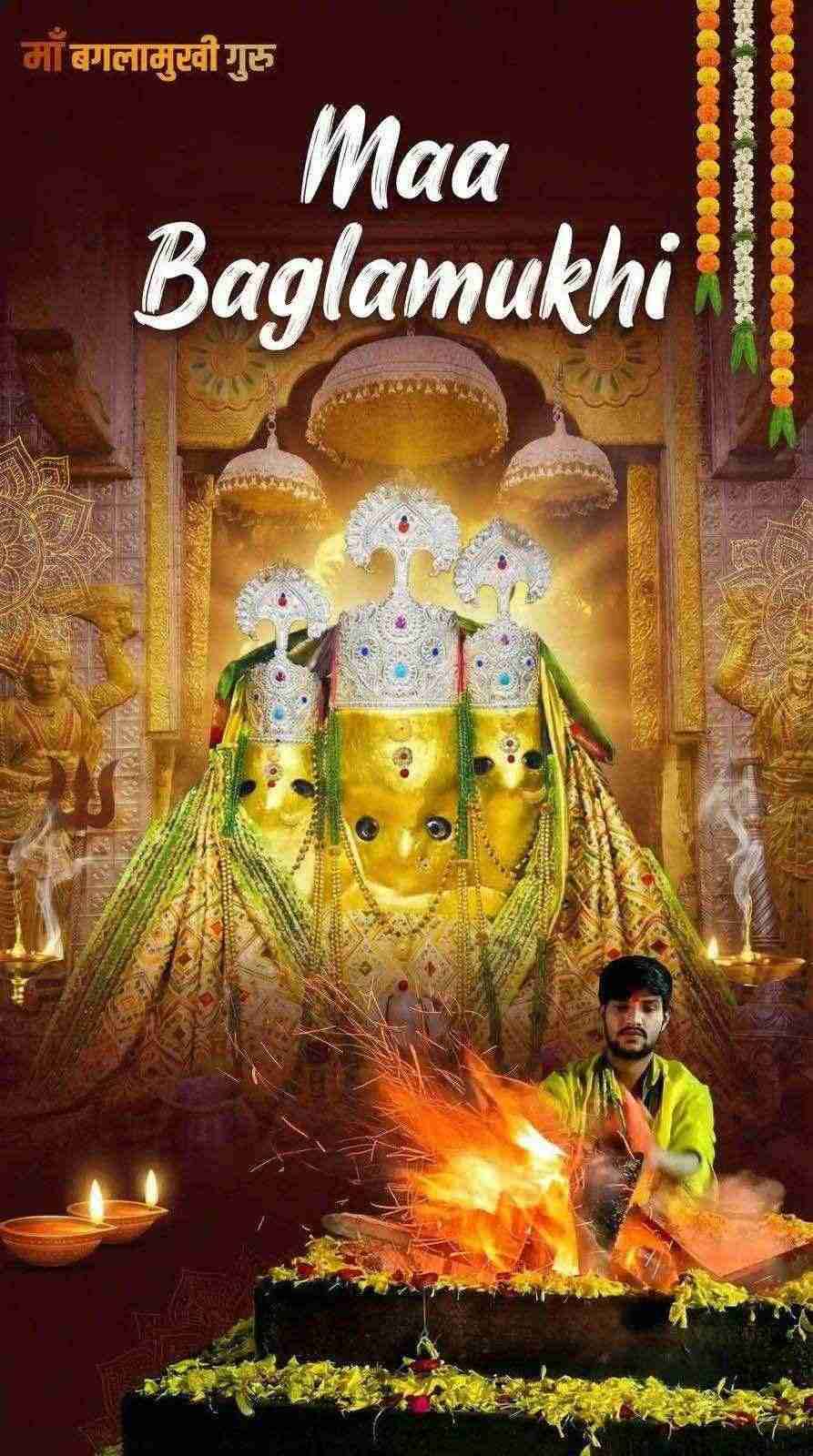
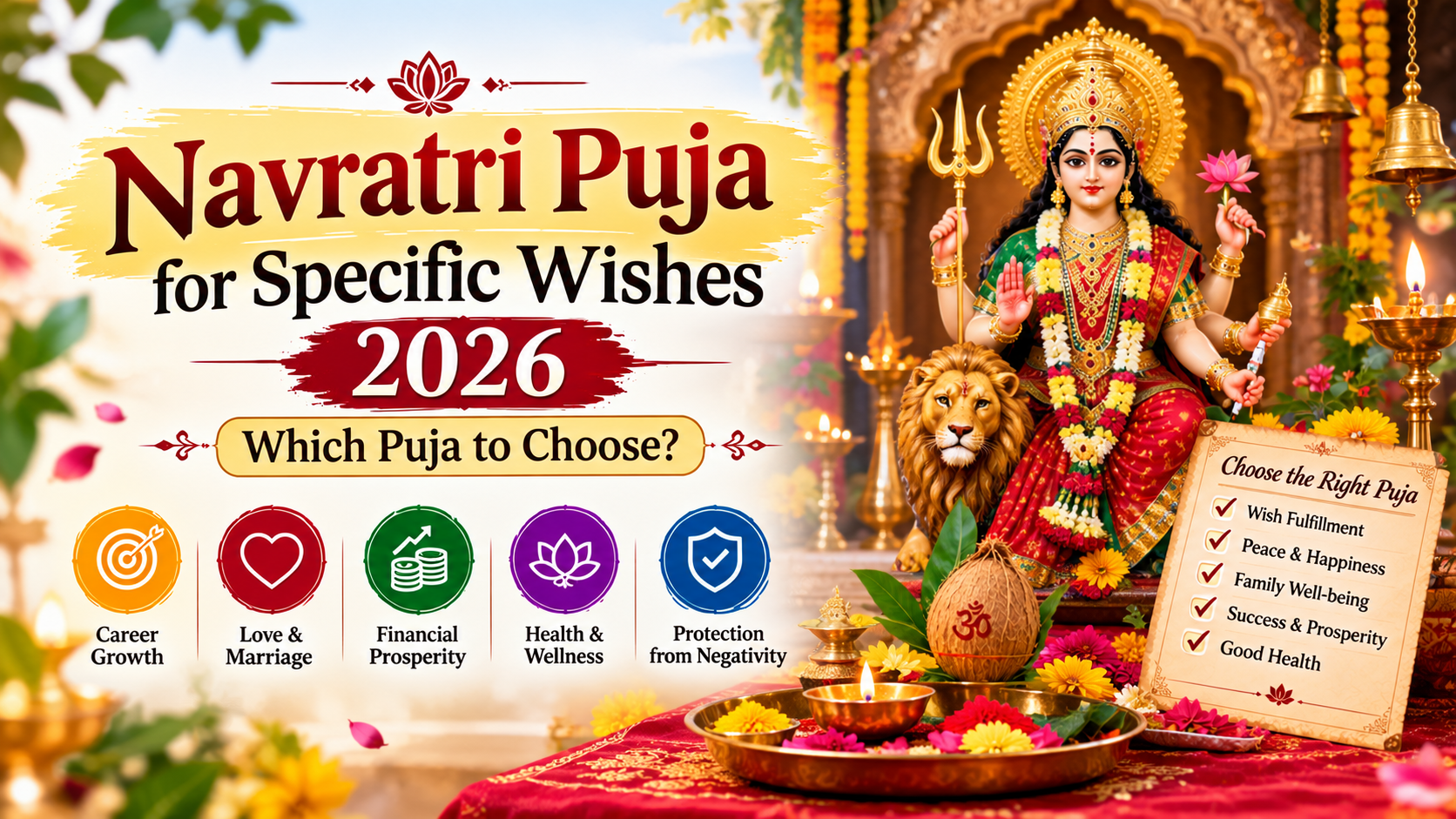
Every year, as Sharad Navratri approaches, many devotees ask the same thing: "I have a particular concern or intention in mind, so which worship should I choose?" This guide on Navratri Puja for specific wishes 2026 explains how devotees traditionally think about that choice. It covers Maa Baglamukhi worship in three forms: Puja, Havan and Anushthan.
A note first. This article describes tradition and devotional intention. It does not promise that any Puja will solve a problem, and it is not medical, legal or financial advice.
Quick Answer: Which Puja Should You Choose During Navratri 2026?
There is no single best Puja for every wish. During Navratri 2026, devotees usually match their Sankalp (stated intention) to a format: a Puja for focused worship, a Havan for a fire ritual with offerings, or an Anushthan for a longer, mantra-based discipline. Share your purpose while enquiring and the team can advise.
If you already know what you want to ask about, you can Book Maa Baglamukhi Puja Online and describe your purpose there.
Navratri 2026 Dates
Current panchang sources agree on the main dates:
For Delhi, the Ghatasthapana window is listed as 6:19 AM to 10:12 AM, with Abhijit Muhurat at 11:44 AM to 12:31 PM. Timings shift with location, and sources differ on the exact day of Ashtami, so confirm any Muhurat through a local panchang or with the priest.
For dates, Ghatasthapana and the nine days, see the Shardiya Navratri 2026 page or the day-wise Sharad Navratri 2026 guide.
What Does "Puja for a Specific Wish" Mean?
In Hindu practice, a Puja for a specific purpose begins with a Sankalp, a spoken resolve stating who is performing the worship, in whose name, and with what intention. The Puja does not work like a product where one problem maps to one item.
Three ideas help:
The Sankalp gives direction. The same Havan can be offered with different intentions, such as protection, peace or steadiness in a difficult phase.
Tradition speaks of blessings, not guarantees. Devotees offer worship with faith. Outcomes in court, business, family or finances depend on many real-world factors.
Practical steps still matter. A legal matter needs a lawyer, health needs a doctor, and money needs planning. Worship is often kept alongside these steps for inner strength.
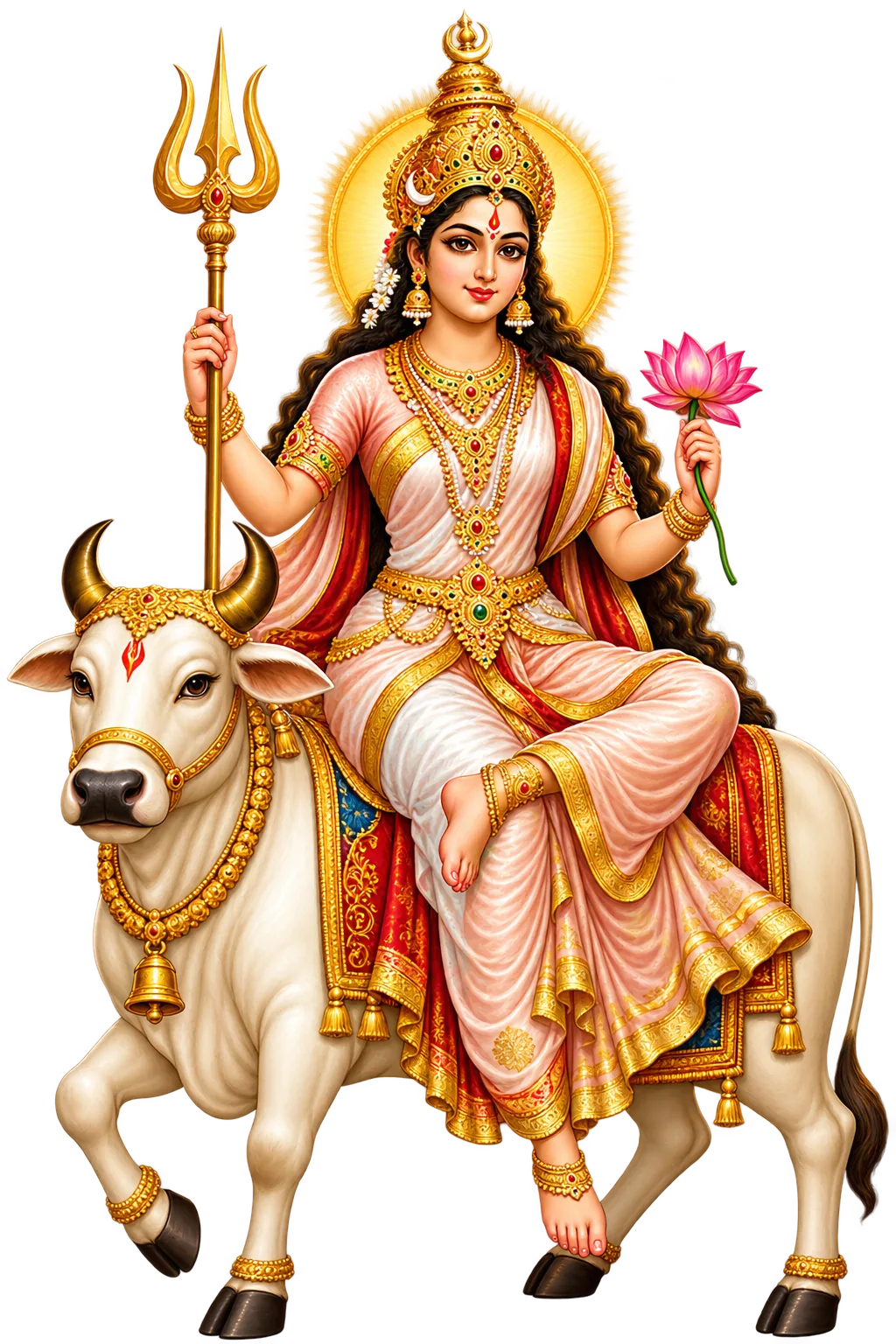
Maa Baglamukhi is traditionally worshipped as a Shakti associated with the colour yellow and with Stambhan, the idea of halting or stilling disruptive forces. Many devotees also worship her during Navratri, alongside the Navdurga. The site's guide to Maa Baglamukhi Navratri Puja at Nalkheda covers the devotional background.
Which Maa Baglamukhi Puja Should You Choose During Navratri 2026?
The table below is a starting point for your enquiry. It is not a prescription.
Do not treat any row as "the best". The right choice depends on your Sankalp, your circumstances and the guidance you receive. You can explore Maa Baglamukhi Puja Services to see what is currently listed.
Quick Answer: Which Maa Baglamukhi Puja should I choose?
Start with your purpose, not the name of a Puja. Write one clear sentence about your intention, decide whether you want a single ritual (Puja or Havan) or a longer discipline (Anushthan), and share both with the team. They can suggest a suitable format.
Maa Baglamukhi Puja for Protection
Protection is probably the most common reason devotees turn to Maa Baglamukhi. In tradition, she is invoked to guard against negative influences, fear and disruption, and for inner steadiness.
People who ask about protection often include those starting a new phase of life, those moving house, and devotees who simply feel unsettled. A general Puja or Havan is a common starting point. Devotees also add Kavach recitation or mantra jaap. Nothing here promises safety. It is worship done with the intention of feeling spiritually protected.
Maa Baglamukhi Puja for Removing Obstacles
Delays, repeated setbacks and a sense of being "stuck" are common reasons for enquiry. Tradition links Maa Baglamukhi with stilling forces that block progress, which is why Nalkheda is well known for this kind of worship. The site explains that background in its article on Nalkheda and Stambhan-related worship.
For a fresh or short-term concern, devotees often choose a Puja or Havan. For a long-running one, some prefer an Anushthan because it is sustained over several days. Be honest in your Sankalp about what you hope for, and avoid framing it as harm to another person. If you would like to enquire, you can start your Puja booking.
Maa Baglamukhi Puja for Court and Legal Matters
Baglamukhi worship is widely associated with legal and dispute-related concerns. Some devotees perform it while a matter is ongoing, seeking clarity, composure and fairness.
Please be realistic about this:
Legal outcomes are decided by courts and evidence, not by any ritual.
Keep your lawyer and your documents in order regardless.
Choose a Sankalp such as "steadiness and a fair process", not "winning the case".
If you wish to enquire, a Baglamukhi Havan booking is one of the formats devotees commonly ask about. Confirm current availability with the team.
Maa Baglamukhi Puja for Business and Career Concerns
Traders, professionals and job seekers sometimes worship Maa Baglamukhi when work feels stalled: a business slowdown, an interview period, a career change. The intention is usually confidence, clarity and steady effort.
The services page lists business- and career-oriented Pujas. Because names and availability can change, ask which one applies to your situation. A Sankalp like "steadiness and good judgement in my work" is more grounded than "guaranteed growth". Worship works best alongside skill-building, planning and networking.
Maa Baglamukhi Puja for Financial Obstacles
Devotees who worry about money often ask about prosperity-oriented worship. Nalkheda's tradition includes the Trishakti idea: Baglamukhi in the centre with Lakshmi and Saraswati beside her, which many devotees connect with wealth, wisdom and strength.
The site lists a Dhan Prapti Anushthan as a structured format for financial intentions. This is a devotional practice, not a financial strategy. Do not stop working on budgeting, repayment plans or professional advice because of it, and do not spend beyond your means on any ritual.
Maa Baglamukhi Puja for Family Peace and Stability
Family tension, an unsettled household or a difficult phase at home can lead people to seek worship for peace. Two related formats appear on the site: a Graha Shanti Puja, traditionally connected with planetary balance, and a Vastu Shanti Anushthan, connected with the harmony of a home or workplace.
A family can also do a general Puja together with one shared Sankalp. Worship offers a shared moment of calm, but it does not replace honest conversation or, where needed, counselling.
Maa Baglamukhi Puja for Relationship Concerns
Some devotees seek worship for harmony in a marriage, a family bond or a personal relationship. I have not found a separate, clearly named relationship Puja on the site, so the practical route is to describe your intention and ask which format the team recommends.
Keep the Sankalp about your own peace and clarity, not about controlling another person. Worship cannot decide anyone else's feelings, and it does not replace communication or professional support.
Maa Baglamukhi Puja for General Navratri Worship
Not every devotee has a specific problem. Many simply worship during Navratri as part of the festival: Ghatasthapana, daily Puja, mantra jaap, and a Havan near the end. A general Puja with a Sankalp for well-being and gratitude is a perfectly valid choice.
Some traditions mention Ashtami, Chaturdashi and Tuesdays as preferred days for Baglamukhi worship, but this varies. Read more in the site's guide to Navratri Havan and Anushthan at Nalkheda.
Puja vs Havan vs Anushthan
These three terms are often confused. Here is a plain comparison:
None of the three is always better than another. A Havan is not automatically "stronger" than a Puja, and an Anushthan is not right for everyone. If you are unsure, share your Sankalp and let the team explain the options. You can read the Anushthan and Havan cost and benefits guide, learn about the Maa Baglamukhi Havan, and see the Maa Baglamukhi Anushthan page.
Quick Answer: What is the difference between Puja, Havan and Anushthan?
A Puja is devotional worship, a Havan is a fire ritual with offerings, and an Anushthan is a longer, disciplined series of mantra jaap that usually ends with a Havan. The right one depends on your Sankalp, time and comfort, not on which sounds most powerful.
Maa Baglamukhi Puja at Nalkheda During Navratri 2026
Nalkheda is a town in the Agar Malwa district of Madhya Pradesh, on the banks of the Lakhundar River. The Baglamukhi temple here is one of the three shrines historically associated with Maa Baglamukhi, along with Datia and Bankhandi. The central deity is worshipped with Lakshmi and Saraswati, which is why devotees speak of Nalkheda's Trishakti.
Navratri is a time when many devotees turn to Nalkheda, either in person or by having worship performed on their behalf. The site describes Nalkheda as the place where its Acharya performs Havan, Puja and Anushthan. For temple background and travel context, see the Nalkheda pilgrimage guide.
This article does not add history, priest credentials or devotee numbers beyond what is publicly verifiable. If you want a Puja arranged there, you can book a Puja at Nalkheda and mention Navratri in your requirement.
Quick Answer: Can I book Baglamukhi Puja at Nalkheda from outside India?
Yes. Devotees living abroad can enquire about online booking, where the Sankalp is taken with the devotee's name and Gotra. Confirm participation options, timing and any Prasad arrangements with the team when you enquire.
How to Book Maa Baglamukhi Puja Online During Navratri 2026
The site's pages describe several ways to book: through the website, by phone or by visiting the temple. Based on what the site publishes, the online process looks like this:
Choose the format. Decide between a Puja, Havan or Anushthan, or ask the team to suggest one.
Share your details. This usually includes your name, Gotra and contact information.
State your Sankalp. Write your purpose in one or two clear sentences.
Mention your preferred date. Say that you want it during Navratri and note any preferred day.
Receive confirmation. The site says the team confirms the booking and shares the date, time and materials list.
Participate. The site mentions participation by live video call for devotees who cannot attend.
Prasad and payment arrangements are not described the same way on every page, so confirm both directly. Do not assume a policy that you have not seen in writing. If you want the fuller picture of online worship, read the guide to performing Baglamukhi Anushthan from home. When you are ready, use the Maa Baglamukhi Puja Booking page.
Quick Answer: Can I book Maa Baglamukhi Puja online?
Yes. The site offers online booking for Puja, Havan and Anushthan, with the devotee's name, Gotra and Sankalp taken for the ritual. Live video participation is mentioned on the site, so confirm the details for your booking.
What Details Are Required for Sankalp?
A Sankalp normally includes:
Full name of the person for whom the worship is done
Gotra, if known (if you do not know it, say so and the priest can advise)
Purpose, written respectfully and clearly
Place and preferred date
Family members to be included, if any
Keep your purpose specific but modest. "Peace of mind and steady effort during a difficult period" is better than "a certain outcome by a certain date".
Can NRI Devotees Book Online?
Yes. The site mentions online Puja for devotees living abroad, with live video and Prasad delivery on its NRI page. Time zones matter, so tell the team where you live when you enquire, and ask what participation window suits you. NRI devotees usually find it easiest to state the Sankalp in writing before the ritual date.
Frequently Asked Questions
1. Which Puja is best during Navratri?
There is no universal best. Devotees choose according to their Sankalp, time and comfort. A general Puja or Havan is a common starting point.
2. Which Maa Baglamukhi Puja should I choose?
Start with your purpose, then decide between a single ritual and a longer Anushthan. Share both when you enquire.
3. Can Maa Baglamukhi Puja be booked online?
Yes, the site offers online booking for Puja, Havan and Anushthan.
4. How can I book Baglamukhi Puja at Nalkheda?
Use the online booking page, call the team, or visit the temple. Mention Navratri and your preferred day.
5. What details are needed for the Sankalp?
Name, Gotra, purpose, preferred date and contact details.
6. Is Gotra required?
It is normally used. If you do not know your Gotra, tell the team, who can advise.
7. Can someone book Puja for another person?
The site says you can book for family, friends or loved ones. Provide that person's name and Gotra.
8. Can NRI devotees book Maa Baglamukhi Puja?
Yes, online booking is available for devotees abroad.
9. What is the difference between Baglamukhi Puja and Havan?
A Puja is devotional worship. A Havan adds a fire ritual with offerings.
10. What is the difference between Havan and Anushthan?
A Havan is usually a single ritual. An Anushthan is a multi-day discipline of mantra jaap, often ending with a Havan.
11. Can Puja be performed remotely?
Yes. The ritual is performed on your behalf, and the site mentions live video participation.
12. What does online Puja booking involve?
Choosing a format, sharing your details and Sankalp, agreeing a date, and receiving confirmation.
13. What is the cost of Baglamukhi Puja?
I do not quote prices here. Cost varies by format, duration and samagri, so confirm with the team. See the cost and benefits guide for background.
14. What affects Puja or Havan cost?
Typically the type of ritual, number of days, samagri, and the number of priests involved.
15. Which Navratri day is suitable for Baglamukhi worship?
Some traditions mention Ashtami, and also Chaturdashi or Tuesdays. Ashtami's date differs across sources in 2026, so ask the team.
16. Can families book a Puja together?
Yes. A family can share one Sankalp, with all names and Gotra provided.
17. Does the Puja guarantee results?
No. It is a devotional practice, not a guaranteed outcome.
18. Should I still consult a lawyer, doctor or financial advisor?
Yes. Worship is an addition to practical steps, never a replacement.
Book Maa Baglamukhi Puja During Navratri 2026
Navratri Puja for specific wishes 2026 comes down to a simple process: clarify your intention, understand the difference between Puja, Havan and Anushthan, and share your Sankalp with the team. Nalkheda is the traditional home of this worship, and online booking is available for devotees who cannot travel.
Ready to enquire about Maa Baglamukhi Puja during Navratri 2026? Share your Sankalp and booking requirement with the Maa Baglamukhi team and explore the available Puja, Havan or Anushthan options.
Book Maa Baglamukhi Puja During Navratri 2026