A shop is more than a place of trade - it is a living space where the day's fortune unfolds, from the first sale of the morning to the last customer at dusk. Yet many shopkeepers watch their shop struggle to prosper: trade stays slow, the shop next door seems to flourish while theirs does not, and despite honest effort, the growth just isn't coming. In the Vedic tradition, a shop is a sacred space presided over by Lakshmi herself, and its prosperity is nurtured through blessing, auspicious custom, and the clearing of obstacles. When you long for your shop to flourish, devotees turn to the divine to bless the space and open the path to growth.
In the Vedic tradition, a shop is a blessed space where Lakshmi is invited to reside, and its prosperity is nurtured through devotion and auspicious custom. Maa Baglamukhi, one of the ten Mahavidyas, is revered for removing obstacles and protecting against negativity and the evil eye. Her power of stambhan clears what obstructs a shop's growth, while her grace blesses its flourishing. Alongside the worship of Lakshmi at the gaddi, Ganesha at the threshold as Shubh-Labh, and Kubera the lord of wealth, her blessing is sought to make a shop prosperous, auspicious, and ever-growing.
This page explains how authentic Vedic practices, the sacred Baglamukhi Gayatri Mantra, and the Dukan Samriddhi (Shop Growth) Puja can bless your shop - easing the path toward greater footfall, flourishing trade, and lasting prosperity.
Quick Answer: How can spiritual practices support shop growth?
In Vedic thought, a shop's prosperity is shaped by its atmosphere and vastu, favourable planetary influences, auspicious custom, the clearing of obstacles, and divine grace - with Lakshmi presiding over the shop. Maa Baglamukhi is traditionally worshipped to remove the obstacles and negativity blocking a shop's growth and to protect it from the evil eye, while Lakshmi and Ganesha bless its prosperity and threshold. The Dukan Samriddhi Puja is a specialised Vedic ritual - combining sacred mantras, offerings, and a hawan - performed to bless a shop with overall growth, footfall, and flourishing trade. Paired with honest shopkeeping, it opens the path to prosperity.
Disclaimer: All remedies, mantras, and rituals described here are traditional Hindu spiritual practices based on faith and scripture. No guaranteed outcomes are promised. Spiritual practices are meant to complement sincere personal effort and professional preparation.

Slow Trade & Quiet Days
Slow trade, quiet days and a shop that isn't busy.
Stagnant Growth
A shop that won't grow, stagnation despite steady effort.
Falling Behind Neighbours
Nearby shops flourishing while yours does not.
Difficulty Establishing
A new shop struggling to find its feet and build momentum.
Low Footfall & Sales
Both customer visits and daily revenue running thin.
Stalled Momentum
A shop that started well but whose early promise has faded.
Reputation Hurdles
The shop struggling to become widely known and trusted.
Unseen Obstacles
A persistent sense that something blocks the shop's growth.
Connect with Acharya Vishnu Sharma for authentic guidance and rituals.
Beyond location and trade, the Vedic tradition offers a perspective on a shop's fortune. These are beliefs held by millions of devotees, not scientific claims.
Hindu philosophy teaches that a shop's prosperity is shaped in part by karma. A shop that struggles despite effort may reflect karmic patterns that call for spiritual resolution.
In the Vedic view, the energy and vastu of the shop matter deeply - the direction of the entrance, the placement of the cash box (gaddi), and the flow of the space all affect prosperity. A well-aligned, bright, positive shop invites Lakshmi; a heavy or ill-aligned one obstructs her.
Vedic astrology reads a shop's trade through the 10th house of livelihood, the 11th house of gains, and Mercury, the planet of commerce. A weak or afflicted 10th, 11th, or Mercury can hold a shop back. A Graha Shanti Puja by an experienced Vedic priest can strengthen the planets of trade.
Tradition holds strongly that a prospering shop can attract the evil eye (nazar) and envy, believed to slow its trade. Protective practices - such as nimbu-mirchi at the entrance - are a well-known part of shop life.
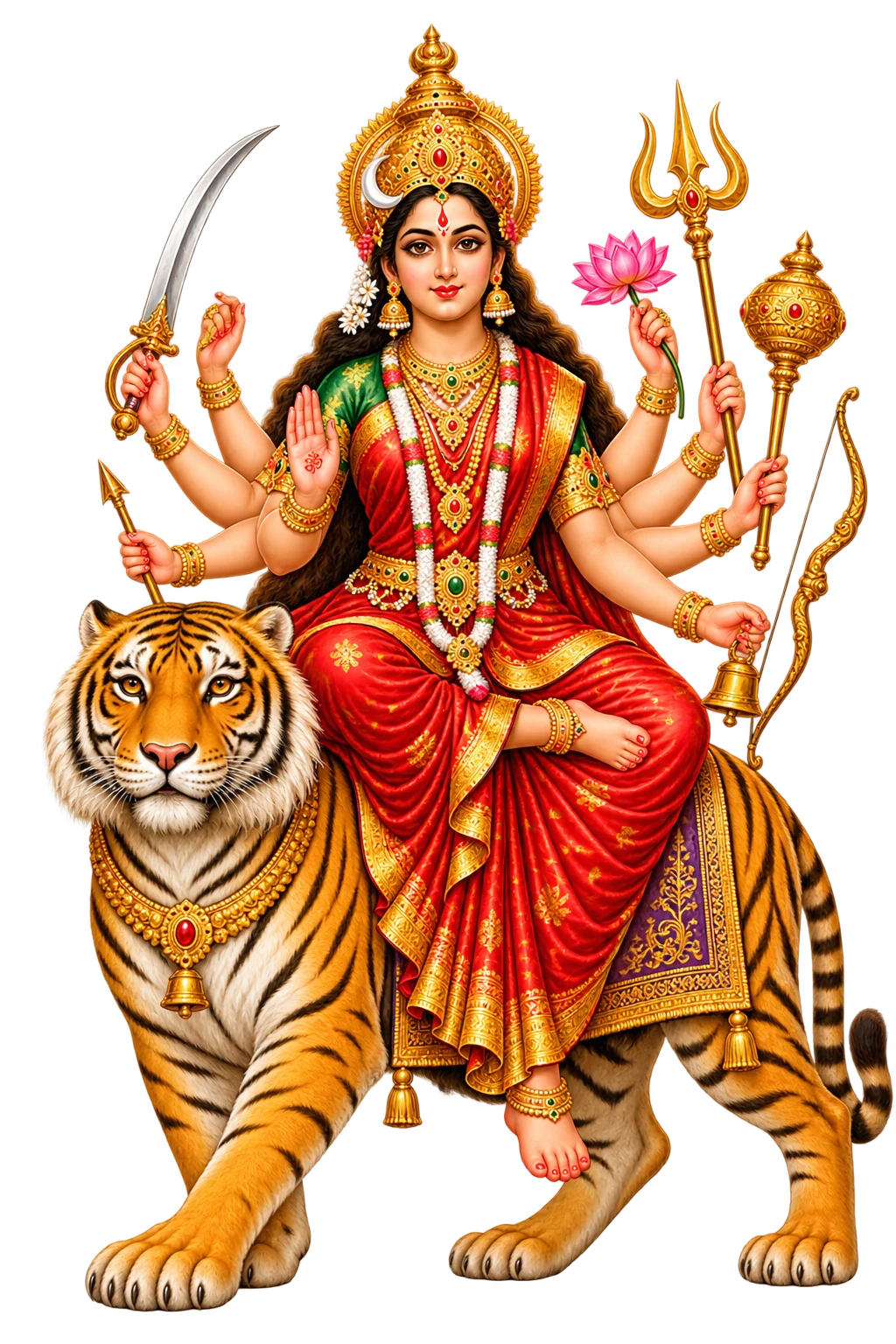
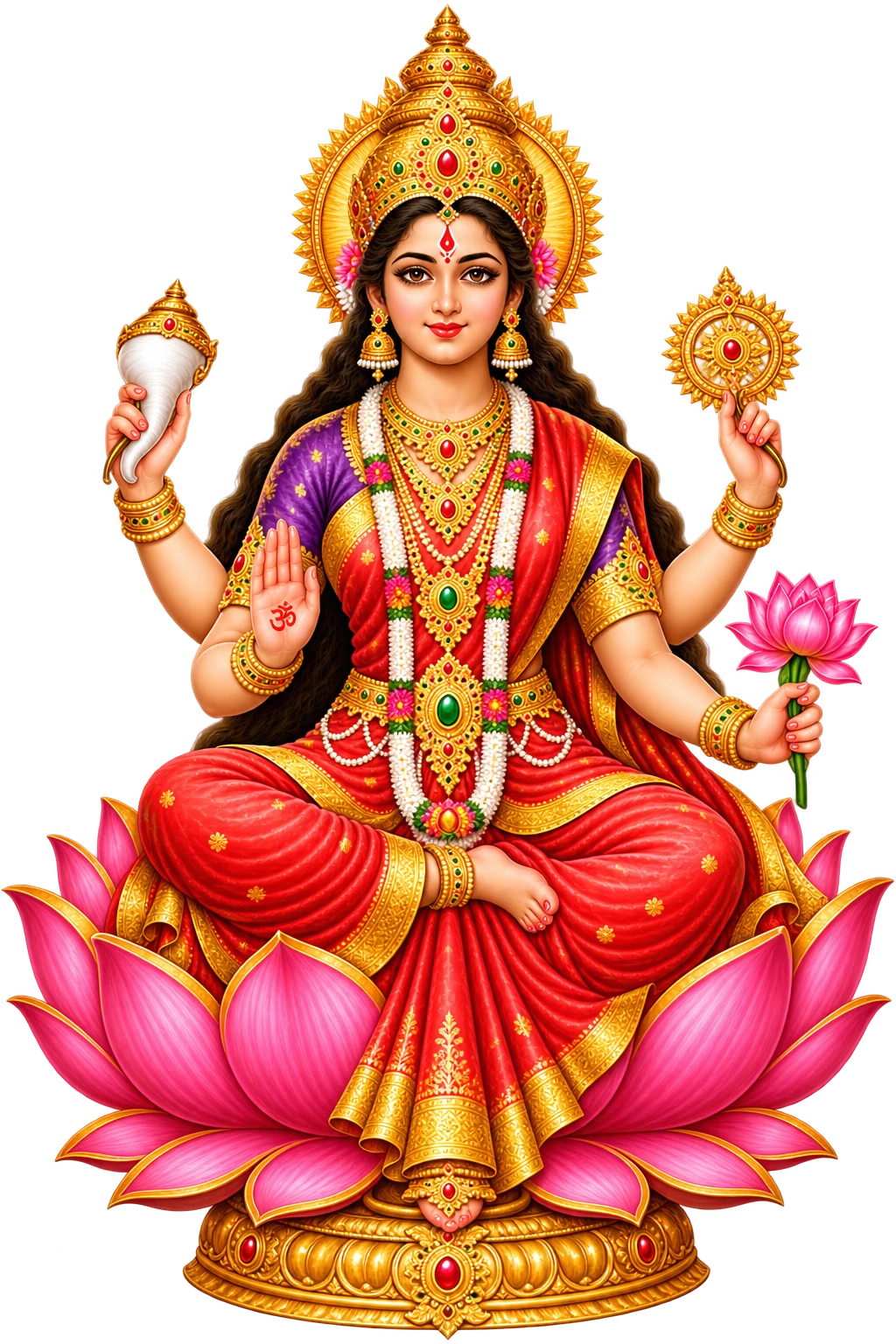
Above all, a shop prospers by the grace of Lakshmi, who is invited to reside at the gaddi. Sincere worship and auspicious custom invite her blessing.
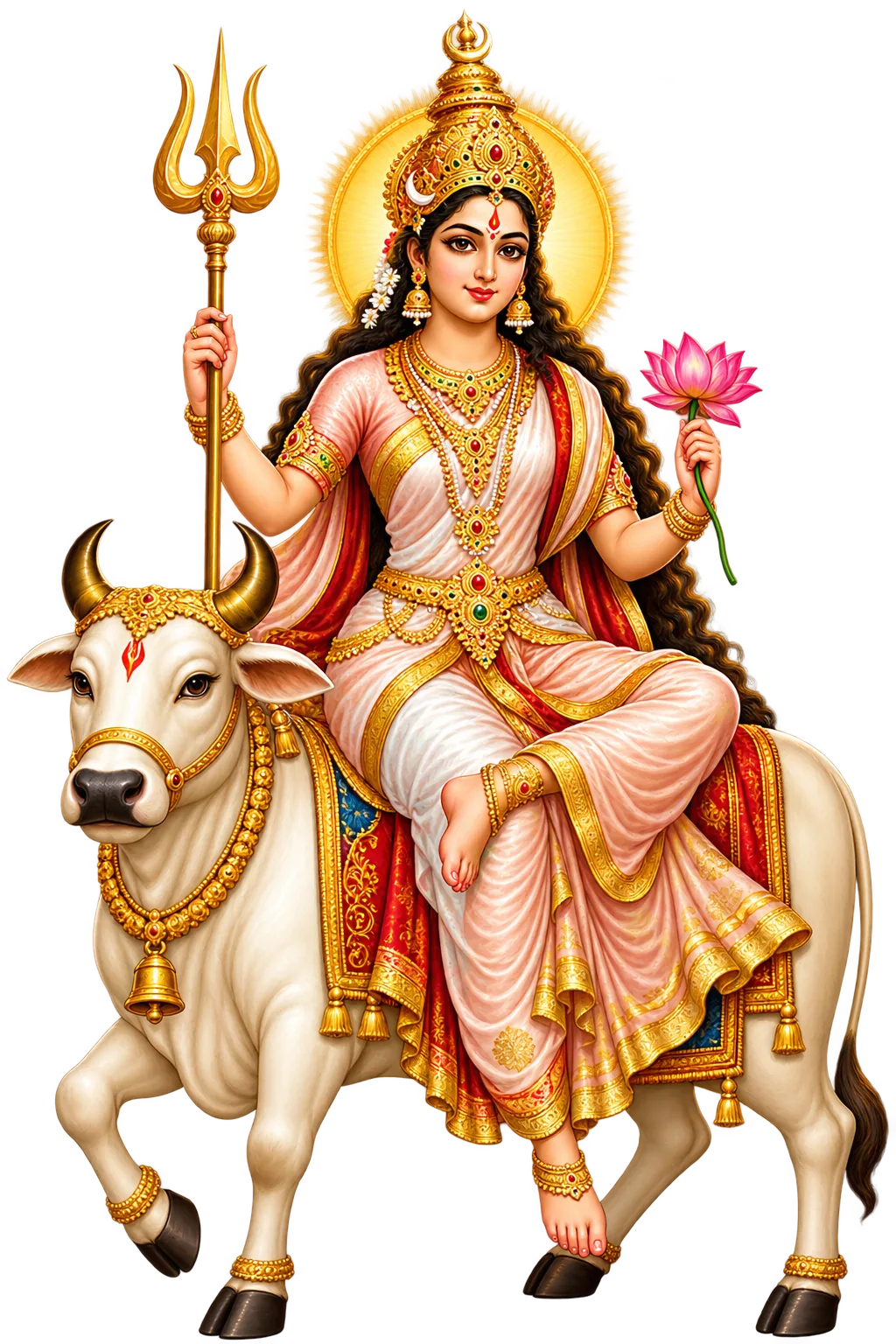
Maa Baglamukhi holds a singular place in Hindu spirituality as a remover of obstacles and protector against negativity. Among the ten Mahavidyas, her power of stambhan clears what obstructs a shop's growth and shields it from the evil eye, while her grace blesses its flourishing. Alongside Lakshmi and Ganesha, her worship makes a shop prosperous and auspicious.
Her name reveals her nature: "Bagla" means bridle and "Mukhi" means face - she is the Goddess who restrains every obstacle. For shop growth, devotees seek her grace for:
The clearing of what blocks the shop's prosperity.
A shield for the shop against envy and negativity.
The blessing of footfall, sales, and reputation together.
The making of a shop that draws customers and prosperity.
The grace to establish the shop firmly and help it grow.
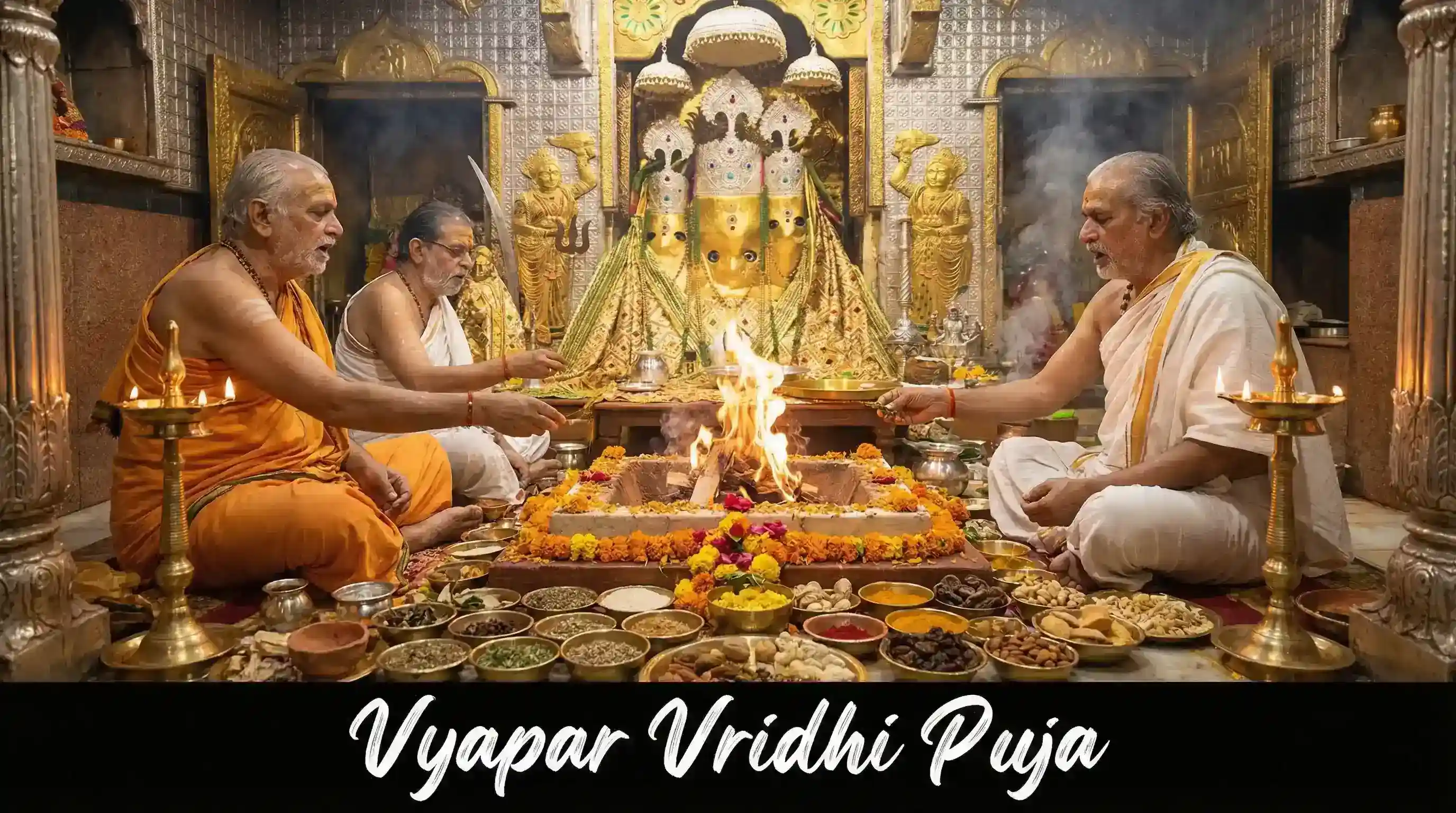
For a strong blessing on a shop, a Maa Baglamukhi Hawan - a sacred fire ceremony in which mantras are chanted while oblations meet the consecrated flame - is traditionally recommended to purify and energise the space.
For invoking the Goddess's grace over a shop, devotees turn to the sacred Baglamukhi Gayatri Mantra - a revered prayer that meditates on her power of stambhan and seeks her grace and guidance. Recited with devotion at the shop, it clears obstacles and blesses the space with prosperity.
ॐ बगलामुख्यै च विद्महे स्तम्भिन्यै च धीमहि। तन्नो देवी प्रचोदयात्॥
Om Baglamukhyai Cha Vidmahe Stambhinyai Cha Dheemahi, Tanno Devi Prachodayat
| Detail | Information |
|---|---|
| English Meaning | Om, we contemplate the Goddess Baglamukhi; we meditate upon her who holds the power of stambhan - the stilling of all obstructing forces. May the Goddess illumine and bless us. |
| Spiritual Benefits | Removes obstacles to a shop's growth; protects from the evil eye; blesses footfall, sales, and reputation; makes the space auspicious and magnetic; supports establishment and expansion. |
| Best Time | Brahma Muhurta (4:00 AM – 6:00 AM), after the morning bath; and at the shop before opening each day. |
| Recommended Jaap | 108 times daily using a turmeric (haldi) mala or yellow sandalwood mala. |
| Jaap Duration | Minimum 40 consecutive days (one mandala) without break. |
| Direction | Face East while chanting. Sit on a yellow or white asana. |
The Dukan Samriddhi Puja is the principal Vedic ritual for the prosperity of a shop. The phrase dukan samriddhi means the prosperity of a shop. This complete ceremony unites sacred mantra recitation, traditional offerings, the blessing of the shop space, and a consecrated fire ritual to invoke Maa Baglamukhi's grace - alongside Lakshmi, Ganesha, and Kubera - for overall growth and flourishing trade.
To remove the obstacles blocking a shop's growth, protect it from the evil eye, bless its footfall, sales, and reputation together, make the space auspicious, and support its establishment and expansion.
Rooted in authentic Vedic tradition, this puja and the customs around it have long blessed shops and traders. It is especially cherished when opening a new shop, when a shop struggles, or on auspicious occasions such as Dhanteras and Diwali, when shopkeepers perform Lakshmi and Chopda (account-book) Pujan.
On an auspicious muhurat for opening a new shop; on Dhanteras, Diwali, and Akshaya Tritiya; on Fridays or Wednesdays; and during Shukla Paksha, within a muhurat fixed through Vedic astrology.
The puja opens with Sankalp, followed by Ganesh Puja at the threshold (as Shubh-Labh), the worship of Lakshmi at the gaddi, and Navagraha Puja - with emphasis on strengthening the 10th and 11th houses and Mercury. The main Baglamukhi Puja follows with offerings of yellow flowers, turmeric, honey, yellow rice, betel nut, and ghee, and the shop space is blessed and cleansed. A hawan (sacred fire ceremony) concludes the ritual, and a Yantra may be installed at the shop.
Where the shop's vastu is unfavourable or its charts reveal afflictions, vastu remedies and a Graha Shanti Puja can be performed alongside.
For a shop seeking strong, sustained prosperity, Maa Baglamukhi Anushthan offers the most complete engagement.
Shopkeepers who turn to Maa Baglamukhi worship for shop growth traditionally report a range of spiritual and practical blessings:
The blocks holding the shop back begin to dissolve.
Footfall and sales begin to grow together.
Overall prosperity, from morning to evening, improves.
A brighter, more welcoming, magnetic atmosphere.
The evil eye and heaviness are dispelled from the shop.
The shop becomes better known and trusted.
The blessings of the goddess of wealth settle at the gaddi.
The shop is established firmly and helped to grow.
Note: These are traditional spiritual benefits drawn from devotional experience and scriptural references. Individual experiences vary. A shop's growth also depends on products, service, location, and effort.
Recite the Baglamukhi Gayatri Mantra 108 times each morning, and a few rounds at the shop before opening, with a sincere prayer for its growth.
Each morning, worship Lakshmi at the gaddi (the seat where the cash box is kept), inviting her to reside and bless the day's trade. Keep the gaddi clean and honoured.
Mark the entrance with Shubh-Labh and a Swastik, and honour Ganesha at the door, so auspiciousness and gain enter with every customer.
Honour the first sale of the day (bohni) as auspicious, touching the money to the gaddi or deities with gratitude, welcoming the day's prosperity.
Align the shop with vastu where possible - the cash box facing a prosperous direction (such as North, Kubera's direction), a clear, welcoming entrance, and an uncluttered space.
Light a ghee or oil lamp and offer dhoop at the shop each morning, purifying and brightening the space and welcoming positive energy.
Hang nimbu-mirchi at the entrance and use nazar-removal to protect a prospering shop from envy.
Keep the shop clean, bright, and welcoming, and trade with honesty and fairness. A well-kept, honest shop invites both customers and Lakshmi's grace.
For strong, sustained prosperity, Maa Baglamukhi Anushthan - conducted over 9, 21, or 40 days under an experienced Vedic priest - offers the most complete engagement.
Spiritual practice blesses a shop, but good products, fair prices, honest trade, and service are what sustain it. Grace and good shopkeeping work together.
A dull, cluttered, or ill-kept shop repels prosperity; keep the space bright, clean, and welcoming.
Cheating customers drives away both people and Lakshmi's grace. Honest dealing is the ground of lasting prosperity.
Skipping days weakens the practice. Once a mandala begins, complete it unbroken.
Learn the right pronunciation from a qualified guru or priest; faulty recitation weakens the practice.
The gaddi is Lakshmi's seat; keep it clean, respected, and never misused.
The Tantric tradition advises keeping mantra and puja details private to preserve their power.
A shop, blessed and well-kept, can become a flourishing source of prosperity. If your shop struggles to grow, or you wish to open one auspiciously, it may be time to seek Maa Baglamukhi's grace through the sacred Dukan Samriddhi (Shop Growth) Puja.
Maa Baglamukhi Guru, Nalkheda, Madhya Pradesh - your trusted centre for authentic Vedic spiritual guidance. Our experienced Vedic pandits will study your chart and your shop, identify the influences on its prosperity, and perform personalised rituals to bless the space and open the path to growth.
Whether you seek a complete Dukan Samriddhi Puja, a Maa Baglamukhi Hawan to purify and energise your shop, an auspicious muhurat and Lakshmi Pujan for a new shop, a Yantra for your premises, or a Graha Shanti Puja for planetary appeasement - we offer traditional, authentic services both in person at Nalkheda and online for devotees across India and abroad.
Everything you need to know about Dukan Samriddhi (Shop Growth) Puja at Nalkheda.