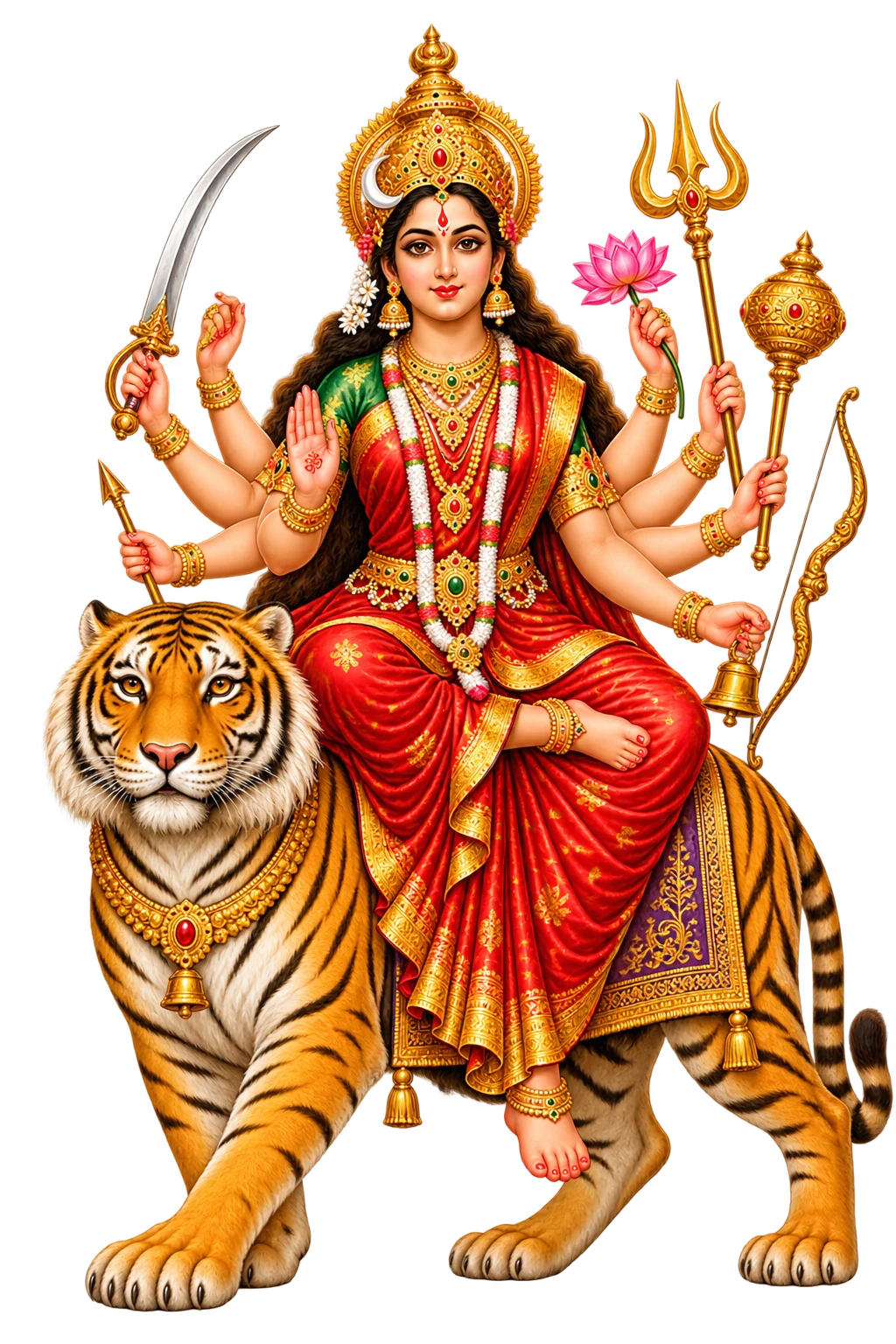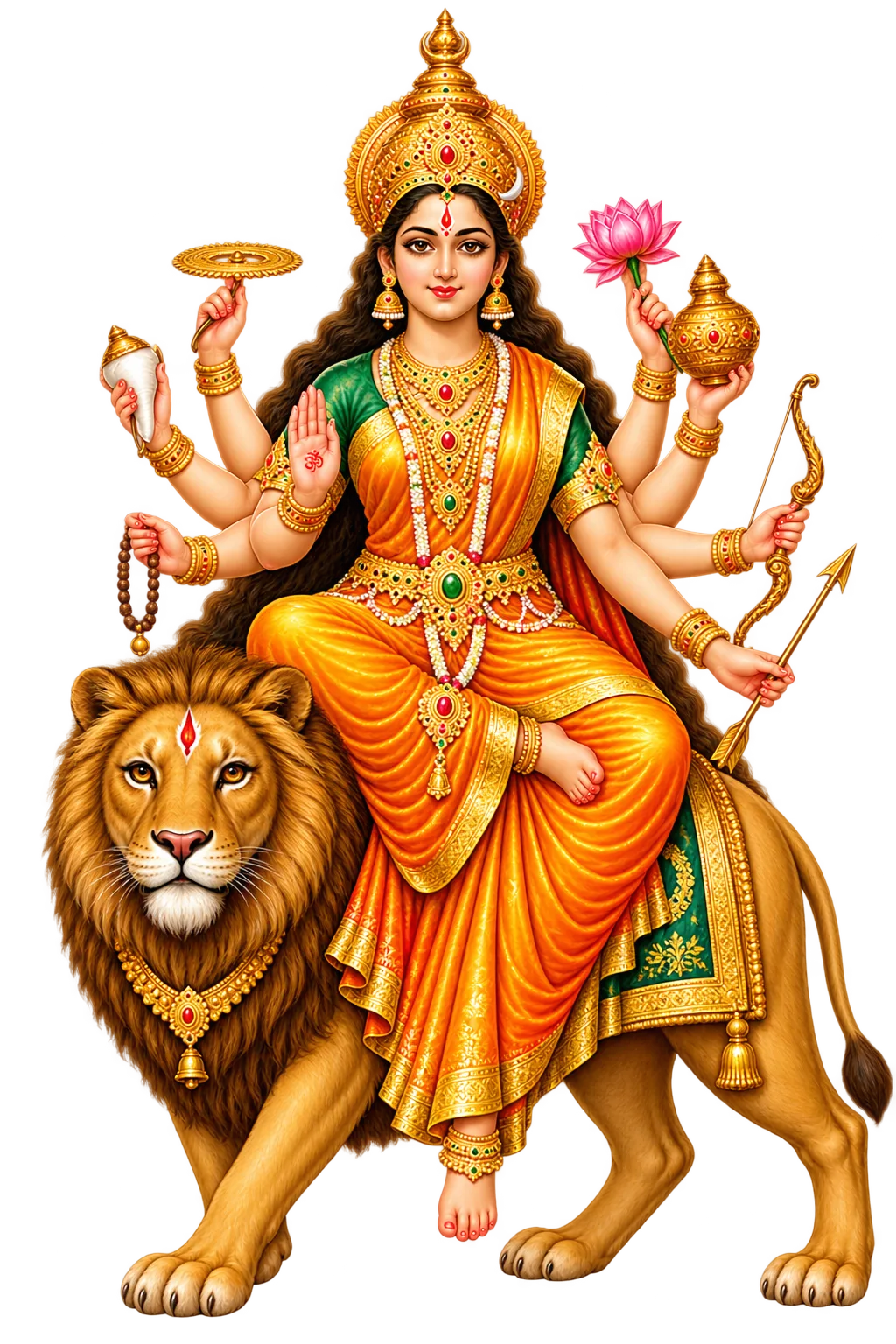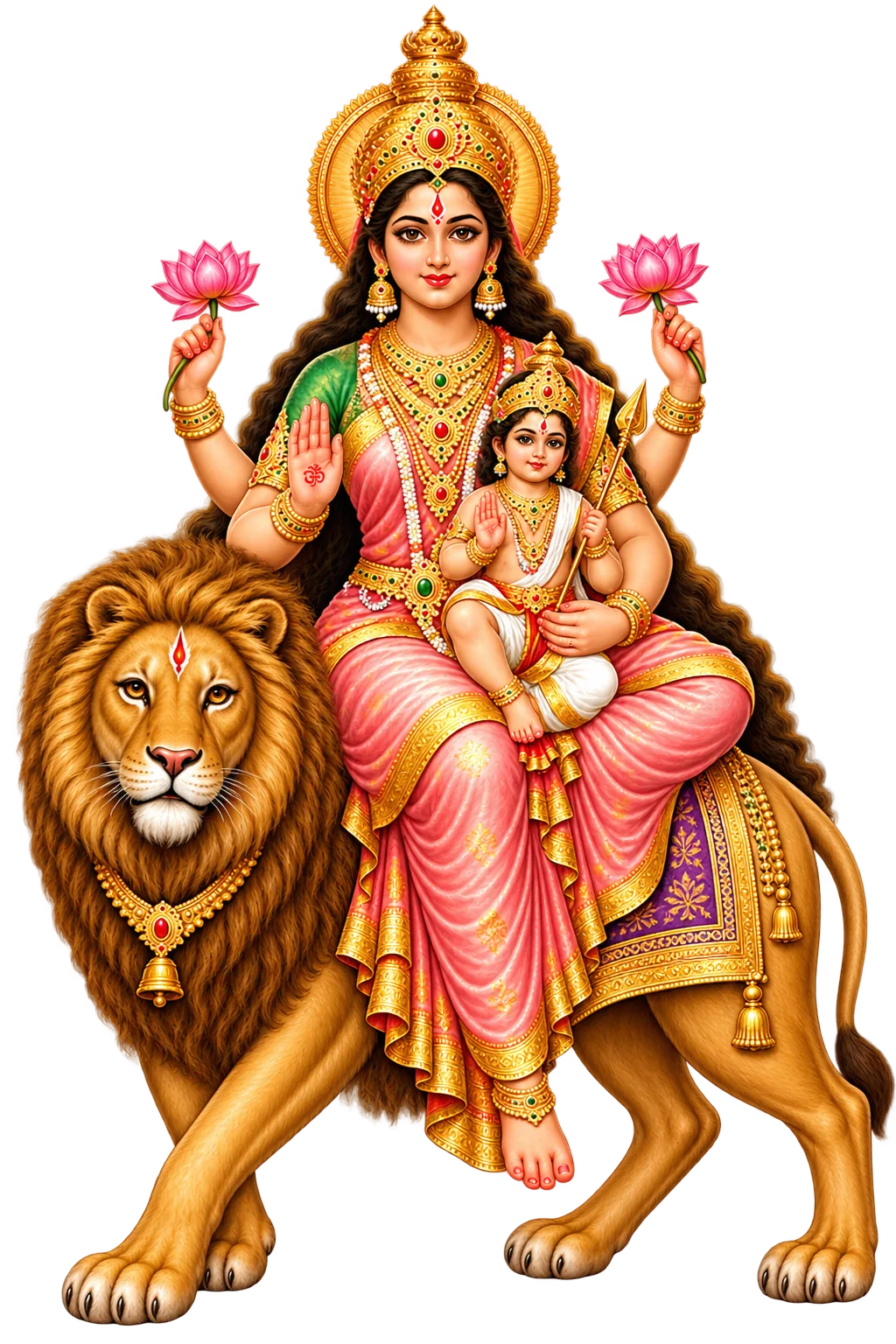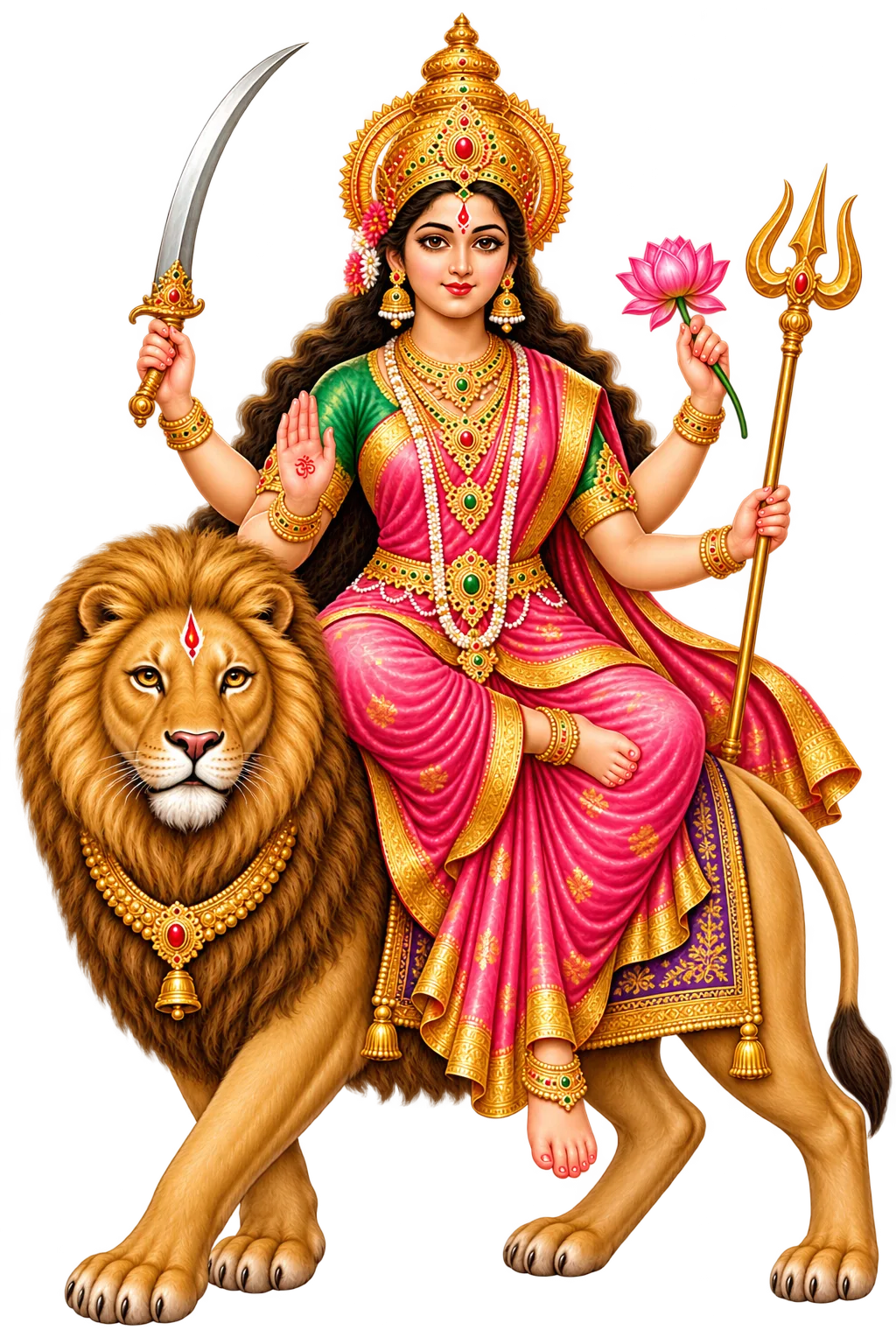
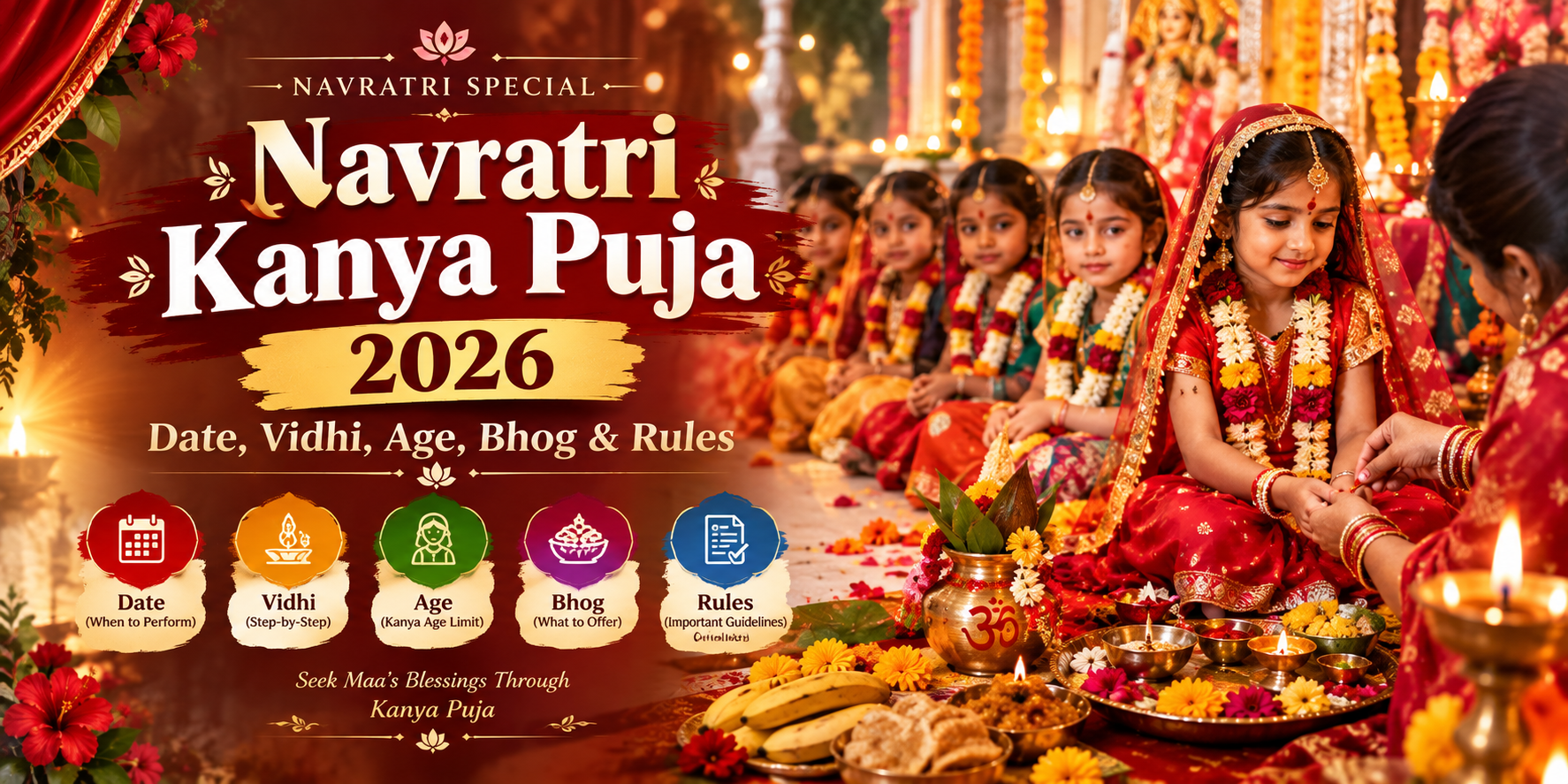
Kanya Puja is the Navratri ritual in which young girls are welcomed, worshipped and fed as living forms of Maa Durga. Devotees traditionally believe that Shakti, the divine feminine, is present in every girl. In many homes, honouring her completes the nine days of worship. Most families do it on Ashtami or Navami, the eighth and ninth days.
This guide covers Navratri Kanya Puja 2026 for Sharad (Shardiya) Navratri, which begins on 11 October 2026. It explains the date and tithi timings, the right age, how many girls to invite, the vidhi, bhog, samagri and rules. Customs differ by region and family, so confirm timings with your local panchang or family priest. For the full nine days, see our Sharadiya Navratri 2026 overview.
Quick Answer
Kanya Puja 2026 date: Monday, 19 October 2026 in most calendars (Delhi-based timings). Some list 18 October, and some families keep Navami on the morning of 20 October.
Ashtami: about 8:27 AM on 18 Oct to about 10:51 AM on 19 Oct
Navami: about 10:51 AM on 19 Oct to about 12:51 PM on 20 Oct
Recommended age: 2 to 10 years
Number of girls: traditionally 9, sometimes with one boy. Fewer is accepted.
Main puja steps: welcome, wash feet, tilak, flowers, chunri, aarti, bhog, meal, dakshina and gifts, blessings
Traditional bhog: kala chana, puri and halwa
Important rule: follow your family tradition and confirm the date with a local panchang
What Is Kanya Puja?
Kanya Puja (also called Kanya Pujan, Kanjak or Kumari Puja) is a Hindu ritual in which girls, usually aged two to ten, are worshipped as forms of Goddess Durga, fed a meal and given small gifts during Navratri.
According to Hindu tradition, a young girl is seen as pure and innocent, so devotees regard her as a form of Shakti. The idea rests on the philosophy that women symbolise Mahamaya, the goddess Durga. It is often linked to the Devi Mahatmya, which describes all women as expressions of the Devi. Wikipedia
A typical home observance has four parts:
Complete the morning Devi puja.
Welcome the girls and worship them with tilak and flowers.
Serve the meal and offer gifts.
Many devotees then end their Navratri fast.
Some communities honour a girl on every day of Navratri, but Ashtami and Navami are the days when nine girls are usually worshipped. Hindu Blog
Navratri Kanya Puja 2026 Date and Muhurat
Most 2026 calendars place Navratri Kanya Puja on Monday, 19 October 2026. On that day Ashtami is present at sunrise and ends around 10:51 AM, after which Navami begins and lasts until about 12:51 PM on 20 October. PanchangBodh's Delhi calculation is nearly identical, at 10:53 AM and 12:52 PM. PatrikaPanchangbodh
Sharad Navratri opens on Sunday, 11 October, with Ghatasthapana (Ghatasthapana 2026 guide). It begins the day after Pitru Paksha ends. See our Pitru Paksha 2026 calendar for that period. Vijayadashami (Dussehra) follows on Tuesday, 20 October. Shubhdivas
Why dates differ online. Ashtami begins on the morning of 18 October, so some calendars name 18 October as Ashtami and 19 October as Navami. Others go by the tithi at sunrise and keep both on 19 October. Both readings use the same tithi timings. Navami is also still running at sunrise on 20 October. Families who count Navami by sunrise tithi may ask their pandit about that morning, finishing before about 12:51 PM. Times Now Hindi
Is there a Kanya Puja muhurat? In the sources we checked, no major panchang lists a separate Kanya Puja muhurat for October 2026. Families usually hold it in the daytime, after the morning Devi puja, within the tithi they follow. The Sandhi Puja juncture of the two tithis is listed at roughly 10:27 to 11:15 AM. CreditMitra
Which day is preferred? Where Kumari Puja is done on a single day during Durga Puja, Maha Ashtami is preferred. Many North Indian families choose Navami instead. Both are accepted. Drikpanchang
Location note. These timings use Delhi. Tithi end times differ only by minutes between panchang systems, but sunrise and custom vary by city. In Nalkheda or elsewhere in Madhya Pradesh, check a local panchang or ask your family priest.
How Many Girls Are Needed for Kanya Puja?
Traditionally nine girls are invited, one for each form of Navadurga. Some families add one boy, who represents Bhairav. Other sources call him Langur. Astroyogi
Fewer girls are also common. Many families say sincerity matters more than the number, so if nine are not available, invite as many as you can, even one. In some Durga Puja settings, especially Bengal, Kumari Puja often centres on a single girl.
Invite girls with their parents' knowledge and comfort. Some texts attach conditions of caste or physical condition. Most households, and this guide, do not apply them. Drikpanchang
What Is the Right Age for Kanya Puja?
Girls between two and ten years are traditionally invited. Texts cited by Drik Panchang describe two to ten as suitable and say a one-year-old should be avoided. Each age is linked to a named form of the Goddess. Lists differ slightly between sources. Drikpanchang
Some sources swap names between ages seven and nine. India TV lists Shambhavi at seven, Durga at eight and Chandika at nine. Treat the range as guidance, not a strict test. The blessings various texts attach to each age are matters of belief, so we do not list them as outcomes.
Kanya Puja Vidhi: Step by Step
This is a widely followed home sequence. Steps marked optional are family customs.
Prepare. Bathe, finish your morning Devi puja, and clean the seating area. If you are also keeping a home altar, see our Navratri Puja at home guide.
Invite. Invite the girls a day earlier, with their parents.
Welcome. Greet them warmly and seat them on clean mats or low seats.
Wash feet (optional). Use clean lukewarm water and a soft towel, and mind wet floors.
Tilak. Apply roli or kumkum with a few grains of akshat. Some families also tie a red mauli thread on the wrist.
Flowers. Offer flowers to each girl with a short prayer.
Chunri (optional). Offer a red chunri or dupatta as a token of devotion.
Prayer and aarti. Light a diya and incense and do a brief aarti.
Bhog. Offer the prepared bhog first to the Devi, then to the girls.
Serve. Let the girls eat comfortably and never force food.
Dakshina and gifts. Give a token according to your means.
Blessings. Seek blessings respectfully and see the girls off at the door.
Never ask children to perform rituals, pose for photos or stay longer than they are comfortable.
Kanya Puja Samagri List
Exact samagri varies by family tradition.
What Food Is Offered During Kanya Puja? (Kanya Puja Bhog)
Halwa, kala chana and puri are the most common bhog. Kheer, coconut, fruits and sweets are also served. We did not find a scriptural rule fixing these dishes. They are commonly understood as simple, festive prasad for the Devi that is easy to prepare for a group. RTV Bangladesh
Many families follow Navratri food norms and avoid onion and garlic. Cook fresh, wash hands, and cover food. Serve it warm, not hot, and avoid hard nuts or large chunks for small children. Ask parents about allergies.
Kanya Puja Rules
These are widely followed traditional guidelines. Families differ, and missing a custom does not invalidate the puja.
Confirm the date with your local panchang and family tradition.
Keep the space and food clean, and cook the bhog before the girls arrive.
Prepare sattvic food. Many families avoid onion and garlic during Navratri.
Follow the sequence: puja first, then the meal, then gifts.
Treat the girls as honoured guests. Never pressure a child.
Give dakshina and gifts by your means. No fixed form is required.
Keep the fasting connection flexible. Many break the vrat afterward, and health comes first.
Choose one day (Ashtami or Navami) per your tradition and stay consistent.
Avoid rushing, comparing or singling out children, and photos without consent.
Respect regional differences. Do not treat one custom as universal.
Kanya Puja at Home: Simple Timeline
Before the girls arrive (clean space, cook bhog, arrange seats, keep gifts ready)
↓
Welcome (greet, seat, offer water)
↓
Tilak and puja (tilak, flowers, chunri, aarti)
↓
Bhog (offer to the Devi, then the girls)
↓
Meal (serve with care)
↓
Dakshina and gifts
↓
Blessings and respectful farewell
Kanya Puja and Navratri Fasting
Fasting is not required to perform Kanya Puja, but many devotees who keep the vrat break it only after feeding the girls. Some sources say the fast is broken only after the children are fed. Some devotees break it on Ashtami and others on Navami. Some fast all nine days and others only on the first and last, so follow your own tradition. AstroyogiIndia Online Pages
Dietary and health needs may require flexibility, and a doctor is the right person to ask. Our Navratri fasting rules 2026 guide covers vrat food.
Ashtami vs Navami Kanya Puja
Kumari Puja is often held at the end of the Mahashtami puja, but it can also be held on Navami. Neither is considered wrong. RTV Bangladesh
Kanya Puja Mantra and Prayer
No single mantra is mandatory. Many families offer flowers with a short namah-style chant to Durga. Longer Kumari Puja mantras, one for each age-form, appear in Tantric and Puranic texts, and versions vary. They are best recited with a priest's guidance. We are not quoting a specific Sanskrit verse, so as to avoid misquoting one. A simple prayer in your own words is equally valid.
Kanya Puja and Navadurga
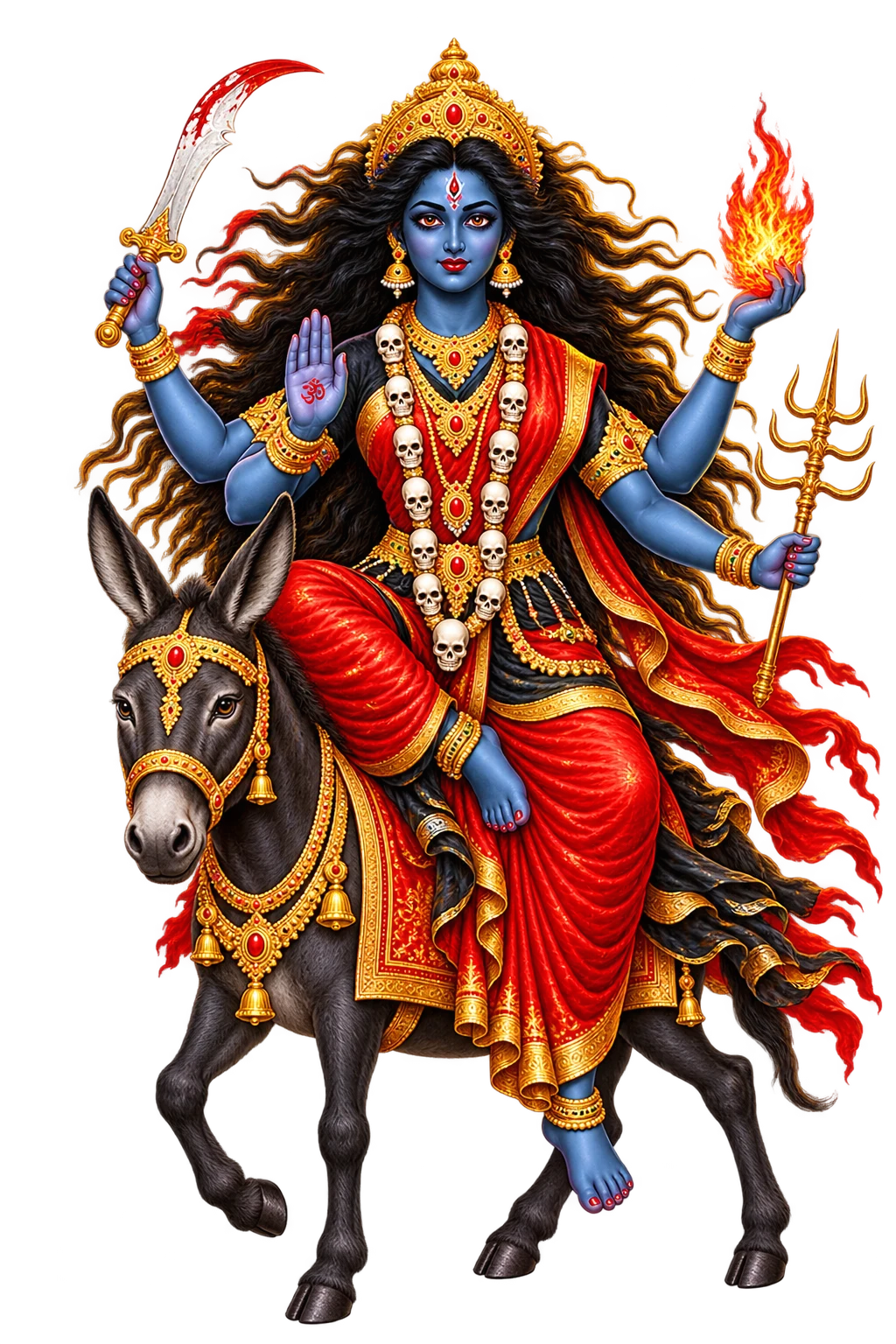
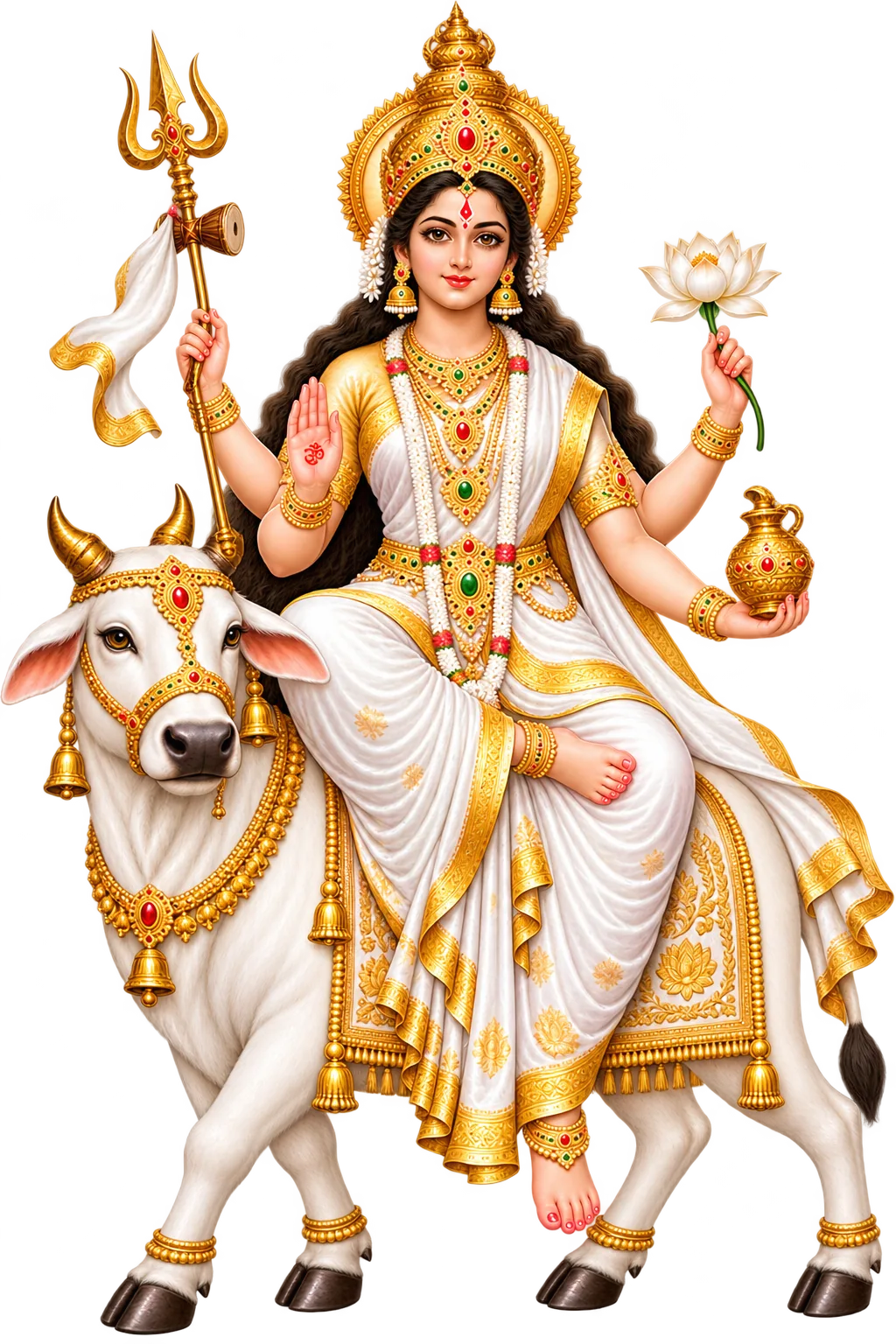
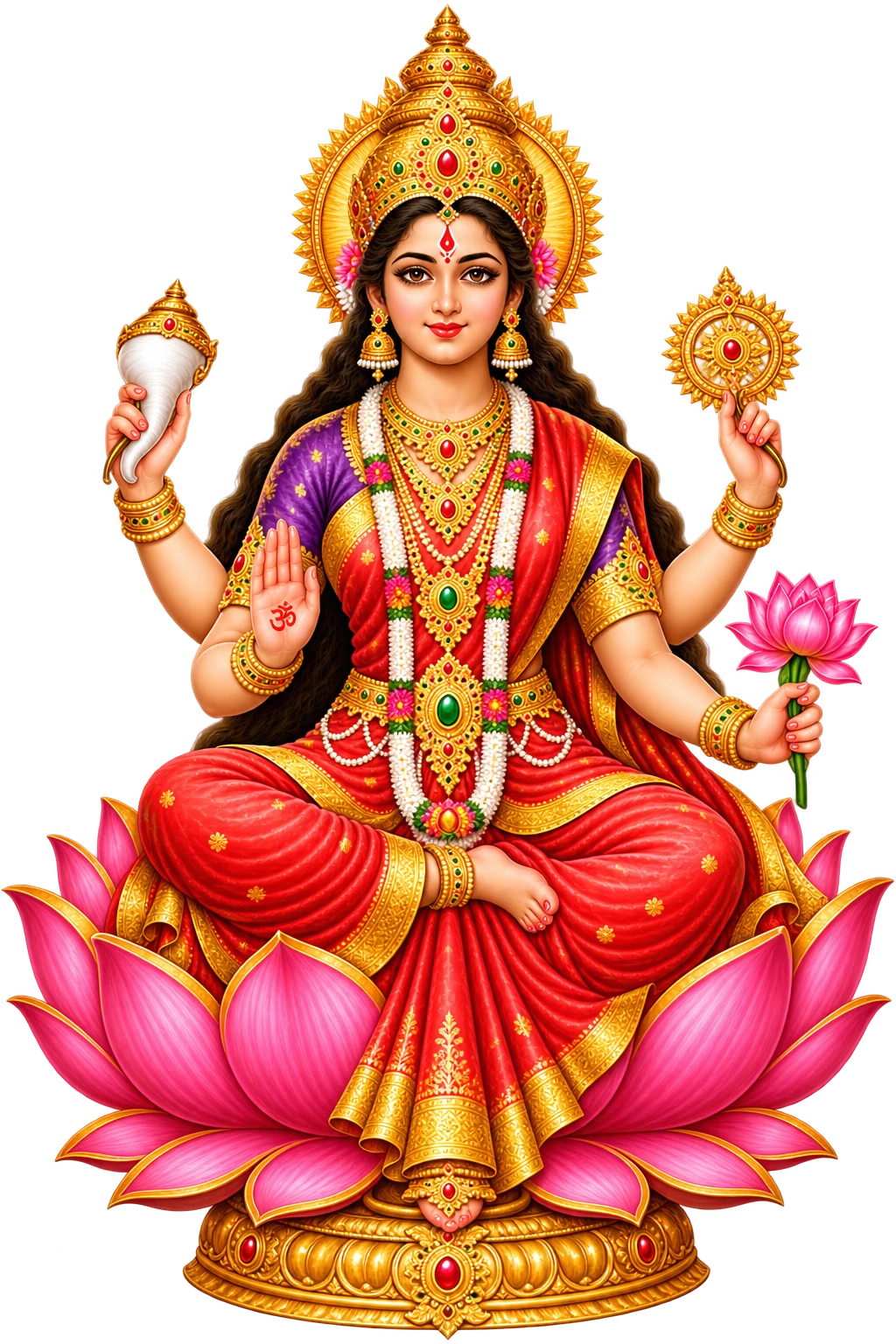
Nine girls, nine nights and nine forms are connected in tradition. Shailputri, Brahmacharini, Chandraghanta, Kushmanda, Skandamata, Katyayani, Kalaratri, Mahagauri and Siddhidatri are worshipped one per day, and devotees see the nine girls as their living reflection. You may also enjoy our Navratri colours 2026 guide.
In 2026 the eighth and ninth forms, Mahagauri and Siddhidatri, fall together on 19 October in most calendars. The tithis are compressed, so Ashtami, Sandhi Puja and Navami all fall on that one day. Panchangbodh
Want the full nine-day picture, with puja ideas for each form? Explore our complete Shardiya Navratri guide.
Kanya Puja and Maa Baglamukhi
Kanya Puja is tied to Navratri worship of Maa Durga and her nine forms. Maa Baglamukhi is one of the Dash Mahavidyas, not one of the nine Navadurga forms. These are two separate traditions and should not be merged.
Devotees may perform Baglamukhi Puja separately during Navratri, according to their spiritual tradition. Our introduction, Maa Baglamukhi's divine power, explains her place among the Mahavidyas. Gupt Navratri is the period when the Mahavidyas are the main focus. Simple devotional worship can be done at home, while advanced anushthan should be done under a qualified guru. Read more in our Gupt Navratri 2026 guide and Baglamukhi Puja page. Maa Baglamukhi Guru
If you would like guidance on Baglamukhi worship during Navratri, read how Maa Baglamukhi Navratri Puja is approached at Nalkheda.
Navratri Worship and Kanya Puja in Nalkheda
Nalkheda is a town in Agar Malwa district, Madhya Pradesh. Its Baglamukhi temple stands on the banks of the Lakhundar river and is dedicated to Bagalamukhi, one of the ten Mahavidyas, and it is popular during Navratri. According to tradition, the shrine dates to the Mahabharata era, and it was restored in 1815. Our Nalkheda pilgrimage guide has more background. WikipediaBhaktiBharat
Kanya Puja is a household ritual. You can do it at home, whether or not you visit Nalkheda. Devotees interested in Baglamukhi worship may separately explore priest-guided Puja, Havan or Anushthan. This website arranges such services through Nalkheda-based priests. It is a separate service and, as its own pages note, not the temple's administration. For darshan timings or temple-run services, use the temple's official channels.
If you would like priest guidance for Navratri Puja, Havan or Anushthan, read about Navratri Havan and Anushthan at Nalkheda and the Baglamukhi Havan ritual.
Common Kanya Puja Mistakes to Avoid
Not confirming the date with your local panchang or family tradition
Confusing Ashtami and Navami, or splitting the ritual across both by accident
Treating one regional custom as universal
Ignoring food hygiene and children's allergies
Preparing bhog at the last minute
Treating dakshina or gifts as mandatory in one fixed form
Using fear-based claims about what happens if a step is missed
Mixing Navadurga and Dash Mahavidya traditions
Kanya Puja Checklist
Frequently Asked Questions
1. When is Navratri Kanya Puja 2026?
Most calendars place it on Monday, 19 October 2026, when Ashtami ends around 10:51 AM and Navami begins. Some list 18 October for Ashtami, and some families keep Navami on the morning of 20 October. Confirm with your local panchang or family priest.
2. Is Kanya Puja on Ashtami or Navami?
Both are traditional. Many families choose Ashtami, while others choose Navami, often where the fast ends on the ninth day. In 2026 both fall on 19 October in most calendars, so follow your family custom and local panchang.
3. What is the age for Kanya Puja?
Girls aged two to ten are traditionally invited, and a one-year-old is usually avoided. Each age is linked to a named form of the Goddess, though lists differ between sources. Treat the range as guidance, not a strict test.
4. How many girls are needed for Kanya Puja?
Traditionally nine, matching the nine Navadurga forms, sometimes with one boy. If nine are not available, invite as many as you can. Many families say devotion and respect matter more than the exact number.
5. Can one girl be worshipped?
Yes, in many family and regional traditions. Kumari Puja in some Durga Puja settings centres on a single girl. If you can invite only one or two, follow the same steps with the same respect.
6. Can Kanya Puja be done at home?
Yes. It is commonly a household ritual. Prepare a clean seating area, the samagri and the bhog, then follow the welcome, tilak, prayer, meal and gifts sequence described above.
7. What food is prepared and offered to Kanya?
Halwa, kala chana and puri are the most common, with kheer, fruit and coconut also served. Keep food fresh, mildly spiced and age-appropriate, and check with parents about allergies.
8. What is the Kanya Puja vidhi?
Welcome the girls, wash their feet if that is your custom, and apply tilak. Then offer flowers and a chunri, do a short prayer and aarti, offer bhog and serve the meal. Finish with dakshina or gifts and respectful blessings.
9. What gifts can be given to Kanya?
Common gifts include a chunri, fruits, sweets, stationery, books, hair accessories, small toys or clothes, as your means allow. Choose something useful and age-appropriate. There is no single required gift.
10. Is dakshina necessary?
No fixed amount or form is mandatory. Dakshina, whether money, a gift or both, is a token of gratitude given according to means and custom. Sincerity matters more than value.
11. Can Kanya Puja be done without fasting?
Yes. Fasting and Kanya Puja are separate practices, though many devotees who keep the vrat break it afterward. If you are not fasting, or your health does not permit it, you can still perform Kanya Puja.
12. What is the significance of nine girls, and how does it connect to Navadurga?
Traditionally the nine girls represent the nine Navadurga forms worshipped across the nine nights, and devotees regard each girl as a form of Shakti. This is religious symbolism, so families follow different numbers.
13. What is the difference between Kanya Puja and Kanjak Puja?
They refer to the same ritual. Kanjak is the name commonly used in parts of North India for the girls and the ceremony. Kumari Puja is the term in Durga Puja traditions, where it may be more formal and often centres on one girl.
14. Can Kanya Puja be performed in the evening?
It is traditionally done in the daytime, after the morning Devi puja and within the chosen tithi. An evening puja is uncommon. If it is your family practice or your priest advises it, follow that guidance.
15. What should be avoided during Kanya Puja?
Avoid stale or unhygienic food, pressuring or rushing the children, singling out a child, photos without consent, and treating one regional custom as universal. Onion and garlic are commonly avoided in Navratri food.
16. What if Navami falls on a different date or tithi in my city?
Follow your local panchang and family priest. Ashtami ends around 10:51 AM on 19 October and Navami continues to about 12:51 PM on 20 October, so some families choose 19 October and others the morning of 20 October.
17. Is Kanya Puja compulsory during Navratri?
No. It is a widely observed custom, not a universal requirement. Those who cannot host it may feed children, make an offering or worship at home. Traditions differ, and skipping it is not treated as wrong.
Plan Your Navratri Puja in Nalkheda
If you would like priest support this Navratri, you can plan it in advance through our booking page. Devotees can enquire about Maa Baglamukhi Puja, Havan or Anushthan during Sharad Navratri 2026. Nalkheda-based priests perform them according to the traditional vidhi, with your name, gotra and sankalp included. Our Navratri overview also lists Kanya Pujan among the rituals you can ask about. Where the selected service is available online, devotees living elsewhere, including abroad, can arrange it remotely. The site lists puja photos or video and prasad delivery as part of its process.
The process is simple. Choose the service you are interested in, share your details and sankalp, and our team will guide you on the date and timings. Rituals are offered according to tradition and personal faith, and no outcome is promised. Confirm services, availability and any charges directly when you book. Plan your Navratri Puja in Nalkheda.