🌸 GUPT NAVRATRI 2026 BOOKING OPEN (15-23 JULY) | 🔱 10,000+ SUCCESSFUL ANUSHTHANS | 🛡️ COMPLETE VEDIC REMOVAL OF BLACK MAGIC | ⚖️ COURT CASE VICTORY SUPPORT | 🔥 SIDDHA PEETH SPECIAL ANUSHTHAN SEVA | 🌍 WORLDWIDE PRASAD DELIVERY | 📿 LIVE SANKALP VIDEO CALL AVAILABLE
Maa Baglamukhi Guru
COMPLETE GUIDE TO DATES & SADHANA

Gupt Navratri 2026 Baglamukhi Puja & Sadhana

By Pandit Vishnu Sharma - Acharya, Nalkheda Siddha Peeth

Among the four Navratris of the Hindu year, there are two that are openly celebrated, and two that are held in secret. Gupt Navratri falls into the latter category. This is a time when sadhaks go within, the worship of the ten Mahavidyas - including Baglamukhi Maa - takes place not for the world, but for siddhi. In 2026, the sacred period falls from 15 to 23 July.

⏳ Gupt Navratri Starts In (15 July 2026)
--Days
:
--Hrs
:
--Min
:
--Sec
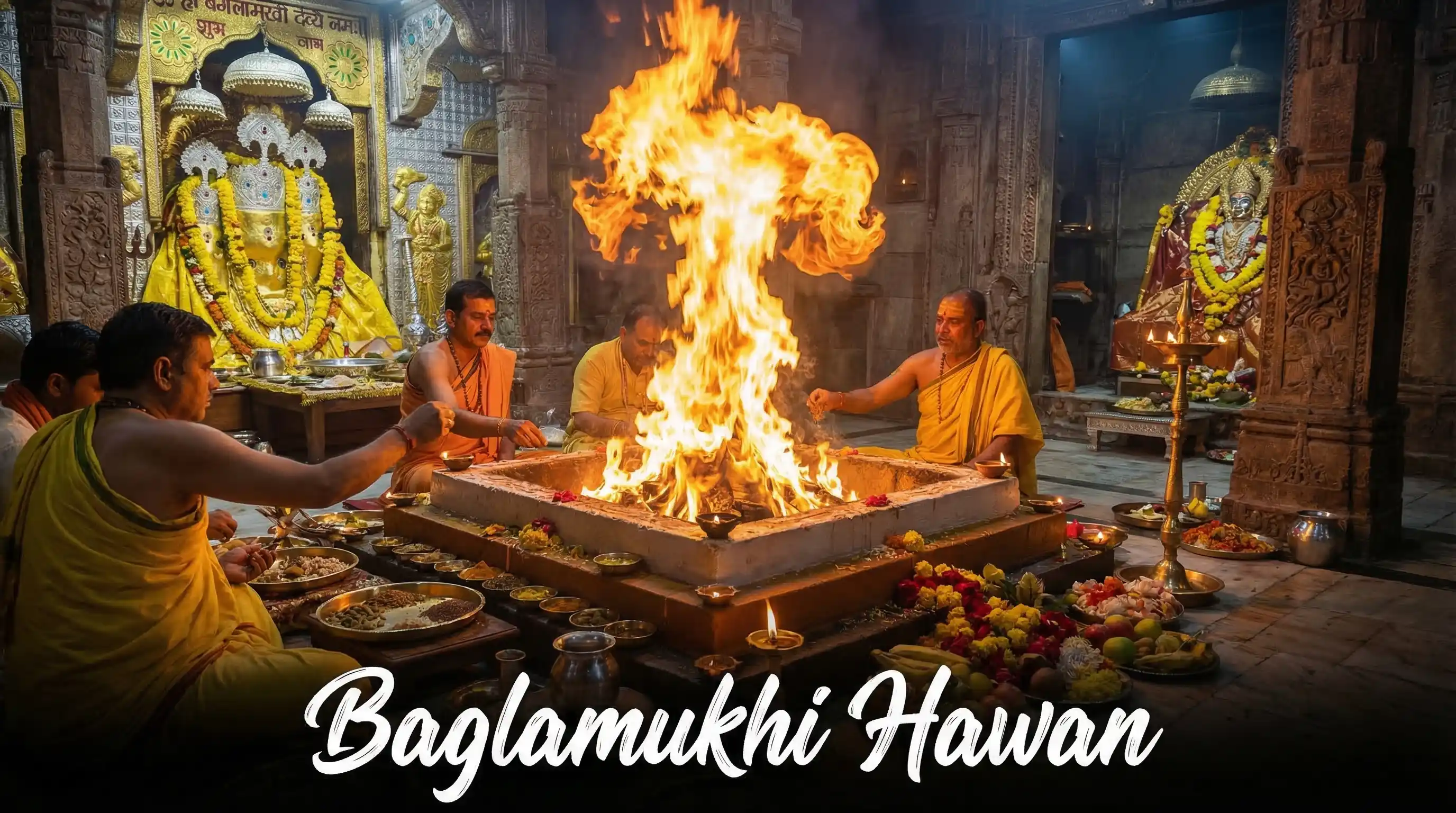
Maa Baglamukhi Gupt Navratri Hawan at Nalkheda

This comprehensive guide will take you through all you need for the time: including accurate dates and Muhurats, reasons for this Navratri being a secret one, who Baglamukhi Maa is, and how you can offer her puja and sadhana with success at home, drawing from my decades as a priest for this puja at Nalkheda. Advanced stages of practice I will openly highlight so that you don’t do what requires a guru, solo.

WHAT IS GUPT NAVRATRI?

Gupt Navratri is one of the two secret nine-day festivals in the Hindu calendar; these are celebrated in the months of Ashadha (June-July) and Magha (January-February). While Navratris associated with Chaitra and Sharad (also called Shardiya) are widely observed, this hidden Navratri is dedicated to the worship of the Dasha Mahavidyas - ten goddesses of knowledge - by secret Shakti upasakas, tantra sadhaks and mystics.

Gupt is a Sanskrit word for hidden or secret. The word gupt is attached to the festival as the practice and worshipping process used to be done in secret, and the energies the goddess possesses are believed to be subtle. Ashadha Gupt Navratri will be celebrated in 2026 between 15 and 23 July.

Panchang & Timings

GUPT NAVRATRI 2026 DATES & GHATASTHAPANA MUHURAT

In 2026, Ashadha Gupt Navratri begins on Wednesday, 15 July and concludes on Thursday, 23 July. Ghatasthapana (Kalash Sthapana) - the installation of the sacred pot that marks the first day - is performed on 15 July during the morning muhurat.

Please verify your local muhurat. Tithi and muhurat timings shift with sunrise and location. If you live outside India, confirm the precise Ghatasthapana window for your city with a reliable panchang before beginning. We are happy to calculate it for you on request.

Book a Baglamukhi Puja Online

Festival Schedule 2026

  • Festival: Ashadha Gupt Navratri
  • Begins (Pratipada): Wednesday, 15 July 2026
  • Ends (Navami): Thursday, 23 July 2026
  • Duration: 9 days and nights
  • Ghatasthapana: Morning of 15 July 2026
  • Approx. Muhurat: 05:33 AM – 10:09 AM (IST)

WHY IT IS CALLED GUPT (SECRET) NAVRATRI

There is a common misunderstanding that Gupt Navratri is only for tantriks and aghoris. That is not the whole truth. The secrecy of this Navratri is about the nature of the practice, not about exclusion.

The older school offers three reasons for the naming of this tradition. Firstly, since the sadhanas of the Mahavidyas were passed from guru to guru secretly, not publicised widely; Secondly, since the nine nights energy of this season is said to be turned inward, it's a season of pratyahara (withdrawal of senses) and not a celebratory season; and Thirdly, due to an established practice, not many publicize the worship and tantric practices that they undertake in the seclusion of their home. They may not even reveal their sankalp.

A householder can absolutely observe Gupt Navratri with simple devotion: a daily lamp, a clean altar, mantra japa, and a sincere heart. The advanced tantric anushthans are a separate matter, and those should only be undertaken under a qualified guru - a point I return to in the sadhana section below.

GUPT NAVRATRI VS CHAITRA & SHARAD NAVRATRI

Gupt Navratri is dedicated to the ten Mahavidyas, while Chaitra and Sharad Navratri honour the nine forms of Durga. Gupt Navratri is inward, quiet and secret in mood; the other two are public, festive and celebratory. Gupt Navratri is observed mainly by sadhaks and Shakti upasakas, whereas Chaitra and Sharad are observed by households and communities at large.

Gupt Navratri falls in Ashadha and Magha (June–July and January–February); Chaitra and Sharad fall in spring and autumn. The emphasis of Gupt Navratri is mantra siddhi, sadhana and spiritual power; the emphasis of the others is devotion, fasting and celebration.

Both are equally sacred. They simply serve different aspects of the spiritual path - one outward and joyous, the other inward and disciplined.

THE TEN MAHAVIDYAS AND MAA BAGLAMUKHI'S PLACE

According to the Devi Bhagavata tradition, just as the nine forms of Durga are worshipped in Chaitra and Sharad Navratri, the ten Mahavidyas are worshipped during Gupt Navratri. The ten are Kali, Tara, Tripura Sundari (Shodashi), Bhuvaneshwari, Chhinnamasta, Tripura Bhairavi, Dhumavati, Baglamukhi, Matangi, and Kamala.

Each Mahavidya represents a distinct facet of Shakti - from the fierce to the gracious, the terrifying to the abundant. Their worship is not about asking for favours so much as understanding the different shades of the Divine Mother that reside within ourselves.

Among these ten, Maa Baglamukhi holds a special place for those seeking protection, stability, and victory over opposition - which is why her sadhana draws so many devotees during this particular season.

WHO IS MAA BAGLAMUKHI?

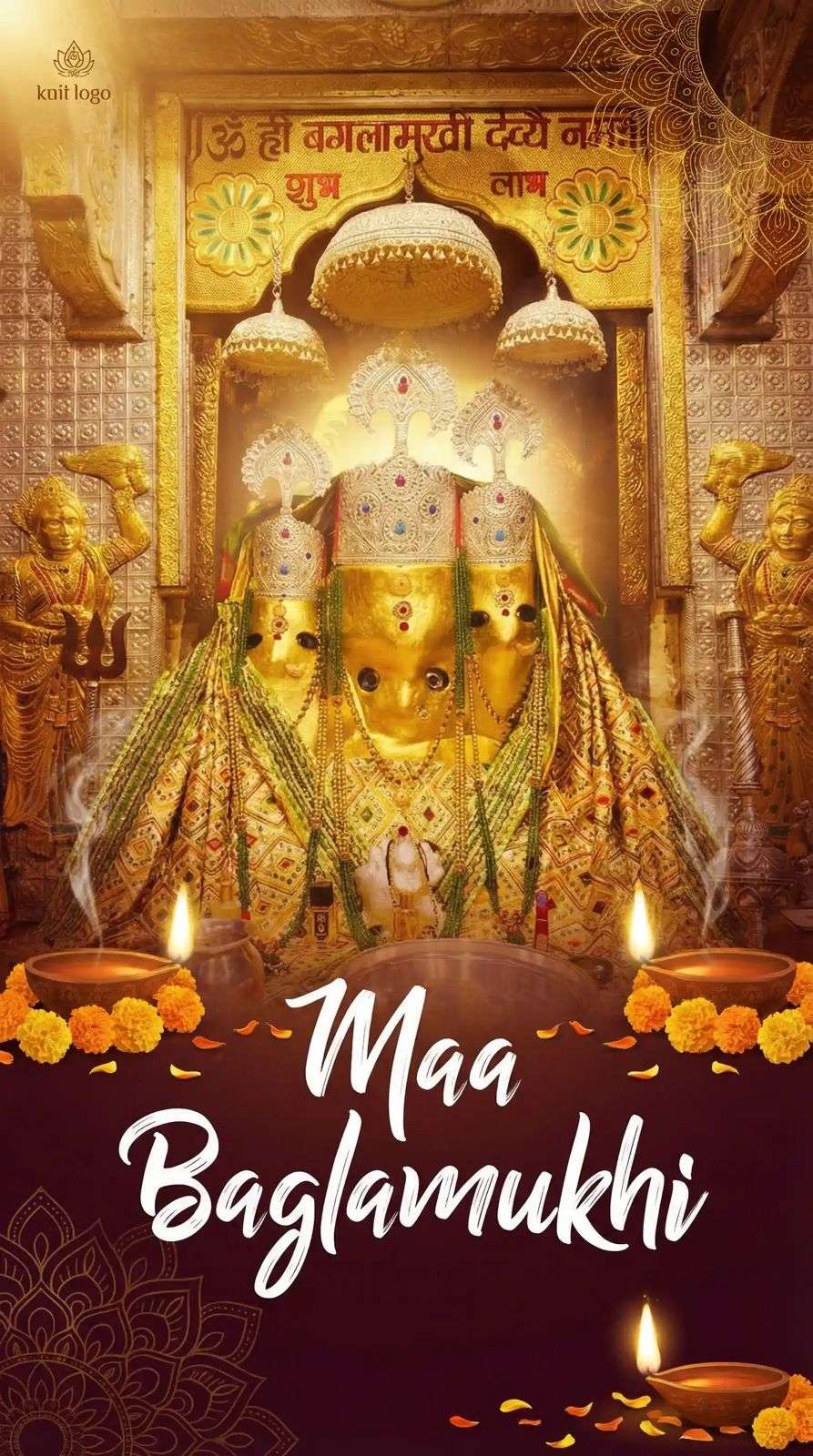
Maa Baglamukhi is the eighth of the ten Mahavidyas. She is also revered as Pitambara Devi - she who is robed in yellow - and her worship is therefore associated throughout with the colour yellow: yellow cloth, turmeric, yellow flowers, and a turmeric (haldi) mala for japa.

She is depicted holding the tongue of a demon in one hand and a club in the other. This image carries her central meaning. Baglamukhi is the goddess of Stambhan Shakti - the power to still, to restrain, to silence. In the symbolism of the tradition, she stops harmful speech, paralyses hostile intention, and freezes the forces that would harm her devotee. It is for this reason that she is invoked by those facing conflict, opposition, false accusation, or disputes.

It is important to hold this correctly. In the devotional understanding, victory over enemies is not an instrument of harm against others; it is protection - the calming of conflict and the restoration of one's own footing. Her grace is sought for steadiness of mind as much as for outward circumstances.

Across many traditions, the Ashadha Gupt Navratri is held to be an especially potent time to undertake her worship.

BENEFITS OF BAGLAMUKHI WORSHIP IN GUPT NAVRATRI

In the devotional tradition, sincere worship of Maa Baglamukhi during Gupt Navratri is believed to bring profound spiritual and practical reassurance:

Protection from Hostility

Complete protection from hostility, conspiracy, harmful speech, and hidden enemies.

Dispute & Legal Steadiness

Steadiness, mental calm, and confidence in disputes, including legal and professional matters.

Obstacle Removal

Removal of prolonged stagnation and unseen obstacles in business, finances, and career.

Relief from Negativity

Relief from the heavy effects of dark negativity, evil eye, and black magic in traditional belief.

Mental Calm & Courage

Inner mental calm, sharp clarity, reduced anxiety, and freedom from lingering fear.

Spiritual Progress

Deep spiritual advancement and mantra siddhi through disciplined, focused mantra practice.

*These are described as the fruits of devotion as understood in the scriptures and the lived experience of devotees. They are matters of faith, not guaranteed outcomes, and genuine practical problems - legal, medical, financial - also call for the proper worldly counsel alongside one's prayers.

HOW TO PERFORM BAGLAMUKHI PUJA AT HOME

A householder can observe a simple, sincere Baglamukhi puja at home through the nine days. Here is the basic order I recommend:

1
Wake early and bathe Begin the day clean in body and surroundings. Sprinkle a little Gangajal to purify the space.
2
Prepare the altar Place an image or yantra of Maa Baglamukhi on a yellow cloth over a clean wooden platform, facing east where possible.
3
Perform Ghatasthapana on Day 1 Install the kalash - a pot of clean water topped with mango leaves and a coconut - and light an Akhand Jyoti lamp kept burning safely.
4
Take your sankalp Quietly state your name, gotra, and the sincere intention with which you are observing the worship.
5
Offer to the Goddess Offer yellow flowers, turmeric, kumkum, gram (chana), jaggery, and a sesame-oil lamp. Yellow offerings are traditional to Pitambara.
6
Chant the mantra Sit calmly and perform japa of the Baglamukhi mantra on a turmeric mala (the words and method are given below).
7
Recite the sacred texts Reading the Durga Saptashati or Devi Mahatmya through the nine days is considered highly meritorious.
8
Close with aarti and gratitude End each session with the Baglamukhi aarti, and keep your practice quiet and consistent.

PUJA SAMAGRI CHECKLIST

A simple Baglamukhi puja at home typically calls for:

Image or yantra of Maa Baglamukhi
Yellow cloth (peela vastra) and a wooden platform
Brass or silver kalash, mango leaves, coconut
Turmeric (haldi), kumkum, rice (akshat)
Yellow flowers and a turmeric (haldi) mala for japa
Sesame-oil or ghee lamp (diya), incense
Gram (chana), jaggery, fruits for offering
Gangajal, betel leaves, and homemade sattvic prasad

BAGLAMUKHI MANTRA FOR GUPT NAVRATRI

The most widely chanted mantra of Maa Baglamukhi is her mool (root) mantra:

MOOL MANTRA

ॐ ह्लीं बगलामुखि सर्वदुष्टानां वाचं मुखं पदं स्तम्भय जिह्वां कीलय बुद्धिं विनाशय ह्लीं ॐ स्वाहा॥

Om Hleem Baglamukhi sarvadushtanam vacham mukham padam stambhaya, jihvam keelaya, buddhim vinashaya Hleem Om Swaha.

Her beej (seed) mantra is simply Hleem - considered the concentrated sound-form of her energy.

Important Guidance on Method

Chanting is traditionally done sitting calmly before her image or yantra, on a turmeric mala, with steady focus. Consistency through all nine days matters more than length of session, and correct pronunciation matters a great deal - a mantra mispronounced does not carry the same intention. For this reason, beginners are encouraged to learn the mantra from a knowledgeable guru or priest before undertaking serious japa, and to begin with simple, devotional recitation rather than fixed high counts.

BAGLAMUKHI SADHANA: RULES, PRECAUTIONS & WHEN YOU NEED A GURU

This is the most important section to read honestly, because Baglamukhi sadhana spans a wide range - from gentle householder devotion to advanced tantric anushthan - and the two should not be confused.

What is safe to do on your own is simple, sattvic, devotional practice: daily lamp, clean altar, offerings, gentle mantra japa with a pure heart, and recitation of sacred texts. There is no danger in sincere devotion.

What requires a guru is formal tantric sadhana - fixed high-count purashcharana (such as the lakhs of repetitions some texts prescribe), havan and anushthan with specific procedures, and the use of yantras energised through ritual. These practices have rules of diet, conduct, purity, and procedure, and an error in mantra or method is held in the tradition to reduce - or distort - the result. They are undertaken under the guidance of a qualified teacher, not from a book or a video.

A short, plain checklist for the season:

  • Keep your practice quiet, as the tradition asks.
  • Maintain cleanliness, a sattvic diet, and truthful conduct through the nine days.
  • Do not undertake advanced anushthan unsupervised.
  • Approach the Goddess for protection and steadiness - not to cause harm.
  • If in doubt about any procedure, ask before you act.

FASTING RULES AND DO'S & DON'TS

Fasting during Gupt Navratri is observed according to one's capacity. A strict fast means pure sattvic food once a day, taken with discipline. A partial fast (phalahaar) means fruits, milk, and permitted foods, suitable for those who cannot keep a strict fast for health reasons.

A few customary do's and don'ts: maintain cleanliness and a calm, truthful temperament; avoid anger, gossip, tamasic food and intoxicants; keep the Akhand Jyoti tended safely; and, in keeping with the spirit of gupt, keep your observance private. Those with medical conditions should fast only as their health allows - devotion does not require harming the body.

BOOK AN AUTHENTIC BAGLAMUKHI PUJA OR HAVAN

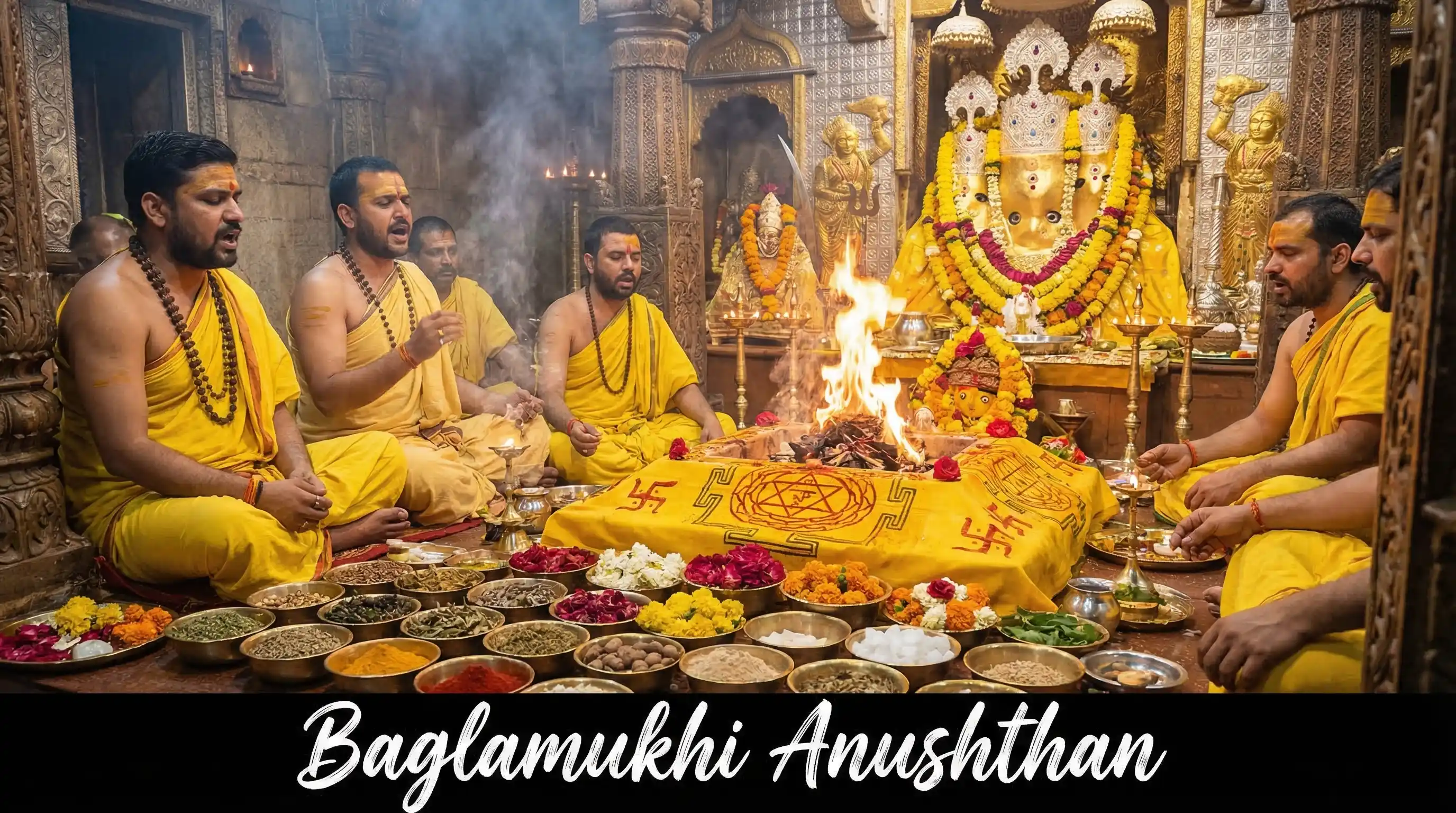
Not everyone can keep a full nine-day observance, and the advanced havan and anushthan should in any case be performed by experienced priests under correct procedure. If you wish, we can perform the puja or havan in your name at Nalkheda, with your sankalp taken correctly and the rituals done at the proper muhurat.

Personalized Sankalp Puja
TRUSTED ANUSHTHAN

Personalized Sankalp Puja

Sankalp taken in your exact name and gotra on opening day (15 July 2026) for divine protection and family well-being.

  • Vedic Ghatasthapana & Kalash Sthapana
  • Name & Gotra Sankalp video update
  • Yellow Pushpa & Haldi Archana
  • Strict adherence to Tantrokt Vidhi
  • Divine protection during the 9 sacred days
9-Day Complete Anushthan
TRUSTED ANUSHTHAN

9-Day Complete Anushthan

The supreme nine-day Mahavidya sadhana with daily mantra japa and grand culminating Purnahuti havan.

  • 9 days of unbroken daily mantra japa
  • Daily photo & progress reports
  • Grand Maha Purnahuti ceremony
  • Dedicated Vedic pandit assigned for your sankalp
  • Complete spiritual shielding for business & family

Devotees outside India - from the USA, UK, Canada, Australia, the UAE, and beyond - can book entirely online. We take your sankalp by name and gotra, send live updates and the puja video over WhatsApp, and ship the tirth prasad to your address. There is no need to travel or worry about time zones.

⏳ Gupt Navratri slots are limited - please book before 15 July 2026.

ABOUT OUR PRIEST & THE NALKHEDA TRADITION

This guide is written by Pandit Vishnu Sharma, Acharya at the Nalkheda Siddha Peeth, who has dedicated over two decades to Baglamukhi worship in the lineage of Pitambara sadhana.

Every havan and anushthan we perform is done with proper sankalp, authentic samagri, correct mantras, and the specific procedures of this tradition - not casually. We have guided thousands of devotees through these rituals, and you can verify our work through our devotees' testimonials.

FREQUENTLY ASKED QUESTIONS

Everything you need to know about Gupt Navratri 2026 Baglamukhi worship.

Ashadha Gupt Navratri 2026 runs from 15 July to 23 July, nine days and nights. Ghatasthapana is performed on the morning of 15 July.

The ten Mahavidyas are worshipped: Kali, Tara, Tripura Sundari, Bhuvaneshwari, Chhinnamasta, Tripura Bhairavi, Dhumavati, Baglamukhi, Matangi, and Kamala. Maa Baglamukhi is a particular focus for protection and victory.

Yes - simple devotional worship, a daily lamp, offerings, and gentle mantra japa can be done at home by anyone. Advanced tantric anushthan, however, should only be done under a qualified guru.

For Baglamukhi devotees, her beej mantra Hleem and her mool mantra (Om Hleem Baglamukhi sarvadushtanam...) are chanted. Learn the correct pronunciation from a knowledgeable guide before serious japa.

No. While it is favoured by sadhaks, householders can observe it with simple, quiet devotion. The secret refers to the inward, private nature of the practice - not to exclusion.

Yellow offerings are traditional: yellow flowers, turmeric, gram, jaggery, and a sesame-oil lamp, placed on yellow cloth before her image or yantra.

Nine days and nights, from 15 to 23 July 2026.

Yes. We take your sankalp by name and gotra, perform the puja in your name, share live updates and the video by WhatsApp, and ship the prasad to your address anywhere in the world.

She is Pitambara, robed in yellow. Yellow is her sacred colour, which is why turmeric, yellow cloth, and yellow flowers are used throughout her worship.

The Gupt Navratris - Ashadha and Magha - are traditionally held to be especially auspicious for Baglamukhi and Mahavidya sadhana.

Disclaimer: The benefits and outcomes described on this page reflect traditional faith and scriptural belief. They are a matter of devotion and are not guaranteed. For serious legal, medical, financial, or personal matters, please also seek appropriate professional advice alongside your spiritual practice.

WhatsApp Consultation
HOME CALL
Book Puja
CHAT PUJAS