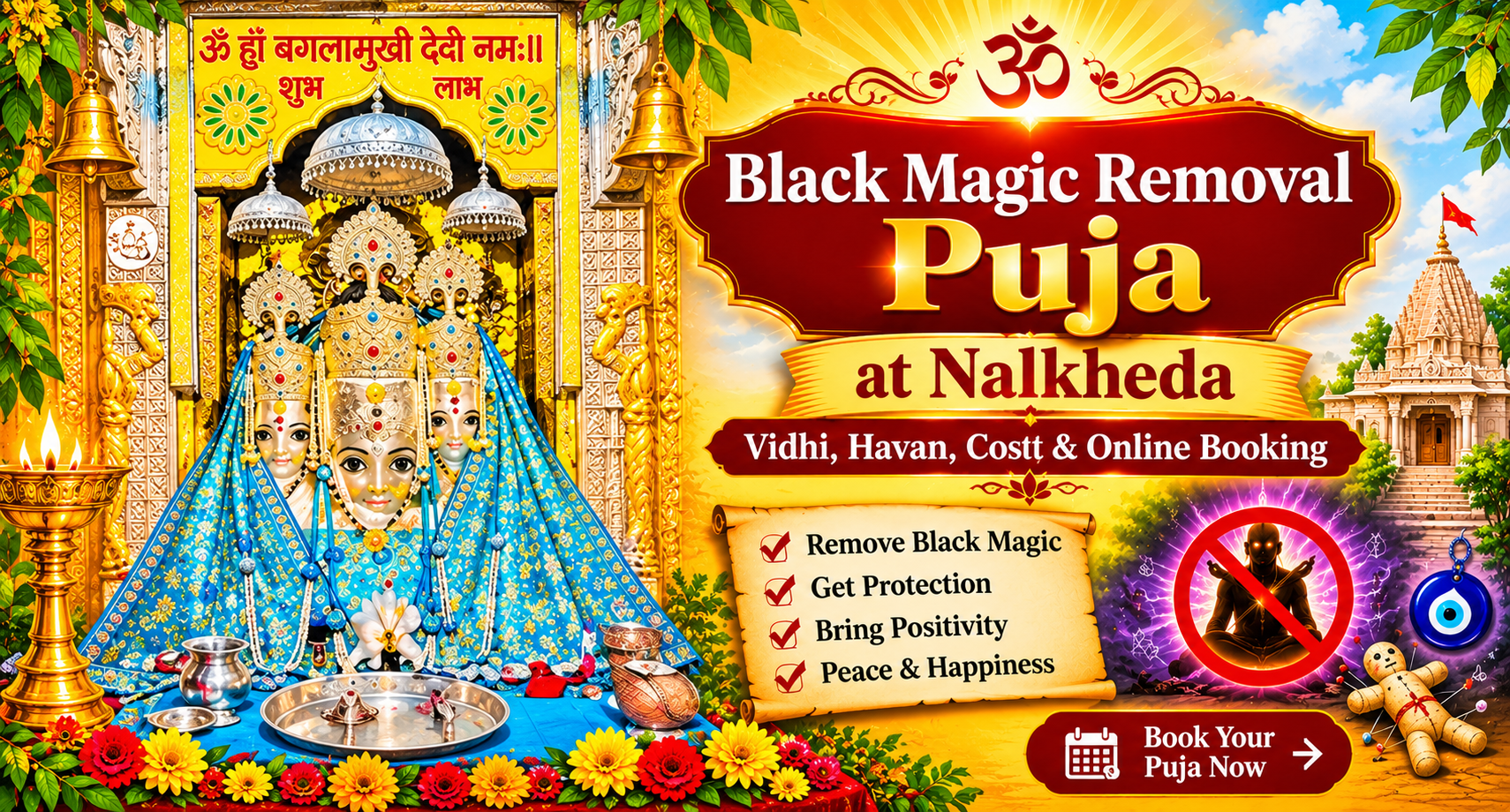
Fear of black magic, evil eye or "heavy energy" is more common than most people admit. It rarely begins as a firm belief. More often it starts with a hard stretch of months, a family quarrel nobody can explain or a run of sleepless nights, and someone says, "Maybe someone has done something." Many Hindu families respond the way their elders did, with prayer. They look for a puja, a Havan or an Anushthan led by a knowledgeable priest.
If that is why you searched for Black Magic Removal Puja, this guide is meant to give you a calm, honest picture. It explains what the term traditionally means, why devotees turn to Maa Baglamukhi for protection, how a typical Vidhi and Havan are arranged, what affects the cost, and how to enquire about a puja at Nalkheda, in person or online. It also says clearly what a puja cannot do.
A note on wording. People search for "black magic removal", but on this website the same devotional practice is offered as Anti-Black Magic Protection, also called Maa Baglamukhi Raksha Puja. The service page describes it as a Raksha worship rooted in Hindu belief, not a diagnostic service and not a guarantee of any outcome. This article follows the same honest framing. You can read more about the goddess on the About Maa Baglamukhi page and about the sacred site on the Nalkheda temple page.
Quick Answer: What Is Black Magic Removal Puja?
Black Magic Removal Puja is a traditional Hindu protection ritual in which a goddess, most often Maa Baglamukhi, is invoked to seek spiritual strength, calm and protection from negative influences. It usually includes a Sankalp, mantra Jaap, offerings, and sometimes a Havan. It is a devotional practice, not a medical or diagnostic service, and results are never guaranteed. Devotees can enquire about puja arrangements at Nalkheda through the website's booking page.
What Is Black Magic Removal Puja?
In many Indian households, ideas such as black magic (often called tantra badha), evil eye (nazar dosh) and negative energy are part of a long cultural and spiritual tradition. They are not unique to Hinduism. Cultures across the world have their own words for the feeling that someone's ill will, envy or hostility can affect a person's life.
Within Hindu worship, the traditional answer to this fear has never been panic. It has been devotion. A devotee takes a Sankalp (a sacred vow stating name, gotra and intention), invokes a protective deity, chants mantras and offers prayers, often with fire offerings. The aim is spiritual shelter and inner steadiness. This is why the website's evil eye and Nazar Dosh page and its page on negative energy removal both frame the practice as devotional support.
Why do people seek such a puja? Usually because they want reassurance. Someone may feel uneasy at home, restless at night, drained after a long period of misfortune, or simply unable to shake a sense of heaviness. A ritual gives that feeling a structure: a clear intention, a set of prayers, a priest who guides the process and a moment of closure.
Belief and verified fact are different things
It is important to be honest here. There is no scientific evidence that black magic can cause illness, financial loss or broken relationships. Many of the experiences people attribute to it, such as persistent fear, poor sleep, anxiety, low mood or repeated bad luck, can have medical, psychological or practical explanations. A puja is a matter of faith and tradition. It can offer comfort and a sense of direction, but it is not a test that proves someone has been "affected," and it should never replace a doctor, a counsellor, a lawyer or a financial adviser.
If you take only one thing from this article, let it be this: the right way to approach a protection puja is with faith and with common sense together.
Explore Maa Baglamukhi Black Magic Removal Puja on the service page
Why Is Maa Baglamukhi Worship Associated With Protection?
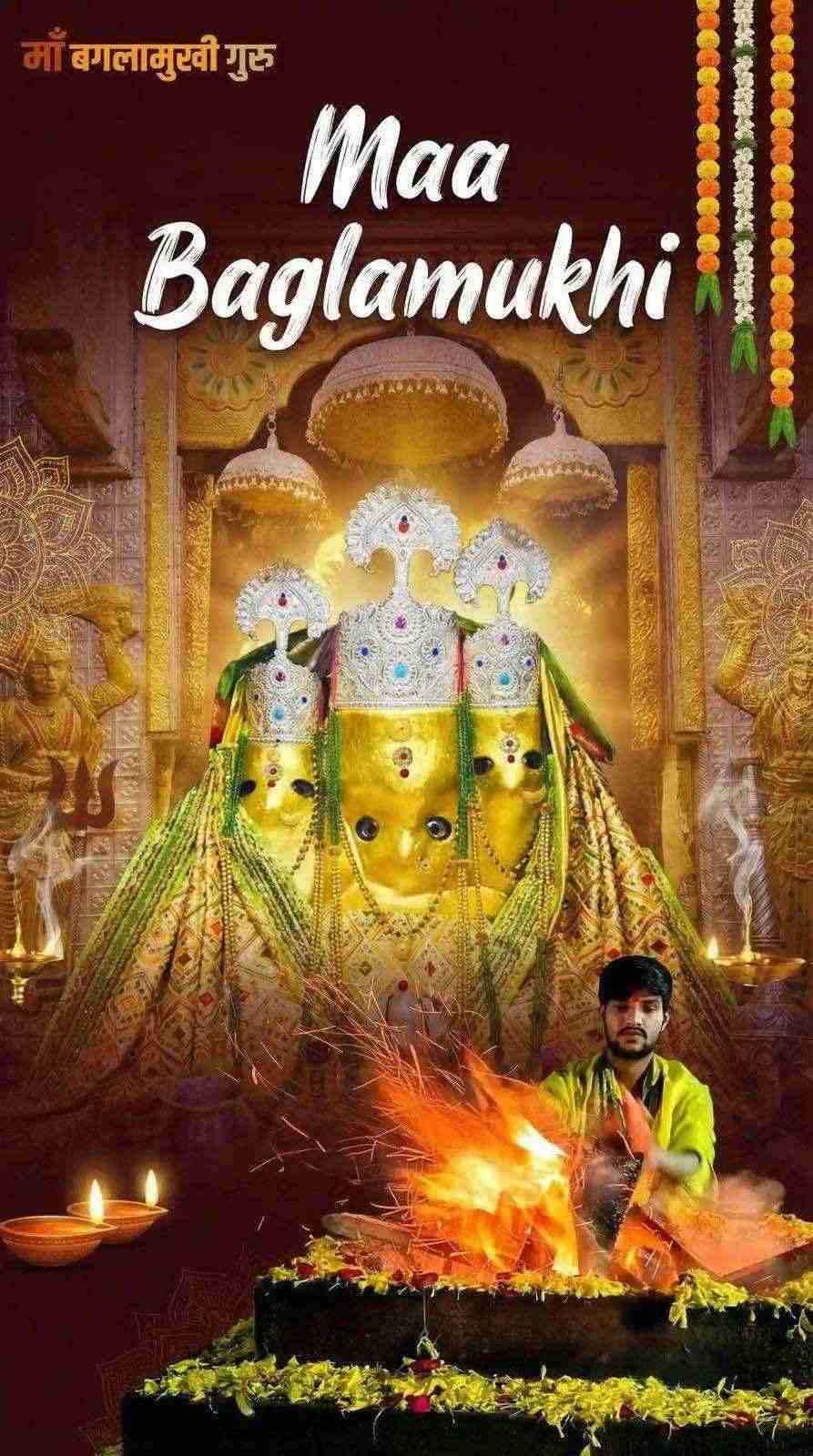
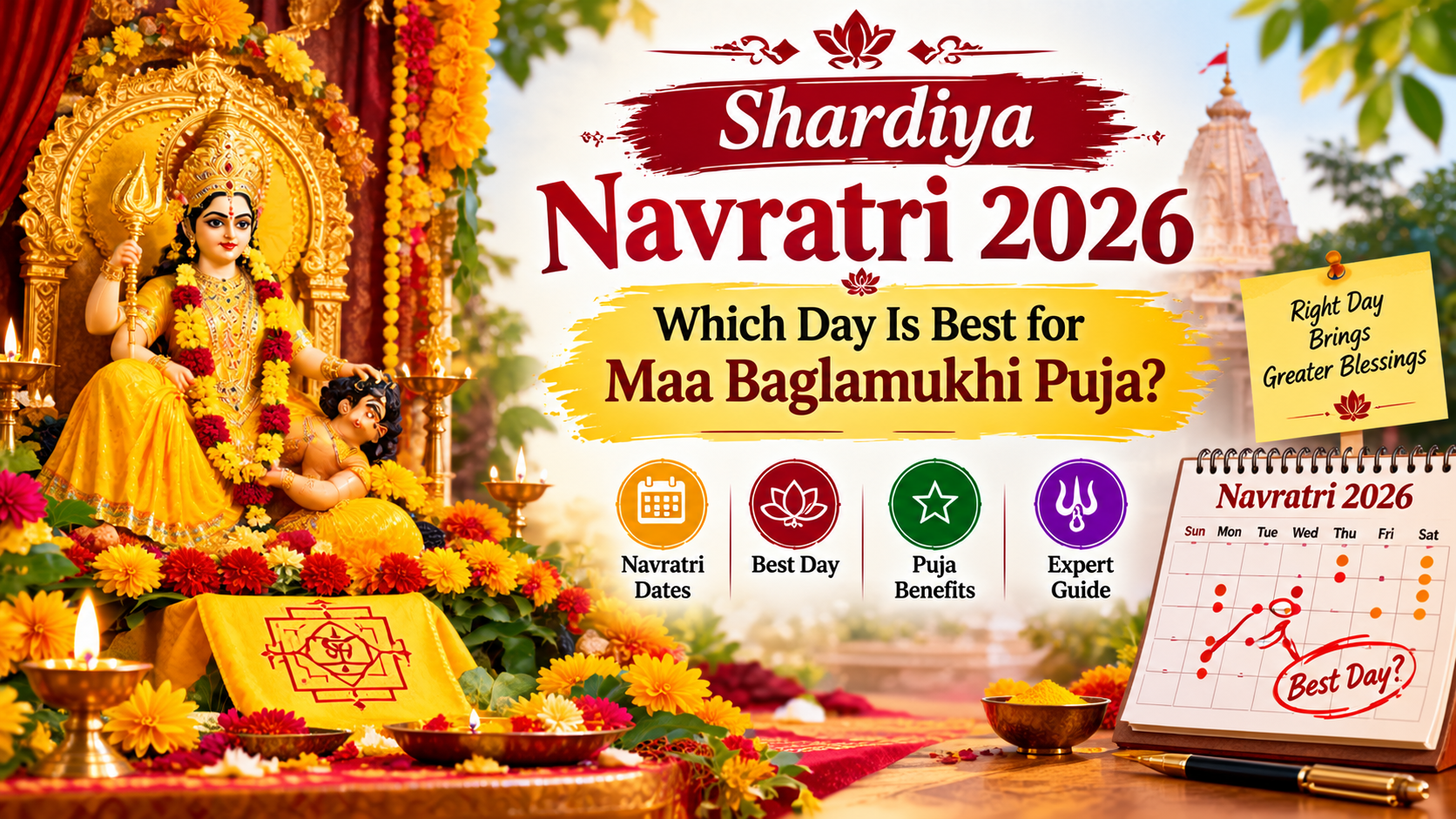
Maa Baglamukhi is regarded as the eighth of the ten Mahavidyas, the Dasha Mahavidya or "ten great wisdom goddesses" of the Shakta tradition. Reference sources such as Drik Panchang describe her name as linked to the Sanskrit word for a bridle, the headgear used to control a horse. Hence she is understood as the goddess who can restrain and bring to a standstill. Our own article on Maa Baglamukhi's story and Stambhan Shakti tells the traditional narrative in more detail.
Three ideas appear again and again in how she is described.
Stambhan Shakti. Stambhan means stopping, arresting or stilling. In tradition, Baglamukhi's defining power is to halt hostile speech, harmful intent and chaos. Devotees therefore see her as a shield in difficult phases.
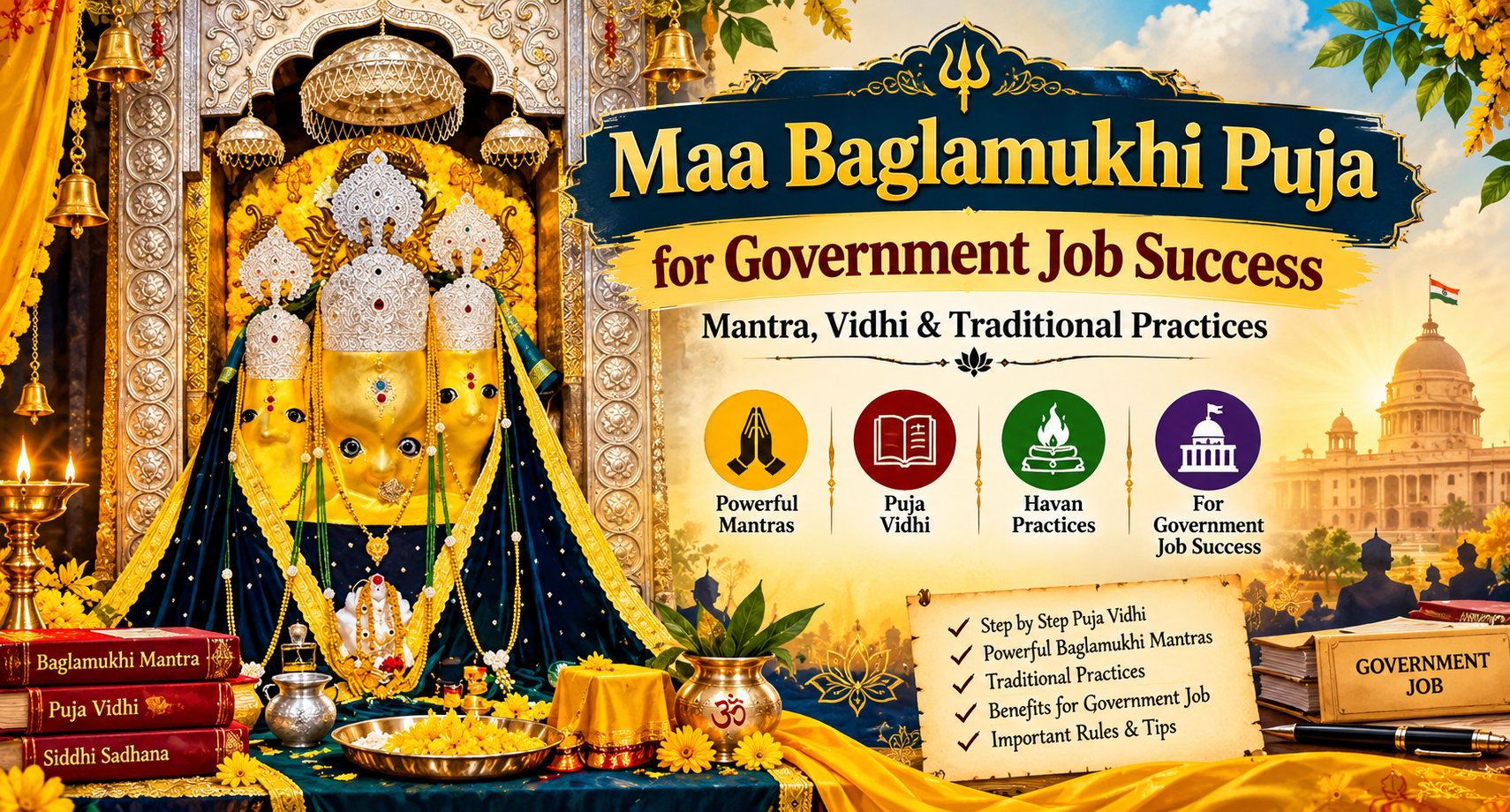
Pitambara Devi. She is called "the one clothed in yellow." Turmeric, yellow flowers and yellow sweets are part of her worship, and the colour is associated with purity, auspiciousness and focus. Many devotees wear yellow on the day of the puja.
Vaak Siddhi. She is also revered as the goddess of speech, which is why people pray to her before courtrooms, negotiations and difficult conversations.
The legend most often retold says that when a destructive storm threatened creation, the goddess emerged from the Haridra Sarovar, the turmeric-coloured lake, and stilled it. Whether one reads this literally or symbolically, the message is the same. Her grace is invoked to bring stillness where there is turmoil.
It is worth noting a quieter reading that many practitioners also share. Stambhan can be turned inward: the ability to pause before reacting, to still anger and fear, and to choose speech and action carefully. For a person who is frightened or restless, that inward meaning may be the most useful part of the worship.
Why Do Devotees Choose Nalkheda for Maa Baglamukhi Puja?
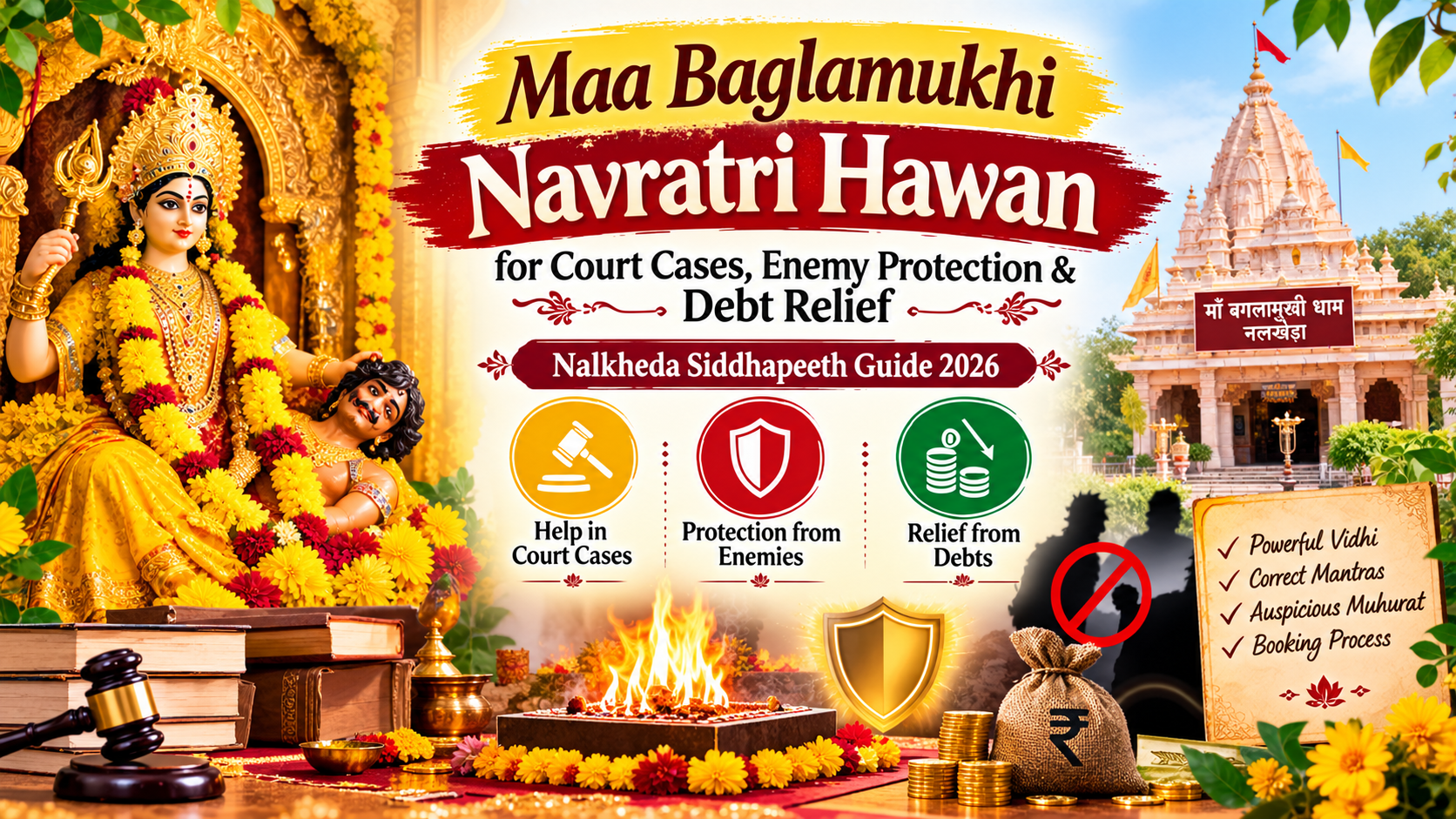
Nalkheda is a town in the Agar Malwa district of Madhya Pradesh, and it is home to one of the best-known Baglamukhi temples in India. The temple stands on the banks of the Lakhundar river, a tributary of the Narmada. It is widely described as one of the three historic Baglamukhi Siddhapeeths of the country, and local tradition connects its origins to the Mahabharata era. The deity is often described as Trishakti, a form combining three powers, and many devotees speak of the image as self-manifested (Swayambhu).
These descriptions come from tradition, public reference sources and devotee accounts, and they are best read as such. This article does not claim anything about the temple's official arrangements beyond what the temple and the authorities themselves announce. If you plan to visit, check current darshan details on the website's pages for temple timings and the temple address before travelling.
What draws devotees is the belief that worship at a Siddhapeeth carries special weight. For many, being able to have a Sankalp taken in their name at Nalkheda, even from another city or country, makes the puja feel connected to a place they trust.
Traditional Black Magic Removal Puja Vidhi
The exact order of a ritual depends on the priest, the lineage and the type of worship chosen. The website's service page describes the general sequence of its protection puja as follows, and it matches the broad pattern of Baglamukhi worship found elsewhere.
Sankalp and Ganpati invocation. The priest recites your name, gotra and intention. Lord Ganesha is worshipped first so that the ritual proceeds without obstacles.
Invocation of Maa Baglamukhi. The goddess is invited with her traditional Raksha mantras.
Mantra Jaap and yellow offerings. Mantras are chanted while turmeric, yellow flowers and naivedya are offered.
Havan, where included. In the Havan and Anushthan formats, offerings are made into the sacred fire, concluding with Purnahuti.
Aarti and concluding prayers. The worship closes with aarti, prayers in the devotee's name, and blessings of Raksha.
Our detailed guide to the Baglamukhi Puja Vidhi and the Pujan Vidhi page go deeper into each step, and the Baglamukhi Puja service page explains the single-day worship.
What the website says about the formats
The service page lists three formats for the protection ritual:
Single-day Protection Puja. A focused prayer by an experienced acharya with a Sankalp in your name and gotra, offerings of turmeric and yellow flowers, and either live online darshan or in-person attendance.
Protection Havan. One or two acharyas perform a complete Havan with Mantra Ahutis, concluding with Purnahuti and aarti, and a full recording is shared with the devotee.
Raksha Kavach Anushthan. A longer worship of 11, 21 or 36 days with daily mantra Jaap, concluding with a Havan and Maha Purnahuti, with daily photo and video updates.
Remember that ritual details can vary. Always ask the team to confirm what your chosen format will include.
Enquire About Puja Arrangements in Nalkheda
Maa Baglamukhi Mantra for Protection
The mantra most commonly associated with Maa Baglamukhi is her root mantra, usually called the Moola Mantra. As found in standard reference collections such as Ved Panchang and explained on the website's Moola Mantra page, it reads:
ॐ ह्लीं बगलामुखि सर्वदुष्टानां वाचं मुखं पदं स्तम्भय जिह्वां कीलय बुद्धिं विनाशय ह्लीं ॐ स्वाहा
Om Hleem Baglamukhi Sarva Dushtanam Vacham Mukham Padam Stambhay Jihvam Kilay Buddhim Vinashay Hleem Om Swaha
Written forms differ slightly between sources and lineages, so please confirm the exact text and pronunciation with a knowledgeable guide before you begin.
Simple meaning. "Om Hleem" is the seed sound of the goddess. The rest is a prayer to Baglamukhi to still the speech, the face and the steps of all harmful forces, to hold their tongue, and to undo harmful thinking. It ends with Swaha, a ritual offering.
How to read it. Traditionally the mantra is addressed to hostile and harmful forces in general. It is not meant to be aimed at a named person, and a responsible acharya will not ask you to do that. Many devotees find the inward reading more helpful: asking the goddess to still their own fear, angry words and restless thoughts.
General chanting guidance.
Many practitioners chant in a clean, quiet place, often wearing yellow and using a turmeric rosary, though the details vary by tradition.
Pronunciation matters. The seed sound "Hleem" in particular is easy to get wrong when learning from text alone.
The website's own mantra material recommends receiving the mantra from a guru for intensive Jaap, and it covers rules and timing in the guide on the best time and rules for chanting Baglamukhi mantra.
For a gentler start, many devotees begin with the Baglamukhi Beej Mantra and then read the notes on mantra Jaap.
Chanting is a spiritual practice. It does not guarantee protection, and nobody can honestly promise that a mantra will remove black magic or any other problem.
Role of Havan in Traditional Baglamukhi Puja
A Havan (also spelt Hawan) is a Vedic fire ritual. Agni, the fire, is treated as the carrier of offerings to the deity. As each mantra is chanted, the priest or the devotee makes an offering, called an Ahuti, into the fire. The ritual ends with Purnahuti, the final complete offering.
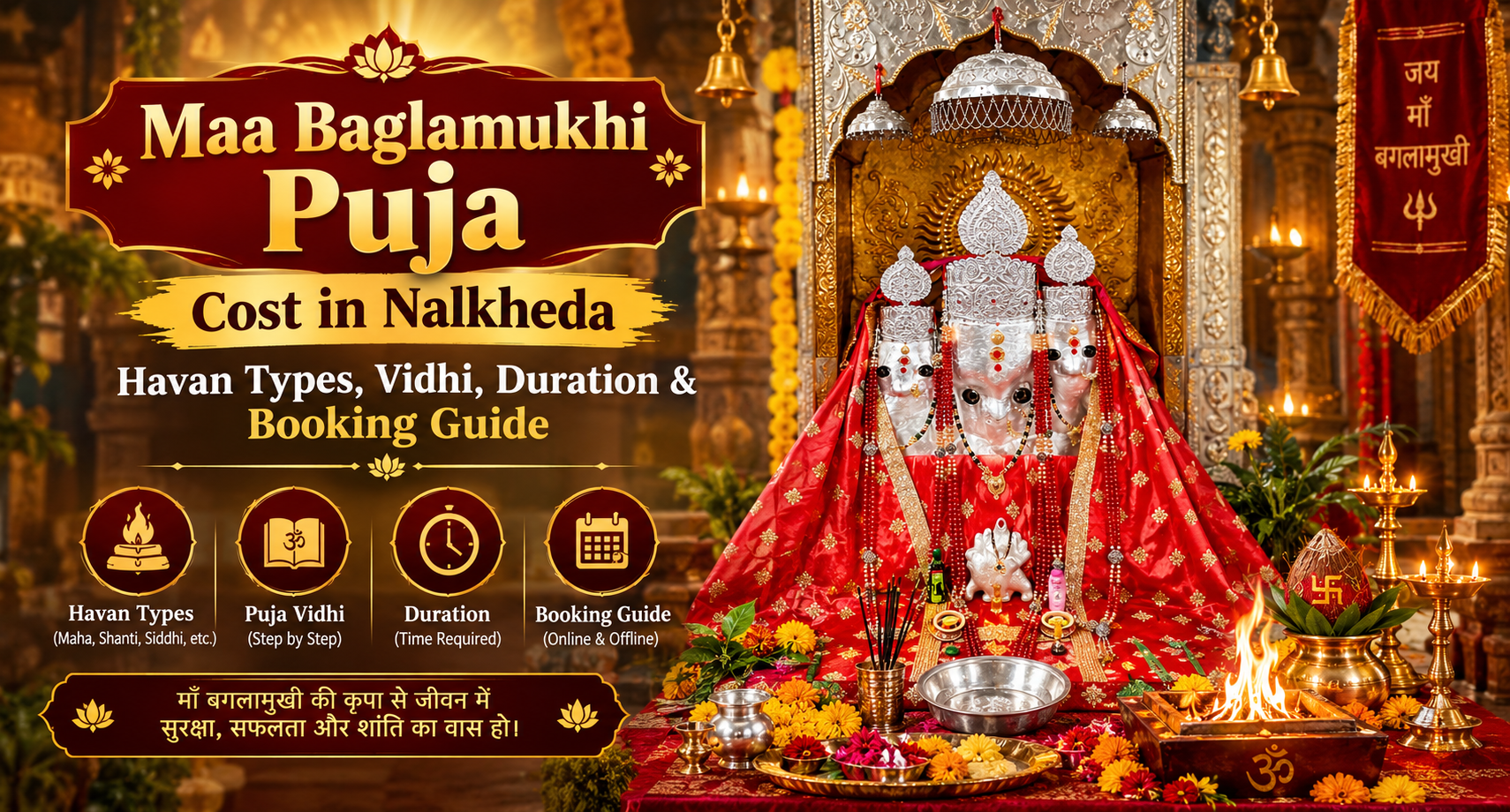
In a Baglamukhi Anushthan, a Havan usually comes at the end of a period of Jaap. The idea is that the mantra repetitions are completed and sealed with fire offerings. According to the service page, Protection Havan Ahutis use turmeric, ghee and sacred herbs, and the wider worship uses yellow flowers and yellow sweets. The website's Havan Samagri page lists materials commonly used in Havan worship, and the Baglamukhi Havan service page explains how the website arranges it.
Why can two Havans look very different? Because the number of priests, the mantras, the quantity of samagri, the number of Ahutis and the time taken all vary with the lineage and the purpose. This is also why two quotes for a "Havan" are not directly comparable.
For a fuller explanation, read the website's Baglamukhi Havan guide. Devotees who prefer a longer, structured worship can read about the Baglamukhi Anushthan.
Contact the Team for Puja Details
How Long Does the Puja or Anushthan Take?
There is no single answer, because "puja" can mean very different things.
A single-day puja is described on the service page as completed in one sitting.
A Havan is described as taking a few hours.
An Anushthan involves daily Jaap over several days. The service page lists the Raksha Kavach Anushthan as 11, 21 or 36 days, concluding with a Havan.
Different pages on a website, or different providers, may describe the length of an Anushthan differently. So when you enquire, ask for the exact number of days, the daily time commitment, and whether you are expected to join live on particular dates. The right format is best decided through a conversation with the team, not guessed from a blog post. If you want to compare cost and duration side by side, the website has a separate guide on Maa Baglamukhi puja cost in Nalkheda.
Black Magic Removal Puja Cost in Nalkheda
Many readers want a number. This article does not give one, for a simple reason: the website's service page does not publish a fixed price for this puja, and inventing one would mislead you. Please use the booking page or the website's cost guide for India for current details.
What it can do is explain what usually changes the cost of any Baglamukhi ritual:
Type of worship. A single-day puja, a Havan and a multi-day Anushthan are different scales of effort.
Number of priests. The service page mentions one or two acharyas for a Havan and senior acharyas for an Anushthan.
Mantra Jaap requirement. More days and more repetitions mean more priest time.
Havan arrangements. The quantity and quality of samagri, ghee and offerings differ.
Duration and complexity. An 11-day worship is not priced like a one-sitting prayer.
Extras. Photo and video updates, a recording, prasad delivery and shipping abroad may or may not be included.
Prices for similar rituals vary widely across providers. A lower number is not automatically better, and a higher number is not automatically more authentic. Compare what is included, not the headline figure.
The booking page states that no advance payment is taken and that payment is made after the puja is complete. Because other parts of the site describe the payment process more generally, it is sensible to ask for the exact payment terms in writing and to read the website's refund and cancellation policy before you proceed.
Can You Book Black Magic Removal Puja Online?
Yes. According to the website, devotees can book Baglamukhi pujas online and take part from anywhere. The service page says the puja is performed by acharyas at Nalkheda while you join live by video call, and that you may also attend in person. The website also states that bookings are accepted from devotees abroad, and has a page for NRI puja online and one on online Baglamukhi puja.
How the booking process works
Open the booking page. Go to the booking page. The form lets you choose a ritual type. One of the options is "Black Magic / Nazar Removal - Protection from negative energy."
Submit your details. The website says it usually asks for your full name, gotra (if you know it), contact details, location, the ritual you prefer, and a short description of your concern. You can also contact the team through WhatsApp or the contact page.
Wait for the callback. The booking page says the team will call back within 30 minutes. A short, private discussion follows in which the format, date and time (muhurta) are agreed.
Confirm the Sankalp. The Sankalp is taken in your name and gotra. Bookings can also be made on behalf of a family member.
Take part and receive updates. Depending on the format, you join live and receive photos, video clips or a recording, along with prasad guidance.
Keep in mind that what the website lists today may change, so confirm any facility you are counting on, whether live video, a recording, prasad shipping or time-zone arrangements for devotees abroad, before you confirm the booking.
If you want to understand who conducts the rituals, the website has an Acharya profile page. For general questions, check the FAQ page.
Things to Check Before Booking Any Puja
A good provider welcomes questions. Before you pay anything, ask:
What ritual is being performed? A Puja, a Havan and an Anushthan are different. Ask for the exact name.
What is included in the quoted amount? Samagri, priest dakshina, photos or video, recording, prasad, courier charges.
How long will it take? Number of days, daily duration, and your own role.
Who will conduct the ritual? Ask whether it is the named acharya or another priest from the team.
Are there additional charges? For example, extra Ahutis, upgrades, or international shipping.
What confirmation will you receive? A written summary, a date and time, and proof such as photos or video.
What are the payment and refund terms? Get them in writing.
Is your privacy protected? The service page says personal concerns and recordings are kept private.
Be careful with anyone who demands large payments quickly, uses fear to create urgency, or claims they can tell from a phone call that you are "under attack." Honest priests do not need to frighten you into booking.
What Should Devotees Keep in Mind?
Follow the priest's guidance. If you are given simple observances, such as wearing yellow, eating sattvik food on the day and keeping your mind calm, follow them in a relaxed way. They are there to help you focus, not to add worry.
Avoid fear and panic. The service page itself says the traditional Hindu response has always been devotion, not fear. A puja is not an emergency treatment. You do not need to decide in a hurry.
Do not trust guaranteed results. Nobody can promise that black magic will be removed, that an enemy will be defeated or that a problem will vanish. The website's disclaimer says that no guaranteed results or cures are promised, and that is the standard to expect from any provider.
Do not make major life decisions out of fear. Avoid quitting a job, ending a relationship, selling property or taking on debt because of a spiritual claim.
Look for practical and professional help where needed. If you or someone in your family is experiencing intense fear, intrusive thoughts, long-lasting sleep problems, severe anxiety or thoughts of self-harm, please speak to a doctor or a qualified mental health professional. Legal disputes need a lawyer and money problems need a financial adviser. Devotional practice can sit beside that help but cannot stand in for it. The service page encourages the same approach.
Keep your own routine going. A few minutes of quiet prayer each day, good sleep, regular meals and the company of people you trust are all part of feeling protected.
Frequently Asked Questions
1. What is Black Magic Removal Puja?
It is a traditional Hindu protection ritual in which a deity, often Maa Baglamukhi, is worshipped to seek spiritual strength, calm and protection from negative influences. It is a devotional practice, not a diagnosis or a medical treatment.
2. Why is Maa Baglamukhi worship associated with protection?
She is regarded as the eighth Mahavidya and is associated with Stambhan Shakti, the power to stop and still hostility and chaos. Devotees therefore turn to her for courage and spiritual shelter.
3. Where can devotees perform Maa Baglamukhi Puja in Nalkheda?
The website says its pujas are performed at Nalkheda, the seat of the Baglamukhi Siddhapeeth, and can be attended in person or watched online. Confirm the exact venue and arrangements when you enquire.
4. What is the traditional Vidhi of Black Magic Removal Puja?
It generally includes Sankalp, Ganpati invocation, invocation of Maa Baglamukhi, mantra Jaap with yellow offerings, a Havan where included, and aarti. Details vary by priest and tradition.
5. Which Maa Baglamukhi mantra is traditionally chanted for protection?
The root (Moola) mantra, beginning "Om Hleem Baglamukhi," is the best known. Learn the exact text and pronunciation from a knowledgeable guide, and treat chanting as a spiritual practice, not a guarantee.
6. Is Havan included in Black Magic Removal Puja?
Not always. According to the service page, a single-day puja does not necessarily include a Havan, while the Havan and Anushthan formats do. Ask which format you are booking.
7. How long does the puja take?
A single-day puja is described as one sitting and a Havan as a few hours. An Anushthan runs over several days. Ask for the exact schedule before you confirm.
8. What affects the cost of Black Magic Removal Puja?
The type of worship, number of priests, Jaap requirement, Havan arrangements, samagri, duration and any extras such as recordings or shipping. Check the booking page for current details.
9. Can I book Black Magic Removal Puja online?
Yes. The website offers an online booking form, WhatsApp contact and live participation. Select the "Black Magic / Nazar Removal" option on the booking page.
10. Can devotees living outside India enquire about puja arrangements?
Yes. The website states that devotees abroad participate regularly and that the Sankalp is taken in their name. Ask the team about timings for your time zone.
11. What is the difference between Baglamukhi Puja and Baglamukhi Havan?
A puja is a worship with mantras and offerings. A Havan adds fire offerings, usually with more priests and time. An Anushthan is a longer cycle of daily Jaap that normally ends with a Havan.
12. What should I ask before booking a puja?
Ask what ritual is performed, what the quote includes, how long it takes, who conducts it, whether extra charges apply, and what confirmation you will receive.
13. Is there a specific day for Maa Baglamukhi worship?
Many devotees associate Tuesday with her worship, and she is also honoured during Navratri and on Baglamukhi Jayanti. Your priest may suggest a muhurta based on your situation.
14. Can students and working professionals also perform Maa Baglamukhi Puja?
Yes. Devotion is open to anyone. Students and professionals often choose a short puja or simple daily prayer. It should supplement, not replace, study, work and planning.
15. Does Black Magic Removal Puja guarantee results?
No. The website states plainly that it does not guarantee removal of curses, elimination of negative energy or any specific outcome. A puja offers spiritual support and reassurance.
16. Can a puja be booked for a family member or for a house?
Yes. The website says family members often book on behalf of loved ones, and a joint Sankalp can include multiple names.
17. Should I see a doctor before booking a puja?
If you are having symptoms such as ongoing fear, poor sleep or low mood, please consult a doctor or mental health professional first or alongside the puja. Both can go together.
18. How do I know if a provider is genuine?
Look for transparent pricing, a clear description of the ritual, no fear tactics, no guaranteed outcomes and written confirmation. If something feels pressured, take time to decide.
Conclusion: Approach the Puja With Faith and Clarity
Maa Baglamukhi is worshipped across India as a protective goddess, and Nalkheda is one of the places where devotees most often seek her blessings. A Black Magic Removal Puja is best understood as a devotional practice that offers reassurance, a sense of Raksha and a calmer heart. It is not a diagnosis, not a medical remedy and not a guarantee.
What matters most before you book is clarity. Know which ritual is being performed, what the cost includes, how long it takes, who conducts it and what confirmation you will receive. Clear communication protects you, and it also respects the tradition.
If you would like to go ahead, you can read about the ritual on the Anti-Black Magic Protection service page and submit an enquiry on the booking page. Take your time, ask your questions, and keep looking after your health, your family and your daily routine alongside your prayers.
Explore the service page | Book a Maa Baglamukhi Puja