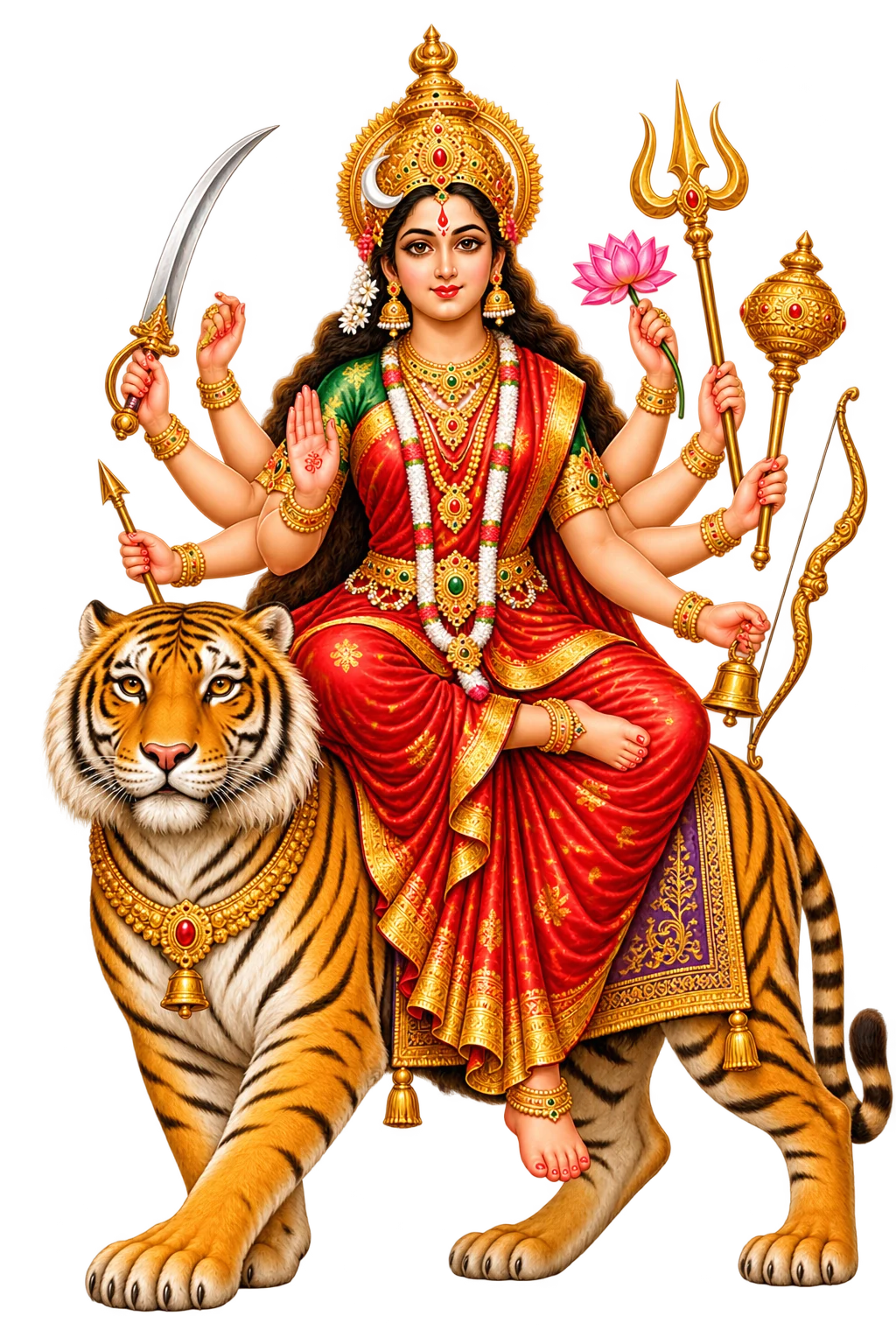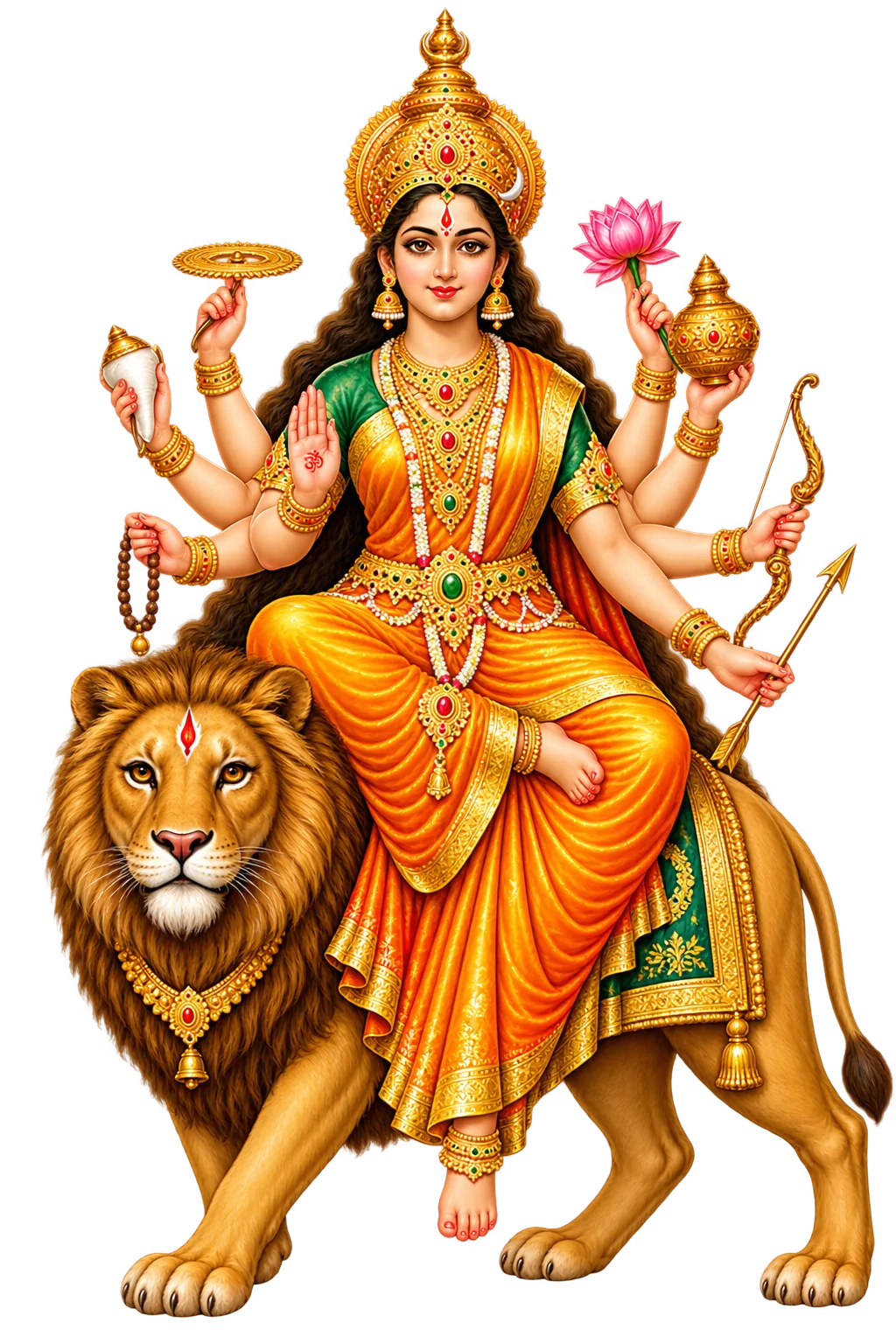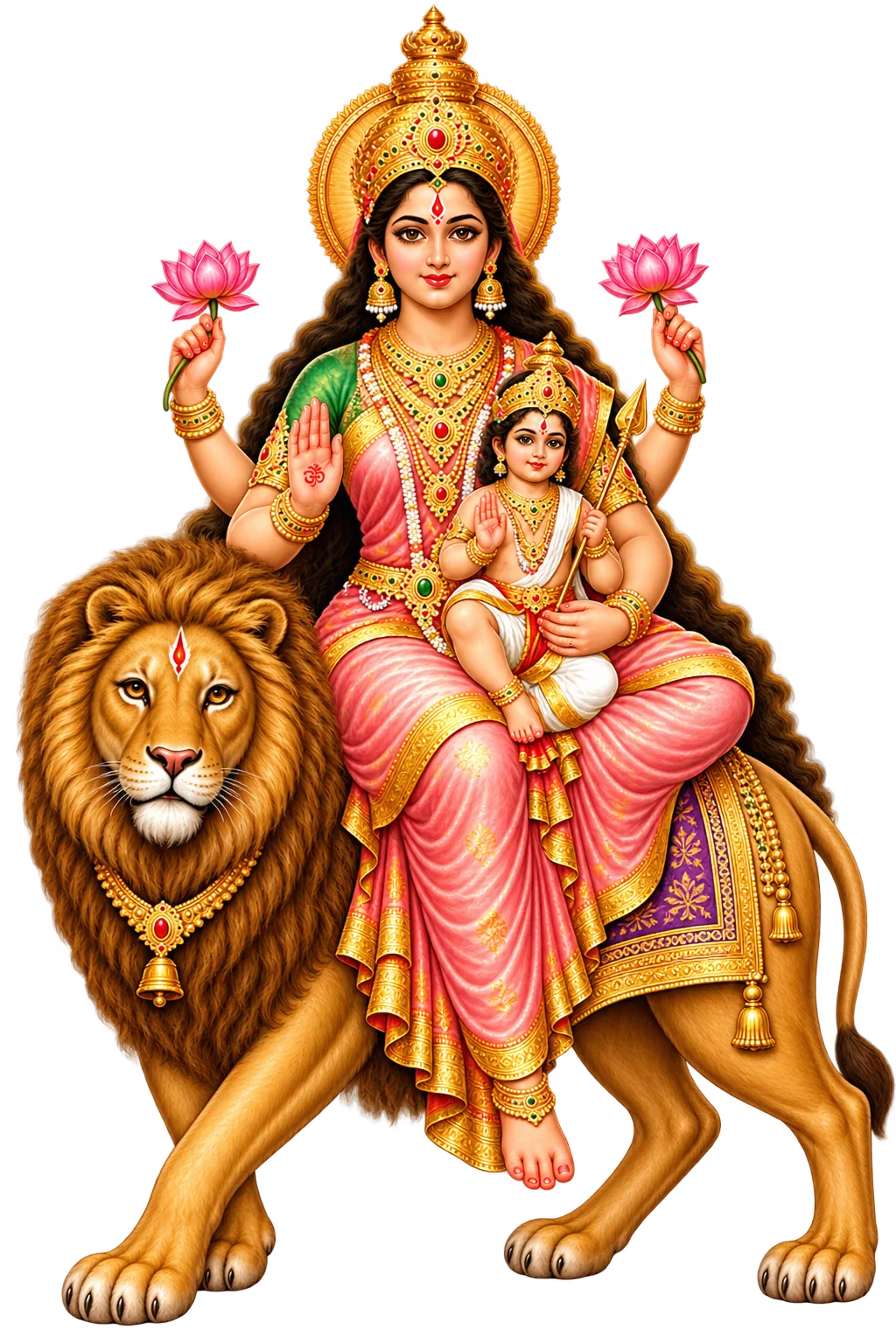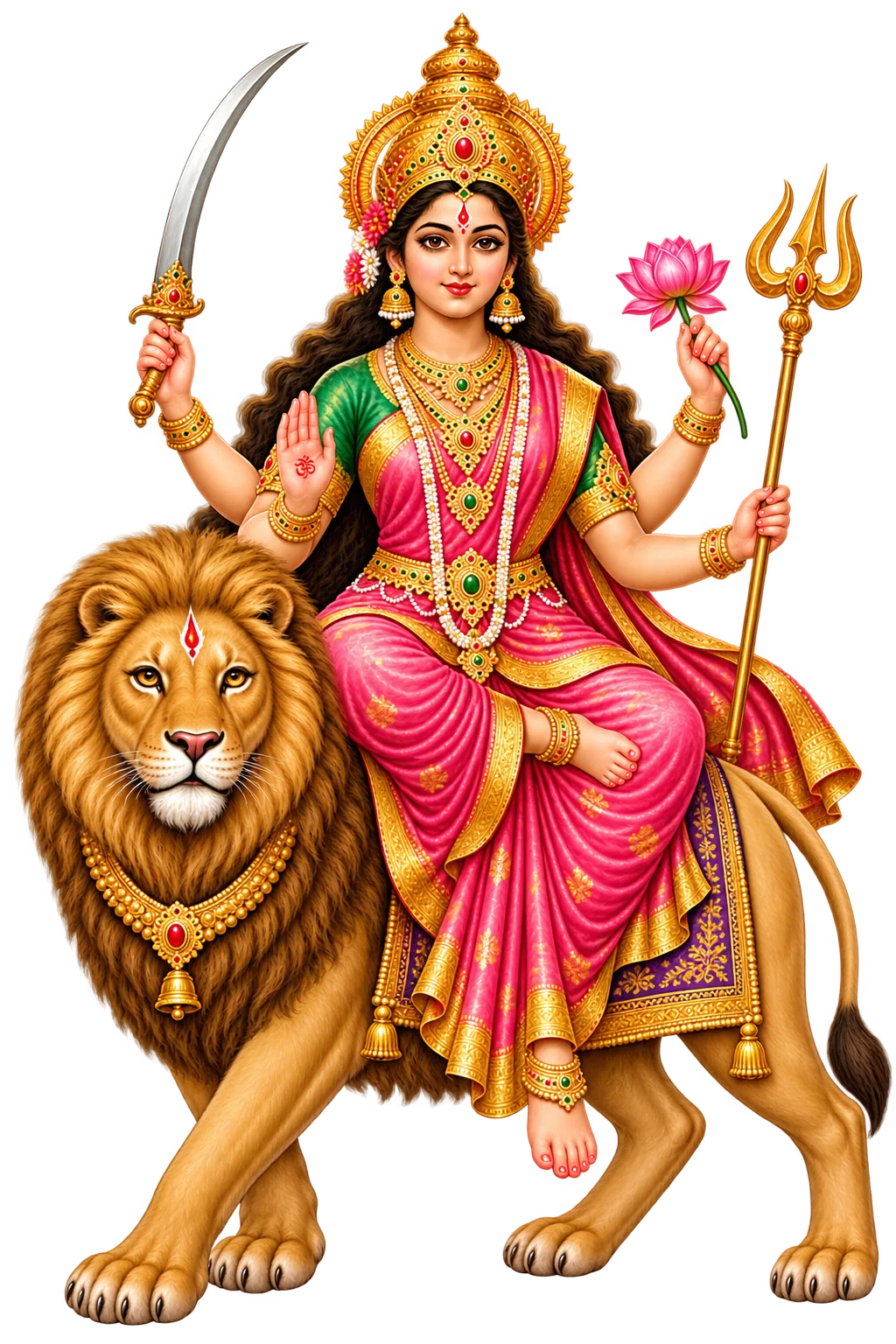
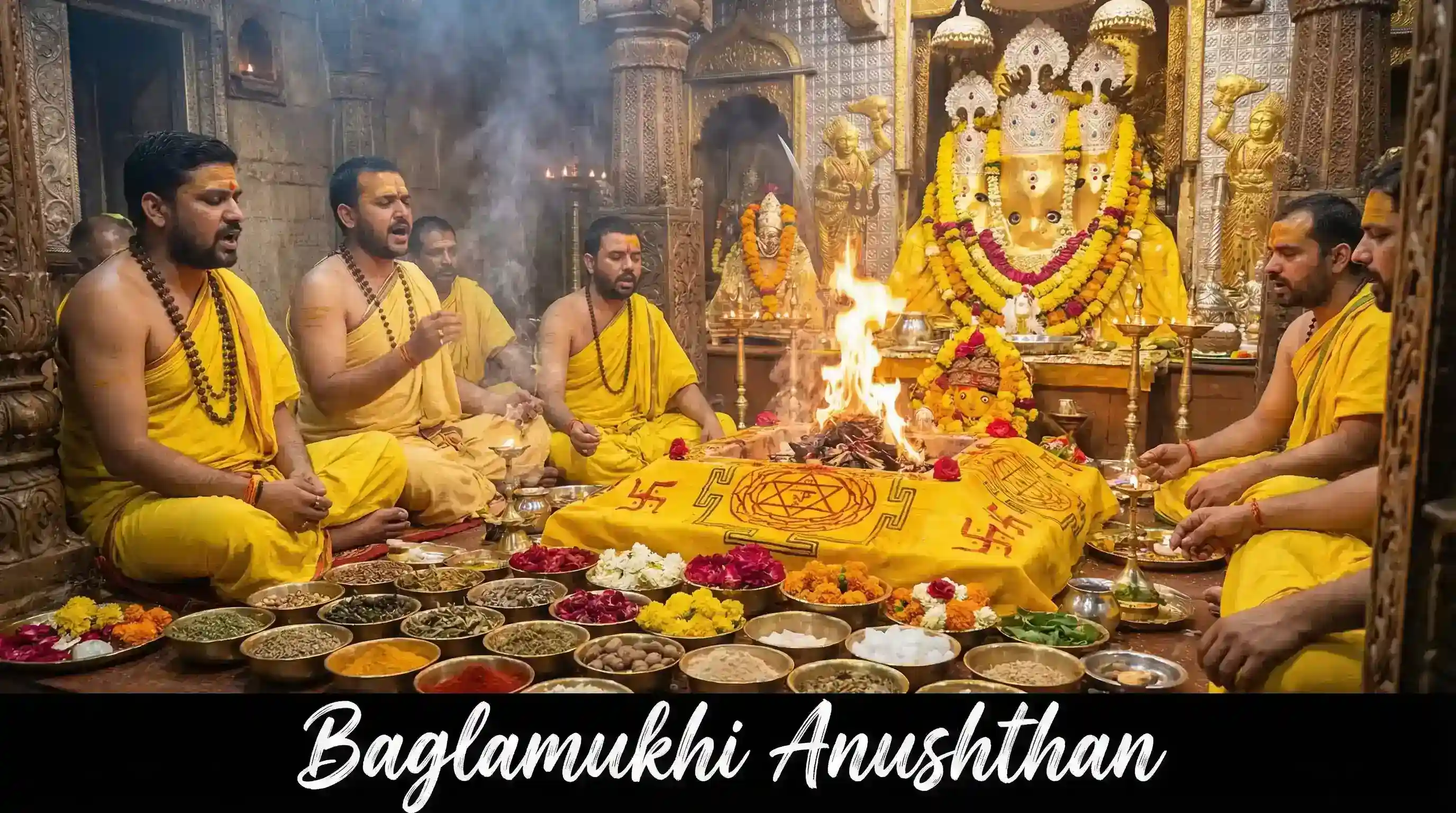
Among all Vedic spiritual disciplines dedicated to the Ten Mahavidyas, an Anushthan represents the highest level of vowed devotion, mental fortitude, and ritual precision. Unlike a standalone hawan that is concluded within a few hours, a Maa Baglamukhi Anushthan is an extended sadhana conducted across 9, 11, 21, or 36 days. Centered around fixed daily counts of the sacred Mool Mantra and culminating in a classical Dashansh Hawan (a sacred fire oblation equal to one-tenth of the total mantra japa), this ritual builds an unbroken continuity of prayer designed to remove deep-rooted obstacles, protect families, and foster divine grace.
1. What is an Anushthan? The Science of Vowed Continuity
The Sanskrit word Anushthan implies disciplined execution of a sacred vow (Niyama) with an unwavering focus on a specific sankalp. When an individual faces drawn-out court trials, systemic career stagnation, intense personal opposition, or long-standing negative energy, ordinary brief prayers may feel insufficient. An extended sadhana serves three critical spiritual purposes:
- Purification of the Chitta (Mind): The daily chanting of thousands of mantras purifies the practitioner's subconscious impressions, dissolving anxiety and replacing doubt with unshakable conviction.
- Accumulation of Tapasya: Daily disciplined observance creates an energetic momentum that pierces through karmic obstructions.
- Consecration of Divine Grace: Pitambara Devi's Stambhan Shakti is invoked continuously, creating a durable spiritual shield around the devotee's household.
To understand the comprehensive offerings available at Nalkheda, explore our dedicated Maa Baglamukhi Anushthan Service.
2. The Formula of Dashansh: Hawan, Tarpan, Marjan & Brahmana Bhojan
In classical Tantric and Vedic texts (such as the Mantra Mahodadhi and Sharda Tilak), no japa sadhana is deemed complete without the fivefold fulfillment known as Panchang Siddhi. The mathematical progression is strictly maintained:
- Mantra Japa: The primary vow, typically 1,25,000 mantras (Sava Lakh Japa) distributed evenly across the chosen duration.
- Dashansh Hawan (10%): Exactly one-tenth of the total japa count—meaning 12,500 ahutis (oblations)—must be offered into the consecrated sacrificial fire using pure ghee, yellow mustard, and specific samagri.
- Dashansh Tarpan (1%): One-tenth of the hawan count (1,250 offerings) is dedicated with sanctified water and milk to satisfy the deity and divine energies.
- Dashansh Marjan (0.1%): One-tenth of the tarpan count (125 sprinklings) is used to purify the seeker with consecrated water and sacred Kusha grass.
- Brahmana Bhojan: Feeding virtuous Vedic Brahmins and offering dakshina to conclude the vow and seal the spiritual merits.
For devotees seeking guidance on samagri and sacred offerings for the fire ceremony, refer to our detailed Nalkheda Hawan Vidhi Guide and the Lal Mirch Hawan Guide.
3. Duration Options and Daily Roster at Nalkheda
Depending on the urgency of the devotee's situation and the guidance of Acharya Pandit Vishnu Sharma, three primary formats of Anushthan are conducted at Nalkheda:
- 11-Day Anushthan (31,000 Japa): Ideal for resolving emerging conflicts, family discord, and academic or career hurdles. Conducted with 2-3 initiated pandits.
- 21-Day Anushthan (51,000 to 1,25,000 Japa): Designed for prolonged legal disputes, property litigation, and complex business friction. Conducted with 3-5 pandits.
- 36-Day Sava Lakh Maha Anushthan (1,25,000 Japa): The classical golden benchmark of Vedic sadhana. Five to seven pandits maintain strict brahmacharya and continuous chanting to fulfill the complete 1.25 lakh vow with full Dashansh Hawan.
4. Devotee Preparation and Rules (Niyama) During Anushthan
While the Vedic pandits at Nalkheda perform the rigorous chanting on behalf of the devotee, the sponsor of the sankalp is expected to maintain sacred decorum at home:
- Strict Vegetarianism & Purity: Refrain from onion, garlic, alcohol, and non-vegetarian food throughout the duration of the sadhana.
- Brahmacharya & Calm Speech: Observe mental and physical restraint; avoid anger, loud arguments, and deceitful conduct.
- Daily Lamp Lighting: Devotees are encouraged to light a mustard oil or ghee lamp facing north or east in their own prayer room during morning and evening sandhyas.
- Regular Progress Tracking: Join the daily live video link or review the high-resolution timestamped updates sent via WhatsApp by the ashram team.
5. Online Participation and Remote Sankalp Process
For thousands of devotees living across the world who cannot spend weeks in Nalkheda, our temple team offers a seamless online mechanism:
- Opening Day Live Sankalp: On the first morning, you connect via two-way video call. The Acharya guides you through pronouncing your Gotra, name, ancestors, and precise prayer.
- Daily Video & Photo Logs: Each morning and evening, verified recordings of your named altar, japa counts, and offerings are shared directly with you.
- Final Dashansh Hawan Broadcast: On the concluding day, you participate live in the Maha Purnahuti, witnessing every oblation offered in your name.
- Sanctified Prasad & Yantra: Energized Baglamukhi Yantra, Raksha Kavach, and holy hawan bhasma are dispatched securely via insured express courier.
To begin planning your sadhana, review our Nalkheda Temple Information or reach out through our Online Booking Center.