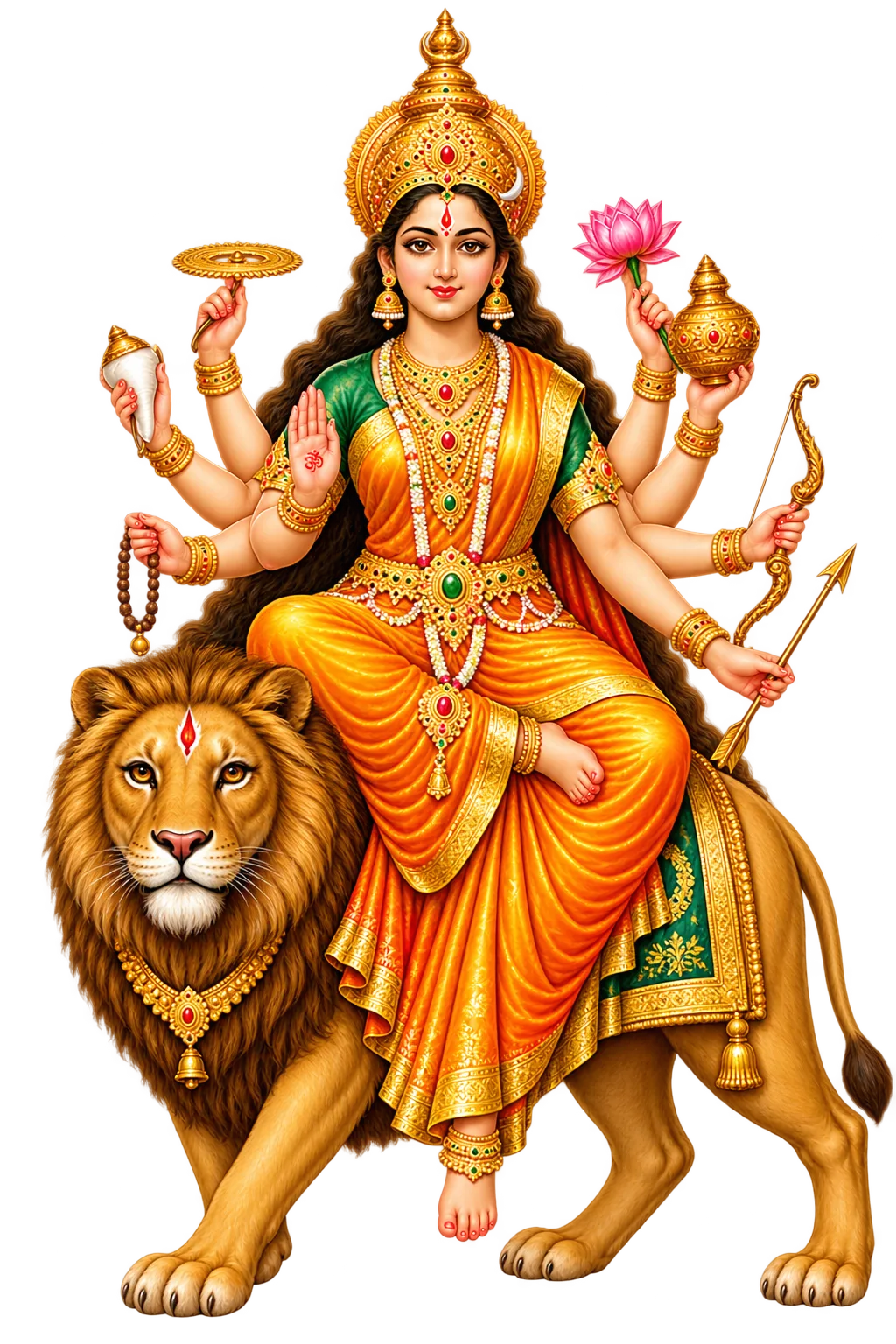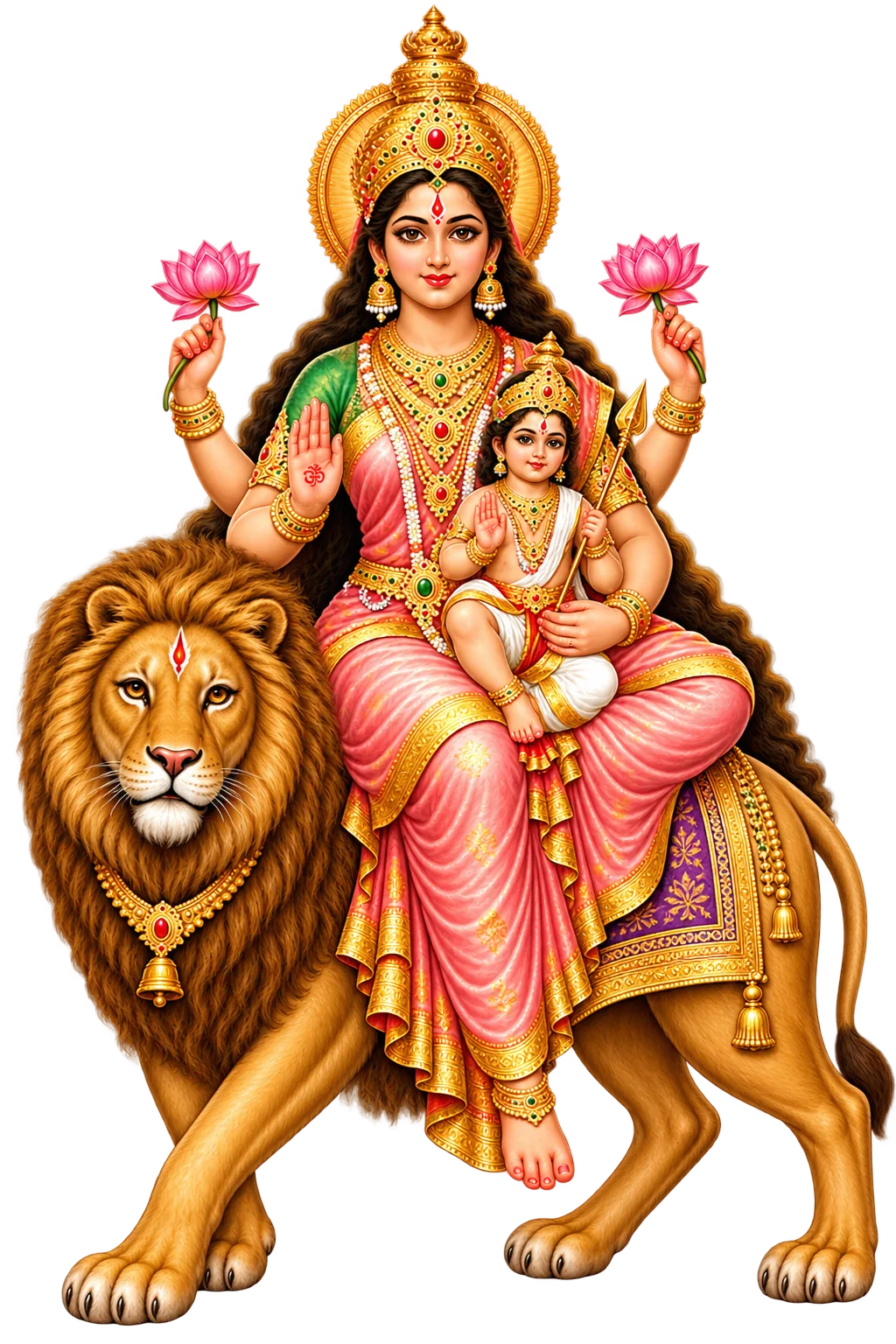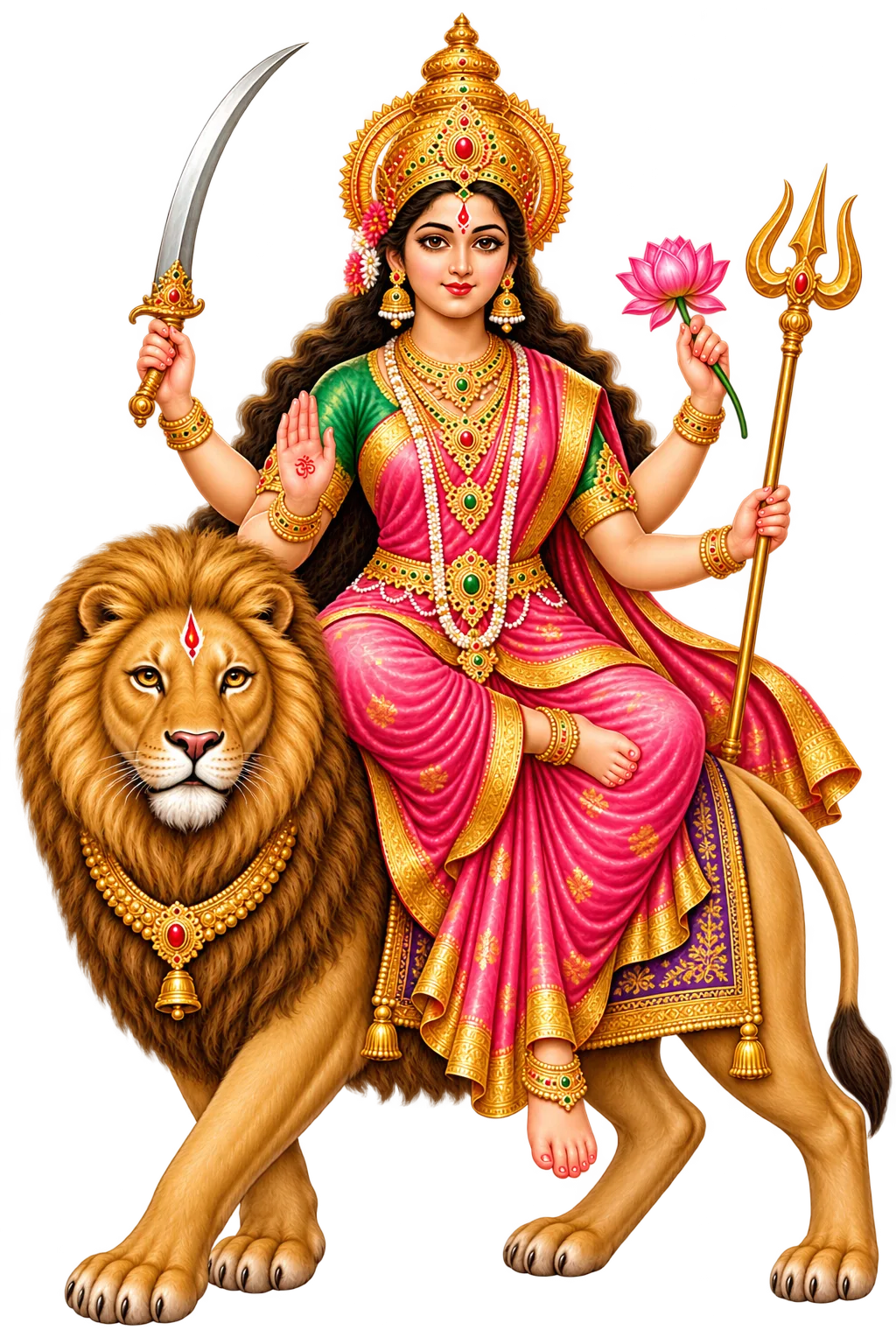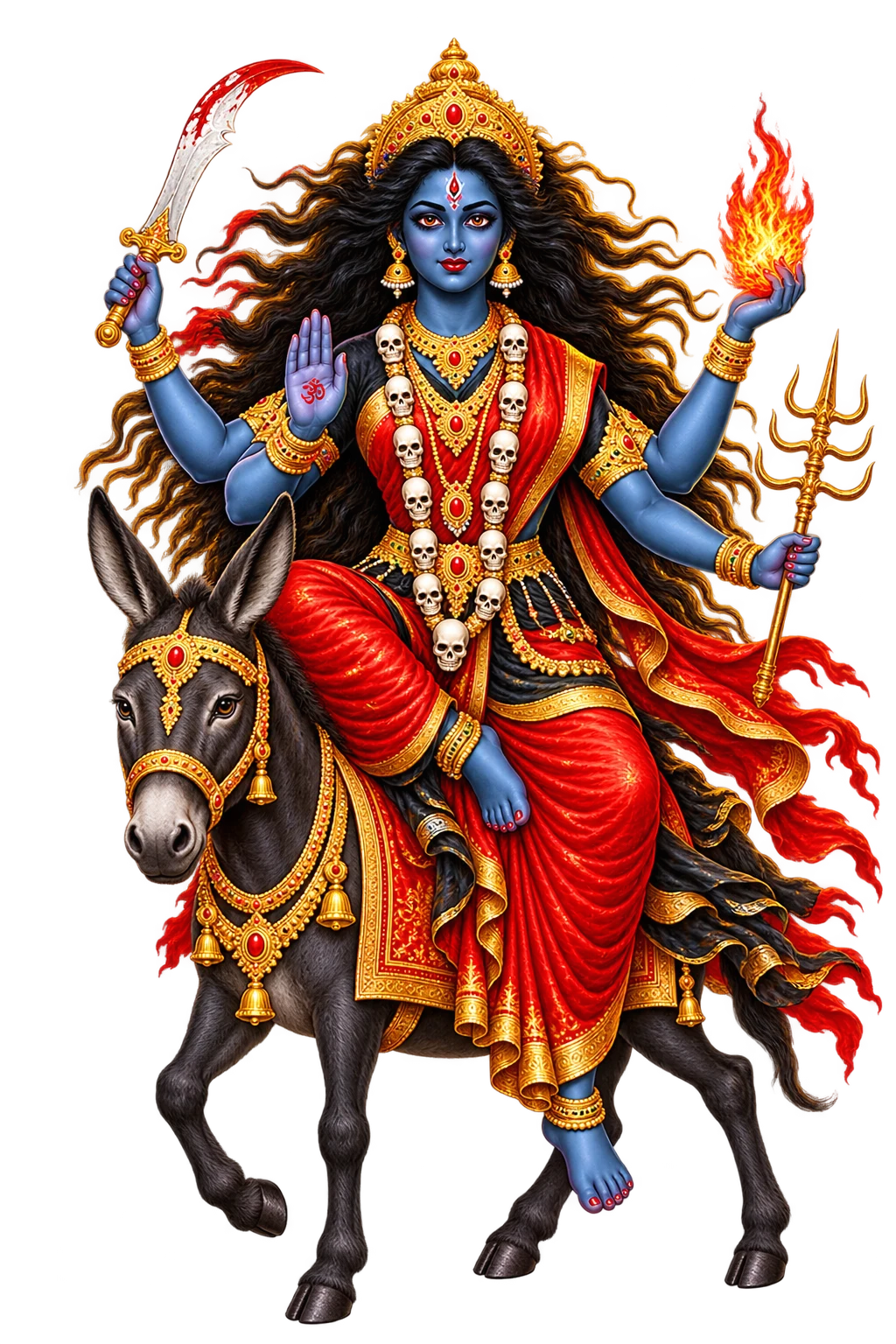
Most Indian households perform Navratri Puja at home rather than at a temple. This guide covers exactly how to do it in 2026: Samagri, Kalash Sthapana, the daily routine, fasting rules, Kanya Puja and Havan.
This is a practical vidhi guide. For the full festival calendar and Navdurga significance, see the Sharadiya Navratri 2026 guide first, then return here for the step-by-step home Puja process.
Navratri Puja at Home 2026 - Quick Answer
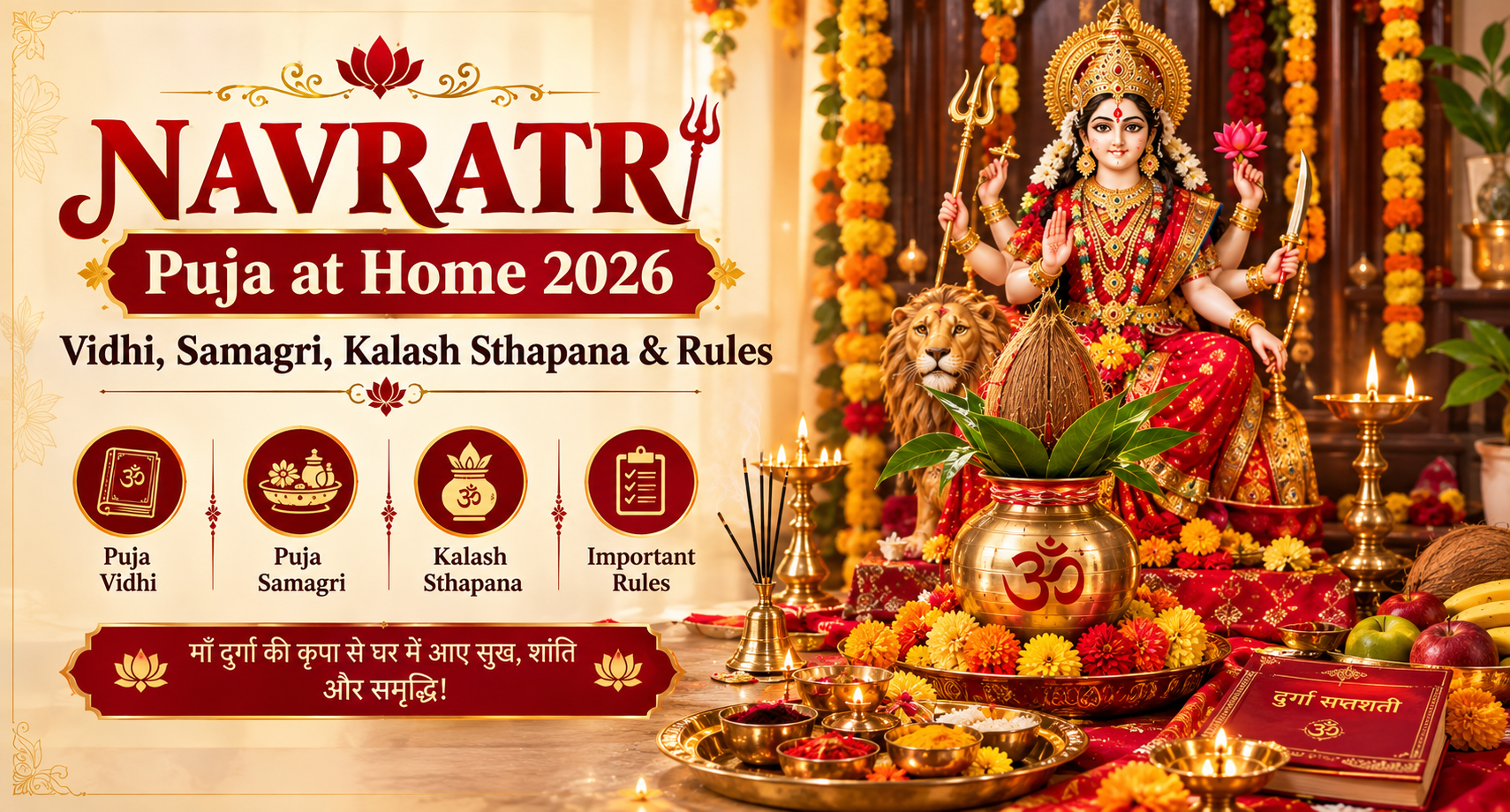
Yes, Navratri Puja can be performed at home. A simple home Puja includes Kalash Sthapana (Ghatasthapana), placing an image of Maa Durga, lighting a diya, offering flowers, akshat and Prasad, reciting a Devi mantra, and performing Aarti morning and evening for nine days. Sharad Navratri 2026 runs from 11 to 19 October, with Vijayadashami on 20 October. Basic requirements are a Kalash, water, mango leaves, coconut, roli, akshat, flowers, a diya, incense and Prasad. A priest is not required for ordinary home worship; guidance helps mainly for elaborate Havan or specialised Anushthan.
Can Navratri Puja Be Performed at Home?
Yes. A sincere home Puja is a fully accepted form of Navratri worship. The core elements, Kalash Sthapana, a daily diya, flowers, Prasad and Aarti, can be done by any family member. Consistency and devotion matter more than ritual perfection.
Family practices differ. Some keep an Akhand Jyoti burning for nine days; others light the diya only twice a day. Some recite Durga Saptashati daily; others use a short Devi stotra. None of this makes a home Puja incomplete.
Priest guidance is more useful for a full Navratri Havan, a strict Durga Saptashati Anushthan, or a specialised Puja tied to a specific purpose. For everyday worship, a family can confidently manage the entire nine days on its own. See the Sharadiya Navratri 2026 guide for the complete calendar and Navdurga background.
Explore the complete Sharadiya Navratri guide for the full 9-day schedule.
When Is Navratri Puja Performed in 2026?
Sharad Navratri 2026 begins 11 October and runs through 19 October, with Vijayadashami on 20 October. Ghatasthapana is performed on 11 October; the exact Ghatasthapana Muhurat can vary by location, so devotees should check their local Panchang. Durga Ashtami and Maha Navami fall toward the end of the nine days. For the complete date breakdown and Navdurga significance, see the Sharad Navratri 2026 dates and Puja Vidhi article.
Navratri Puja Samagri List
Samagri varies by region and family, but this covers what most households need.
Essential Samagri
Kalash, clean water, coconut, mango leaves, roli/kumkum, akshat, Mata's image or idol.
Kalash Sthapana Samagri
Clean soil and tray (for Jau), Jau seeds, supari, a coin or two, red or yellow cloth, mauli thread.
Daily Puja Samagri
Diya and cotton wicks, ghee or mustard oil, incense/dhoop, fresh flowers, camphor for Aarti.
Prasad and Food Items
Seasonal fruits, sweets or homemade Prasad, Panchamrit ingredients if followed.
Optional Items
Durga Saptashati book, bell, Havan Samagri, yellow cloth or seat for Kanya Puja.
Treat this as a working list, not a strict rulebook; some families add items based on their kul devi tradition.
Navratri Puja at Home 2026 - Quick Checklist
Samagri varies by family tradition and region, so adjust as needed.
How to Prepare Your Home for Navratri Puja
Clean the house, especially the Puja room, a day or two before Navratri
Choose a quiet corner, ideally facing east or north
Set up the Mata image or idol on a raised, clean platform
Keep all Samagri ready in advance
Maintain daily cleanliness throughout the nine days
Decide your routine, morning-only or morning and evening, before Day 1
Kalash Sthapana at Home - Step-by-Step Vidhi
Kalash Sthapana is a ritual most households perform themselves, without a priest. Some steps vary by tradition.
Choose a clean space, ideally the northeast corner
Wash the Kalash thoroughly
Fill it about three-quarters with water
Add a coin, rice or supari inside, if your family follows this
Place mango leaves around the neck
Place a coconut on top, husk side up
Wrap with a clean cloth where customary
Sow Jau in a tray of soil beside the Kalash, if part of your tradition, and water it daily
Take Sankalp, stating your name and intention
Offer prayers to Ganesha, then Maa Durga
Light the diya and incense to complete the Sthapana
Some families skip the Jau planting entirely; others treat it as essential. Follow your own tradition or a trusted Acharya's guidance.
Ghatasthapana vs Kalash Sthapana
Are they the same? Yes. Both terms describe installing the sacred pot on Day 1 to invoke Devi Shakti's presence for the nine days.
What is Ghatasthapana? The opening ritual of Navratri, performed on Pratipada.
Why is the Kalash important? It serves as a symbolic seat of the Goddess through the nine days and receives daily offerings alongside the main deity image.
Why does timing matter? Ghatasthapana is traditionally done in a specific morning window. Exact Ghatasthapana Muhurat can vary by location, so check your local Panchang.
Navratri Puja Vidhi - Complete Step-by-Step Method
Step 1 - Sankalp
State your name and intention with water and akshat in hand.
Step 2 - Kalash Worship
Offer roli, akshat, flowers and water to the Kalash daily.
Step 3 - Maa Durga Invocation
Light incense and offer flowers while invoking her presence.
Step 4 - Diya and Dhoop
Light the diya with ghee or oil, and burn incense.
Step 5 - Flowers and Offerings
Offer fresh flowers and any seasonal items your family includes.
Step 6 - Mantra/Prayer Recitation
Recite a Devi mantra, short stotra, or Durga Saptashati portion.
Step 7 - Naivedya and Prasad
Offer fruits or a Satvik dish, then set it aside as Prasad.
Step 8 - Aarti
Move the lit lamp in a circular motion before the deity.
Step 9 - Pranam and Closing Prayer
Offer a final Pranam and conclude the day's Puja.
Daily Navratri Puja Routine
Morning: bathe and wear clean clothes, clean the Puja space and refresh flowers, light the diya and incense, offer a short prayer, prepare the day's Naivedya.
Evening: light the diya again, perform Aarti with the family, offer a short prayer, distribute Prasad.
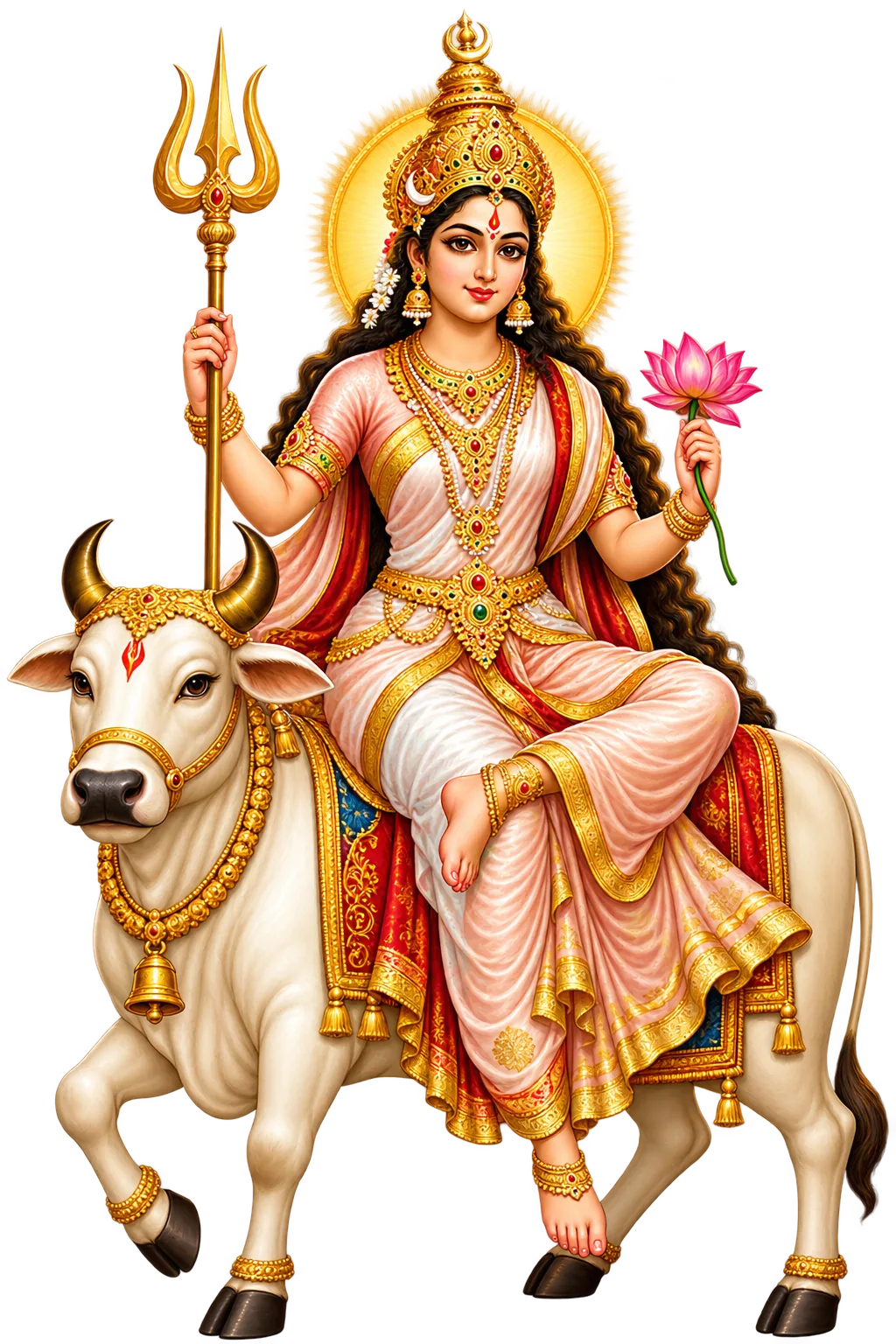
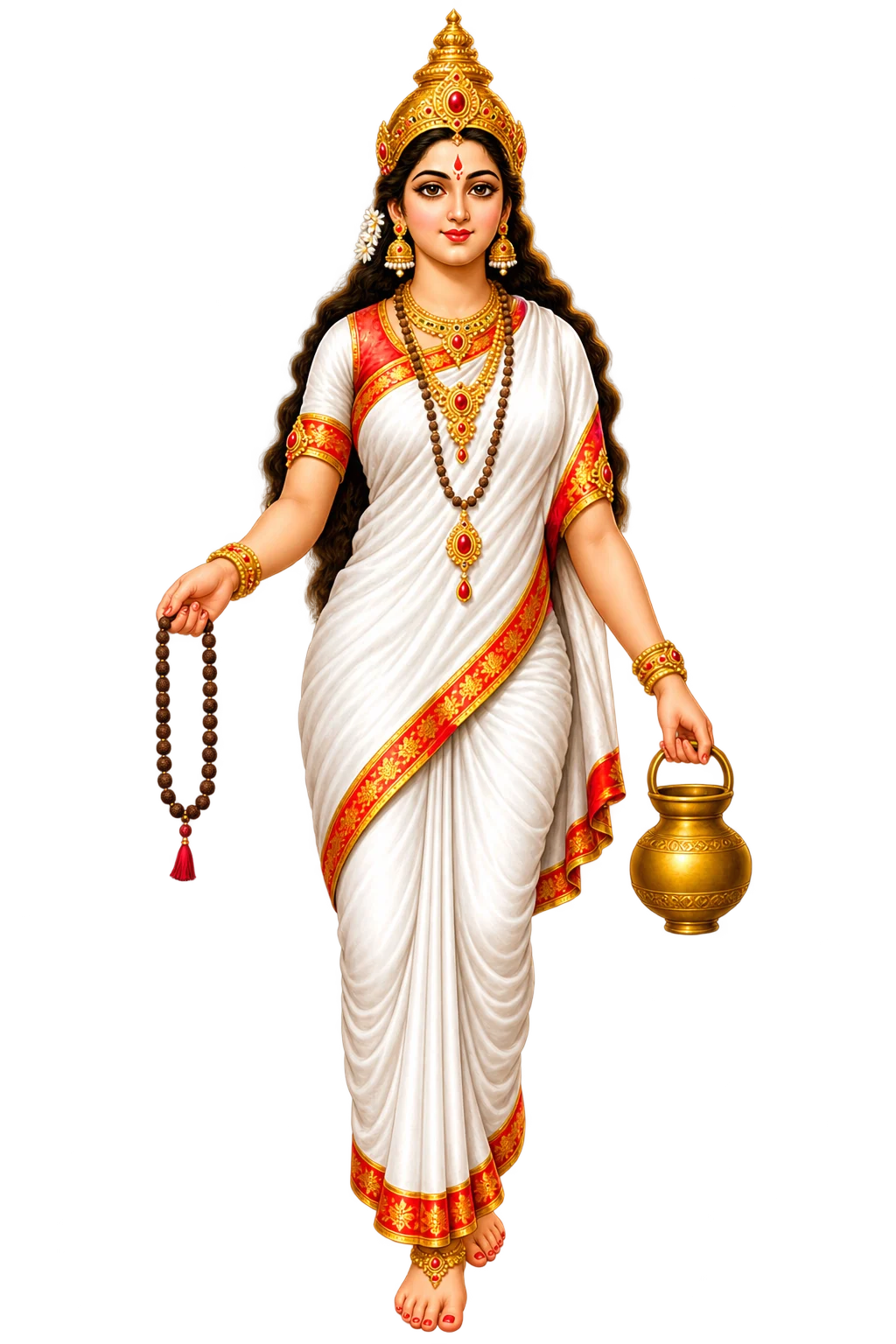
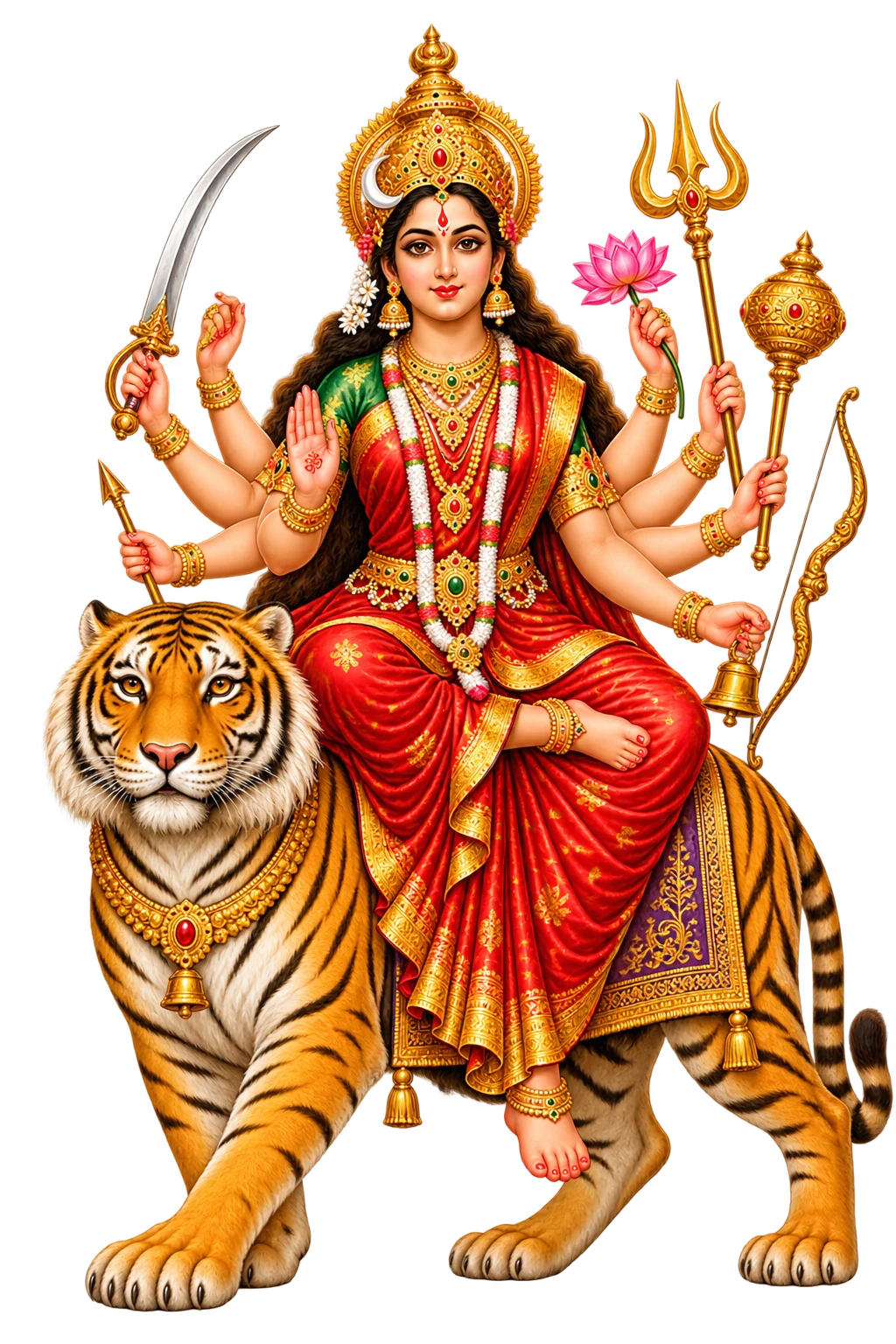
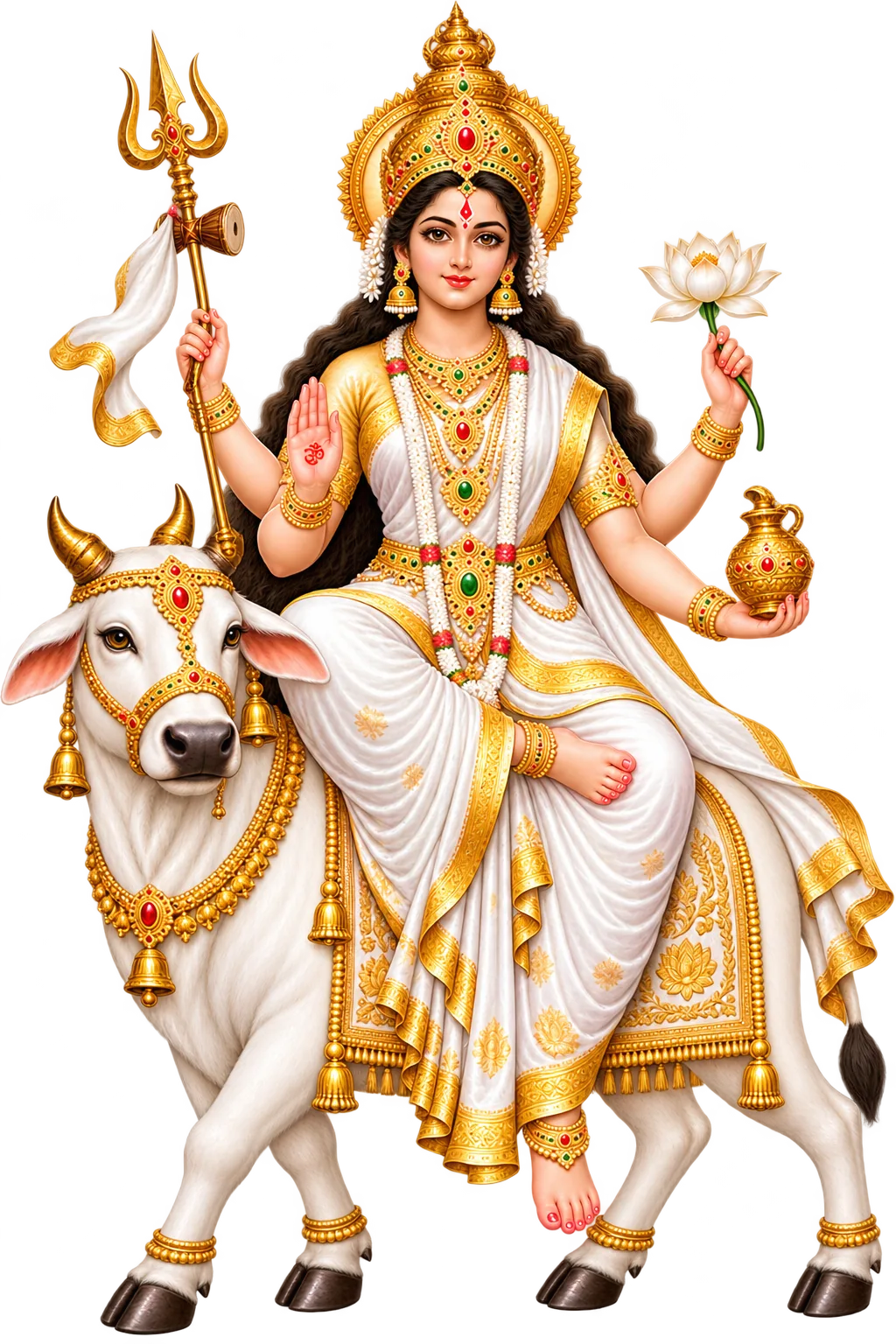
Adapt this to your schedule. Include Kalash Sthapana on Day 1, as covered on the Day 1 Puja page for Maa Shailputri. The same routine continues through Day 2 for Maa Brahmacharini and Day 3 for Maa Chandraghanta.
9 Forms of Maa Durga Worship During Navratri
Each day is dedicated to a different Navdurga form. The daily Vidhi stays largely the same; the form invoked, and sometimes the colour worn, changes.
Maa Kushmanda, worshipped on Day 4, is linked to cosmic energy, while Maa Skandamata on Day 5 represents nurturing. Maa Katyayani on Day 6 is associated with strength, and Maa Kalaratri on Day 7 represents protection from negativity. Day 8, for Maa Mahagauri, usually coincides with Durga Ashtami, and Day 9, for Maa Siddhidatri, falls on Maha Navami.
Navratri Mantras and Prayers for Home Puja
Navarna Mantra: Om Aim Hreem Kleem Chamundaye Vichche. A short mantra invoking Maa Durga's combined energy, suitable for daily Japa.
Durga Gayatri Mantra: Om Kaatyaayanaay Vidmahe Kanya Kumaari Dheemahi Tanno Durgih Prachodayaat. Meaning roughly "may Durga guide our intellect," often used in morning Puja.
Baglamukhi Beej Mantra: Om Hleem Baglamukhi Sarvadushtanam Vacham Mukham Padam Stambhaya Jihvam Keelay Buddhin Vinashay Hleem Om Swaha. Associated with the Dash Mahavidya tradition; some devotees include it in Navratri Sadhana. See the Baglamukhi Mantra guide for correct usage.
Mantra Japa is traditionally understood as a discipline supporting focus and devotion, not a guarantee of specific outcomes.
Navratri Fasting Rules at Home
Approaches vary: a strict single-meal fast for all nine days, fasting only on select days, or simply eating Satvik food without a formal fast.
Regional differences are significant; what is avoided in one tradition may be permitted in another. People with diabetes, low blood pressure, pregnancy or other health concerns should follow appropriate professional guidance before restrictive fasting.
What to Eat During Navratri
Sabudana khichdi, kuttu ki puri with aloo sabzi, singhara flour paratha, fruit chaat with sendha namak, samak rice kheer, roasted nuts, boiled potatoes. Exact rules vary by family, so adjust as needed.
What Should Be Avoided During Navratri?
Commonly avoided: non-vegetarian food, alcohol, onion and garlic, and in many households, cutting hair or nails. These are traditional customs, not universal rules followed identically everywhere.
Navratri Puja Rules and Common Mistakes
Ashtami and Navami Puja at Home
Many households mark Durga Ashtami and Maha Navami with a fuller Puja, Kanya Puja and sometimes a home Havan. In 2026, Ashtami and the Day 8 Puja for Maa Mahagauri fall on 18 October, while Navami and the Day 9 Puja for Maa Siddhidatri fall on 19 October. Some families perform Kanya Puja on Ashtami, others on Navami or both. Confirm with your family's usual custom or a local priest.
Kanya Puja During Navratri - Vidhi and Significance
Most families perform Kanya Puja on Ashtami or Navami, though some do it on any day.
Invite a small group of girls, often nine, sometimes with one boy for Bhairav
Wash their feet where customary
Apply tilak
Offer a simple meal, often puri, halwa and chana
Give Prasad and a small gift, money, clothing or stationery
Treat them with warmth and respect
Some families keep this elaborate, others simple with fruits and small gifts; neither is more correct.
Can You Perform Navratri Havan at Home?
Yes. A simple devotional Havan can be done at home, typically on Ashtami or Navami, with basic Samagri and a small kund or heat-safe metal plate.
Use dry wood, cow dung cakes and standard Havan Samagri
Perform in a well-ventilated space, away from curtains
Keep water or sand nearby
Never leave the fire unattended, and extinguish it fully afterward
For a larger Durga Havan or specific Anushthan, experienced guidance is recommended. See the Baglamukhi Havan guide for detailed vidhi, or the Baglamukhi Havan booking page to arrange one professionally.
Can Navratri Puja Be Done Without a Priest?
Yes. Ordinary Navratri Puja, Kalash Sthapana, daily worship and Aarti, can be performed by any family member. A priest becomes more useful for a complex Havan, a Durga Saptashati Anushthan with strict rules, a specialised Puja such as Baglamukhi Sadhana, or guidance on Sankalp wording. Everyday devotional worship does not require one.
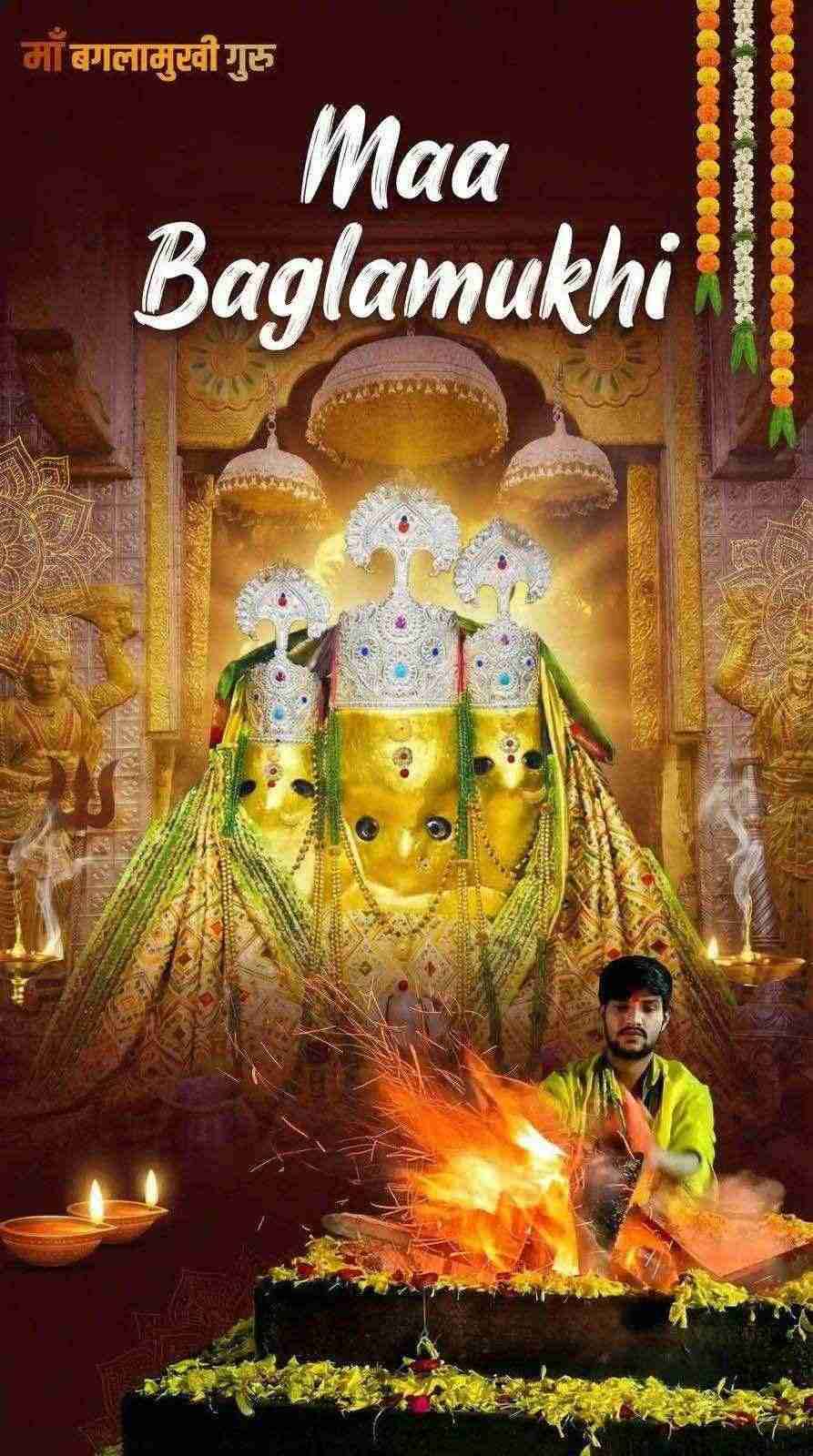
Maa Baglamukhi Puja During Navratri
Maa Baglamukhi belongs to the Dash Mahavidya tradition and is not one of the nine Navadurga forms worshipped during standard Navratri. Even so, many devotees traditionally use auspicious periods like Navratri to also perform Baglamukhi Puja, Japa or Havan, viewing this time as spiritually significant for Shakti worship more broadly.
General Navratri Puja, as covered above, is simple and family-led. A dedicated Baglamukhi Puja, especially one involving Stambhan rituals or a multi-day Anushthan, traditionally follows a more structured procedure and is often performed by an experienced Acharya.
According to devotional tradition, devotees traditionally seek Maa Baglamukhi's blessings for protection, mental clarity and steadiness, and some combine this with their Navratri Sadhana. Many devotees consider the Nalkheda Siddha Peeth in Madhya Pradesh significant for this practice, given its association with the Pitambara tradition.
Devotees who cannot travel may arrange an online Puja, where an Acharya performs the ritual with the devotee's Sankalp, and Prasad or a recorded video is shared afterward. Learn the sequence in the Maa Baglamukhi Puja Vidhi guide, or explore the Baglamukhi Sadhana overview and Baglamukhi Sadhana Vidhi for the discipline traditionally associated with this practice.
Book Maa Baglamukhi Puja During Navratri through the online Puja booking page to arrange a Sankalp-based Puja or Havan at Nalkheda.
Navratri Puja for Beginners - Simple 15-Minute Routine
Clean the Puja space, even a small corner
Light a diya with ghee or oil
Offer a few fresh flowers
Say a short prayer to Maa Durga
Recite a simple mantra, such as the Navarna Mantra
Perform a brief Aarti
Offer a small Prasad and share it with the family
This does not replace every traditional ritual, but it is a genuine way to observe Navratri when time is limited.
Navratri Puja at Home - Final Checklist
Before Navratri: [ ] Clean Puja space [ ] Buy Samagri [ ] Prepare Kalash [ ] Arrange Mata image/idol
During Navratri: [ ] Daily Puja [ ] Diya [ ] Prasad [ ] Mantra/prayer [ ] Aarti
Ashtami/Navami: [ ] Kanya Puja if following tradition [ ] Havan if planned [ ] Special Puja
Planning a special Navratri Puja or Baglamukhi Anushthan? Connect with an experienced Acharya through the booking page.
Navratri Puja at Home 2026 - Quick Summary
Sharad Navratri 2026 runs 11 to 19 October, with Vijayadashami on 20 October
Kalash Sthapana happens on Day 1; exact Muhurat depends on location
Basic Samagri: Kalash, water, coconut, mango leaves, roli, akshat, flowers, diya, Prasad
A daily diya, prayer, mantra and Aarti routine is enough for a meaningful home Puja
Fasting rules vary; Satvik food, fruits and specific flours are common during Vrat
Ashtami and Navami often include Kanya Puja and sometimes a home Havan
A priest is not required for ordinary worship, though useful for larger Havan or Anushthan
Maa Baglamukhi Puja is a separate, specialised practice some combine with Navratri
Regional and family variations are normal and do not make a home Puja incomplete
A 15-minute routine is a valid option when time is limited
Frequently Asked Questions
1. Can Navratri Puja be performed at home? Yes. A simple Puja with Kalash Sthapana, daily worship, mantra recitation and Aarti can be fully performed at home without a priest.
2. What Samagri is needed for Navratri Puja at home? Basic Samagri includes a Kalash, water, coconut, mango leaves, roli, akshat, flowers, a diya, incense and Prasad items, varying by family tradition.
3. How do you perform Navratri Puja at home? Start with Kalash Sthapana on Day 1, then follow a daily routine of cleaning the space, lighting a diya, offering flowers, reciting a mantra and performing Aarti through all nine days.
4. How is Kalash Sthapana performed? A Kalash is filled with water, mango leaves and a coconut are placed on it, Sankalp is taken, and prayers invoke the Goddess's presence.
5. What is Ghatasthapana? The opening ritual of Navratri performed on Day 1, installing a sacred pot to mark the start of nine days of worship.
6. Are Ghatasthapana and Kalash Sthapana the same? Yes, both terms refer to the same ritual of installing the sacred pot at the start of Navratri.
7. Can Navratri Puja be done without a priest? Yes, ordinary home Puja does not require one. A priest helps more for elaborate Havan or specific Anushthan.
8. What should be kept inside the Navratri Kalash? Commonly, clean water, and sometimes a coin, supari or a few grains of rice, depending on family tradition.
9. Can Jau be planted during Navratri? Yes, many families sow Jau seeds beside the Kalash and water it daily, though this custom is not universal.
10. What food is allowed during Navratri fasting? Fruits, milk, sabudana, kuttu and singhara flour, potatoes and dry fruits are commonly allowed, depending on the type of Vrat.
11. What should be avoided during Navratri? Non-vegetarian food, alcohol, onion, garlic, and often regular grains during a formal Vrat.
12. Can we perform Havan at home during Navratri? Yes, a simple devotional Havan with basic Samagri and proper fire safety can be performed, typically on Ashtami or Navami.
13. When is Kanya Puja performed? Most commonly on Ashtami or Navami, though some families perform it on other days as well.
14. What is done on Ashtami and Navami? Many households perform a special Puja, Kanya Puja and sometimes a home Havan on these two days.
15. What are the daily Navratri Puja steps? Cleaning the space, lighting a diya, offering flowers and Naivedya, reciting a mantra, and performing Aarti.
16. What mantra can be chanted during Navratri Puja? The Navarna Mantra, "Om Aim Hreem Kleem Chamundaye Vichche," and the Durga Gayatri Mantra are commonly recited.
17. Can Maa Baglamukhi Puja be performed during Navratri? Yes, some devotees traditionally combine Baglamukhi Puja or Japa with Navratri, though it is a separate practice from Navdurga worship.
18. Is Maa Baglamukhi one of the nine forms of Durga? No, she belongs to the Dash Mahavidya tradition, distinct from the nine Navadurga forms.
19. Can Navratri Puja be performed if someone cannot fast? Yes, fasting is not mandatory. The full worship routine and Aarti can be performed without observing a Vrat.
20. Can NRIs perform Navratri Puja from outside India? Yes, the same home Puja process works anywhere, and some also arrange online Puja or Sankalp-based rituals at temples such as Nalkheda for additional support.