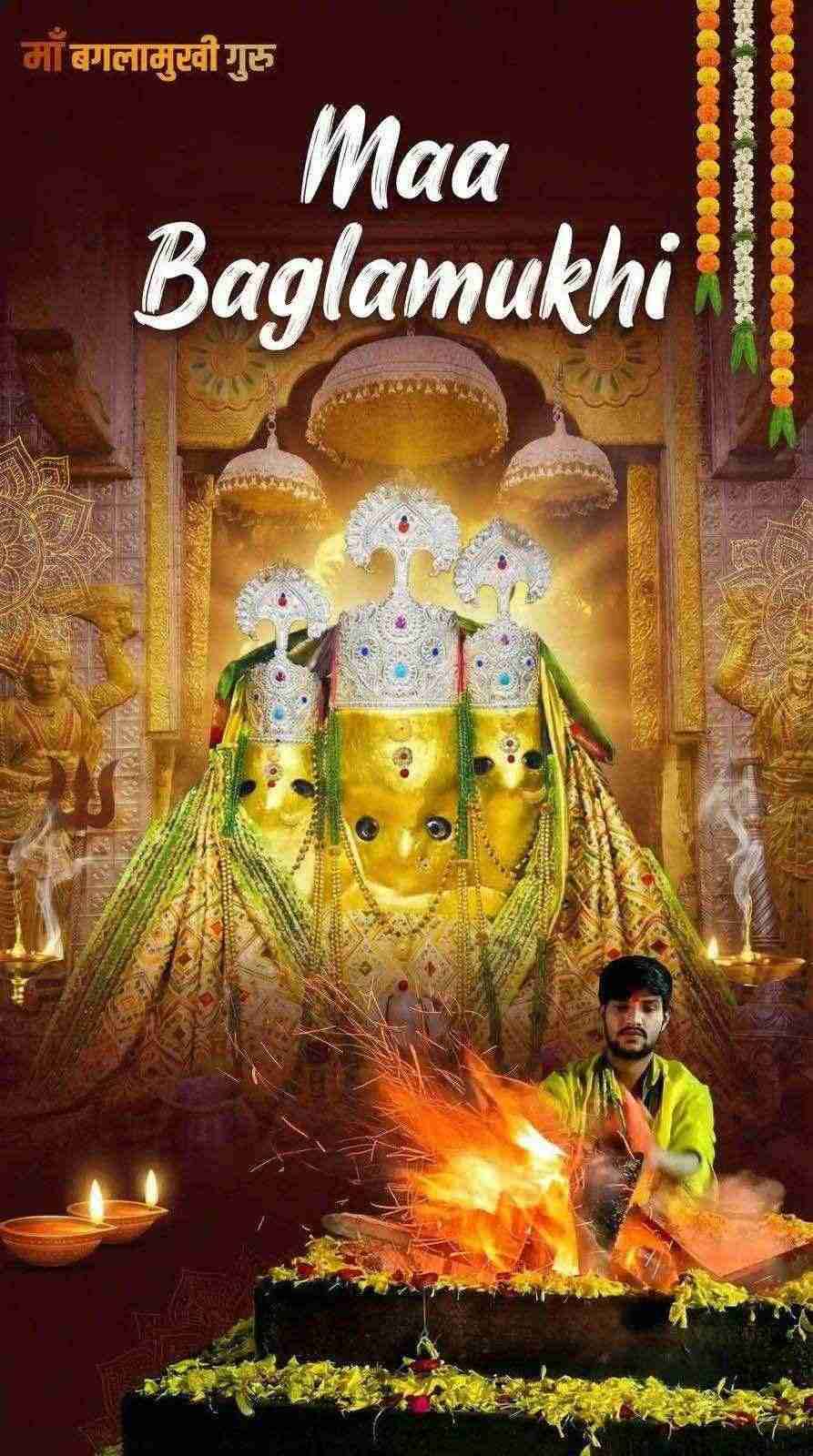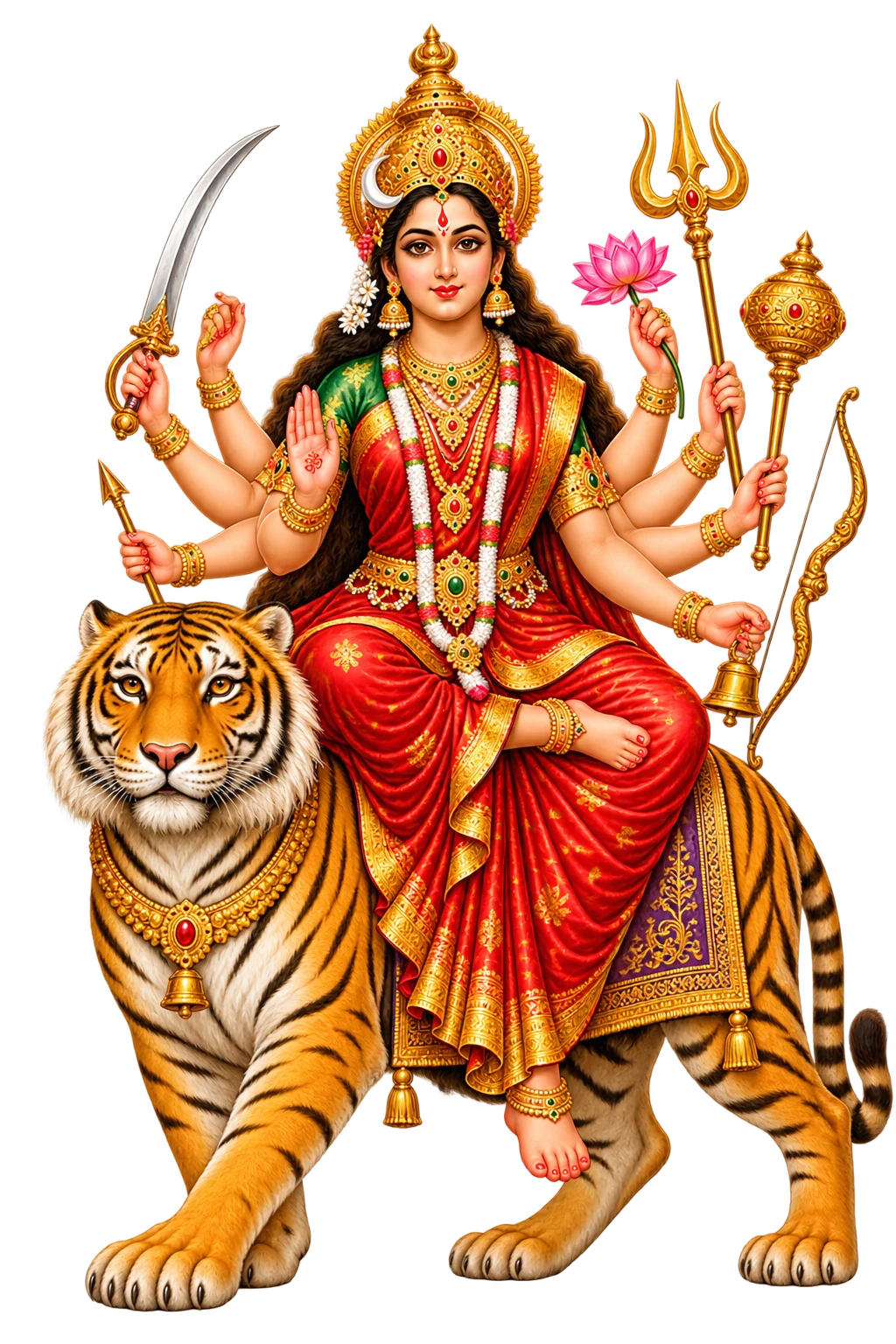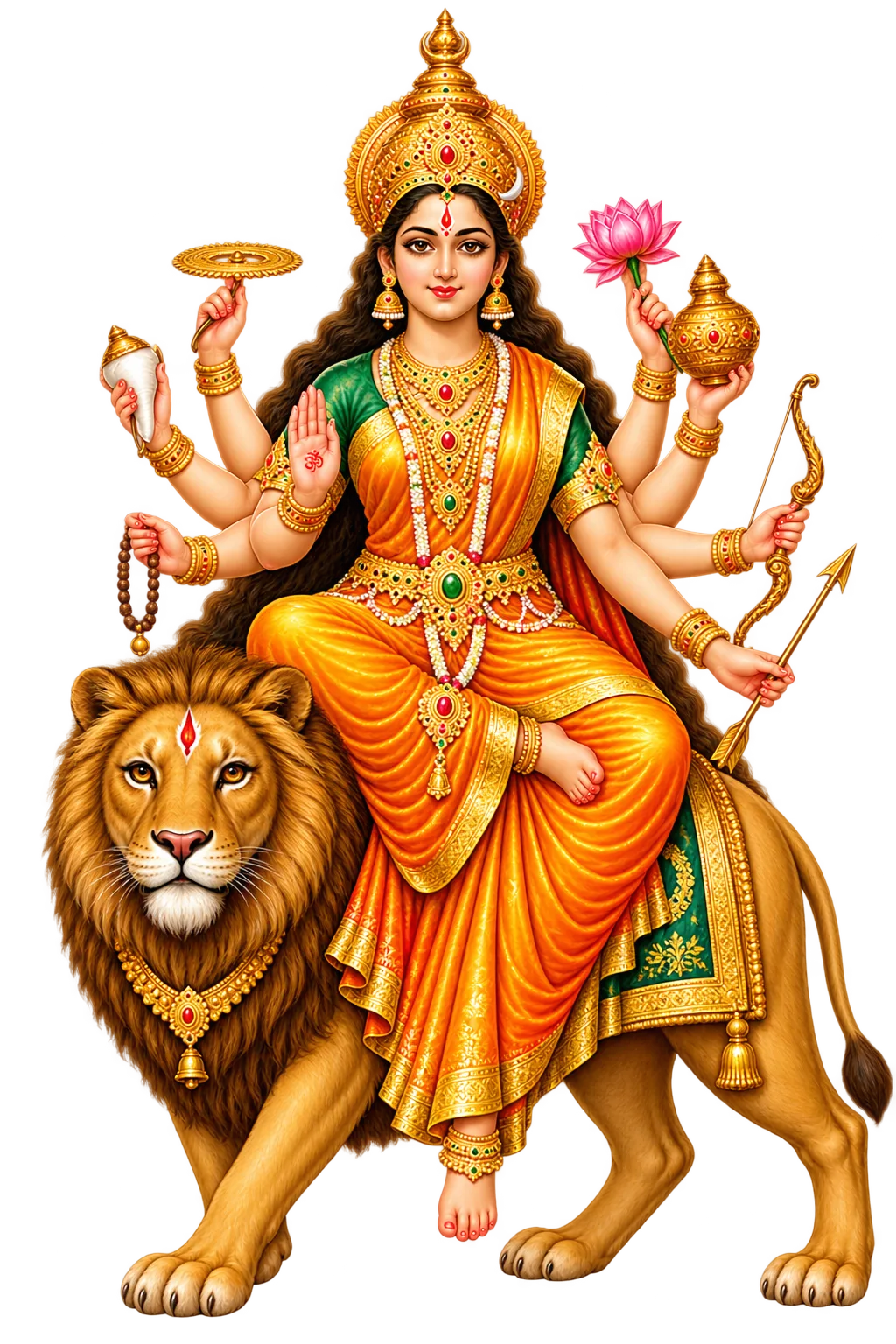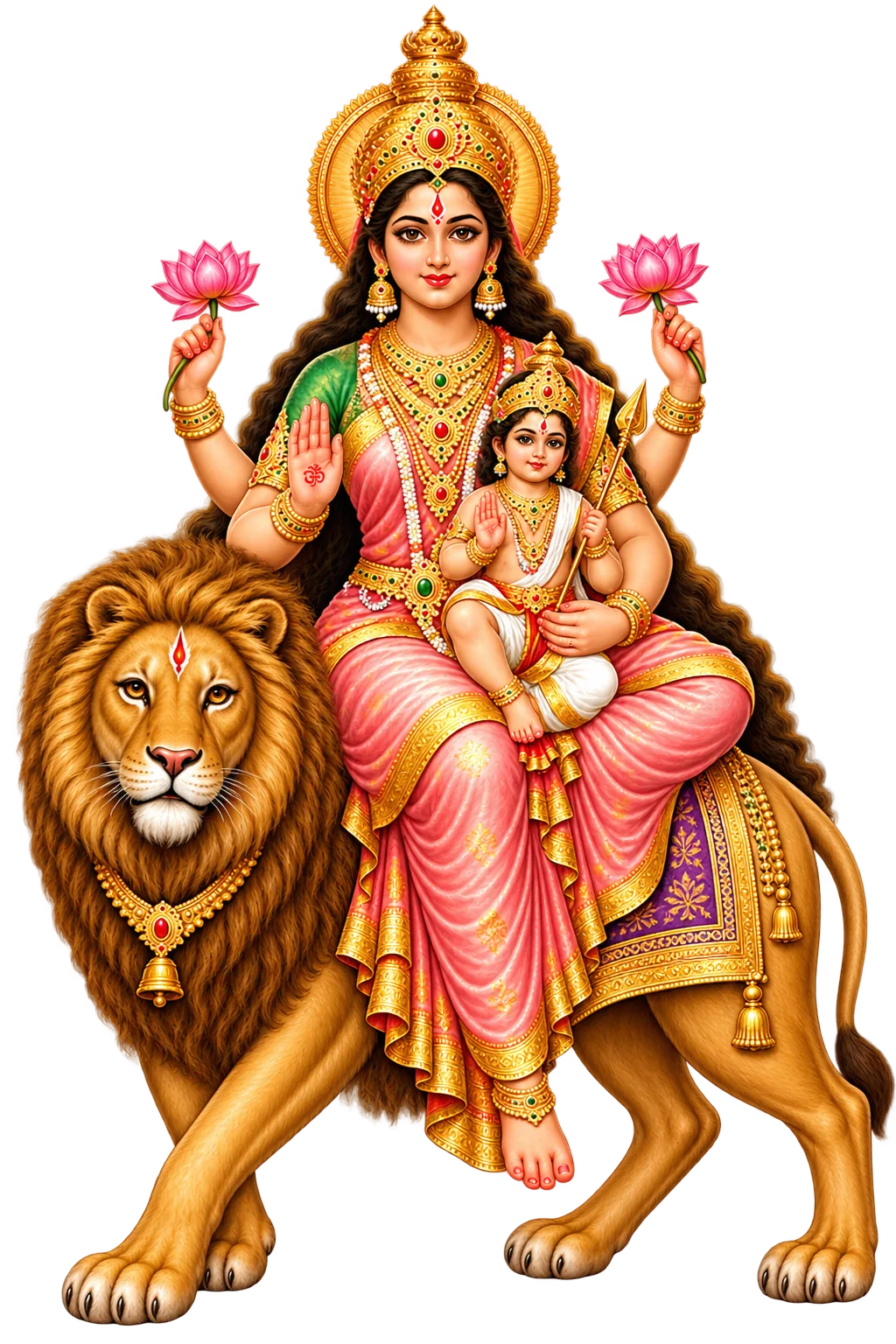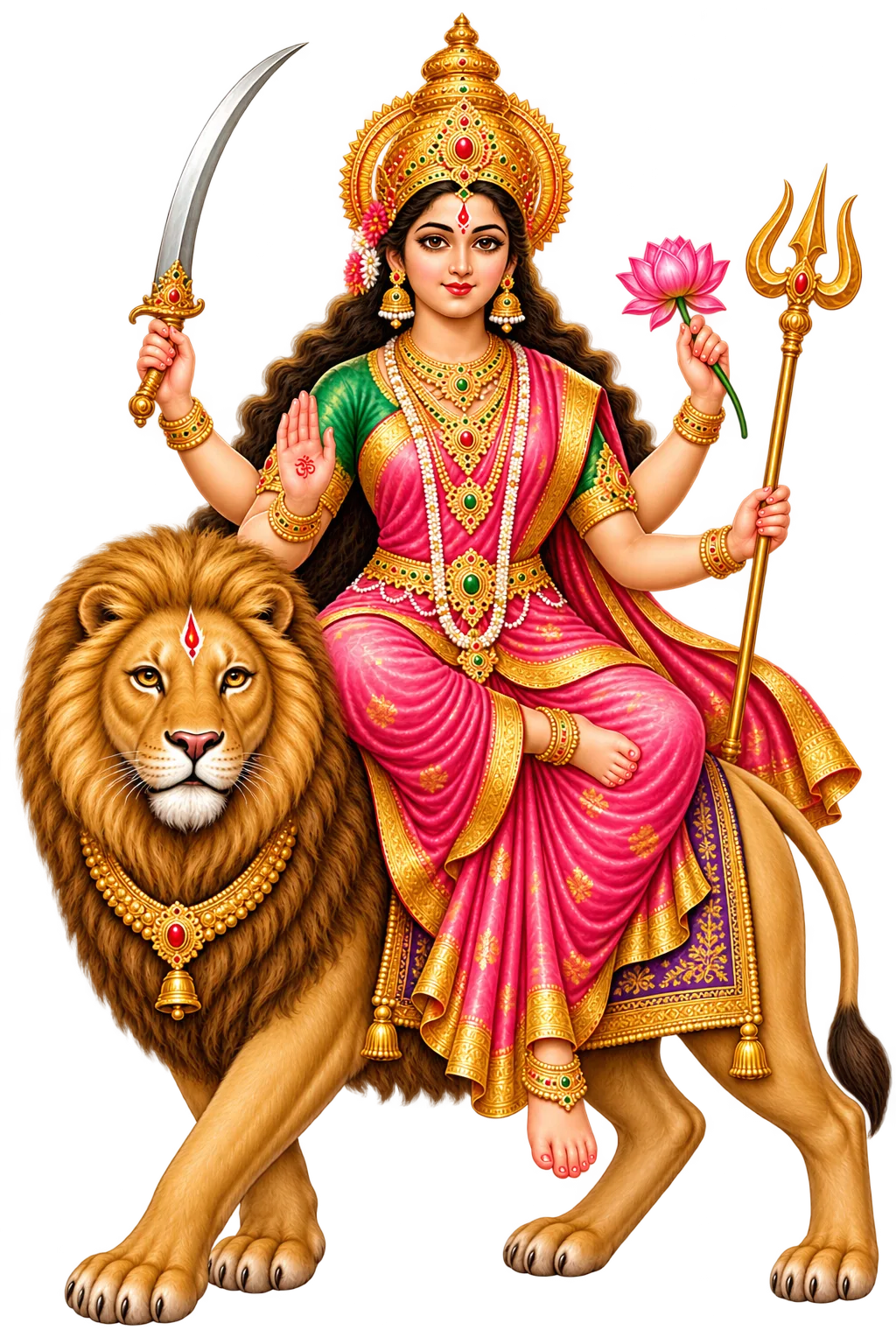
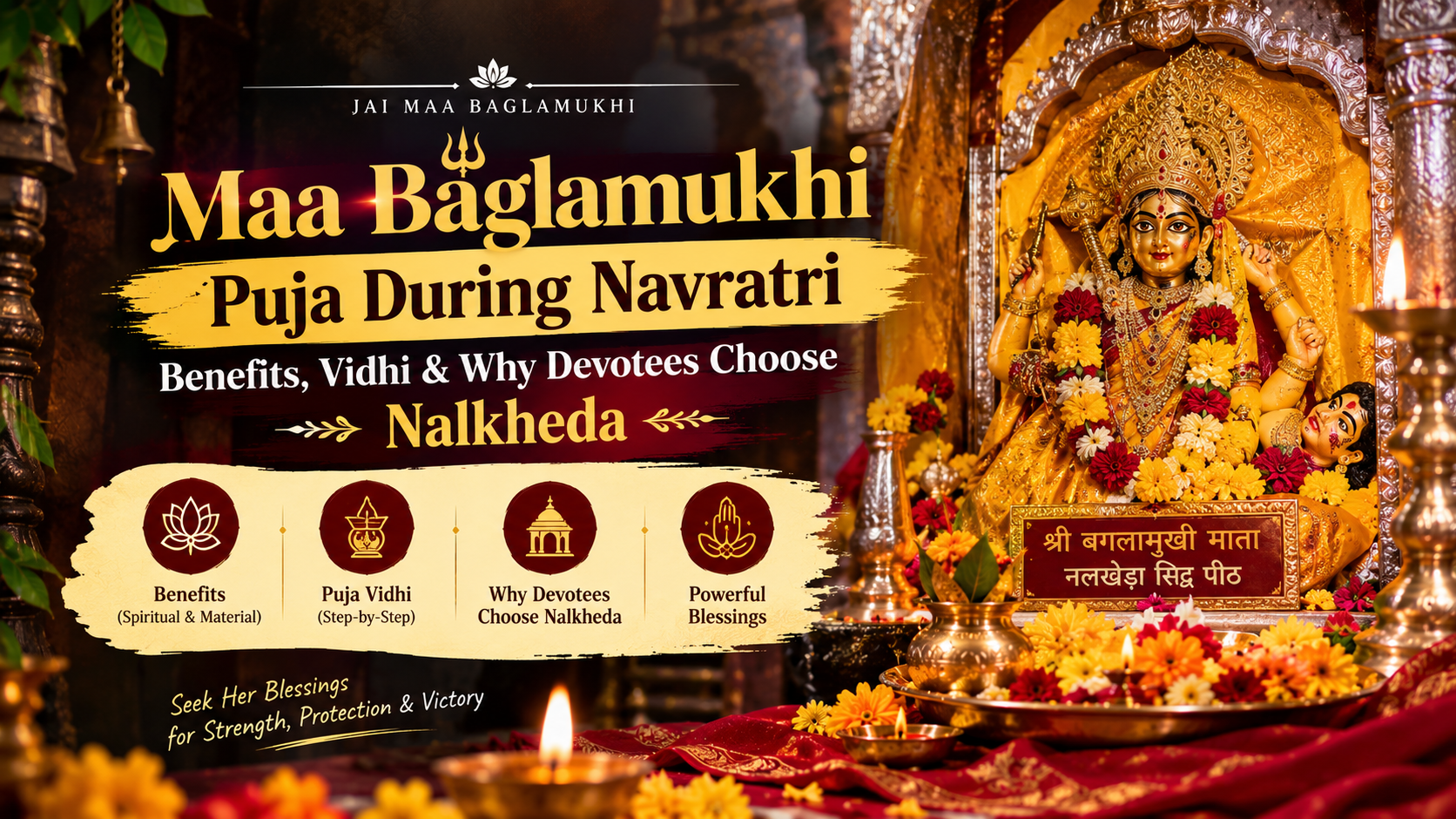
Navratri is one of the most devotionally active periods of the Hindu calendar, and for many Shakti worshippers, it is also a time to focus specifically on Maa Baglamukhi Puja during Navratri. This guide explains who Maa Baglamukhi is, the traditional beliefs associated with her worship, how the Puja is generally performed, and why so many devotees choose to observe it at her ancient Siddha Peeth in Nalkheda, Madhya Pradesh.
Quick Answer: Maa Baglamukhi Puja During Navratri
What it is: A devotional worship of Maa Baglamukhi, one of the ten Mahavidyas, often performed by her devotees during the nine nights of Navratri.
Why during Navratri: Navratri is broadly dedicated to Shakti worship, so some devotees extend their focused prayer, mantra japa and Havan to Maa Baglamukhi during this period, alongside or separate from Navadurga worship.
Traditional associations: In devotional tradition, her worship is linked to stambhana (stilling obstacles), courage, focused speech, and steadiness in difficult situations - understood as devotional beliefs, not guaranteed outcomes.
Why Nalkheda: Her Siddha Peeth at Nalkheda is one of the historically recognised Bagalamukhi shrines in India, drawing devotees for priest-guided worship, especially during Navratri.
What the Puja involves: Sankalp, invocation, offerings, mantra japa, and often Havan, performed either simply at home or through a priest-guided ritual.
How to arrange it: Devotees can visit Nalkheda in person or explore online Puja arrangements where priests perform the ritual on their behalf.
What Is Maa Baglamukhi Puja?
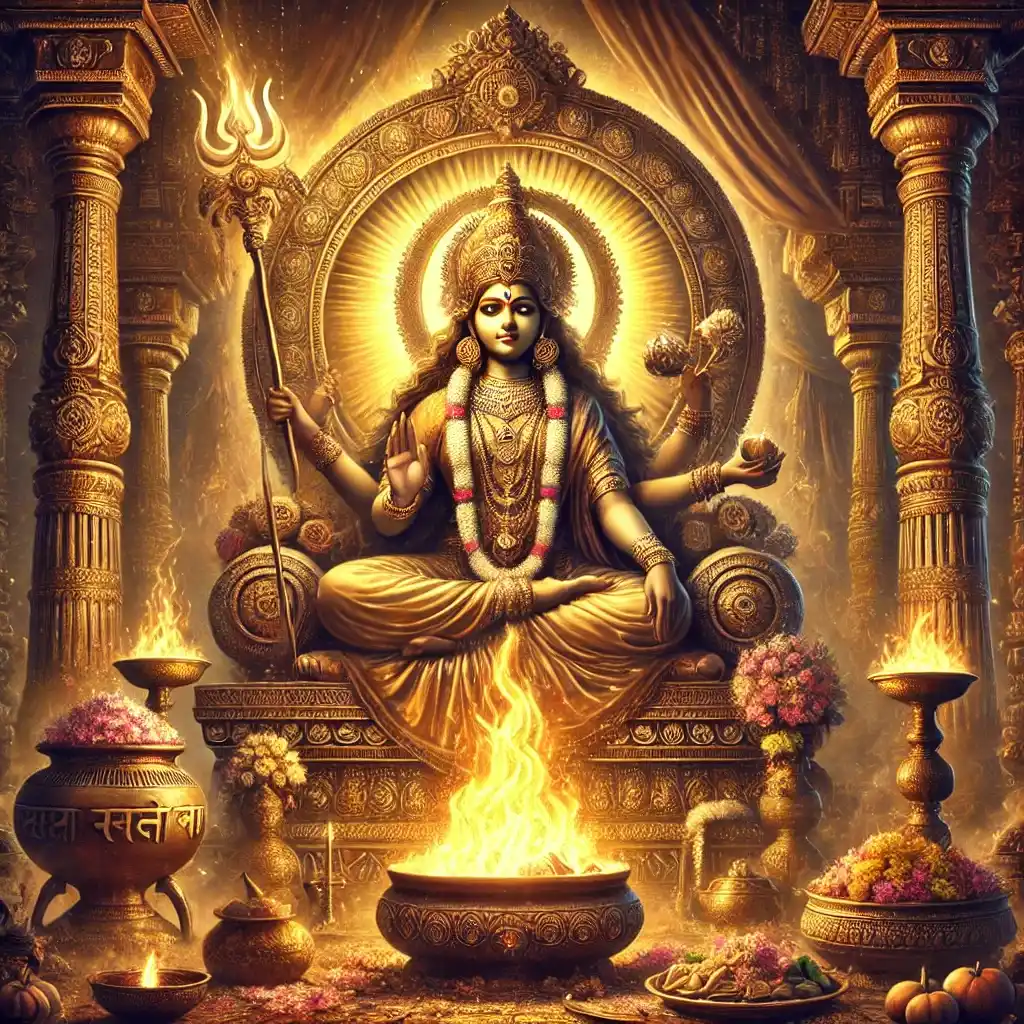
Maa Baglamukhi is one of the ten Mahavidyas (Dash Mahavidya), a group of Tantric goddess forms within Shakta Hinduism. She is not one of the nine Navadurga forms worshipped specifically during Navratri - the Navadurga and the Mahavidyas are two distinct traditions within Devi worship, and this article keeps that distinction clear throughout.
She is traditionally associated with the colour yellow and with stambhana shakti - the power to "still" or check disruptive forces, whether understood as obstacles, harmful speech, or opposition in a difficult situation. Maa Baglamukhi Puja generally involves invoking her through mantra, offerings and, in more elaborate observances, Havan, with the goal of seeking clarity, steadiness and protection-oriented blessings.
It is important to separate devotional worship from guaranteed outcomes. Like most forms of Hindu worship, Maa Baglamukhi Puja is approached by devotees as a spiritual and devotional practice - a matter of faith, discipline and sincere intention - rather than a mechanism that assures a specific real-world result. Any traditional benefit described in this guide should be read in that spirit.
Why Perform Maa Baglamukhi Puja During Navratri?
Navratri is considered one of the most spiritually significant periods for Devi worship in the Hindu calendar, since the nine nights are dedicated to invoking Shakti, the divine feminine, across her many forms. While the festival's central worship is of the Navadurga, many Shakta devotees - those with a particular devotion to the Mahavidyas - use this same window of heightened devotional focus to also worship their chosen form, including Maa Baglamukhi.
The reasoning is less about a specific rule and more about context: Navratri already brings a household or temple into a rhythm of daily Sankalp, mantra japa, Havan and spiritual discipline. Devotees who worship Maa Baglamukhi often find it natural to fold her worship into this existing devotional structure, rather than treating it as a separate occasion. This is a matter of personal and family tradition rather than a fixed requirement - and Navratri itself does not automatically amplify or guarantee any specific supernatural outcome; it is simply a period widely regarded as auspicious for sustained Devi worship.
Maa Baglamukhi Puja During Navratri 2026
Sharad Navratri 2026 (also called Shardiya Navratri) begins on Sunday, 11 October 2026, with Ghatasthapana, and continues through Monday, 19 October 2026, followed by Vijayadashami on Tuesday, 20 October 2026. The table below shows the nine days and their Navadurga worship, alongside where Maa Baglamukhi devotion is commonly placed within this period.
Maa Baglamukhi is not identified with any single Navratri day here, since she is not one of the Navadurga. Devotees focus on her worship for a single day, several days, or the full nine-day period, according to their own tradition. The complete Shardiya Navratri 2026 guide covers the Ghatasthapana muhurat and day-wise Navadurga worship in more detail; exact timings vary by location, so confirm with a local Panchang.
Traditional Benefits of Maa Baglamukhi Puja
The associations below reflect traditional devotional beliefs passed down through Shakta and Tantric practice. They are described here as beliefs held by devotees, not as scientifically verified or guaranteed outcomes.
None of these associations should be read as a promise of victory in legal, professional or personal disputes, guaranteed wealth, or any other assured result. Devotional tradition emphasises sincere worship, discipline and faith, with outcomes understood as beyond human guarantee.
Maa Baglamukhi Puja Vidhi During Navratri
The overview below describes a general, commonly followed devotional structure. It is not a specialised tantric procedure, and more advanced practices should only be undertaken under the guidance of a qualified, experienced practitioner rather than attempted from a written summary.
A simple, sincere home Puja along these lines is accessible to most devotees. More elaborate or specialised practices - extended Anushthans or rituals tied to a particular goal - are traditionally guided by an experienced Acharya rather than attempted from a written summary alone.
Maa Baglamukhi Puja Samagri
Exact Samagri lists can vary between family traditions and between a simple home Puja and a priest-guided ritual. Where a specialised Anushthan is being arranged, the officiating Acharya typically specifies any additional items required.
Baglamukhi Mantra During Navratri
Mantra japa is central to Maa Baglamukhi worship, understood in devotional tradition as a way of steadying the mind and directing focused intention toward the goddess. Her most widely referenced mantra is the Moola Mantra, and its wording should not be altered or approximated - if you intend to chant it seriously, it is worth confirming the exact pronunciation with a knowledgeable priest or guide rather than relying solely on a written transliteration.
During Navratri, some devotees increase the frequency or duration of their mantra japa as part of their broader devotional routine for the nine days. Specialised practices - very high repetition counts, specific Anushthans tied to a particular life concern, or advanced tantric japa - are traditionally undertaken with guidance rather than independently, since correct pronunciation and method matter in this tradition. The website's Baglamukhi Mantra guide covers the mantra and its traditional use in more depth.
Baglamukhi Havan During Navratri
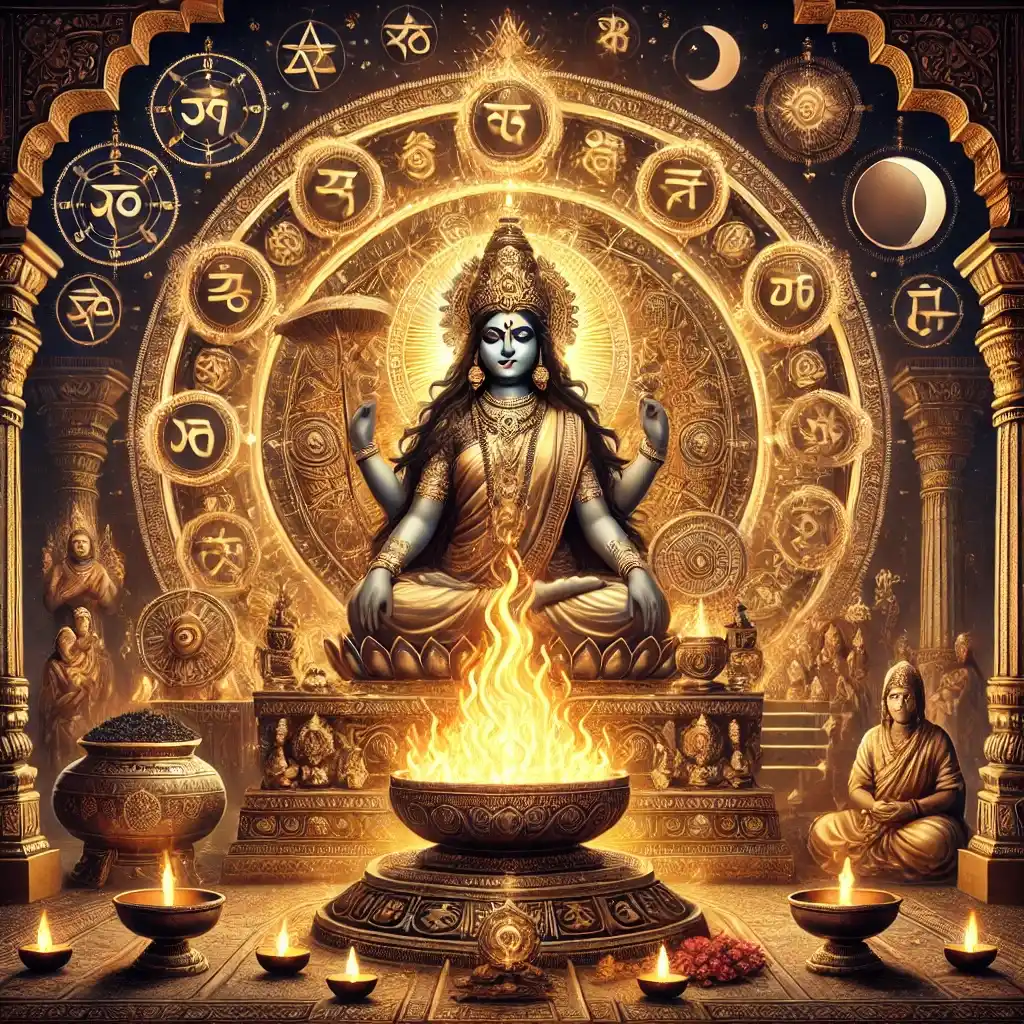
Havan is a fire ritual in which specific offerings are made into a consecrated fire while mantras are recited, traditionally understood as a way of formally presenting one's prayers and offerings to the deity being invoked. In Baglamukhi worship, Havan is often included as part of a more complete or priest-guided observance, particularly during a significant period like Navratri.
The general structure of a Havan includes preparing the Kund (fire pit), invoking the deity, making the prescribed offerings while chanting mantras, and closing with Aarti and Prasad distribution. Because Havan involves specific ritual sequencing, correct offerings and safe handling of a live fire, it is traditionally performed by or under the direct guidance of a trained priest rather than improvised independently, especially for a Devi as closely associated with Tantric practice as Maa Baglamukhi. The website's Baglamukhi Havan guide has more detail on how this ritual is traditionally structured.
Why Do Devotees Choose Nalkheda for Maa Baglamukhi Puja?
The Bagalamukhi Temple at Nalkheda, on the banks of the Lakhundar river (a tributary of the Narmada) in the Agar Malwa district of Madhya Pradesh, is one of three shrines in India historically recognised as significant centres of Bagalamukhi worship, alongside the temples at Datia and Bankhandi. The temple structure at Nalkheda was restored in 1815, and its sanctum has the distinctive feature of a triad icon, with Parvati at the centre.
Local tradition also holds that the temple's origins reach back to the Dwapar Yuga and the Pandavas - an account that is part of the temple's traditional lore rather than verifiable history, presented as such here. What draws devotees to Nalkheda practically is its long-standing recognition as a Bagalamukhi Siddha Peeth, its riverside setting, and the availability of priest-guided Puja and Havan. The Maa Baglamukhi Mandir Nalkheda guide covers the temple and its pilgrimage context in more depth.
What Makes Navratri at Nalkheda Special for Devotees?
Navratri brings a noticeable rise in devotional activity at Bagalamukhi temples generally, including Nalkheda, as devotees combine their Navadurga worship with a focused period of Baglamukhi Puja, Havan and mantra japa. Families often plan a joint Sankalp for the nine days, and priest-guided rituals become more structured around the festival's daily rhythm.
Because Navratri already draws devotees from across India and abroad to temples associated with Devi worship, Nalkheda during this period sees a mix of local visitors and those travelling specifically for a Baglamukhi Anushthan timed to the festival. This is best understood as a period of heightened, collective devotional focus rather than a claim that worship performed at this time carries a different or amplified spiritual effect - that distinction matters for keeping expectations realistic and respectful of the tradition.
Planning your Navratri worship? If you are organising your nine-day observance and want the full day-wise structure alongside your Baglamukhi practice, the Shardiya Navratri 2026 guide walks through Ghatasthapana, the nine Navadurga days, and general puja considerations.
Who Can Perform Maa Baglamukhi Puja During Navratri?
Beginners: Yes, a simple devotional Puja - a clean altar, sincere prayer, basic mantra japa - is accessible to anyone starting out.
Families: Yes, families commonly arrange a joint Puja or Sankalp together, particularly during Navratri.
Women: Yes, Devi worship, including Baglamukhi worship, is open to women devotees.
NRI devotees: Yes, through the website's online booking process, discussed below.
Booking on behalf of family members: The booking process allows a devotee's name and gotra to be taken for Sankalp, supporting a Puja arranged on someone else's behalf.
Puja performed while the devotee is not present: Yes, a priest performs the ritual at Nalkheda while the devotee participates remotely, with documentation shared afterward.
This reflects what is described on the website itself; for anything not explicitly confirmed there, ask directly before booking.
Can Maa Baglamukhi Puja Be Performed at Home?
Yes - a simple, sincere home Puja is a normal and accepted way to worship Maa Baglamukhi, particularly during a devotionally active period like Navratri. This typically means a clean, yellow-draped altar space, a picture or small idol, basic offerings, and personal mantra japa, without requiring elaborate ritual equipment.
The distinction worth understanding is between this kind of simple home worship and a specialised, priest-guided Puja or Havan, particularly one tied to a specific Anushthan or life concern. Because correct mantra pronunciation, ritual sequencing and fire-handling matter in more advanced practices, devotees considering anything beyond simple daily worship are generally better served by consulting an experienced Acharya rather than attempting it independently from written instructions. Readers wanting more on the devotional and Sadhana side of her worship can review the website's broader Baglamukhi mantra and ritual guide.
Maa Baglamukhi Puja vs General Navratri Puja
Neither form of worship is presented here as superior; many devotees observe both, treating Navadurga worship as Navratri's central practice and Baglamukhi worship as an additional, personal focus within the same period.
Home Puja vs Priest-Guided Puja
Best Time for Maa Baglamukhi Puja During Navratri
Many devotees perform their daily Baglamukhi worship in the morning, alongside their regular Navratri puja routine, with a second, shorter round of prayer in the evening - a pattern broadly consistent with general Devi worship during Navratri. For Havan or a more structured Anushthan, priests typically recommend a specific muhurat based on the Panchang for that date and location.
There is no single verified "best time" that applies uniformly to every devotee or location; Ghatasthapana muhurat and other significant timings shift by city and by the Panchang being followed. Rather than fixing one time here, devotees planning a priest-guided Havan or Anushthan are encouraged to confirm the appropriate muhurat with the officiating Acharya for their specific dates.
Maa Baglamukhi Puja for NRI Devotees
Devotees living outside India who wish to observe Maa Baglamukhi Puja during Navratri can explore the website's online Puja arrangement, where a priest at Nalkheda performs the ritual on the devotee's behalf. Based on the website's own description of its service, this includes taking the devotee's Sankalp with their name and gotra, performing the Puja or Havan at the temple, and sharing video documentation of the ritual afterward, with Prasad shipped to the devotee's address.
For NRI devotees, the main practical consideration is coordinating the Sankalp details and any specific date preference in advance, since the ritual itself is performed at Nalkheda on Indian Standard Time. Devotees wanting to confirm scheduling, pricing or specific inclusions for their location should enquire directly before booking, since exact service details can vary by the type of Puja or Anushthan requested. The service page and booking page outline what is currently offered.
How to Book Maa Baglamukhi Puja During Navratri
Based on the website's own booking flow, arranging a Maa Baglamukhi Puja during Navratri generally follows this structure:
Choose the Puja or service that matches your intention, from the options listed on the service page.
Provide your details, including the information needed for Sankalp, such as your name and gotra.
Confirm your booking through the website's booking process.
The priest performs the Puja at the Siddha Peeth in Nalkheda on the agreed date, with the devotee's Sankalp taken on their behalf.
Receive confirmation and documentation, which the website describes as including video verification of the Sankalp and, for many services, a recorded video of the ritual itself.
Specific inclusions, pricing and turnaround can vary by the type of Puja or Anushthan chosen, so it is worth reviewing the details on the booking page directly or asking the Acharya's team before confirming.
Plan Your Maa Baglamukhi Puja During Navratri
Navratri offers a natural, spiritually significant window for devotees who wish to deepen their worship of Maa Baglamukhi alongside the festival's broader Devi worship. Whether you are drawn to her for a sense of protection during a difficult period, steadiness in a demanding situation, or simply a deeper connection to her as one of the Dash Mahavidyas, this period is widely regarded by her devotees as a meaningful time for focused Sankalp, mantra japa and Havan. For those who cannot travel to Nalkheda Siddha Peeth in person, the website's online Puja arrangement allows a priest to perform the ritual on your behalf, with your Sankalp taken in your name and gotra and documentation shared afterward.
Book Maa Baglamukhi Puja Online
Explore Maa Baglamukhi Puja Services
Frequently Asked Questions
What is Maa Baglamukhi Puja during Navratri?
It is the devotional worship of Maa Baglamukhi, one of the ten Mahavidyas, performed by her devotees during the nine nights of Navratri, alongside or separate from the festival's central Navadurga worship.
Why do devotees perform Baglamukhi Puja during Navratri?
Because Navratri is broadly dedicated to Shakti worship and already involves daily Sankalp, mantra japa and Havan, many Baglamukhi devotees use this existing devotional rhythm to also focus on her worship.
What are the traditional benefits of Baglamukhi Puja?
Traditionally, devotees associate her worship with protection-oriented prayer, courage, steadiness, focused speech and clarity during difficult circumstances - understood as devotional beliefs rather than guaranteed outcomes.
What is the Vidhi for Maa Baglamukhi Puja?
A general Vidhi includes Sankalp, preparing the altar, invocation, offerings, mantra japa, Havan where applicable, Aarti and Prasad, though specific steps can vary between simple home worship and priest-guided rituals.
Can Baglamukhi Puja be performed at home?
Yes, a simple devotional Puja can be performed at home; more specialised practices are better undertaken with guidance from an experienced Acharya.
Can beginners perform Baglamukhi Puja?
Yes, beginners can start with simple devotional worship - a clean altar, sincere prayer and basic mantra japa - without needing an elaborate ritual.
Is Baglamukhi Puja performed during all nine days of Navratri?
Some devotees observe it across all nine days, while others focus on specific days such as Ashtami or Navami; this depends on personal or family tradition rather than a fixed rule.
Which day is associated with Maa Baglamukhi Puja?
No single Navratri day is specifically hers, since she is not one of the nine Navadurga; some devotees choose to intensify their Baglamukhi worship around Ashtami or Navami.
What is the role of Havan in Baglamukhi Puja?
Havan is a fire ritual used to formally present offerings and prayers to the goddess, often included in more complete or priest-guided Baglamukhi observances.
Why is Nalkheda associated with Maa Baglamukhi worship?
Nalkheda's Bagalamukhi Temple is one of three shrines in India historically recognised as significant centres of her worship, alongside Datia and Bankhandi, and is known as a Siddha Peeth for her devotees.
What is Nalkheda Siddha Peeth?
It refers to the Bagalamukhi Temple at Nalkheda, Madhya Pradesh, on the banks of the Lakhundar river, recognised in tradition as a seat of spiritual accomplishment (Siddha Peeth) for Baglamukhi worship.
Can devotees book Baglamukhi Puja online?
Yes, the website offers an online booking process where devotees provide their Sankalp details and a priest performs the Puja at Nalkheda on their behalf.
Can NRI devotees arrange Baglamukhi Puja?
Yes, devotees living outside India can arrange Puja through the website's online service, with Sankalp taken in their name and documentation shared afterward.
What Samagri is used in Baglamukhi Puja?
Commonly used items include a yellow cloth, turmeric, yellow flowers, kumkum, akshat, honey, and Havan samagri where a fire ritual is included.
Which mantra is associated with Maa Baglamukhi?
Her most widely referenced mantra is the Baglamukhi Moola Mantra; its exact wording should be learned from a knowledgeable priest or guide rather than approximated.
What is the difference between Baglamukhi Puja and Navdurga Puja?
Navadurga Puja worships the nine forms of Durga central to Navratri, while Baglamukhi Puja focuses on one of the ten Mahavidyas, a related but distinct tradition within Devi worship.
What is the significance of Navratri for Devi worship?
Navratri is widely regarded as one of the most spiritually significant periods for worship of the divine feminine, encompassing both Navadurga worship and, for some devotees, worship of other Devi forms like the Mahavidyas.
Can Baglamukhi Havan be performed during Navratri?
Yes, Havan is commonly included in Baglamukhi observances during Navratri, generally performed by or under the guidance of a trained priest.
What should devotees know before arranging specialized Baglamukhi Puja?
That correct mantra pronunciation, ritual sequencing and fire-handling matter in specialised practices, and these are best arranged with an experienced Acharya rather than attempted independently.
How can I book Maa Baglamukhi Puja at Nalkheda?
Through the website's booking page, where devotees choose a service, provide Sankalp details, and have a priest perform the Puja at Nalkheda on their behalf.