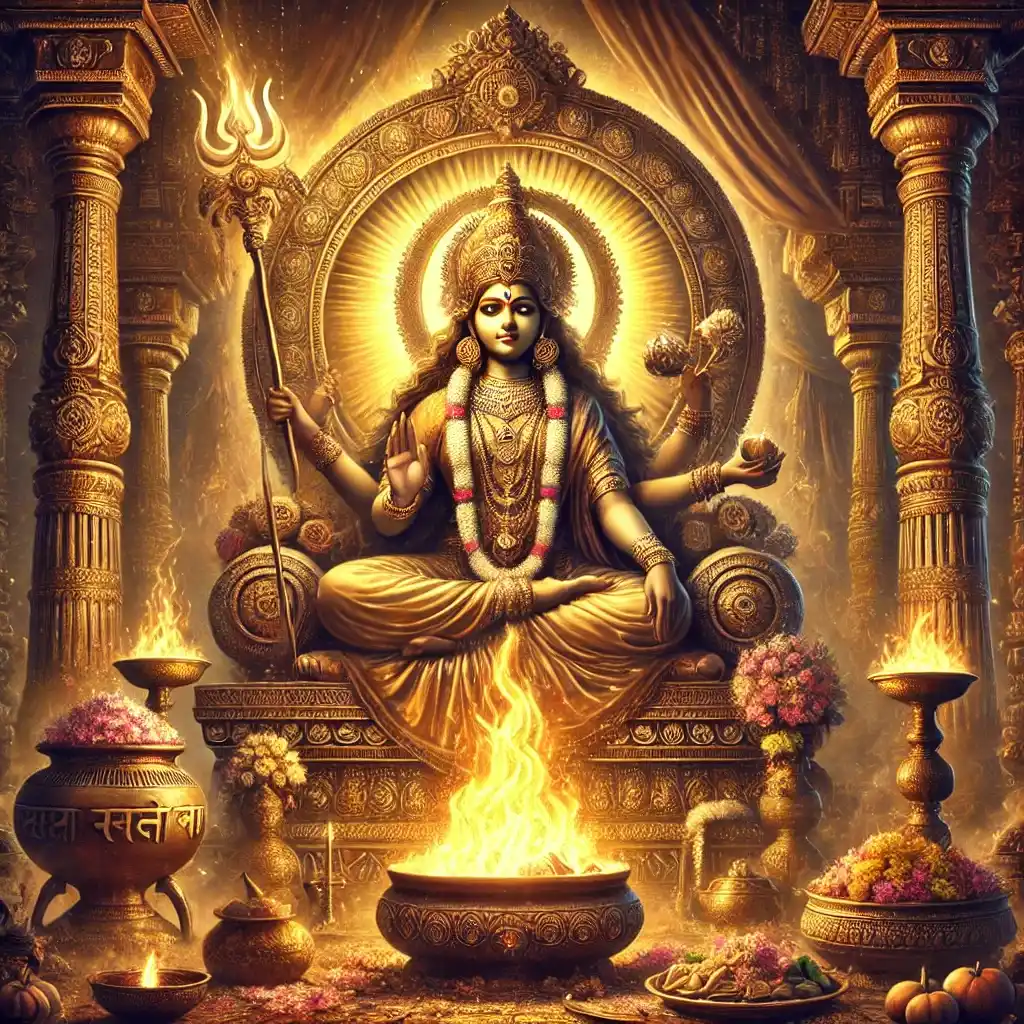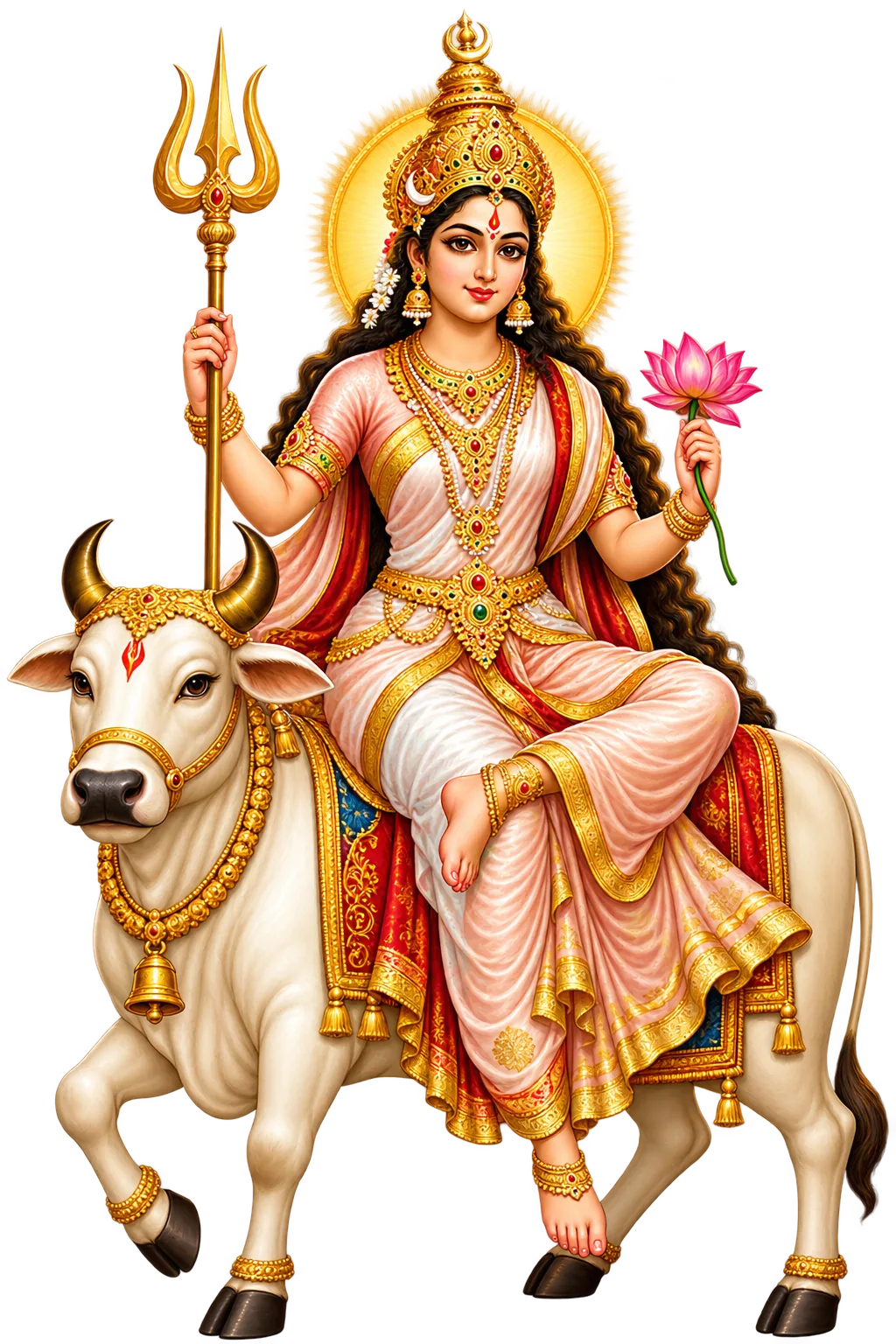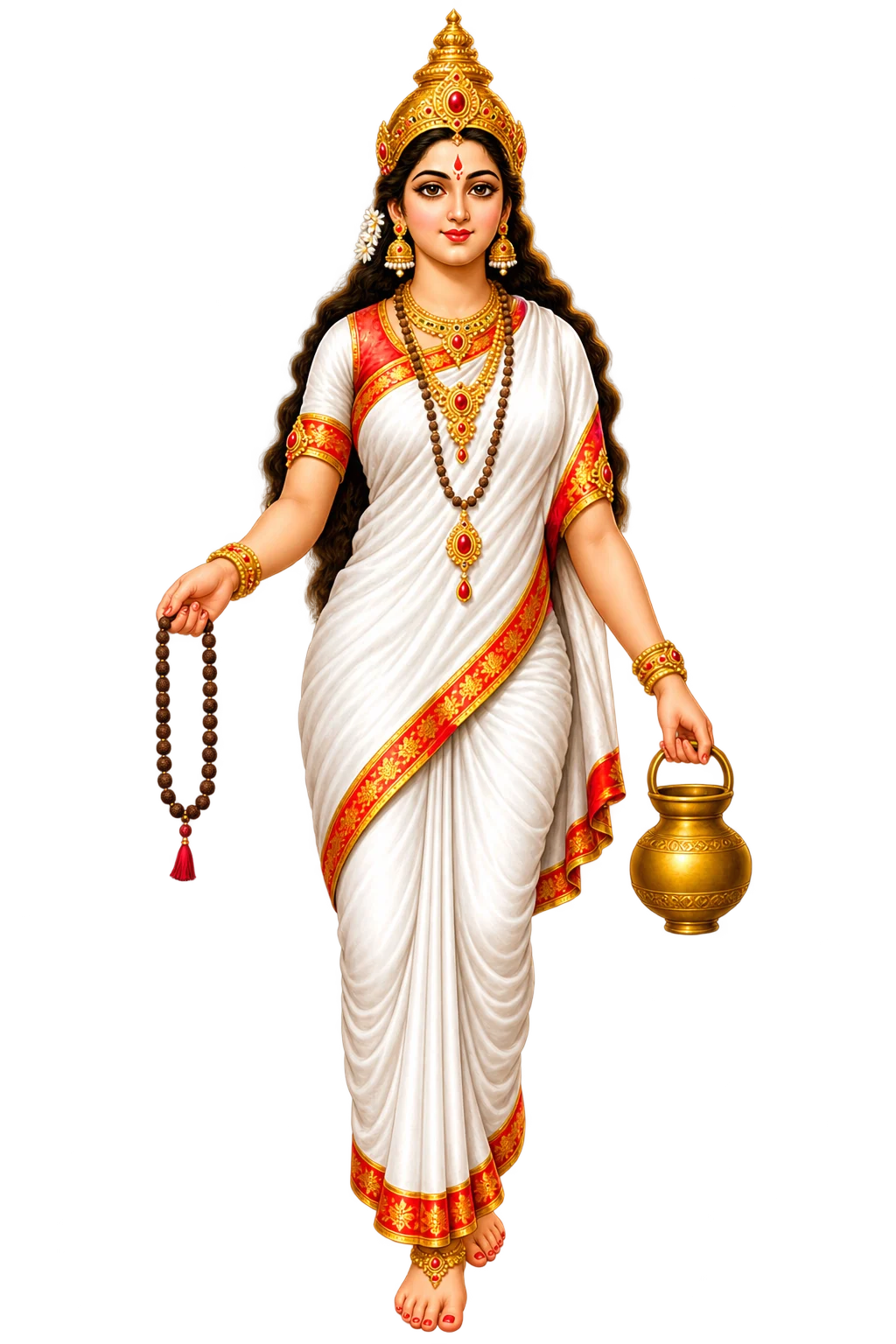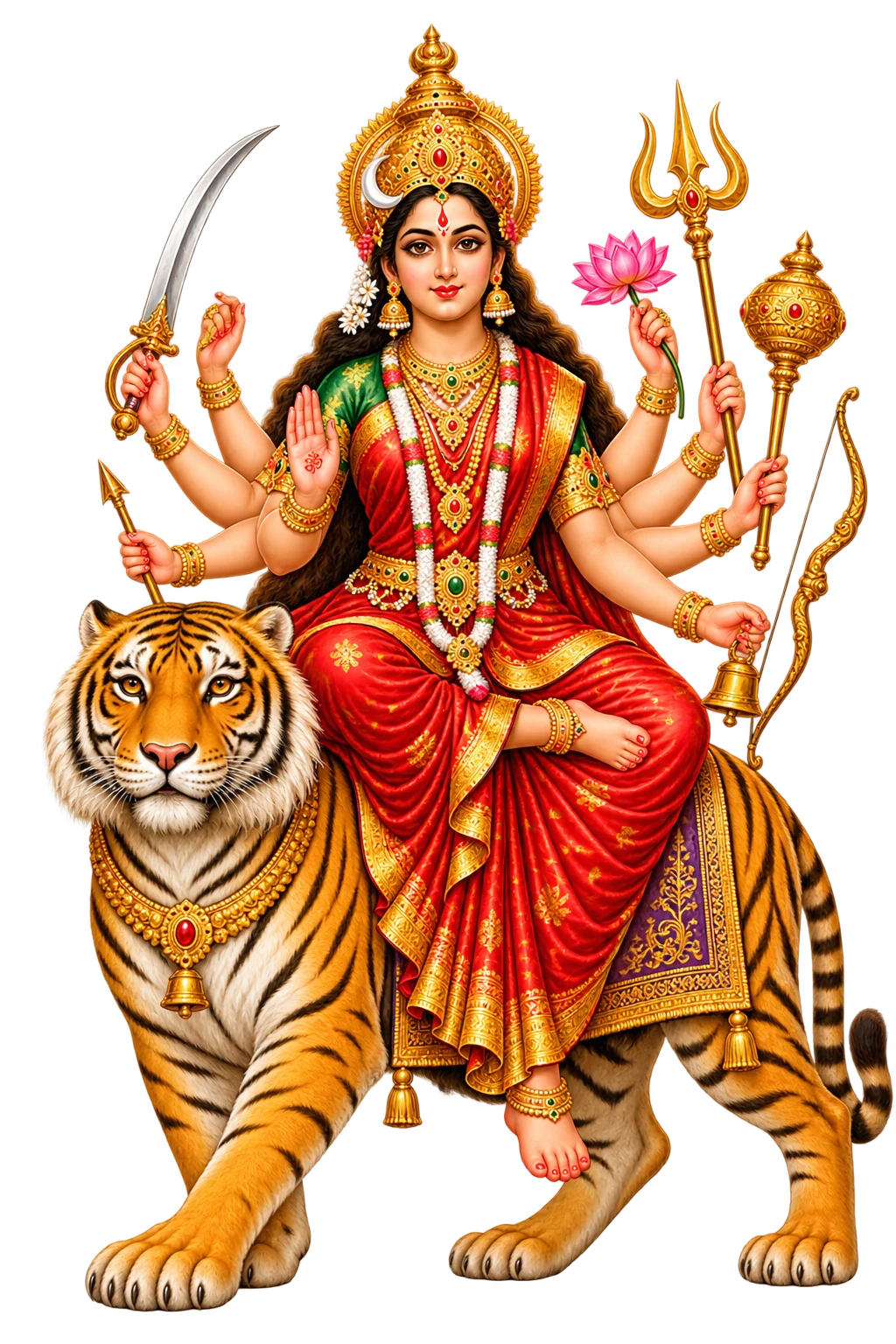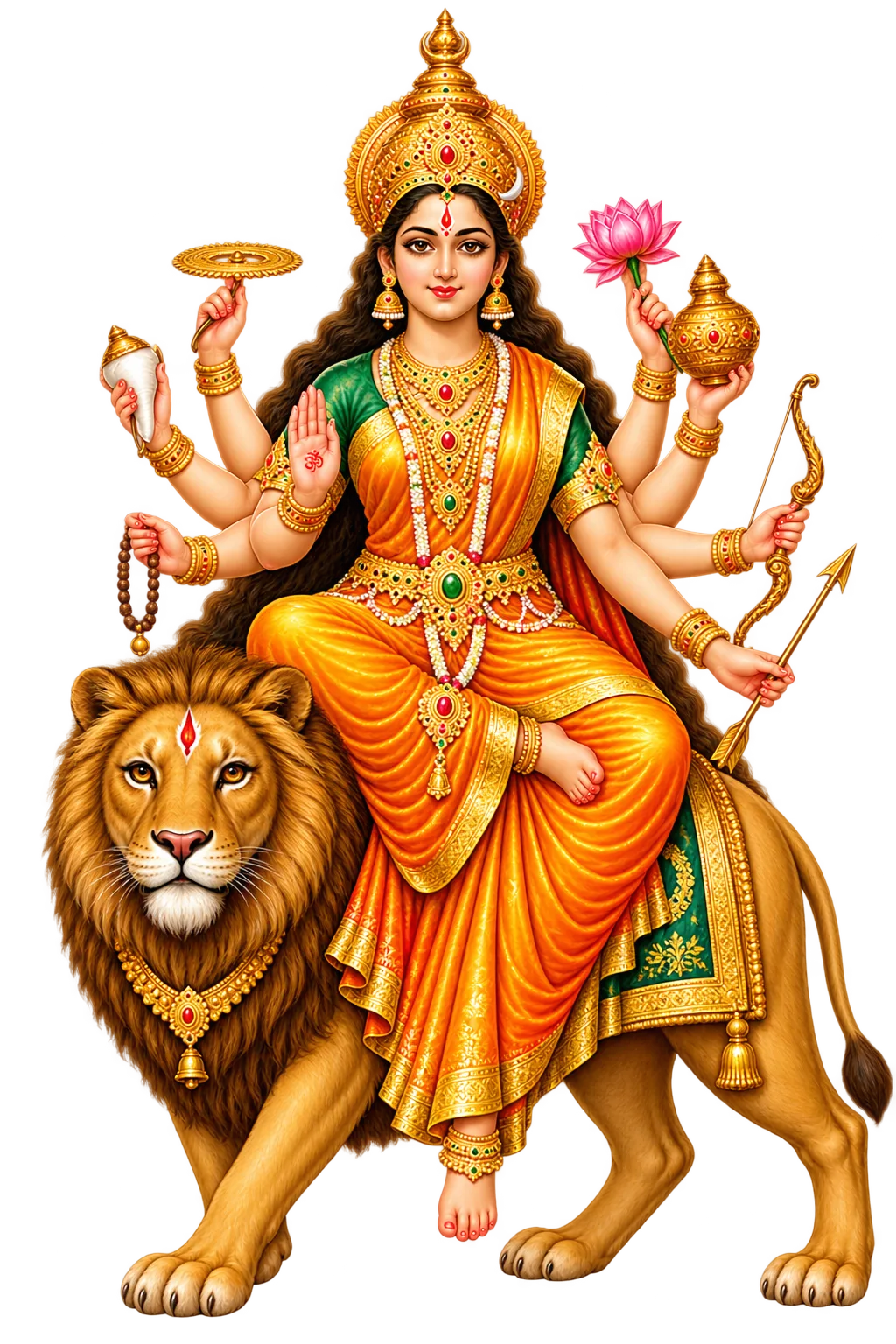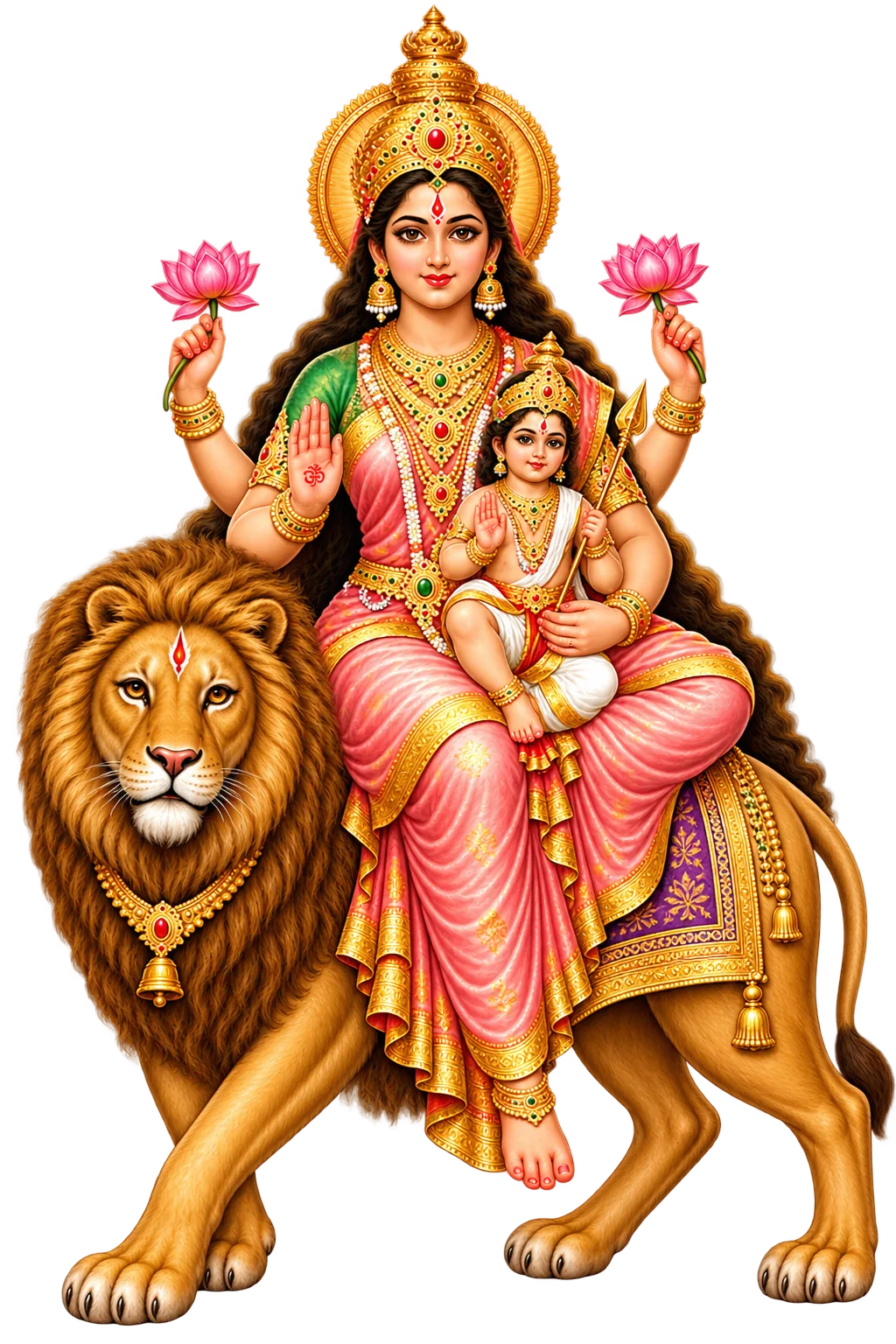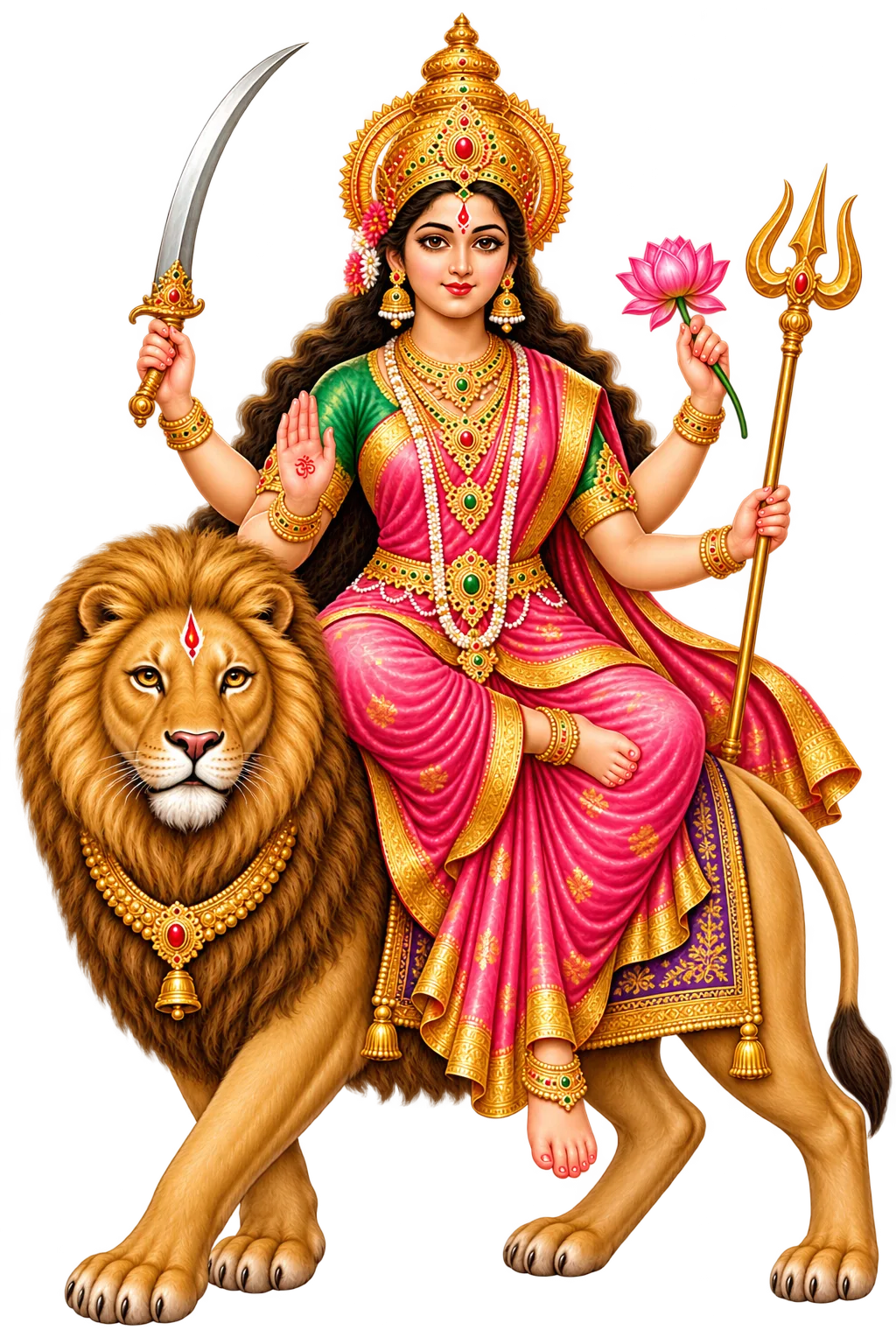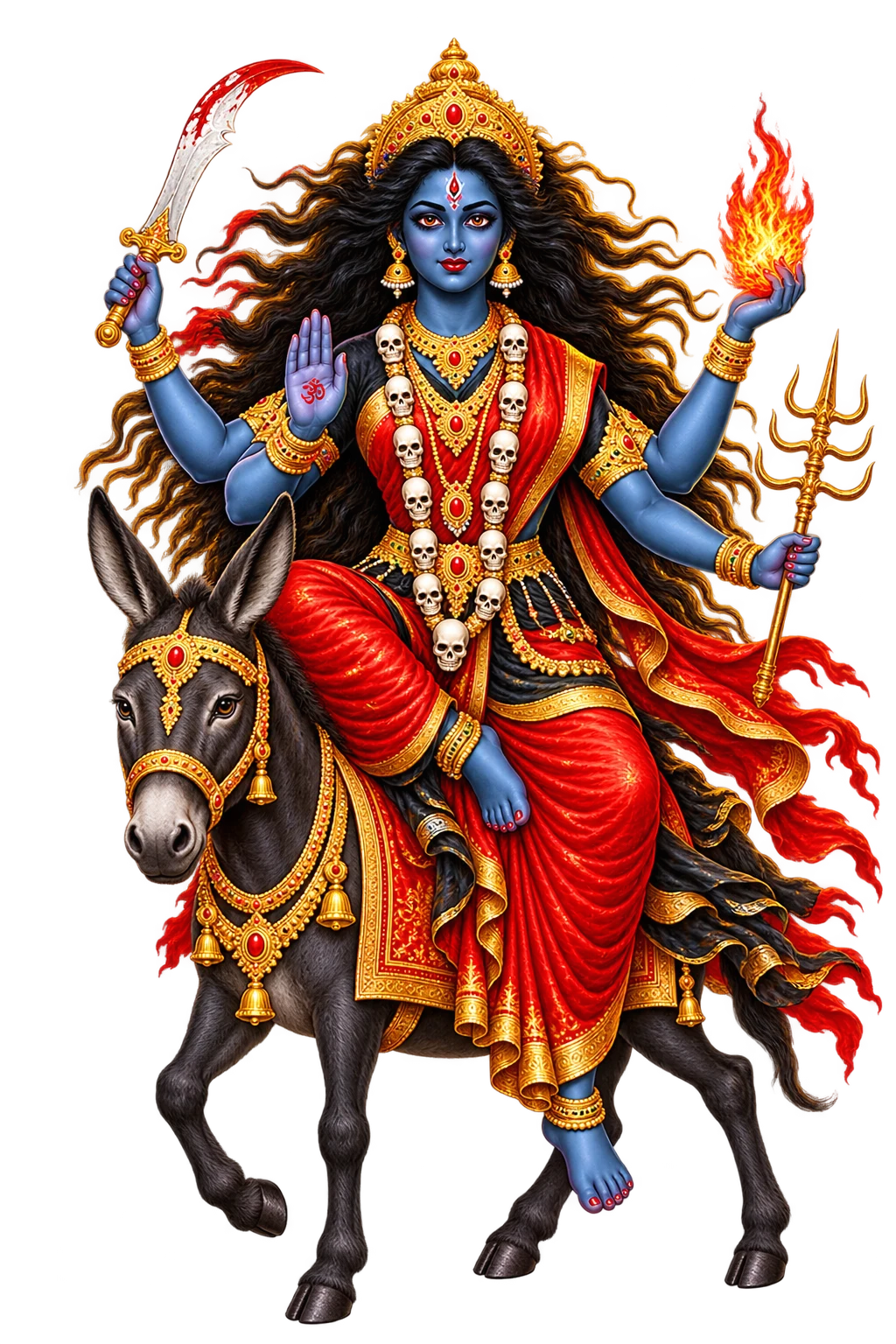
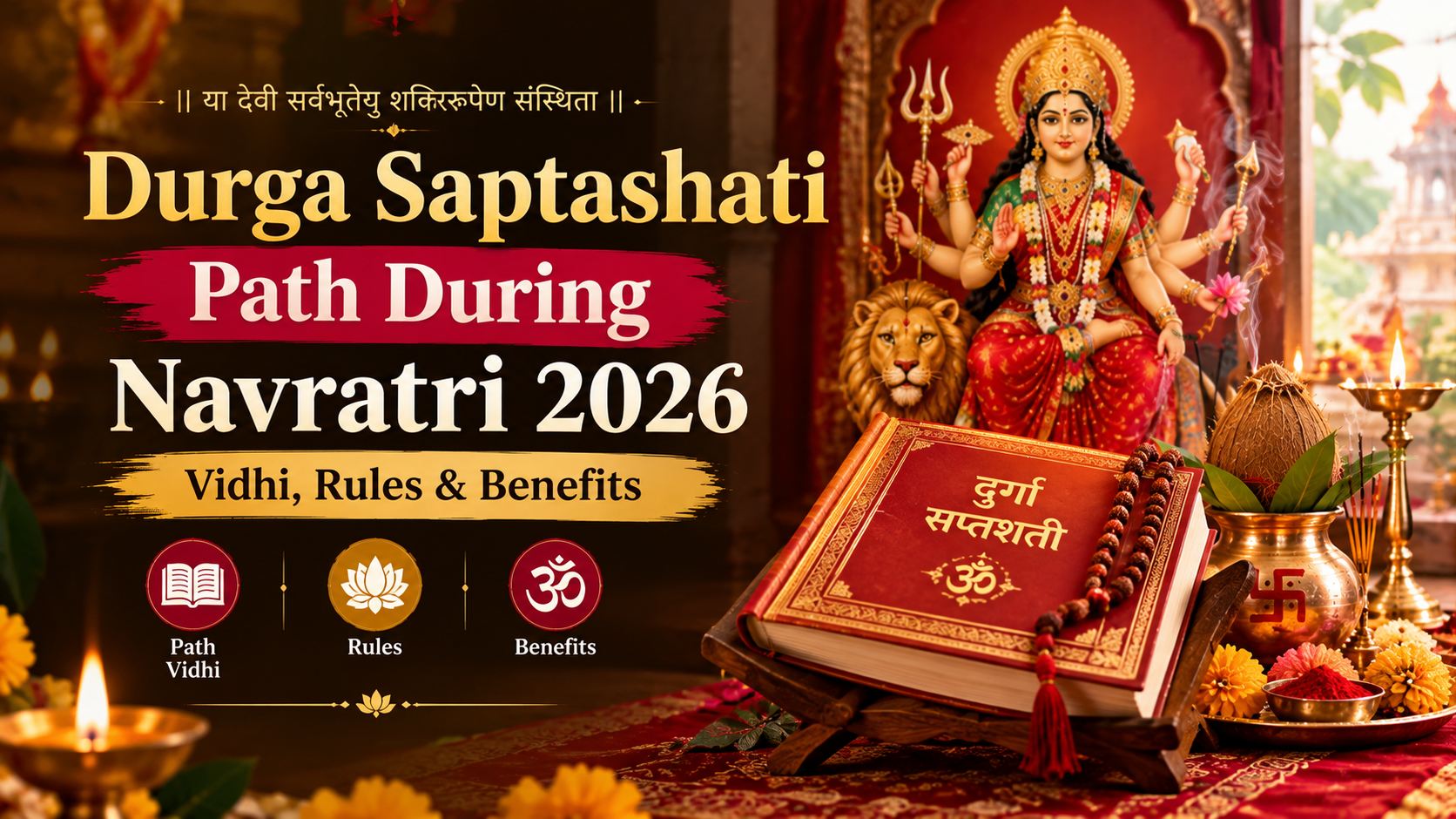
Navratri is one of the most devotional times of the year, and for many families the nine nights are incomplete without a reading of Durga Saptashati. If you are planning to begin this Path in 2026, or you simply want to understand what it involves before you commit to it, this guide walks through the text itself, the traditional Vidhi, the Samagri, the rules that different families follow, and where this practice fits alongside the wider Sharadiya Navratri 2026 calendar.
Quick Answer
Durga Saptashati, also called Devi Mahatmya, is a 700-verse Sanskrit text from the Markandeya Purana that narrates the Devi's victories over Mahishasura, Shumbha and Nishumbha.
Yes, it can be read during Navratri. In fact, Navratri is traditionally considered one of the most appropriate periods for the Path because the nine days are dedicated to Shakti worship.
The text has 13 chapters, divided into three sections called Prathama, Madhyama and Uttama Charitra.
A basic Path approach involves cleaning the puja space, taking a Sankalp, and reading the chapters in a chosen sequence, either across one sitting, three sittings, seven sittings, or across all nine days of Navratri.
Both householders and priests perform this Path; a priest is not strictly mandatory for simple devotional reading, though many families prefer a Pandit-led Anushthan for a full or accelerated recitation.
Rules, timing and exact procedure can differ by Sampradaya, family custom and regional tradition, so what one household follows may not be identical to another.
What Is Durga Saptashati?
Durga Saptashati is a Sanskrit devotional text that forms part of the Markandeya Purana. It is also widely known as Devi Mahatmya ("Glory of the Goddess"), and in many parts of India it is referred to interchangeably as Chandi Path. The name Saptashati comes from the fact that the text contains roughly 700 (sapta-shati) verses spread across 13 chapters.
The text is structured as a dialogue in which the sage Markandeya narrates the story to his disciple, describing how the Devi manifested to protect the universe from demonic forces at different points in cosmic time. It is one of the central scriptures of Shakti worship and has been recited by devotees for many centuries, particularly around Navratri.
It helps to understand how this fits into the broader picture of Devi worship during the festival, which the 9 Forms of Maa Durga guide covers in more depth.
Why Read Durga Saptashati During Navratri?
Navratri is devoted to the worship of Shakti in her many forms, and Durga Saptashati narrates precisely that: the Devi taking form to restore balance. This is why the text is traditionally associated with the nine nights, and why many households and temples schedule a full or partial Path during this period.
Devotees believe that reciting the text with sincerity and attention helps deepen one's connection with Maa Durga and brings a sense of focus, discipline and devotion during the festival. It is traditionally regarded as an act of Sadhana rather than a guaranteed remedy, and it is best approached as part of one's overall Navratri worship rather than as an isolated ritual. For the full festival calendar and puja sequence this year, see the Sharad Navratri 2026 dates and Puja Vidhi guide.
Durga Saptashati 13 Chapters - Complete Overview
The 13 chapters are traditionally understood to cover three major episodes of the Devi's manifestation. Here is a scannable overview:
This table is meant as a general reference. Different published editions and regional traditions sometimes group a few verses slightly differently, so treat this as a structural guide rather than a word-for-word breakdown.
Three Charitras of Durga Saptashati
The 13 chapters are traditionally grouped into three sections, each associated with a different aspect of the Devi:
Prathama Charitra (Chapter 1): This opening chapter describes Vishnu in Yoga Nidra and the emergence of the demons Madhu and Kaitabha. It is traditionally associated with the Devi's Mahakali aspect.
Madhyama Charitra (Chapters 2 to 4): This section narrates the battle against Mahishasura and is traditionally associated with the Mahalakshmi aspect. In many households where time is limited, only the Madhyama Charitra is recited, since it is considered a complete narrative in itself. If it is read on its own, tradition holds that it should not be interrupted partway through.
Uttama Charitra (Chapters 5 to 13): The longest section, describing the defeat of Shumbha, Nishumbha and their generals including Chanda, Munda and Raktabija. This part is traditionally associated with the Mahasaraswati aspect and concludes with the Devi's teachings and the boons granted to her devotees.
Durga Saptashati Path During Navratri 2026 - Which Days?
Shardiya Navratri 2026 begins with Ghatasthapana on Sunday, 11 October 2026 and concludes with Vijayadashami on Tuesday, 20 October 2026. Because Ashtami and Navami tithis can sometimes overlap depending on the Panchang followed in a given region, some calendars mark Durga Ashtami and Maha Navami a day apart from others. It is worth checking a local Panchang or your family priest for the exact tithi timing that applies to you before finalizing your Sankalp.
Within this window, devotees generally follow one of a few common approaches, though none of these is mandatory for everyone:
Single-day reading: The entire text is read in one sitting, often on the first day after Ghatasthapana or on a day the family considers auspicious.
Three-day reading: Chapter 1 on the first day, Chapters 2 to 4 on the second day, and Chapters 5 to 13 on the third day.
Seven-day reading: A slower pace that spreads the chapters across a week, commonly used when reading alongside daily work commitments.
Nine-day reading: One or more chapters are read each day of Navratri, with the Path timed to conclude around Ashtami or Navami.
Whichever schedule you choose, it helps to align it with the day-wise worship you're already following. You can see the specific forms of the Devi associated with each date on the Maa Shailputri Day 1, Maa Mahagauri Day 8 and Maa Siddhidatri Day 9 pages, and cross-check the Kalash timing on the Ghatasthapana 2026 page before you begin.
Durga Saptashati Path Vidhi
The steps below outline a general, widely followed approach. Specific details, such as the exact Mantras used at each stage or the order of certain rituals, can vary by Sampradaya and by what a family's own priest recommends, so treat this as a practical starting framework rather than the only correct sequence.
Clean the Puja space the evening before or the morning of the Path, so the area is ready without last-minute rushing.
Bathe and wear clean clothing before beginning, as physical cleanliness is treated as a basic preparation across nearly all traditions.
Prepare the altar with an image or idol of Maa Durga, a clean Asan to sit on, and the items listed in the Samagri section below.
Take a Sankalp, a short statement of intent naming the purpose of the Path, usually spoken silently or aloud while holding water, rice and flowers in the right hand.
Invoke Maa Durga with a short prayer or the Devi Kavacha where your tradition includes it.
Light the Diya and keep it burning through the reading where practical.
Perform a brief preliminary Puja, offering flowers, Roli and Akshat to the image or Kalash.
Begin the Path, starting from the chapter your chosen schedule calls for, reading slowly and clearly rather than rushing through the verses.
Follow your chosen recitation sequence without switching between different published sequences midway, since consistency is valued more than speed.
Complete the concluding rituals associated with the day's reading, such as the closing prayers some editions include after each Charitra.
Perform Aarti once the day's portion is complete.
Offer Bhog or Prasad, commonly fruits or a simple sweet, after the Aarti.
Close with a short prayer, thanking the Devi and stating the completion of that day's Path.
For a fuller home Puja sequence covering the Kalash and the rest of the daily worship, see Navratri Puja at home.
Durga Saptashati Path Rules
Across most traditions, a few practical principles are commonly followed:
Keep the Puja space and your own person clean before and during the Path.
Maintain a calm, respectful environment, free from unnecessary noise or interruption.
Approach the reading with focus rather than as a routine task to finish quickly.
Pay attention to correct pronunciation as far as possible; if you are new to Sanskrit recitation, reading slowly from a reliable printed edition is preferable to rushing.
Try to stay consistent with the schedule you have chosen rather than skipping days without reason.
Avoid casual interruptions such as phone calls or unrelated conversations during the actual recitation.
Stick to the sequence and edition you started with rather than mixing verses from different sources.
Respect the specific customs your family or Sampradaya follows, even where they differ from what is written generally online.
If you are undertaking a longer or more elaborate Anushthan, it is reasonable to take guidance from a priest familiar with that specific procedure.
Because these details genuinely vary by tradition, it is worth checking with an elder in your family or your family priest if you are unsure about a particular step.
Can You Read Durga Saptashati at Home?
Yes. Simple devotional reading of Durga Saptashati at home is a common and long-standing practice, and it does not require a priest to be present. Many households read it themselves every Navratri, either individually or together as a family.
That said, there is a difference between a simple, devotional home reading and a priest-guided Path performed as part of a structured Anushthan with specific Sankalp, timing and additional rituals. For beginners, a few things are worth keeping in mind:
Read from a printed edition with Sanskrit and a transliteration or translation you can follow.
Do not worry excessively about achieving perfect pronunciation on your first attempts; sincerity and steady practice matter more than getting every syllable exact from day one.
Set aside a realistic amount of time each day rather than overcommitting to a pace you cannot sustain.
If you plan a more elaborate, priest-guided recitation for a specific purpose, that is a separate undertaking from a simple home reading, and guidance from someone experienced in that procedure is genuinely useful there.
There is no need to feel that reading the text without a priest will somehow cause harm. Millions of households across India read Durga Saptashati at home every year as an act of personal devotion.
Durga Saptashati Path Samagri
Exact Samagri can vary by region and family custom, but the following items are commonly used for a home Path during Navratri:
For a complete list covering the rest of the festival, not just this Path, see the Navratri Puja Samagri List 2026.
Durga Saptashati Path and Navratri Fasting
Many devotees observe a Navratri fast alongside their Path, but the two are not strictly dependent on each other. Fasting practices themselves vary widely, some people avoid grains entirely, others follow a lighter Satvik diet, and some do not fast at all while still performing the Path with full devotion.
There is no universal rule that says fasting is a prerequisite for reading Durga Saptashati. If your family tradition combines the two, that is worth continuing; if it does not, that is equally valid. For a full breakdown of what is typically eaten and avoided, see the Navratri fasting rules guide, and if you are fasting across the nine days, the Navratri Parana 2026 page covers how to break the fast correctly once Navratri concludes.
Durga Saptashati Path on Ashtami and Navami
Ashtami and Navami carry particular significance in the Navratri calendar. Ashtami is associated with Maa Mahagauri, and Navami with Maa Siddhidatri, the day that traditionally concludes the main worship period before Vijayadashami.
Many households time the conclusion of their Durga Saptashati Path to coincide with one of these two days, often alongside a Havan and Kanya Puja. If your Path has been spread across the nine days, Navami is commonly treated as the natural closing point, with the final Aarti and Bhog offered that day.
This is also when Kanya Puja and Havan are most commonly performed. For detailed guidance on those specific rituals, see Navratri Ashtami 2026, Navratri Navami 2026, Navratri Kanya Puja 2026 and Navratri Havan 2026.
Durga Saptashati Path vs Chandi Path
These two terms are often used interchangeably, but it helps to understand where they overlap and where usage differs by region and tradition.
Where a tradition uses these terms interchangeably, that is entirely valid; the important thing is understanding which specific procedure your family or priest is referring to, since the finer details can differ.
How Long Does Durga Saptashati Path Take?
This depends heavily on the pace and format chosen:
A complete, unhurried reading of all 13 chapters in one sitting generally takes several hours for a fluent reader; beginners will need longer.
A three-day reading spreads this comfortably across shorter daily sessions.
A seven-day or nine-day reading allows for 20 to 60 minutes of recitation per day, depending on how the chapters are divided.
A priest-led Anushthan involving additional Mantras, Havan and other elements will naturally take longer than a simple text reading and its duration is best confirmed with the priest conducting it.
There is no single universal time estimate that applies to everyone, since pace, familiarity with Sanskrit, and the specific format chosen all affect the total duration.
Can Women Read Durga Saptashati?
Yes, women read and recite Durga Saptashati in households and temples across India, and there is no single universal restriction on this practice. Specific customs do vary between families and regional traditions, and some households follow additional considerations of their own during certain days. Where such questions arise, it is best addressed within your own family or Sampradaya's guidance, since practices genuinely differ and no single answer applies uniformly to everyone.
Common Mistakes During Durga Saptashati Path
Starting the Path without first understanding the recitation sequence you intend to follow.
Rushing through the verses purely to finish quickly rather than reading with attention.
Treating the Path as a casual, background activity rather than a focused act of worship.
Mixing verses or sequences from different published editions midway through.
Adding or altering Mantras based on something seen online without verifying it against a reliable text.
Stopping partway through the Madhyama Charitra when tradition holds it should be read without interruption.
Skipping the concluding prayers or Aarti after finishing a day's portion.
Following a random social media video's instructions without checking them against a known, reliable source.
Assuming that one family's or one region's specific procedure is the only correct way to perform the Path.
Losing consistency by skipping several days without any real reason, then trying to rush through the remaining chapters at the end.
Durga Saptashati Path Benefits
The benefits associated with Durga Saptashati Path are traditional and devotional in nature, connected to Shakti worship rather than being scientifically documented outcomes. Devotees traditionally associate the Path with:
A deeper devotional connection with Maa Durga during Navratri.
Greater focus, discipline and consistency through the practice of daily recitation.
Time set aside for spiritual reflection during a busy festival period.
Participation in the broader tradition of Shakti worship that Navratri centers around.
A structured way to hold one's Sankalp and prayers through the nine days.
A renewed sense of devotion and connection with family traditions passed down through generations.
These are understood as traditional religious beliefs held by devotees, not claims of guaranteed material outcomes, and the Path is best approached with that understanding.
Durga Saptashati Path and Maa Baglamukhi Worship
This is an important distinction to understand clearly. Maa Baglamukhi is one of the Dash Mahavidyas, a separate group of ten Tantric goddess forms, and she is not one of the nine Navadurga forms worshipped during the standard nine days of Navratri. Durga Saptashati itself is primarily associated with Maa Durga and the broader Shakti tradition narrated in the Devi Mahatmya, rather than being a Mahavidya-specific text.
That said, some devotees who follow the Dash Mahavidya tradition undertake Maa Baglamukhi Puja, Mantra Jaap or Havan during Navratri as part of their own family or Sampradaya practice, particularly during Gupt Navratri periods. These are related through the wider devotional context of Shakti worship, but they are distinct rituals with their own procedures, and one should not be presented as identical to the other. Readers interested in that specific worship can refer to Maa Baglamukhi Puja during Navratri for more detail on how it is traditionally approached, including in Nalkheda.
Durga Saptashati Path in Nalkheda
Nalkheda, in Agar Malwa district of Madhya Pradesh, is known for its temple dedicated to Maa Baglamukhi on the banks of the Lakhundar river. Many devotees who travel there during Navratri combine their visit with priest-guided worship, since Nalkheda has a long-standing tradition of Tantric and Vedic ritual practice.
It is worth being clear that Durga Saptashati is not performed exclusively at Nalkheda; it is read in temples and homes across the country. What Nalkheda is specifically known for is priest-guided, tradition-rooted worship, including for those undertaking a more structured Anushthan where correct pronunciation, sequence and procedure genuinely matter more than they would for a simple personal reading at home. For readers who prefer priest-guided worship during this period, see Navratri Puja in Nalkheda for details on how such worship is typically arranged, and the Maa Baglamukhi Puja booking page if you would like to arrange a verified, priest-led service.
Durga Saptashati Path Checklist
Choose your Path method (single-day, three-day, seven-day or nine-day)
Prepare a clean Puja space
Arrange a reliable printed copy of the text
Gather the basic Samagri listed above
Decide your Sankalp before beginning
Follow your chosen recitation sequence without switching midway
Complete the concluding rituals for each day's portion
Offer Bhog or Prasad after each sitting
Perform Aarti at the close of each reading
Maintain consistency across the days you have chosen
Frequently Asked Questions
1. What is Durga Saptashati Path?
It is the traditional recitation of the 700-verse Devi Mahatmya text from the Markandeya Purana, describing the Devi's manifestation and her victories over demonic forces.
2. Can Durga Saptashati be read during Navratri?
Yes. Navratri is one of the most common and traditionally appropriate times for this Path, since the nine days are dedicated to Shakti worship.
3. How many chapters are in Durga Saptashati?
13 chapters, containing approximately 700 verses in total.
4. What are the three Charitras?
Prathama Charitra (Chapter 1), Madhyama Charitra (Chapters 2 to 4) and Uttama Charitra (Chapters 5 to 13).
5. What is the difference between Durga Saptashati and Chandi Path?
They usually refer to the same core text. "Chandi Path" is more common in certain regions and can sometimes denote a more elaborate, priest-led recitation.
6. Can I read Durga Saptashati at home?
Yes, a simple devotional reading at home is common and does not require a priest.
7. Is a priest required for Durga Saptashati Path?
Not for a basic home reading. A priest is commonly involved for a structured Anushthan or where specific Tantric procedures are followed.
8. What are the rules for Durga Saptashati Path?
Cleanliness, focus, correct pronunciation as far as possible, consistency, and following a single chosen sequence without interruption are the main practical rules.
9. How many days does Durga Saptashati Path take?
It can be read in a single sitting or spread across three, seven or nine days, depending on the schedule you choose.
10. Can women read Durga Saptashati?
Yes. Practices can vary by family tradition, but there is no single universal restriction.
11. Can Durga Saptashati be read during fasting?
Yes, though fasting is not a strict prerequisite for the Path; the two practices are commonly combined but are not dependent on each other.
12. What Samagri is needed?
A Durga image, Diya, incense, flowers, Roli, Akshat, fruits and a reliable copy of the text are commonly used; exact items can vary by tradition.
13. Which day of Navratri is best for Durga Saptashati Path?
There is no single mandatory day. Many devotees begin near Ghatasthapana or spread the reading across all nine days, concluding around Ashtami or Navami.
14. Can Durga Saptashati be read on Ashtami?
Yes, and many households specifically schedule the concluding chapters around Ashtami as part of their nine-day reading.
15. Can Durga Saptashati be read on Navami?
Yes, Navami is a commonly chosen day to complete the Path, often alongside Havan and Kanya Puja.
16. What should be done after completing the Path?
Perform the Aarti, offer Bhog or Prasad, and close with a short prayer of gratitude.
17. What are the traditional benefits of Durga Saptashati Path?
Devotees traditionally associate it with a deeper connection to Maa Durga, focus, discipline and spiritual reflection, understood as devotional beliefs rather than guaranteed outcomes.
18. Can Durga Saptashati Path be performed during Navratri at home?
Yes, this is one of the most common ways families observe the text during the festival.
19. What is Chandi Path during Navratri?
It generally refers to the same Devi Mahatmya text, sometimes recited in a more elaborate or Tantric format depending on regional tradition.
20. Can Maa Baglamukhi Puja be performed during Navratri?
Yes, some devotees who follow the Dash Mahavidya tradition perform Maa Baglamukhi Puja during Navratri or Gupt Navratri, as a separate practice from the standard Navadurga worship.