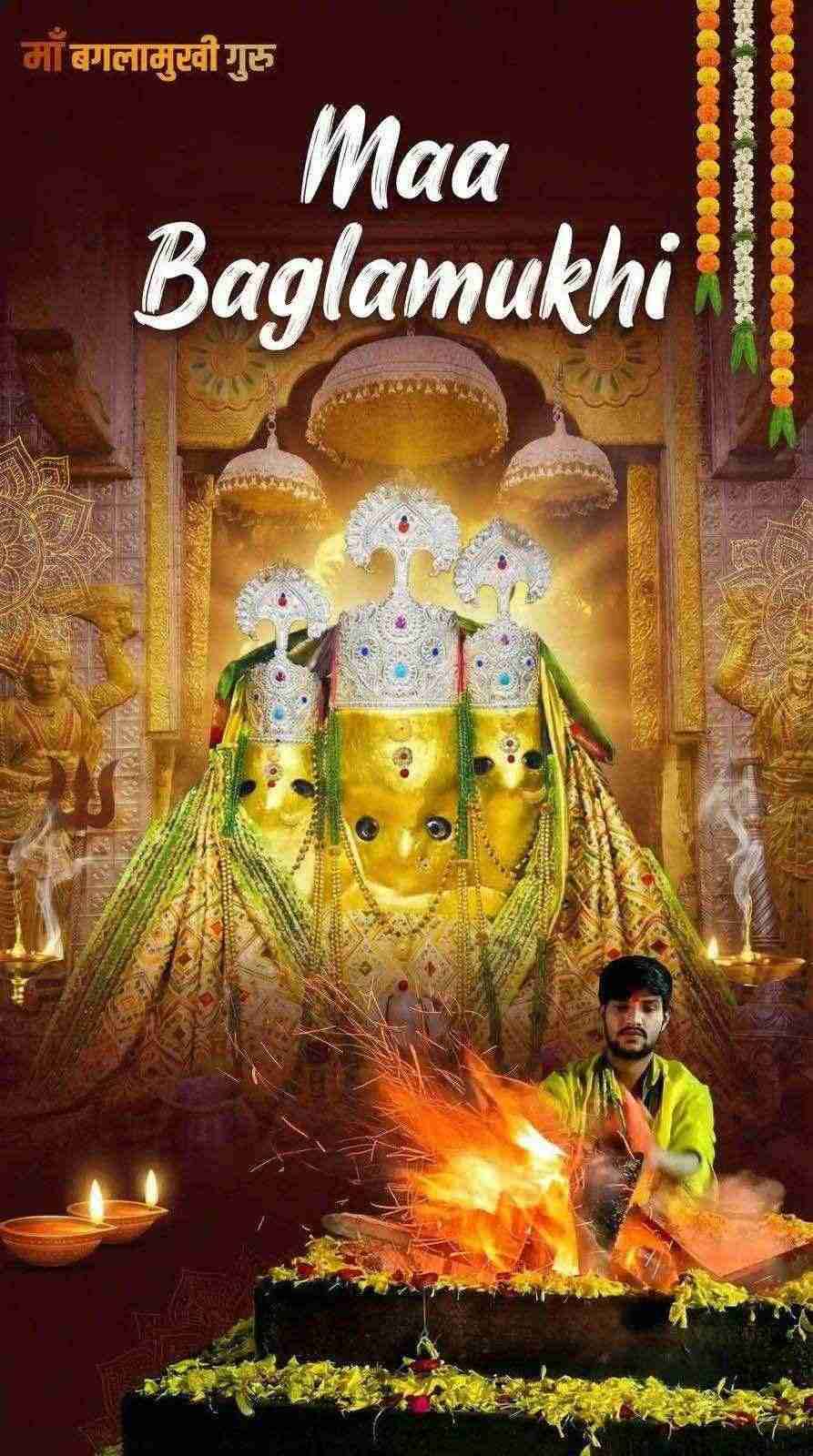

Every year as Gupt Navratri approaches, the same honest question reaches me from devotees: "Should I do a puja, or a havan - and how do I know which one my situation needs?" It is a good question, and it deserves a clear answer rather than a sales pitch. The three main forms of Baglamukhi worship - puja, havan and anushthan - are not ranked from worse to better; they are suited to different needs. Choosing well means matching the worship to your situation, not simply choosing the biggest.
This guide compares the three plainly, so that during Gupt Navratri 2026 (15–23 July) you can choose the right one with confidence. Wherever a belief is described, it is presented as tradition holds it, not as a guaranteed outcome.
Puja, havan, anushthan - the quick answer
In short: a puja is devotional worship for regular blessings and lighter needs; a havan is a fire ritual that seals and intensifies the worship, suited to a specific pressing matter; and an anushthan is a multi-day mantra discipline, sealed by a havan, for deep or long-standing problems. The heavier and more persistent the difficulty, the more complete the ritual it calls for.
None is "holier" than another. A sincere puja for a small need is more fitting than an anushthan undertaken out of anxiety; equally, a single puja for a years-long crisis may be too light. The art lies in matching the worship to the weight of the need.
What is a Baglamukhi puja?
A Baglamukhi puja is devotional worship - offerings, mantra and aarti before the image or yantra of Maa Baglamukhi - performed for blessings, protection and regular devotion. It can be observed daily at home or performed by acharyas on a specific day.
A puja is the foundation of all worship and the most accessible form. During Gupt Navratri, a daily Gupt Navratri Baglamukhi Puja suits families and individuals seeking the season's blessings and general protection, without a specific heavy crisis to address.
What is a Baglamukhi havan?
A Baglamukhi havan is a sacred fire ritual in which offerings are made into the consecrated fire with the mantra, sealing and intensifying the worship. Usually a single-day ceremony, it is chosen for a specific, pressing matter that calls for the complete, sealed form of worship.
Where a puja honours and invokes, a havan offers through Agni and "closes the circuit." It is the natural choice when a particular difficulty - a hearing, a threat, a blocked matter - needs focused, intensified attention during the festival.
What is a Baglamukhi anushthan?
A Baglamukhi anushthan is an intensive, multi-day discipline of high-count mantra japa under strict rules, concluding with a havan - undertaken for deep-rooted or long-resisting problems. It is the most complete and demanding form of her worship.
An anushthan builds cumulative spiritual energy over days that a single ritual cannot, which is why it is reserved for the heaviest matters - prolonged disputes, persistent enemies, stubborn crises. Across Gupt Navratri's nine nights, it fits the season perfectly, sealed by a havan at the peak.
Side-by-side comparison
How to choose - by your situation
The clearest way to choose is by the weight and urgency of your need. Use this simple guide:
When in doubt, describe your situation honestly to an experienced acharya, who can recommend proportionately rather than over- or under-prescribing.
Can you combine them?
Yes - in fact, the three naturally build on one another. A puja is part of every havan, and a havan concludes every anushthan. Many devotees observe daily puja through Gupt Navratri and add a havan on Ashtami or Navami; those with deeper needs undertake a full anushthan that contains both.
So the choice is rarely "either/or" in a strict sense. It is more a question of how far along this spectrum your situation calls you - from a simple daily puja, to a sealing havan, to a complete anushthan.
Choosing for Gupt Navratri 2026
For Gupt Navratri 2026 (15–23 July), a practical approach is: observe or book a daily puja for the season's blessings; add a havan on an auspicious day (Day 1, Ashtami or Navami) if you have a specific matter; and choose a nine-day anushthan if your difficulty is serious and long-standing.
An honest word on cost and value
It is worth saying plainly: a bigger ritual is not automatically a better one for you. The right worship is the one that fits your need. Undertaking an expensive anushthan for a light matter is not more virtuous, and a sincere puja is never "lesser" for being simple.
A trustworthy acharya will recommend proportionately and explain why - not push the most elaborate option. Value in worship comes from authenticity, correct procedure and sincerity of sankalp, not from expense alone. Choose honestly, according to your genuine situation and means.
Have the right ritual performed at Nalkheda
Whether you need a simple puja, a focused havan, or a complete anushthan, our acharyas at Nalkheda Siddha Peeth perform each with authentic procedure, proper sankalp and the correct Gupt Navratri muhurta. If you are unsure which to choose, a short consultation will help you decide proportionately.
Explore the Gupt Navratri Baglamukhi Puja, a Baglamukhi Havan, or a Baglamukhi Anushthan. Devotees from India, the USA, UK, Canada, Australia, UAE, Singapore, Nepal and Mauritius are welcome, with live sankalp and worldwide prasad delivery.
📞 Speak with Acharya Vishnu Sharma: +91 73895 67650, or message on WhatsApp for honest guidance. Book before 15 July 2026 to align with the festival.
Quick summary
Puja: devotional worship for blessings and general protection - daily or performed for you.
Havan: a fire ritual, usually one day, for a specific pressing matter.
Anushthan: an intensive multi-day discipline, sealed by havan, for deep-rooted problems.
Choose by weight of need, not by size - a bigger ritual is not automatically better.
They combine: puja is in every havan; havan concludes every anushthan.
Unsure? A short consultation helps you choose proportionately.
Conclusion
The question is never really "which ritual is best?" but "which ritual is right for me?" A puja, a havan and an anushthan each have their place, and the wisdom lies in matching the worship honestly to your need - light for the light, deep for the deep. During Gupt Navratri 2026, whichever you choose, let it be authentic, sincere, and proportionate. That is the worship the Mother receives most gladly. Jai Maa Baglamukhi.
FAQ Section
1. What is the difference between a Baglamukhi puja and a havan?
A puja is devotional worship - offerings, mantra and aarti - for blessings and general protection. A havan is a fire ritual that offers and seals the worship through Agni, chosen for a specific pressing matter.
2. Which is better, puja or havan?
Neither is inherently better; they suit different needs. A puja is ideal for regular devotion and blessings, while a havan is chosen for a specific matter needing focused, intensified worship.
3. What is the difference between a havan and an anushthan?
A havan is a fire ritual, usually one day. An anushthan is a multi-day discipline of high-count mantra japa that concludes with a havan - chosen for deep, persistent problems.
4. Which Baglamukhi ritual should I choose for Gupt Navratri 2026?
Choose by the weight of your need: a daily puja for blessings, a havan on an auspicious day for a specific matter, or a nine-day anushthan for a serious, long-standing problem.
5. Can I do a puja and a havan together?
Yes. A puja is part of every havan, and a havan concludes every anushthan. Many devotees observe daily puja through the festival and add a havan on Ashtami or Navami.
6. Is a bigger, more expensive ritual always better?
No. The right worship is the one that fits your need. A sincere puja is never "lesser" for being simple, and an elaborate ritual for a light matter is not more virtuous.
7. Can a puja be done at home, but not a havan?
A simple puja is easily done at home. A small havan can be done at home with care and fire safety, but a full havan and an anushthan are best performed by trained acharyas.
8. Which ritual is best for a court case or serious enemy?
Serious, long-standing matters are usually best served by an anushthan concluded by a havan, or at least a dedicated havan - chosen in consultation with an experienced acharya.
9. How do I decide if I'm unsure?
Describe your situation honestly to an experienced acharya. A trustworthy one will recommend proportionately rather than pushing the most elaborate option.
10. Does the type of ritual affect the result?
The tradition holds that authenticity, correct procedure and sincerity of sankalp matter most - and that the worship should be proportionate to the need. Benefits are matters of faith, not guarantees.
11. When should I book for Gupt Navratri 2026?
Before 15 July, as auspicious festival days and nine-day anushthans fill quickly and require preparation.
12. Can I book any of these online from abroad?
Yes. Puja, havan and anushthan can all be booked online, performed at the correct Indian muhurta, with sankalp by name and gotra, live video, and worldwide prasad delivery.