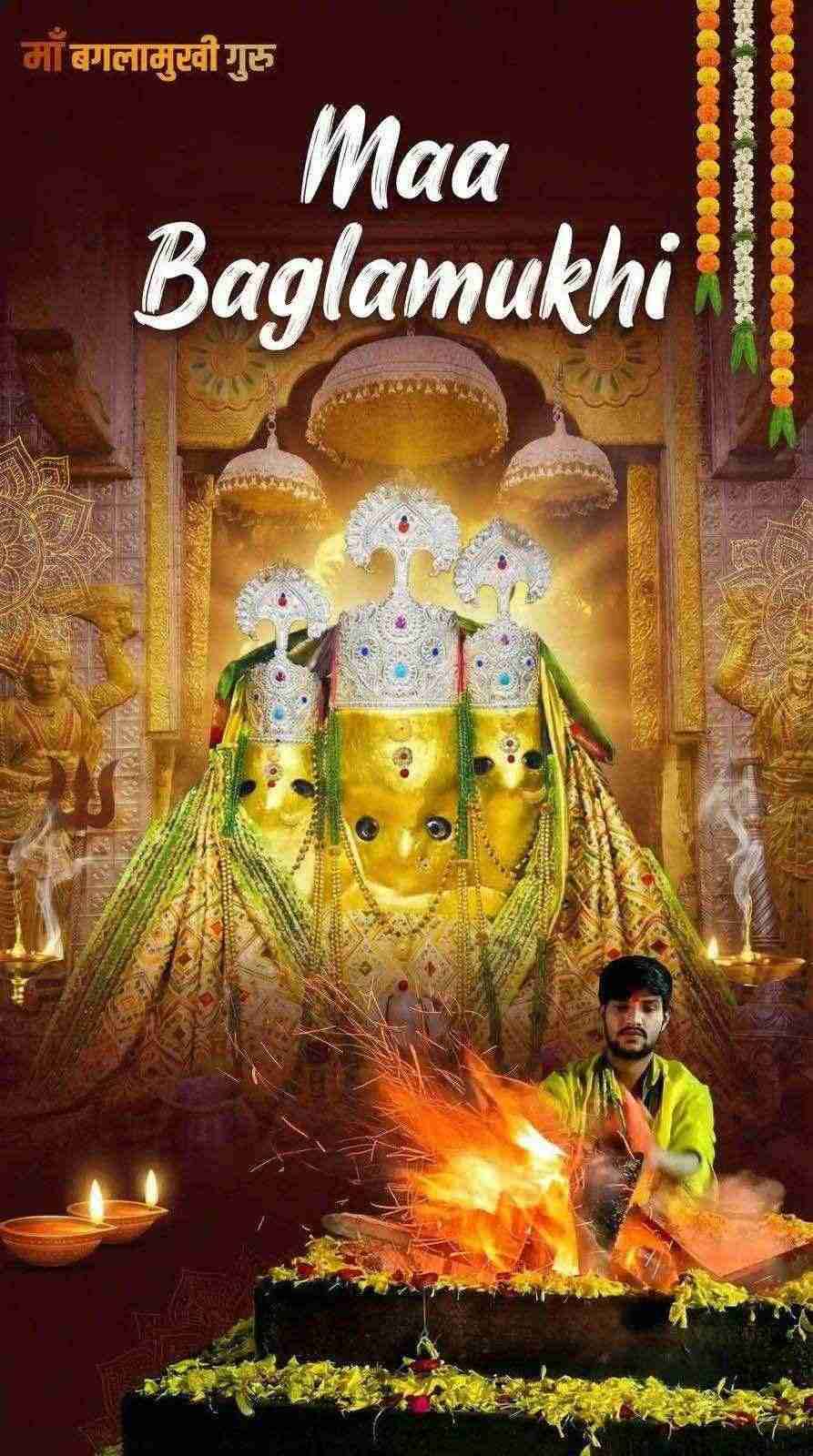

Few phrases are as misunderstood as "Shatru Vinash." Taken literally, it sounds like the destruction of a person. In the Vedic and Tantric tradition, it means something quite different - the stilling and neutralising of the harm an adversary intends, so that the devotee is protected and negativity is turned away. This is the true spirit of the Baglamukhi puja for enemies, and it is essential to understand it correctly before approaching it.
Maa Baglamukhi, the eighth Mahavidya, is the goddess of Stambhan - the power to halt hostility. For anyone facing conspiracy, malicious gossip, a scheming rival, or persistent harassment, her worship has long offered a shield. This guide explains that worship honestly: what it means, the mantra and vidhi, its benefits, and the clear ethical line that the tradition itself draws. Wherever a belief is described, it is presented as tradition holds it, not as a guaranteed outcome.
What is Baglamukhi puja for enemies (Shatru Vinash)?
Baglamukhi puja for enemies is a form of worship invoking Maa Baglamukhi's Stambhan Shakti - her power to still and neutralise hostility - to protect a devotee from adversaries, conspiracy and harmful intent. In the tradition, it is a defensive, protective practice, not an act of aggression against a person.
The practice centres on Baglamukhi's mantra, offered with a clear sankalp for protection. It is chosen by devotees facing malicious opponents, scheming rivals, false allegations, or persistent negativity directed at them. Its aim, correctly understood, is to disarm the harm - to render hostile intentions ineffective - while keeping the devotee steady and shielded. To understand the deity herself, see who Maa Baglamukhi is.
What "Shatru Vinash" really means - the ethical truth
"Shatru Vinash" means the destruction of enmity, not of a human being. In the tradition, the true "enemy" is the harmful intention, the conspiracy, and the negativity aimed at the devotee - and it is that which the Goddess neutralises. Her power is protective and truth-favouring, never a weapon against an innocent person.
This is not a softening of the tradition; it is the tradition. Maa Baglamukhi is shown holding a demon's tongue and a club - the silencing of lies and the stilling of harmful force. Read correctly, this is protection and the restoration of the devotee's own peace, not violence. The tradition holds plainly that worship undertaken to harm an honest person, out of jealousy or revenge, does not carry the Goddess's grace and rebounds on the one who attempts it. A sincere devotee prays to be protected from an enemy's harm - that is the whole of it.
Why Maa Baglamukhi is invoked against enemies
Maa Baglamukhi is invoked because, among the ten Mahavidyas, she is uniquely the goddess of Stambhan - stilling, restraining, immobilising. Where other forms of the Mother grant abundance or wisdom, Baglamukhi grants the power to halt what is coming against you.
Her association with the colour yellow, with turmeric, and with the stilling of speech all point to this protective function. For a devotee under attack - whether by scheming, slander, or unseen negativity - hers is the grace that "freezes" the threat and buys the devotee steadiness and safety. This is why, across generations, those facing hostility have turned specifically to her rather than to another deity.
Which worship is performed?
For protection from enemies, devotees commonly choose a Baglamukhi havan, a mantra anushthan, or a dedicated Shatru Vinash puja - the scale depending on the severity and persistence of the threat.
An experienced acharya can advise which is appropriate for your specific situation and intention.
The Baglamukhi mantra for enemy protection
The mantra is Maa Baglamukhi's own - her beej mantra Hleem and her mool mantra - chanted with a clear sankalp for protection. There is no separate "enemy mantra"; it is her core mantra offered with a protective intention.
You will find the mantra with its meaning and method in our Baglamukhi mantra guide. Two cautions apply here especially: learn the pronunciation correctly, and keep the intention protective. The tradition is clear that mantras chanted with malice toward an honest person do not serve the chanter. High-count purashcharana linked to a havan should be done under a guru or experienced acharya.
Puja vidhi - step by step
A simple protective puja can be observed at home while any intensive ritual is performed by acharyas. The daily vidhi:
Purify and set up. Bathe, clean the space, and place Maa Baglamukhi's image or yantra on yellow cloth facing east.
Light the lamp. Light a ghee or sesame-oil lamp and incense.
Take sankalp. State your name, gotra and your prayer - for protection from the harm being directed at you.
Offer. Offer turmeric, kumkum, yellow flowers, gram and jaggery.
Chant. Perform japa of the Baglamukhi mantra on a turmeric mala with steady focus.
Close. End with the Maa Baglamukhi aarti and a prayer for safety and steadiness.
Keep it consistent through the period of difficulty. Sincerity and consistency matter more than elaborate arrangements.
Benefits according to tradition
In the devotional tradition, Baglamukhi puja for protection from enemies is believed to bring the following - described as fruits of faith, not guaranteed outcomes:
A protective shield against conspiracy, slander and harmful intent
Neutralising of hostile plans directed at the devotee
Relief from fear, anxiety and the stress of being targeted
Return of harmful energy to its source (in traditional belief)
Courage, steadiness and clarity in facing adversaries
Peace of mind and restored sense of safety
Best time and muhurat
The most auspicious times are Gupt Navratri, Navratri, and Tuesdays, with the Ashtami tithi considered especially powerful. For an urgent threat, acharyas can calculate a determined muhurta.
The ethical line - who this is for and not for
This worship is for those who are genuinely being harmed or threatened and seek protection - victims of conspiracy, slander, harassment, or targeted negativity. It is a shield for the vulnerable, sought with a clean heart.
The ethical line, stated plainly. Baglamukhi puja must not be used to harm an innocent person, to take revenge out of jealousy, or to gain an unfair advantage over someone who has done no wrong. The tradition holds that such misuse does not receive the Goddess's grace and turns back on the one who attempts it. If your intention is protection and peace, you are on the right side of this line. If it is to hurt someone who has not wronged you, the tradition itself asks you to stop. A responsible acharya will decline a sankalp built on malice.
Do's and don'ts
Common misunderstandings
"Shatru Vinash destroys a person." No - it neutralises the harm and enmity, not the human being.
"I can use it against anyone I dislike." The tradition restricts it to genuine protection; malice rebounds on the chanter.
"The puja alone will handle a real threat." Where there is genuine danger - stalking, threats, crime - also take proper worldly and legal steps.
"More intensity means more harm to my enemy." The worship's aim is your protection, not another's suffering.
"I can do the full anushthan myself." Intensive rituals need experienced guidance.
Have it performed at Nalkheda
If you are facing a serious or persistent threat and want the ritual performed authentically, our acharyas at Nalkheda Siddha Peeth perform Baglamukhi havan and anushthan for protection, with proper sankalp and procedure. We take your sankalp by name and gotra, perform the ritual, share the video, and courier the tirth prasad and raksha sutra to your home - anywhere in the world.
Explore the Shatru Vinash Puja, a Baglamukhi Havan, or the intensive Baglamukhi Anushthan for deep-rooted concerns. Devotees from India, the USA, UK, Canada, Australia, UAE, Singapore, Nepal and Mauritius are welcome.
📞 Speak with Acharya Vishnu Sharma: +91 73895 67650, or message on WhatsApp for guidance before you decide.
Quick summary
Baglamukhi puja for enemies invokes her Stambhan Shakti to protect a devotee from harm.
"Shatru Vinash" means destroying enmity and harmful intent - never a human being.
Ethical line: protection only; malice toward an innocent person is forbidden and rebounds.
Mantra: her beej mantra Hleem and mool mantra, chanted with a protective sankalp.
Worship options: Shatru Vinash puja, havan, anushthan, or daily japa.
Serious threats also warrant sensible worldly and legal steps.
Conclusion
The Baglamukhi puja for enemies is, at its heart, a prayer for safety - a way to stand protected when someone means you harm. Understood correctly, it is not aggression but a shield: the stilling of hostility and the restoration of the devotee's own peace. Approach it with a clean heart, seek protection rather than revenge, pair your faith with sensible worldly caution, and let the Mother guard you. May she keep you safe and steady. Jai Maa Baglamukhi.
FAQ Section
1. What is Baglamukhi puja for enemies?
It is worship invoking Maa Baglamukhi's Stambhan Shakti to protect a devotee from adversaries, conspiracy and harmful intent. It is a defensive, protective practice - not aggression against a person.
2. What does "Shatru Vinash" actually mean?
It means the destruction of enmity and harmful intention, not of a human being. The tradition neutralises the harm being directed at the devotee, not the adversary as a person.
3. Can Baglamukhi puja harm my enemy?
The tradition frames the worship as protective - it stills hostile intent and shields the devotee. It is not meant to harm an innocent person, and misuse for malice is held to rebound on the one who attempts it.
4. Which mantra is used against enemies?
Maa Baglamukhi's own beej mantra Hleem and her mool mantra, chanted with a clear protective sankalp. There is no separate "enemy mantra."
5. Which puja is best for protection from enemies?
Commonly a Shatru Vinash puja, a Baglamukhi havan, or an intensive anushthan for persistent threats. Daily mantra japa at home supports ongoing protection.
6. Is it ethical to do a Shatru Vinash puja?
Yes, when the intention is genuine protection from harm. It is not ethical - and, in the tradition, not effective - when used to harm an innocent person out of jealousy or revenge.
7. Can I do this puja at home?
You can observe a simple protective daily puja and mantra japa at home. Full havan and anushthan for serious threats are best performed by experienced acharyas.
8. When should the puja be performed?
Gupt Navratri, Navratri and Tuesdays are especially auspicious; for urgent threats, acharyas can calculate a determined muhurta.
9. What are the benefits of Baglamukhi enemy-protection puja?
Traditionally, a protective shield, neutralising of hostile plans, relief from fear, courage and peace of mind - described as fruits of faith, not guarantees.
10. Should I also take worldly action against a real threat?
Yes. Where there is genuine danger - threats, harassment, crime - take sensible worldly and legal steps as well. Faith works alongside responsible action.
11. Can I book this puja online from abroad?
Yes. The ritual is performed in your name at the correct muhurta, with sankalp by name and gotra, live video, and prasad and raksha sutra couriered worldwide.
12. Will a acharya refuse a puja meant to harm someone?
A responsible acharya will decline a sankalp built on malice toward an innocent person, because such intent is contrary to the tradition and does not carry the Goddess's grace.