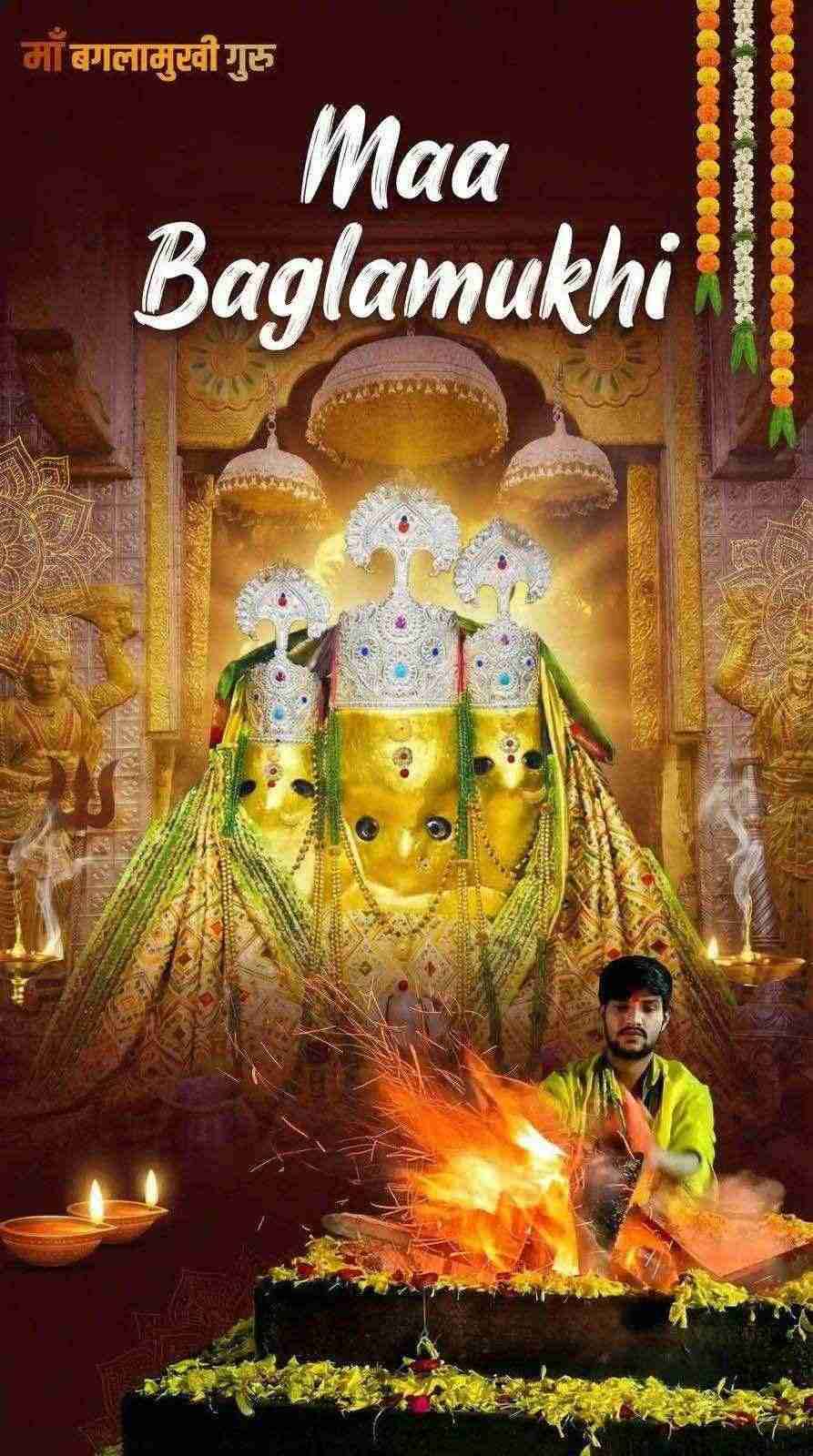

In the science of mantra, a beej - a seed syllable - is the most concentrated form of a deity's energy. It is short, but it is not simple: within a single sound, the tradition holds the entire power of the divine is folded, like a great tree resting inside a small seed. For Maa Baglamukhi, that seed is Hleem, and the Baglamukhi beej mantra is among the most revered single-syllable mantras in the Shakta tradition.
This guide explains the beej mantra honestly and clearly - what Hleem means, its traditional benefits, and above all the correct method and rules for chanting it. A beej mantra is powerful precisely because it is compact, so pronunciation and discipline matter. Wherever a belief is described, it is presented as tradition holds it, not as a guaranteed outcome.
What is the Baglamukhi beej mantra?
The Baglamukhi beej mantra is "Hleem" (ह्लीं) - the single seed syllable that holds the concentrated energy of Maa Baglamukhi, the eighth Mahavidya. Also called her ekakshari (one-syllable) mantra, it is the sonic core from which her longer mantras are built.
Because it is so concentrated, Hleem is treated with great respect in the tradition. It is the same seed that opens and closes her mool (root) mantra, and it can be chanted on its own as a focused sadhana. Devotees associate it directly with her defining power of Stambhan - the stilling of hostility and obstacles - and with the grace of Pitambara Devi, the goddess robed in yellow.
The meaning of "Hleem"
Hleem is a composite seed syllable, and in the traditional understanding each of its sound-elements carries meaning. Broadly, it is described as combining the energies of restraint, illusion-cutting clarity, and Shakti - together expressing Baglamukhi's power to still, to reveal truth, and to protect.
Beej mantras are not translated like ordinary words; their "meaning" lies in their vibration and the deity-energy they invoke rather than in a dictionary definition. What matters for a devotee is that Hleem is understood as the sound-body of Maa Baglamukhi herself - chanting it is, in the tradition, to call her presence directly. This is also why the tradition insists on correct pronunciation: the meaning lives in the sound.
Why beej mantras are so powerful
Beej mantras are considered especially powerful because they are the most concentrated form of a mantra - pure vibration without narrative. The tradition holds that a single seed syllable, chanted correctly and consistently, carries the full potency of the deity in the most direct way.
An analogy helps. A longer prayer is like a sentence that explains and requests; a beej mantra is like the single note that is the presence. There is less for the mind to lean on and more that depends on the purity of sound and attention. This is the strength of the beej mantra and also the reason it demands discipline - its compactness leaves no room for careless or half-hearted chanting.
Benefits according to tradition
In the devotional tradition, sincere and correct chanting of the Baglamukhi beej mantra is believed to bring the following. These are described as fruits of faith and disciplined practice, not guaranteed outcomes:
Protection from hostility, negativity and harmful speech
Stilling of fear, anxiety and inner agitation
Courage and steadiness in conflict and difficulty
Sharper focus, clarity and control over one's own mind
Support in disputes, including legal and professional matters
Deepening devotion and spiritual strength
The tradition places particular emphasis on the beej mantra's calming, obstacle-stilling quality - its power turned as much toward one's own restless mind as toward outer difficulties.
How to chant the Baglamukhi beej mantra - step by step
The beej mantra is chanted calmly, on a turmeric (haldi) mala, before an image or yantra of Maa Baglamukhi. The method for daily home practice:
Purify. Bathe, wear clean clothes, and clean your space and seat.
Sit. Take a fixed asana facing east; settle the breath and mind.
Light the lamp. Light a ghee or sesame-oil lamp before the image or yantra.
Sankalp. Silently state your name, gotra and sincere intention.
Chant. Repeat Hleem on the turmeric mala with clear pronunciation and steady focus, one bead per repetition.
Meditate. After japa, rest quietly for a few minutes on the Goddess.
Close. End with gratitude and, if you wish, the Maa Baglamukhi aarti.
Begin with one or a few malas a day and build gradually. You can learn the full mantra set - beej and mool - in our Baglamukhi mantra guide.
Rules & precautions for japa
Because the beej mantra is potent and compact, the traditional rules of japa apply with particular care:
Correct pronunciation above all. Hleem must be chanted clearly; the meaning lives in the sound. Learn it from a knowledgeable guide first.
Cleanliness and a fixed seat and time. Consistency of place and hour steadies the practice.
Turmeric mala. Traditional to Baglamukhi; do not cross the meru bead.
Sattvic diet and conduct. Avoid onion, garlic, meat and intoxicants during the sadhana; keep truthful and calm.
Privacy. Keep your japa and sankalp quiet.
Right intention. Chant for protection, clarity and steadiness - never to harm another.
Guidance for high counts. Fixed high-count purashcharana should be done under a guru or experienced acharya.
Beej mantra vs mool mantra
The beej mantra is the single seed syllable Hleem; the mool (root) mantra is Baglamukhi's longer, complete mantra that begins and ends with Hleem and contains her full invocation. Both are valid; they suit different stages and purposes.
Many devotees chant the beej mantra for daily practice and use the mool mantra for formal worship. The dedicated Baglamukhi beej mantra page covers this further.
Best time to chant
The most favoured times are the Brahma Muhurta and early morning each day, and the Gupt Navratri, Navratri periods and Tuesdays for beginning or intensifying practice. A calm, undistracted mind is the real requirement, whatever the clock says.
Common mistakes to avoid
Careless pronunciation. The single biggest error with a beej mantra - the meaning is the sound.
Chasing huge counts too soon. Build gradually; do not leap to lakhs of repetitions.
Inconsistency. Sporadic chanting breaks the discipline that gives the mantra its steadiness.
Neglecting purity and intention. Diet, cleanliness and a clean heart are part of the practice.
Treating it mechanically. Chant with attention and devotion, not on autopilot.
Who should chant it - and when to seek guidance
Any sincere devotee can chant the Baglamukhi beej mantra for daily protection and steadiness, provided they learn the correct pronunciation and observe basic discipline. It is a safe, calming practice at the daily level.
Guidance becomes necessary when the practice deepens into fixed high-count purashcharana or is linked to a havan or anushthan for a serious concern. There, the rules of count, timing and conduct are exacting, and an experienced acharya or guru should oversee the sadhana. When in doubt, begin gently and ask before intensifying.
Quick summary
Baglamukhi beej mantra: Hleem (ह्लीं) - the single seed syllable of the eighth Mahavidya.
Meaning: vibration expressing restraint, clarity and Shakti - the sound-body of the Goddess.
Benefits (traditional belief): protection, calming of fear, courage, focus, support in disputes.
Method: chant on a turmeric mala, correct pronunciation, fixed seat and time, clear sankalp.
Beej vs mool: beej for focused daily japa; mool for formal worship.
Guidance needed for high-count purashcharana or ritual-linked sadhana.
Conclusion
The Baglamukhi beej mantra proves that spiritual power is not measured by length. In one syllable - Hleem - the tradition places the whole protective, stilling grace of Maa Baglamukhi. Chanted with clean pronunciation, a steady heart and honest intention, it can become a quiet daily anchor: a way to calm the mind, meet difficulty with courage, and stay close to the Mother. Begin gently, be consistent, and let the seed grow. Jai Maa Baglamukhi.
FAQ Section
1. What is the Baglamukhi beej mantra?
It is Hleem (ह्लीं), the single seed syllable holding the concentrated energy of Maa Baglamukhi, the eighth Mahavidya. It is also called her ekakshari (one-syllable) mantra.
2. What does "Hleem" mean?
Hleem is not translated like an ordinary word; its meaning is its vibration - understood as expressing restraint, illusion-cutting clarity and Shakti, the sound-body of the Goddess herself.
3. What are the benefits of chanting the Baglamukhi beej mantra?
Traditionally, protection from negativity, stilling of fear and anxiety, courage, focus, support in disputes, and spiritual strength - described as fruits of faith, not guarantees.
4. How do I chant the Baglamukhi beej mantra?
Sit clean and settled facing east, light a lamp, take a sankalp, and repeat Hleem on a turmeric mala with clear pronunciation and steady focus. Begin with one or a few malas a day.
5. Can I chant the beej mantra at home without a guru?
Yes, for simple daily japa - provided you learn the correct pronunciation first. Fixed high-count purashcharana or ritual-linked sadhana should be done under guidance.
6. Which mala is used for the Baglamukhi beej mantra?
A turmeric (haldi) mala, traditional to Baglamukhi and her association with the colour yellow.
7. What is the difference between the beej mantra and the mool mantra?
The beej mantra is the single syllable Hleem; the mool mantra is her longer, complete invocation that begins and ends with Hleem. Beej suits daily japa; mool suits formal worship.
8. What is the best time to chant Hleem?
Early morning (Brahma Muhurta) daily, and Tuesdays, Gupt Navratri and Navratri for beginning or intensifying practice.
9. How many times should I chant the beej mantra?
Begin modestly - one or a few malas a day - and increase gradually. High fixed counts should be undertaken only under a guru's guidance.
10. Is it dangerous to chant the Baglamukhi beej mantra?
Simple, correctly pronounced daily japa is safe and calming. The caution applies to advanced, high-count or ritual-linked practices, which need experienced guidance.
11. Can women chant the Baglamukhi beej mantra?
Yes. The daily beej mantra japa is open to women and men alike, with sincerity, cleanliness and correct pronunciation.
12. Do I need to chant the mool mantra too?
Not necessarily. Many devotees chant only the beej mantra for daily practice. The mool mantra is used for formal puja, havan and anushthan.