
Quick Answer
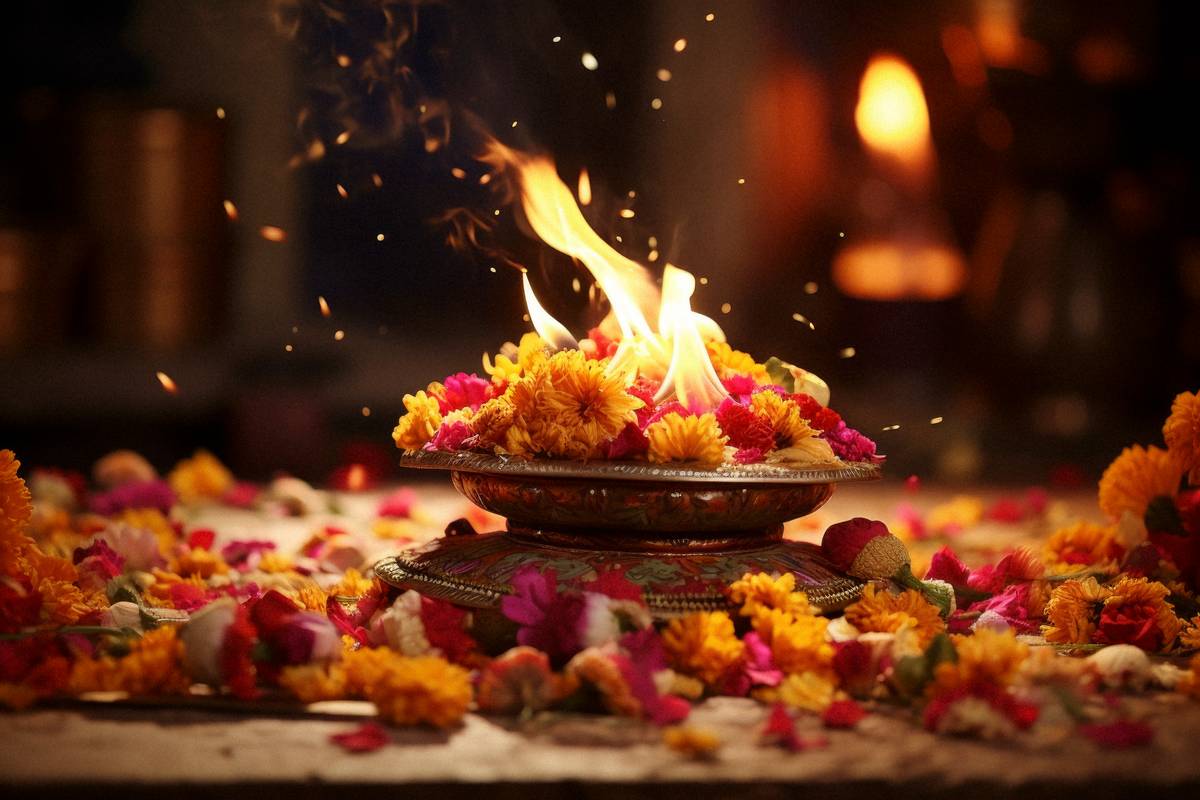
Pitru Tarpan is the traditional offering of water, usually mixed with black sesame (til), made to one's ancestors in Hindu practice. It is most commonly performed during Pitru Paksha (26 September–10 October 2026), on the tithi matching an ancestor's passing, or on Sarva Pitru Amavasya if that tithi is unknown. A simple Tarpan can be performed at home after a bath, facing south, with clean water, til, and a copper or brass vessel — though families seeking the fuller Shradh vidhi often prefer a priest's guidance.
Pitru Tarpan 2026: What You Need to Know
Dates above follow the standard Panchang used for the site's Pitru Paksha 2026 Shradh dates and tithi calendar; tithi timings can shift by a day depending on your city, so confirm with a local Panchang or priest before finalising your plans.
What Is Pitru Tarpan?
Tarpan literally means "to satisfy" or "to please." In traditional Hindu practice, Pitru Tarpan is the act of offering water — usually mixed with black sesame seeds — to one's departed ancestors (pitrs), with their names or gotra recalled where known. It is one of the simplest and most widely practised ancestral rites, alongside the broader Shradh ceremony and Pind Daan.
According to traditional Hindu practices, every person carries three inherited debts: dev rin (debt to the gods), rishi rin (debt to the sages), and pitru rin (debt to one's ancestors). Tarpan is understood as one of the ways this pitru rin is acknowledged. Water and sesame are considered simple, universally available offerings — which is part of why Tarpan is something many Hindu families feel able to perform even without extensive ritual preparation.
Many Hindu families perform Tarpan daily through Pitru Paksha, while others reserve it for the specific tithi connected to an ancestor's passing, or for Sarva Pitru Amavasya. Traditionally, this is a matter of faith and family custom rather than a claim with any scientific basis, and practices differ meaningfully by region and sampradaya.
When Is Pitru Tarpan Performed in 2026?
Pitru Tarpan is most closely associated with Pitru Paksha, the fifteen-day fortnight that in 2026 runs from Purnima Shraddha on 26 September to Sarva Pitru Amavasya on 10 October. Within this window, three distinct but related timeframes matter for Tarpan:
Pitru Paksha dates — the full fortnight during which ancestral rites are traditionally concentrated.
The individual ancestor's Shradh tithi — the specific lunar day within the fortnight that matches when that ancestor passed away.
Sarva Pitru Amavasya (10 October 2026) — the closing day of the fortnight, used when the exact tithi is unknown, and considered especially significant even by families who do know the correct tithi.
This article focuses on how to actually perform Tarpan — the samagri, the steps, and the rules. For the complete day-by-day tithi table covering all fifteen days, see the site's Pitru Paksha 2026 Shradh dates and tithi calendar, which lists each Shradh tithi individually.
Which Tithi Is Used for Pitru Tarpan?
If a family knows the tithi on which an ancestor passed away, Tarpan and the wider Shradh are traditionally observed on that matching tithi during Pitru Paksha. For example, a family whose elder passed on Ashtami would generally perform Tarpan on Ashtami Shraddha.
When the exact death tithi is not known, uncertain, or was simply never recorded — a common situation for families settled away from their ancestral home for a generation or more — tradition already accounts for this. Shradh and Tarpan may be performed on Sarva Pitru Amavasya, the day set aside for all ancestors collectively. This is why Sarva Pitru Amavasya, 10 October 2026, is often treated as the single most important date of the fortnight.
Because tithis are lunar and do not map exactly onto the same calendar date every year, and because they can shift by a day depending on sunrise time and location, it is worth checking your specific tithi against a local Panchang rather than relying on a single fixed date. Where two Panchangs disagree by a day, this usually reflects a normal calculation variation rather than an error, and a family priest can confirm which day applies to your household.
Pitru Tarpan Samagri List
The materials used for Tarpan vary by region and family tradition. The table below distinguishes commonly used items from those that are more tradition-specific.
Not every item on this list is treated as mandatory in every household. Some families perform a very simple Tarpan with only water, til, and a vessel; others, particularly when a priest is engaged for a fuller Shradh, use a longer list. Where your family's practice is unclear, it is worth asking an elder or consulting a knowledgeable priest rather than assuming a generic list applies exactly.
How to Prepare for Pitru Tarpan
1. Confirm the Tithi Establish, as far as possible, the tithi connected to the ancestor you are honouring, or confirm that you will be observing Sarva Pitru Amavasya instead.
2. Check Local Panchang Timing Tarpan is traditionally performed during aparahna kaal — the early-to-mid afternoon portion of the day — though timings can vary by location and are best confirmed with a local Panchang or priest rather than a single universal muhurat.
3. Clean Yourself and the Ritual Space A bath, ideally in the morning, and clean clothing are part of the traditional preparation. The space where the Tarpan is performed is usually kept simple and clean.
4. Arrange the Samagri Gather water, til, a suitable vessel, and any other items your family tradition calls for, referring to the samagri table above.
5. Prepare Water and Til Water is generally kept in the copper or brass vessel, with black sesame added just before the offering begins.
6. Understand the Sankalp Sankalp is a short spoken declaration of intent — naming the ancestor (or ancestors collectively) and the purpose of the rite — traditionally made before the offering itself.
7. Keep the Mind Calm and Respectful Tarpan is traditionally approached with quiet remembrance rather than haste; many families treat this preparatory calm as part of the ritual itself.
Pitru Tarpan Vidhi: Step-by-Step
Practices differ by family, region and tradition, and the outline below reflects a commonly followed general structure rather than a single universal script. Where a family's own custom differs, that custom should be followed.
Step 1: Cleanliness and Preparation Begin with a bath and clean clothing, approached with reverence rather than as a routine task.
Step 2: Set Up the Ritual Space Choose a clean, quiet spot — traditionally near a water source, a courtyard, or a riverbank where possible, though a clean corner at home is commonly used.
Step 3: Take Sankalp State the intention of the Tarpan, naming the ancestor and gotra where known, and the day being observed.
Step 4: Prepare the Tarpan Offering Fill the vessel with clean water and add black sesame seeds, following the proportions your family or priest recommends.
Step 5: Offer Water and Sesame Traditionally, the water is offered by letting it flow from the hand, often facing south — the direction commonly associated with the ancestors in most family traditions — though some communities follow a different posture or direction. This is repeated for each ancestor being remembered.
Step 6: Remember the Ancestors Each offering is generally accompanied by recalling the ancestor's name, and sometimes their relationship and gotra, as an act of remembrance rather than a mechanical repetition.
Step 7: Complete the Prayer A closing prayer for the peace of the departed and the wellbeing of the living family is traditionally offered at the end.
Step 8: Charity or Feeding According to Tradition Many families follow Tarpan with a small act of charity or feeding — crows, cows, dogs, Brahmins, or those in need — as an extension of the offering, though this step is not treated identically across all households.
If any part of this sequence, or the exact mantras used, is unclear for your family, it is best to check with a knowledgeable priest rather than relying solely on a general online outline. The site's broader step-by-step puja vidhi guide covers general principles of preparing for a home ritual, which some readers find useful alongside family-specific Tarpan guidance.
Pitru Tarpan Direction and Posture
Most family traditions associate Tarpan with facing south, since south is widely regarded as the direction connected to the ancestors and to Yama. The offering is typically made from a seated position, with water allowed to flow from the hand rather than being poured directly from the vessel. Where Kusha or Darbha grass is used, it is commonly worn on the hand or held during the offering, according to family custom.
These details vary meaningfully between regions and sampradayas. Some communities follow different postures or use additional implements. No single regional practice should be treated as the only valid Hindu method — if your family follows a different convention, that convention takes precedence over a generic description.
Pitru Tarpan Mantra
Traditionally, Tarpan is accompanied by short mantras invoking the ancestors, often including their name and gotra, along with more general Pitru-related verses recited by a priest. The exact wording, sequence and number of repetitions differ meaningfully across regional and family traditions, and incorrect handling of Sanskrit verses can change their intended meaning.
Rather than presenting an unverified or generic mantra here, the most reliable approach is to have the specific mantra confirmed by a family priest or a Panchang source connected to your own tradition, particularly for the fuller Shradh ceremony. A simple, sincere remembrance of the ancestor by name during the water offering is, in many family traditions, considered valid for a basic home Tarpan, even without an elaborate mantra.
Can Pitru Tarpan Be Performed at Home?
Yes — a simple Tarpan is commonly performed at home. Many households observe a basic water-and-sesame offering themselves, especially during the daily observance days of Pitru Paksha, without engaging a priest for every occurrence.
For the fuller Shradh ceremony — which may include Pind Daan, a structured Sankalp, specific mantras, and feeding rituals — many families prefer the guidance of a priest, either because the family's own tradition calls for it or because the procedure is unfamiliar to the current generation. There is no single rule requiring every family to use a priest, nor one requiring every family to perform it alone; this is a matter of family custom, comfort with the procedure, and the complexity of the specific rite being undertaken.
Who Can Perform Pitru Tarpan?
Traditionally, Tarpan has often been performed by a son or male descendant, particularly for the fuller Shradh ceremony connected to a parent. However, Hindu customs vary considerably by region, community, and family, and several traditions do permit daughters, other family members, or, where no direct descendant is available, another relative to perform these rites.
It would be inaccurate to state that only one specific person can ever perform Tarpan — practice differs across families. Where a family is uncertain about who traditionally performs the rite, or where circumstances mean the usual person is unavailable, this is a reasonable question to raise with a knowledgeable priest rather than assume a single universal rule.
Pitru Tarpan During Pitru Paksha
Pitru Paksha is widely regarded as the most significant annual window for ancestral rites, which is why Tarpan is so closely associated with this fortnight. Within Pitru Paksha, Tarpan may be observed daily by some families, or specifically on the individual Shradh tithi by others, with Sarva Pitru Amavasya treated as the closing and most universally significant day.
For readers who also want guidance on the wider dos and don'ts observed during this period — food customs, avoiding major celebrations, and related family practices — the site's Pitru Paksha 2026 do's and don'ts guide covers this in more detail.
Pitru Tarpan vs Shradh vs Pind Daan
Tarpan and Pind Daan are both components that can sit within the broader Shradh ceremony; Shradh is the umbrella term, Tarpan is its water offering, and Pind Daan is its food offering.
Pitru Tarpan vs Pind Daan: Are They the Same?
No, they are not the same. Tarpan is a water-based offering, generally involving black sesame, while Pind Daan involves offering shaped portions of cooked rice or barley. Families do not always perform both — many perform Tarpan regularly and reserve Pind Daan for a specific occasion or pilgrimage visit — and performing one does not automatically substitute for the other where family tradition calls for both.
What Should Be Offered During Pitru Tarpan?
The core offering is water combined with black sesame. Beyond this, families may include rice, flowers, or other items from the samagri table above, depending on regional and family custom. These offerings are understood, within tradition, as gestures of remembrance and respect rather than material gifts in a literal sense, and no specific outcome should be treated as guaranteed by any particular combination of offerings.
Pitru Tarpan Rules: What to Do
Maintain personal cleanliness and a clean ritual space
Observe the correct tithi where it is known, or Sarva Pitru Amavasya where it is not
Use clean, fresh materials for the offering
Maintain respectful, unhurried conduct throughout
Prepare the samagri in advance rather than improvising at the last moment
Follow your own family's tradition where it differs from a general description
Consult a knowledgeable priest for the fuller Shradh or any unfamiliar step
Where customary in your family, follow Tarpan with a small act of charity or feeding
What to Avoid During Pitru Tarpan
Performing the rite without first checking which tithi applies to your family
Confusing Tarpan with Pind Daan and assuming one substitutes for the other
Treating every item on a generic samagri list as strictly mandatory
Copying detailed ritual steps or mantras from unverified online sources without checking against your own tradition
Assuming one regional practice is the only correct Hindu method
Approaching the rite in a spirit of fear or obligation rather than remembrance
Rushing through the offering casually or without the intended attention
Common Pitru Tarpan Mistakes
Wrong Tithi — performing the rite on a date that does not actually match the ancestor's death tithi for that year.
Confusing calendar date with tithi — assuming the same Gregorian date applies every year, when tithis shift annually.
Not checking local Panchang — tithi timings can differ by a day depending on your city.
Assuming every samagri item is mandatory — some items are tradition-specific, not universal.
Copying random rituals online — generic instructions may not match your family's actual sampradaya.
Ignoring family tradition — following a general guide instead of an elder's or priest's specific guidance.
Using fear-based remedies — approaching Tarpan from anxiety rather than sincere remembrance.
Assuming Tarpan guarantees a particular result — these rites are acts of faith and devotion, not guaranteed outcomes.
What If I Do Not Know the Death Tithi?
This is a common and fully anticipated situation, particularly for families who have lived away from their ancestral home for a generation or more. Traditional options include:
Checking family records, elders, or old documents for the date
Consulting a Panchang or a knowledgeable priest who may be able to help narrow down the likely tithi
Observing Sarva Pitru Amavasya (10 October 2026), the day traditionally set aside for all ancestors, known and unknown, as a widely accepted default
There is no single universally mandated solution beyond this general guidance, and family or regional custom may offer a more specific answer for your situation.
Can NRIs Perform Pitru Tarpan?
Yes. NRIs and Hindus living outside India regularly perform Tarpan, adapted to their circumstances:
A simple home observance — water and black sesame, with a sincere remembrance of the ancestor — is commonly considered sufficient for a basic Tarpan, even without local samagri variety.
Black sesame and other items are increasingly available through Indian grocery stores or online in most countries with a sizeable Hindu community.
Many families rely on a local Hindu priest where one is available, or maintain a connection with a family priest in India for guidance by phone or video call.
Time and tithi should be checked according to the local date and time zone, since a tithi observed in India may fall on a different local calendar day.
For the fuller Shradh or Pind Daan, some NRI families seek remote priest guidance, or arrange for the ceremony to be performed on their behalf in India, particularly around Sarva Pitru Amavasya.
For readers based outside India who want a dedicated overview of options, the site's NRI puja guidance page covers how remote and online arrangements are typically handled.
Simple Pitru Tarpan Checklist
☐ Confirm the ancestor's Shradh tithi, or plan for Sarva Pitru Amavasya ☐ Check the local Panchang for your city ☐ Arrange clean water ☐ Arrange black sesame (til) ☐ Arrange Kusha/Darbha if your tradition uses it ☐ Clean the ritual space ☐ Keep the copper or brass vessel ready ☐ Prepare any additional offerings your family tradition calls for ☐ Understand the Sankalp you intend to recite ☐ Keep prayer or mantra guidance ready, confirmed with a priest if needed ☐ Plan charity or feeding afterward, if customary in your family
Pitru Tarpan: 5-Minute Quick Guide
This is a simple traditional overview for a basic home Tarpan — not a substitute for the guidance needed for a fuller Shradh or Pind Daan ceremony. After a morning bath, fill a clean vessel with water and black sesame. Sit facing south, take a brief Sankalp naming the ancestor, and let the water flow from your hand while recalling their name. Close with a short prayer for their peace. Where your family observes additional steps, follow those instead.
Pitru Tarpan and Pitru Dosh
Pitru Tarpan and Pitru Dosh are related but distinct concepts, and it is easy to conflate them.
Pitru Tarpan is a traditional ancestral offering — a ritual act of remembrance performed during Pitru Paksha or on a specific tithi. Pitru Dosh, by contrast, is a concept within Vedic astrology, understood as an affliction in a birth chart traditionally connected to the ancestors. Performing Tarpan does not mean a person necessarily has Pitru Dosh, and the presence of Pitru Dosh should never be self-diagnosed from a single life difficulty or an unverified online tool — it requires a full chart reading by a qualified astrologer. Pitru Dosh should not be presented as a scientifically established diagnosis; it remains a matter of traditional astrological belief.
That said, some families who have identified Pitru Dosh in their chart do consider ancestral rites like Tarpan and Shradh, performed sincerely during Pitru Paksha, as part of the traditional remedies associated with easing it. For a deeper look at this connection, the site's Pitru Dosh page and its dedicated Pitru Dosh Nivaran during Pitru Paksha 2026 guide explain the traditional remedies in more detail, alongside the complete guide to Pitra Dosh Pooja and an overview of what Pitra Dosh is, with its signs and remedies.
When Should You Consult a Priest?
While a simple Tarpan is commonly performed at home, priestly guidance is generally more useful for:
The fuller Shradh ceremony, especially where mantras and a structured Sankalp are involved
Situations where the exact tithi is uncertain and needs to be worked out from partial family information
Family-specific customs that a general guide cannot anticipate
Pind Daan, particularly at a pilgrimage site
Tripindi Shradh or Narayan Bali, which are specialised rites for specific circumstances
Any situation where Pitru Dosh has been identified and a fuller remedial puja is being considered
A priest's role here is to guide the family through their own tradition correctly, not to promote unnecessary services — where a simple home Tarpan is enough, that is a perfectly valid choice.
FAQs
What is Pitru Tarpan? Pitru Tarpan is the traditional offering of water, usually mixed with black sesame, made to one's ancestors as an act of remembrance and respect, commonly performed during Pitru Paksha.
When is Pitru Tarpan performed in 2026? It is most closely associated with Pitru Paksha, 26 September–10 October 2026, either on the ancestor's matching tithi or on Sarva Pitru Amavasya (10 October) if that tithi is unknown.
What is the Tithi for Pitru Tarpan? There is no single tithi for everyone — it matches the specific lunar day on which each ancestor passed away, or defaults to Sarva Pitru Amavasya when that tithi is unknown.
Can Pitru Tarpan be performed at home? Yes, a simple water-and-sesame Tarpan is commonly performed at home; more elaborate Shradh ceremonies often involve a priest.
What Samagri is needed for Pitru Tarpan? At minimum, clean water, black sesame, and a suitable vessel; other items such as Kusha grass, rice, or flowers are used depending on family tradition.
How do you perform Pitru Tarpan? Generally: bathe, take a brief Sankalp, offer water mixed with sesame while facing south and recalling the ancestor's name, then close with a prayer — though exact steps vary by family.
Can women perform Pitru Tarpan? Practices differ by region and family; several traditions do permit women, including daughters, to perform these rites, particularly where no male descendant is available.
Which direction should you face during Tarpan? Most traditions favour facing south, the direction commonly associated with the ancestors, though some communities follow different conventions.
Can Tarpan be done without a priest? A basic home Tarpan is commonly performed without a priest; the fuller Shradh ceremony often benefits from priestly guidance.
What should be offered during Tarpan? Primarily water mixed with black sesame; some families also include rice, flowers, or other items depending on tradition.
Can I perform Tarpan if I live outside India? Yes, NRIs commonly perform a simplified Tarpan at home, sourcing sesame and other items locally, and may seek remote priest guidance for the fuller ceremony.
What if I do not know the ancestor's death Tithi? Perform Shradh and Tarpan on Sarva Pitru Amavasya (10 October 2026), the day traditionally set aside for all ancestors, known and unknown.
Is Pitru Tarpan the same as Shradh? No — Shradh is the overall ceremony of ancestral remembrance, and Tarpan is the water offering that forms one part of it.
Is Pitru Tarpan the same as Pind Daan? No — Tarpan is a water offering, while Pind Daan involves offering shaped portions of rice or barley; they are distinct rites, sometimes performed together.
Can Tarpan be performed on Amavasya? Yes, Tarpan on Sarva Pitru Amavasya is considered especially significant, and is the default day when an ancestor's tithi is unknown.
What is Sarva Pitru Amavasya? It is the final day of Pitru Paksha (10 October 2026), traditionally observed for all ancestors collectively, particularly those whose exact death tithi is not known.
Is Pitru Tarpan related to Pitru Dosh? They are related but distinct — Tarpan is a ritual offering, while Pitru Dosh is a Vedic astrology concept; performing Tarpan does not itself indicate the presence of Pitru Dosh.
What are common mistakes during Tarpan? Common mistakes include using the wrong tithi, confusing the calendar date with the lunar tithi, and assuming every samagri item or online instruction applies universally to every family.
Can Tarpan be performed every day? Some families do perform a brief Tarpan daily through Pitru Paksha, while others reserve it specifically for the matching tithi or Sarva Pitru Amavasya.
What is the best time for Pitru Tarpan? Tarpan is traditionally performed during aparahna kaal, the early-to-mid afternoon, though the precise window should be confirmed with a local Panchang since it can vary by location.
Disclaimer: Pitru Tarpan and Shradh practices can vary according to region, family tradition and Panchang calculation. For rituals requiring a specific Tithi, Muhurat or detailed procedure, consult a knowledgeable priest or local Panchang.
Need Guidance for Your Family's Pitru Tarpan?
If you are unsure which tithi applies to your family, unable to perform an elaborate Shradh yourself, living outside India, or simply want a knowledgeable priest to guide the process, it helps to ask before the fortnight's busiest days arrive. Acharya Pandit Vishnu Sharma at Maa Baglamukhi Siddha Peeth, Nalkheda, offers guidance on ancestral rites, including Tarpan and the fuller Pitru Dosha Nivaran Puja, available both in person and online for devotees across India and abroad. Book a consultation for your Pitru Tarpan and Pitru Paksha rites →