Quick Answer: When Is Pitru Paksha 2026?
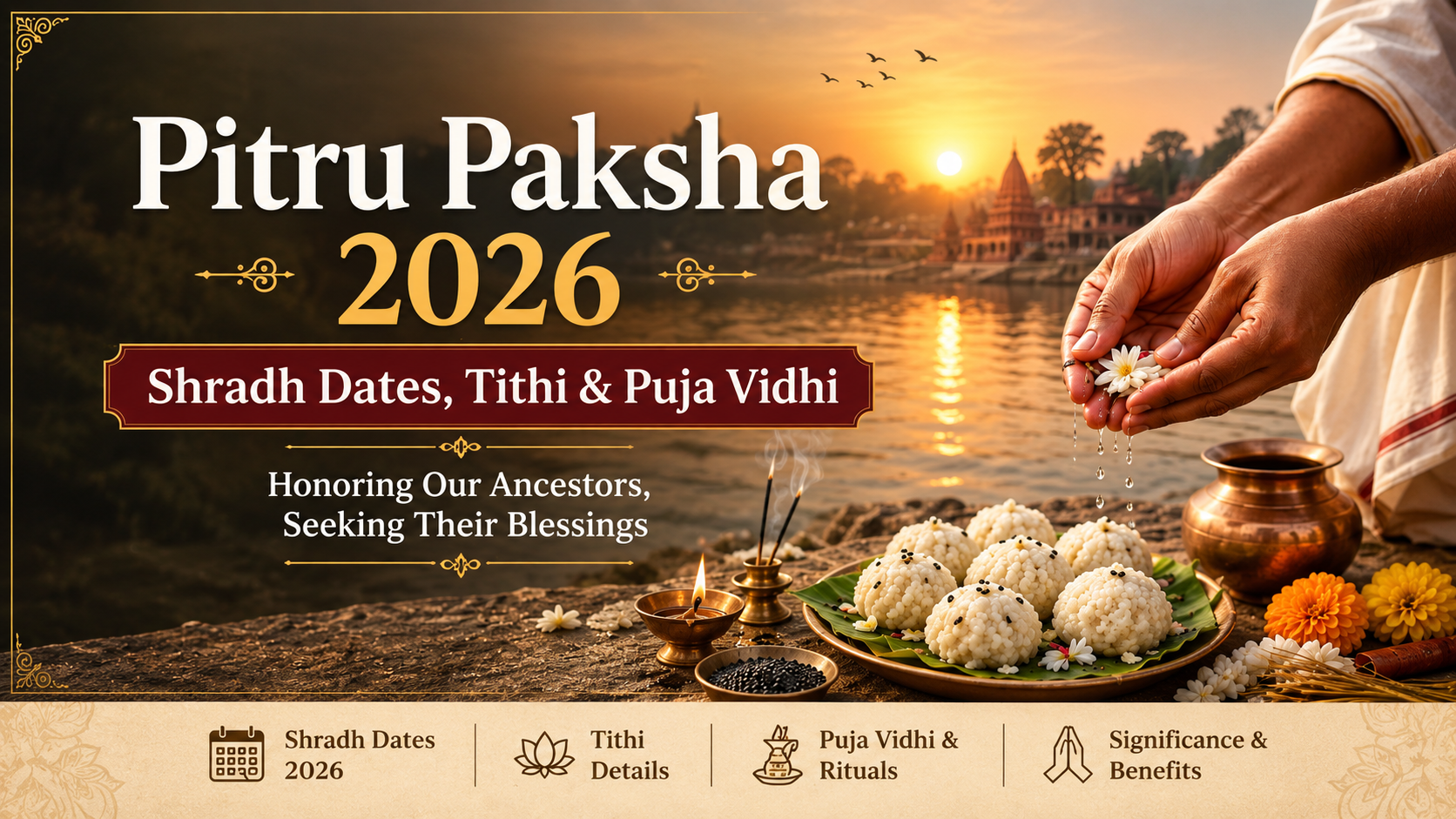
Pitru Paksha 2026 begins on Saturday, 26 September 2026 with Purnima Shraddha, and ends on Saturday, 10 October 2026, observed as Sarva Pitru Amavasya (Mahalaya Amavasya). Over this fifteen-day fortnight, Hindu families perform Shradh, Tarpan, and Pind Daan on the tithi matching an ancestor's death, to repay the pitru rin and seek their peace and blessings. Sharad Navratri begins the very next day, 11 October 2026.
Pitru Paksha 2026: Dates and Shradh Tithi Calendar
Shradh is traditionally performed on the tithi (lunar day) on which the ancestor passed away, not on a fixed calendar date. The table below follows the standard North Indian Panchang; tithi timings can shift by a day depending on your city and local sunrise, so it is worth confirming the exact day with a family priest or local Panchang before finalising arrangements.
A note on regional variation: in the North Indian Purnimanta calendar, this fortnight falls in Ashwin Krishna Paksha; in the South Indian Amanta calendar, the same period is described as Bhadrapada Krishna Paksha. The month name differs, but the actual Shradh dates line up across India. If two Panchangs you consult differ by a day on a specific tithi, this is a normal calculation variation rather than an error - a qualified local priest can confirm which day applies to your family.
What Is Pitru Paksha?
Pitru Paksha, also called Shraddha Paksha or Mahalaya Paksha, is the fortnight of the waning moon each year that Hindu tradition sets aside for remembering and honouring one's ancestors (pitrs). Dharmic thought holds that every person is born with three debts — dev rin (debt to the gods), rishi rin (debt to the sages), and pitru rin (debt to one's ancestors). Pitru Paksha is the annual period during which this pitru rin is traditionally repaid, through Shradh, Tarpan, Pind Daan, and charity, so that the departed find peace and, in turn, bless the family they left behind.
When Does Pitru Paksha 2026 Start and End?
Pitru Paksha 2026 runs for fifteen days, from Purnima Shraddha on 26 September to Sarva Pitru Amavasya on 10 October. It follows immediately after Bhadrapada Purnima and closes the day before Sharad Navratri begins on 11 October - which is why this period is traditionally treated as a time of quiet remembrance rather than celebration, before the festive energy of Navratri takes over.
The Significance of Shradh During Pitru Paksha
Shradh is performed with faith (shraddha, from which the word derives) rather than obligation. Tradition holds that during this fortnight, the souls of ancestors move closer to their descendants' homes, awaiting recognition and offerings. Performing Shradh at the right time is believed to bring contentment to departed souls and, by extension, draw their goodwill toward the living family — easing obstacles, supporting continuity of the lineage, and reinforcing family memory across generations. It is worth noting plainly: these are matters of faith and scripture, not scientifically verifiable claims, and every family's exact practice can differ by region and sampradaya.
Shradh Puja Vidhi: How to Perform Shradh During Pitru Paksha
While the precise steps vary by family tradition and the guidance of the officiating priest, the broad structure of a traditional Shradh generally includes:
Sankalp - a formal declaration of intent, stating the ancestor's name and the purpose of the rite.
Shuddhi - a bath and clean clothing before beginning, approached with reverence rather than routine.
Tarpan - offering water, usually with black sesame, to the ancestors.
Pind Daan, where traditionally appropriate - offering rice-ball portions in remembrance.
Food offering - a simple meal prepared and offered before it is served to the family.
Feeding Brahmins or the needy - sharing food as an extension of the offering to the ancestors.
Dakshina and charity - a token or donation given in gratitude.
Ancestor remembrance and prayer - closing the rite with a prayer for the peace of the departed and the wellbeing of the living.
This is a general outline rather than a universal script - some families perform an abbreviated home version with Tarpan and charity alone, while others engage a purohit for the complete ceremony. Where the family tradition is unclear, a local, experienced priest is the right person to confirm the correct sequence.
What Is Pitru Tarpan and How Is It Performed?
Tarpan literally means "to satisfy" - it is the offering of water, generally mixed with black sesame seeds, made to one's ancestors with their names or gotra recalled where known. It is usually performed facing south, the traditional direction associated with the ancestors, after a morning bath. Tarpan can be done daily through Pitru Paksha or specifically on the matching tithi, and is considered especially significant on Sarva Pitru Amavasya. The exact mantras and sequence differ by tradition, which is why correct procedure - ideally under a priest's guidance the first few times - matters more than speed or repetition.
What Is Pind Daan?
Pind Daan is distinct from Tarpan: rather than water, it involves offering pindas - portions of cooked rice or barley, shaped and consecrated - in remembrance of the ancestors. It is considered one of the more significant rites of the fortnight and is often performed at pilgrimage sites specifically associated with ancestral rites, such as Gaya, Prayagraj, or Kashi, though families also perform simplified versions at home or through a priest locally. Shradh, Tarpan, and Pind Daan together form the traditional trio of ancestral honouring during Pitru Paksha - Shradh is the overall remembrance ceremony, Tarpan is the water offering within it, and Pind Daan is the food offering within it.
On Which Tithi Should Shradh Be Performed?
The guiding rule is simple: Shradh is performed on the tithi on which the ancestor passed away, which is why the table above lists each tithi separately rather than a single date for everyone. A family whose elder passed on Ashtami, for example, would traditionally perform the rite on Ashtami Shraddha - 3 October 2026 this year - rather than on a fixed calendar date each year.
What If You Don't Remember the Death Tithi?
This is one of the most common concerns families raise, and tradition already accounts for it. When the exact tithi is not known or a family cannot perform the rite on the correct day, Shradh may be performed on Sarva Pitru Amavasya - 10 October 2026 - the day set aside for honouring all ancestors collectively, known and unknown. This makes Sarva Pitru Amavasya the single most important day of the entire fortnight, and the safest default when in doubt.
What Is Pitru Dosh?
In the Vedic astrology tradition, Pitru Dosh is understood as an affliction in the birth chart connected to the ancestors - traditionally read through the Sun (karaka of father and forefathers) afflicted by Rahu, Ketu, or Saturn, or through a weakened ninth house. Dharmik manyata ke anusaar, it is said to arise when the departed have not been duly honoured, when death rites were left incomplete, or through karma carried across generations. It is important to be clear: this is a traditional astrological and spiritual belief, not a scientifically proven diagnosis, and it should only be read in a full chart by a qualified astrologer - never assumed from a single symptom or an online tool.
Signs of Pitru Dosh
Jyotishiya drishtikon se, the indicators commonly associated with Pitru Dosh in traditional texts include:
Persistent obstacles despite genuine, sustained effort
Difficulty in having children or continuing the family line
Recurring disharmony or tension within the family
Repeated delays in the marriages of family members
Financial struggles that seem to defy otherwise sound planning
A recurring pattern of setbacks appearing just before success
Long-standing, unexplained health troubles shared across the family
A felt sense of ancestral unrest, or dreams of the departed
These are traditional indicators cited in astrological practice, not a diagnostic checklist - not every family difficulty traces back to Pitru Dosh, and where health or fertility concerns are involved, qualified medical care remains essential alongside any spiritual remedy.
How Are Pitru Paksha and Pitru Dosh Connected?
Pitru Paksha is, in tradition, considered the single most auspicious window in the year for exactly the practices - Shradh, Tarpan, Pind Daan, ancestral remembrance, and charity in the ancestors' names - that are also the recommended remedies for Pitru Dosh. This is the natural bridge between the two topics: even a family with no known Pitru Dosh is encouraged to observe the fortnight out of respect and gratitude, while a family that has identified Pitru Dosh in their chart is specifically advised to prioritise these same rites during Pitru Paksha, when their spiritual effect is traditionally considered strongest. Put simply, Pitru Paksha is the season; Pitru Dosh Nivaran is one of the outcomes devotees seek from observing it sincerely.
Traditional Remedies for Pitru Dosh Nivaran
The remedies handed down through tradition for easing Pitru Dosh are largely the same rites already described above, undertaken with particular sincerity:
Shradh on the ancestor's tithi, or on Sarva Pitru Amavasya where the tithi is unknown
Tarpan - daily or tithi-specific water offerings through the fortnight
Pind Daan, especially at a recognised pilgrimage site where the family tradition calls for it
Feeding crows, cows, dogs, Brahmins, and the needy as an offering on the ancestors' behalf
Charity (daan) - food, clothing, or donations given specifically in an ancestor's name
Chanting the Pitru mantra, and where the family's ishta devata calls for it, an accompanying mantra such as the Baglamukhi Beej Mantra for the removal of obstacles
Guidance from a qualified priest or astrologer, particularly for stronger doshas where special rites such as Narayan Bali or Tripindi Shraddha are traditionally advised
No outcome is guaranteed by any of these practices - they are undertaken as an act of devotion and duty, alongside continued sincere effort in one's own life, not as a replacement for it.
The Significance of Maa Baglamukhi Puja During Pitru Paksha
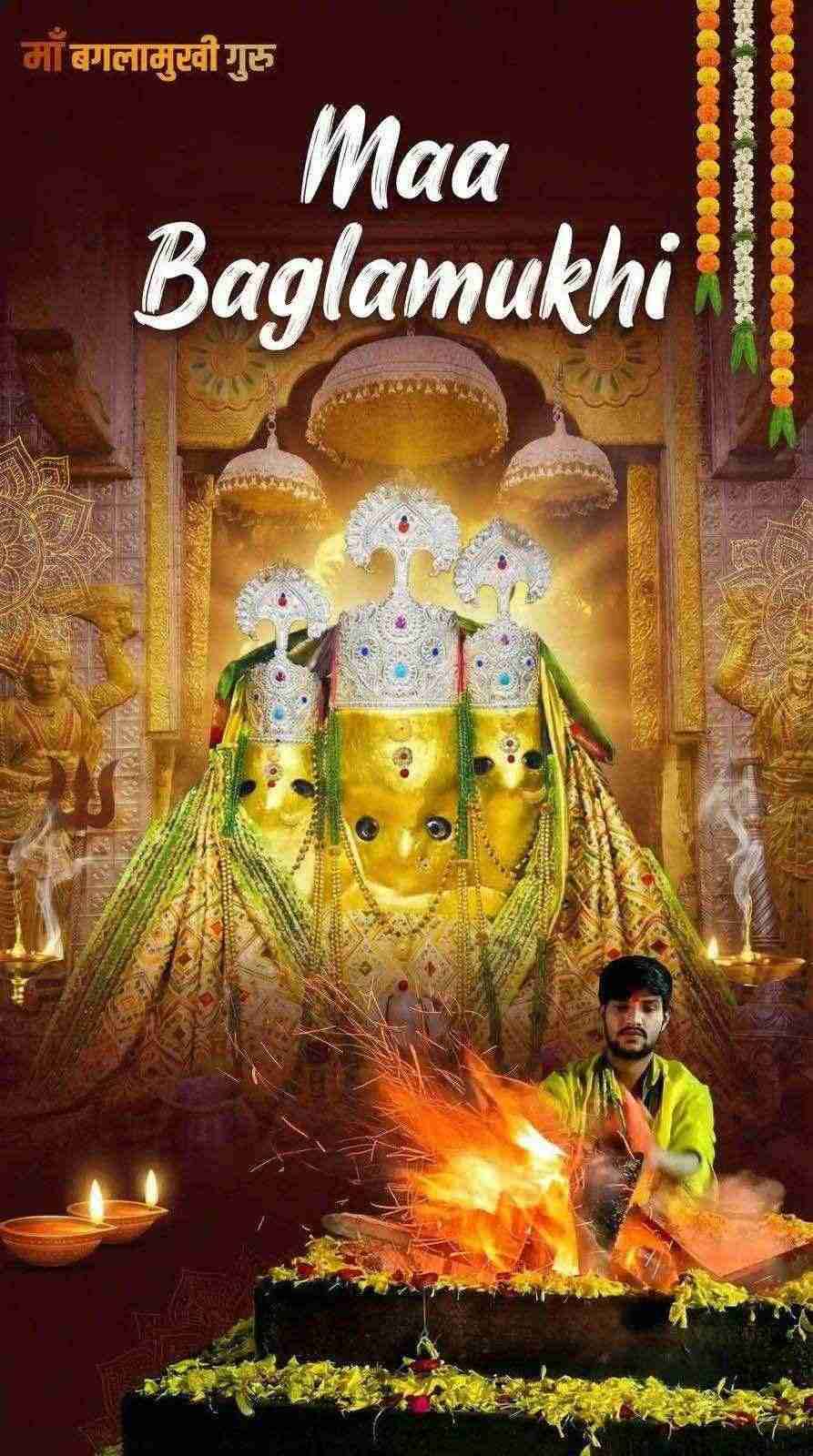
Maa Baglamukhi is revered as the eighth of the Dasha Mahavidyas, worshipped for her Stambhan Shakti - the power to still obstacles and difficulties. Ancestral rites such as Shradh, Tarpan, and Pind Daan remain important in their own right through Pitru Paksha and are never replaced by any other worship; parampara mein maana jata hai that alongside these rites, devotees also seek Maa Baglamukhi's grace to ease the hindrances traditionally associated with a difficult Pitru Dosh, so that the family's efforts at honouring their ancestors are supported by a wider sense of protection and steadiness.
At Maa Baglamukhi Guru's Pitru Dosh page, this connection is explained in detail, including the traditional Pitru Dosha Nivaran Puja that combines the ancestral rites with a Maa Baglamukhi Hawan. Bhakt Maa Baglamukhi ki upasana ko ancestral worship ka replacement nahi maante - it is spiritual tradition mein a complementary practice, sought alongside Shradh and Tarpan rather than instead of them. No claim is made here that any puja "definitely" removes Pitru Dosh; these remain matters of faith and traditional belief, and outcomes are never guaranteed.
What to Do During Pitru Paksha
Perform Shradh on the matching tithi, or on Sarva Pitru Amavasya if the tithi is unknown
Offer Tarpan, ideally each morning, facing south
Feed crows, cows, dogs, and the needy as part of the day's observance
Give charity or donations in the names of departed family members
Keep a simple, sattvic diet during the observance days
Speak respectfully of and remember the departed by name where known
Consult a family priest for the correct vidhi if your family's practice is unclear
What to Avoid During Pitru Paksha
Many families avoid weddings, griha pravesh, and other major celebrations during this fortnight, reserving them for the festive period after Navratri - this is a widely followed regional and family tradition rather than a universal scriptural rule
Avoid beginning the fortnight's rites in a spirit of fear or guilt; Pitru Paksha is a call to remembrance and gratitude, not dread
Avoid diagnosing Pitru Dosh for yourself from a single symptom or an unverified online tool - a full chart reading needs a qualified astrologer
Avoid skipping medical care for genuine health or fertility concerns in favour of ritual alone; the two are traditionally undertaken together, not as substitutes for each other
Where a rule you have heard is specific to your region or family (for instance, particular food restrictions), treat it as family custom rather than assuming it applies to every household
The Importance of Charity (Daan) During Pitru Paksha
Charity is considered one of the most direct ways to earn merit on an ancestor's behalf. Traditional forms of daan during this fortnight include feeding Brahmins, cows, dogs, and crows (a practice known as Kagwal, since crows are traditionally associated with the pitrs), donating food, clothing, or money to those in need, and supporting causes in an ancestor's name. Charity is treated as inseparable from Shradh and Tarpan in most family traditions - the ritual and the act of giving are understood together, not as alternatives to each other.
Pitru Paksha 2026: Complete Checklist
Confirm your family's Shradh tithi against the table above, or plan for Sarva Pitru Amavasya (10 October) if the tithi is unknown
Book a priest or ceremony slot early - the final days of the fortnight, especially around Sarva Pitru Amavasya, are the busiest
Arrange samagri for Tarpan and, where relevant, Pind Daan, in consultation with your priest
Plan charity and food offerings for the relevant tithi
Avoid scheduling weddings, housewarmings, or major purchases within the fortnight, following your family's custom
If Pitru Dosh has been identified in your chart, consider prioritising the Pitru Dosha Nivaran Puja and related rites during this window, when they are traditionally considered most effective
Confirm exact muhurat and tithi timing with a local Panchang or priest, since these can shift slightly by city
Frequently Asked Questions
1. When does Pitru Paksha 2026 start?
Pitru Paksha 2026 starts on Saturday, 26 September 2026, with Purnima Shraddha, and the main Krishna Paksha sequence begins the next day with Pratipada Shraddha on 27 September.
2. When does Pitru Paksha 2026 end?
It ends on Saturday, 10 October 2026, observed as Sarva Pitru Amavasya (Mahalaya Amavasya), the final and most significant day of the fortnight.
3. When is Sarva Pitru Amavasya 2026?
Sarva Pitru Amavasya falls on 10 October 2026. It is the day for honouring all ancestors together, especially where the exact death tithi is not known.
4. On which tithi should Shradh be performed?
Traditionally on the same lunar tithi on which the ancestor passed away, following the tithi calendar for the current year rather than a fixed Gregorian date.
5. How should Tarpan be performed during Pitru Paksha?
Tarpan involves offering water, usually mixed with black sesame, to the ancestors, generally facing south after a morning bath, with their names or gotra recalled where known and the family priest's guidance for the correct mantras.
6. What should be done if the ancestor's death tithi is not remembered?
Shradh may be performed on Sarva Pitru Amavasya (10 October 2026), the day traditionally set aside for all ancestors, known and unknown.
7. What is Pitru Dosh?
Pitru Dosh is a traditional Vedic astrology concept describing an ancestral affliction in the birth chart, commonly linked to an afflicted Sun, ninth house, or ancestral karma, and read only by a qualified astrologer.
8. What are the common signs of Pitru Dosh?
Traditional indicators include persistent obstacles, progeny difficulties, family disharmony, delayed marriages, financial struggles, recurring setbacks, and a sense of ancestral unrest - read together in a full chart, not from any single sign alone.
9. Can Pitru Dosh Nivaran be undertaken during Pitru Paksha?
Yes - Pitru Paksha is traditionally considered the most auspicious period for exactly the rites (Shradh, Tarpan, Pind Daan, charity) recommended for easing Pitru Dosh.
10. What are the traditional remedies for Pitru Dosh Nivaran?
Shradh on the correct tithi, Tarpan, Pind Daan, feeding crows, cows, and the needy, charity in the ancestors' names, mantra chanting, and, for stronger doshas, special rites such as Narayan Bali or Tripindi Shraddha under a qualified priest.
11. What is the difference between Shradh and Tarpan?
Shradh is the overall ceremony of ancestral remembrance, of which Tarpan - the water offering - is one core component; Shradh can also include Pind Daan, food offerings, and charity.
12. What is the difference between Pind Daan and Tarpan?
Tarpan is a water offering, usually with sesame; Pind Daan is a food offering, using shaped portions of rice or barley, and is often performed at pilgrimage sites associated with ancestral rites.
13. What should be donated during Pitru Paksha?
Common forms of daan include food, clothing, and money given to Brahmins or the needy, and feeding crows, cows, and dogs - traditionally believed to reach the ancestors through these recipients.
14. What should be avoided during Pitru Paksha?
Many families avoid weddings, housewarmings, and other major celebratory events during the fortnight, following regional and family custom, though essential work, healthcare, and travel are not restricted.
15. Can Maa Baglamukhi Puja be performed for Pitru Dosh Nivaran?
Devotees traditionally seek Maa Baglamukhi's grace for the removal of obstacles alongside the ancestral rites, never as a replacement for Shradh and Tarpan. This is a matter of faith and tradition, and no specific outcome is guaranteed.
Disclaimer: The information in this article is based on traditional Hindu beliefs, scripture, and widely followed Panchang references. Ritual procedures, exact tithi timings, and regional customs can vary by family tradition, sampradaya, and location. Please confirm your exact Shradh tithi and muhurat with a qualified priest or your local Panchang before finalising arrangements. Spiritual remedies described here are matters of faith and are not presented as scientifically guaranteed outcomes; where health or fertility concerns are involved, please also seek qualified medical care.
Need Guidance for Your Family's Pitru Paksha Rites?
If you are unsure which tithi applies to your family, or which ritual - Shradh, Tarpan, Pind Daan, or a full Pitru Dosha Nivaran Puja — is right for your situation, it helps to speak with a qualified priest before the fortnight gets busy. Acharya Pandit Vishnu Sharma at Maa Baglamukhi Siddha Peeth, Nalkheda offers personalised guidance on ancestral rites and, where relevant, the traditional Pitru Dosha Nivaran Puja alongside Maa Baglamukhi's grace - available both in person at Nalkheda and online for devotees across India and abroad.
Book a Consultation for Pitru Paksha Rites →
A note on regional variation: in the North Indian Purnimanta calendar, this fortnight falls in Ashwin Krishna Paksha; in the South Indian Amanta calendar, the same period is described as Bhadrapada Krishna Paksha. The month name differs, but the actual Shradh dates line up across India. If two Panchangs you consult differ by a day on a specific tithi, this is a normal calculation variation rather than an error - a qualified local priest can confirm which day applies to your family.
What Is Pitru Paksha?
Pitru Paksha, also called Shraddha Paksha or Mahalaya Paksha, is the fortnight of the waning moon each year that Hindu tradition sets aside for remembering and honouring one's ancestors (pitrs). Dharmic thought holds that every person is born with three debts — dev rin (debt to the gods), rishi rin (debt to the sages), and pitru rin (debt to one's ancestors). Pitru Paksha is the annual period during which this pitru rin is traditionally repaid, through Shradh, Tarpan, Pind Daan, and charity, so that the departed find peace and, in turn, bless the family they left behind.
When Does Pitru Paksha 2026 Start and End?
Pitru Paksha 2026 runs for fifteen days, from Purnima Shraddha on 26 September to Sarva Pitru Amavasya on 10 October. It follows immediately after Bhadrapada Purnima and closes the day before Sharad Navratri begins on 11 October - which is why this period is traditionally treated as a time of quiet remembrance rather than celebration, before the festive energy of Navratri takes over.
The Significance of Shradh During Pitru Paksha
Shradh is performed with faith (shraddha, from which the word derives) rather than obligation. Tradition holds that during this fortnight, the souls of ancestors move closer to their descendants' homes, awaiting recognition and offerings. Performing Shradh at the right time is believed to bring contentment to departed souls and, by extension, draw their goodwill toward the living family — easing obstacles, supporting continuity of the lineage, and reinforcing family memory across generations. It is worth noting plainly: these are matters of faith and scripture, not scientifically verifiable claims, and every family's exact practice can differ by region and sampradaya.
Shradh Puja Vidhi: How to Perform Shradh During Pitru Paksha
While the precise steps vary by family tradition and the guidance of the officiating priest, the broad structure of a traditional Shradh generally includes:
Sankalp - a formal declaration of intent, stating the ancestor's name and the purpose of the rite.
Shuddhi - a bath and clean clothing before beginning, approached with reverence rather than routine.
Tarpan - offering water, usually with black sesame, to the ancestors.
Pind Daan, where traditionally appropriate - offering rice-ball portions in remembrance.
Food offering - a simple meal prepared and offered before it is served to the family.
Feeding Brahmins or the needy - sharing food as an extension of the offering to the ancestors.
Dakshina and charity - a token or donation given in gratitude.
Ancestor remembrance and prayer - closing the rite with a prayer for the peace of the departed and the wellbeing of the living.
This is a general outline rather than a universal script - some families perform an abbreviated home version with Tarpan and charity alone, while others engage a purohit for the complete ceremony. Where the family tradition is unclear, a local, experienced priest is the right person to confirm the correct sequence.
Sankalp - a formal declaration of intent, stating the ancestor's name and the purpose of the rite.
Shuddhi - a bath and clean clothing before beginning, approached with reverence rather than routine.
Tarpan - offering water, usually with black sesame, to the ancestors.
Pind Daan, where traditionally appropriate - offering rice-ball portions in remembrance.
Food offering - a simple meal prepared and offered before it is served to the family.
Feeding Brahmins or the needy - sharing food as an extension of the offering to the ancestors.
Dakshina and charity - a token or donation given in gratitude.
Ancestor remembrance and prayer - closing the rite with a prayer for the peace of the departed and the wellbeing of the living.
What Is Pitru Tarpan and How Is It Performed?
Tarpan literally means "to satisfy" - it is the offering of water, generally mixed with black sesame seeds, made to one's ancestors with their names or gotra recalled where known. It is usually performed facing south, the traditional direction associated with the ancestors, after a morning bath. Tarpan can be done daily through Pitru Paksha or specifically on the matching tithi, and is considered especially significant on Sarva Pitru Amavasya. The exact mantras and sequence differ by tradition, which is why correct procedure - ideally under a priest's guidance the first few times - matters more than speed or repetition.
What Is Pind Daan?
Pind Daan is distinct from Tarpan: rather than water, it involves offering pindas - portions of cooked rice or barley, shaped and consecrated - in remembrance of the ancestors. It is considered one of the more significant rites of the fortnight and is often performed at pilgrimage sites specifically associated with ancestral rites, such as Gaya, Prayagraj, or Kashi, though families also perform simplified versions at home or through a priest locally. Shradh, Tarpan, and Pind Daan together form the traditional trio of ancestral honouring during Pitru Paksha - Shradh is the overall remembrance ceremony, Tarpan is the water offering within it, and Pind Daan is the food offering within it.
On Which Tithi Should Shradh Be Performed?
The guiding rule is simple: Shradh is performed on the tithi on which the ancestor passed away, which is why the table above lists each tithi separately rather than a single date for everyone. A family whose elder passed on Ashtami, for example, would traditionally perform the rite on Ashtami Shraddha - 3 October 2026 this year - rather than on a fixed calendar date each year.
What If You Don't Remember the Death Tithi?
This is one of the most common concerns families raise, and tradition already accounts for it. When the exact tithi is not known or a family cannot perform the rite on the correct day, Shradh may be performed on Sarva Pitru Amavasya - 10 October 2026 - the day set aside for honouring all ancestors collectively, known and unknown. This makes Sarva Pitru Amavasya the single most important day of the entire fortnight, and the safest default when in doubt.
What Is Pitru Dosh?
In the Vedic astrology tradition, Pitru Dosh is understood as an affliction in the birth chart connected to the ancestors - traditionally read through the Sun (karaka of father and forefathers) afflicted by Rahu, Ketu, or Saturn, or through a weakened ninth house. Dharmik manyata ke anusaar, it is said to arise when the departed have not been duly honoured, when death rites were left incomplete, or through karma carried across generations. It is important to be clear: this is a traditional astrological and spiritual belief, not a scientifically proven diagnosis, and it should only be read in a full chart by a qualified astrologer - never assumed from a single symptom or an online tool.
Signs of Pitru Dosh
Jyotishiya drishtikon se, the indicators commonly associated with Pitru Dosh in traditional texts include:
Persistent obstacles despite genuine, sustained effort
Difficulty in having children or continuing the family line
Recurring disharmony or tension within the family
Repeated delays in the marriages of family members
Financial struggles that seem to defy otherwise sound planning
A recurring pattern of setbacks appearing just before success
Long-standing, unexplained health troubles shared across the family
A felt sense of ancestral unrest, or dreams of the departed
These are traditional indicators cited in astrological practice, not a diagnostic checklist - not every family difficulty traces back to Pitru Dosh, and where health or fertility concerns are involved, qualified medical care remains essential alongside any spiritual remedy.
Persistent obstacles despite genuine, sustained effort
Difficulty in having children or continuing the family line
Recurring disharmony or tension within the family
Repeated delays in the marriages of family members
Financial struggles that seem to defy otherwise sound planning
A recurring pattern of setbacks appearing just before success
Long-standing, unexplained health troubles shared across the family
A felt sense of ancestral unrest, or dreams of the departed
How Are Pitru Paksha and Pitru Dosh Connected?
Pitru Paksha is, in tradition, considered the single most auspicious window in the year for exactly the practices - Shradh, Tarpan, Pind Daan, ancestral remembrance, and charity in the ancestors' names - that are also the recommended remedies for Pitru Dosh. This is the natural bridge between the two topics: even a family with no known Pitru Dosh is encouraged to observe the fortnight out of respect and gratitude, while a family that has identified Pitru Dosh in their chart is specifically advised to prioritise these same rites during Pitru Paksha, when their spiritual effect is traditionally considered strongest. Put simply, Pitru Paksha is the season; Pitru Dosh Nivaran is one of the outcomes devotees seek from observing it sincerely.
Traditional Remedies for Pitru Dosh Nivaran
The remedies handed down through tradition for easing Pitru Dosh are largely the same rites already described above, undertaken with particular sincerity:
Shradh on the ancestor's tithi, or on Sarva Pitru Amavasya where the tithi is unknown
Tarpan - daily or tithi-specific water offerings through the fortnight
Pind Daan, especially at a recognised pilgrimage site where the family tradition calls for it
Feeding crows, cows, dogs, Brahmins, and the needy as an offering on the ancestors' behalf
Charity (daan) - food, clothing, or donations given specifically in an ancestor's name
Chanting the Pitru mantra, and where the family's ishta devata calls for it, an accompanying mantra such as the Baglamukhi Beej Mantra for the removal of obstacles
Guidance from a qualified priest or astrologer, particularly for stronger doshas where special rites such as Narayan Bali or Tripindi Shraddha are traditionally advised
No outcome is guaranteed by any of these practices - they are undertaken as an act of devotion and duty, alongside continued sincere effort in one's own life, not as a replacement for it.
Shradh on the ancestor's tithi, or on Sarva Pitru Amavasya where the tithi is unknown
Tarpan - daily or tithi-specific water offerings through the fortnight
Pind Daan, especially at a recognised pilgrimage site where the family tradition calls for it
Feeding crows, cows, dogs, Brahmins, and the needy as an offering on the ancestors' behalf
Charity (daan) - food, clothing, or donations given specifically in an ancestor's name
Chanting the Pitru mantra, and where the family's ishta devata calls for it, an accompanying mantra such as the Baglamukhi Beej Mantra for the removal of obstacles
Guidance from a qualified priest or astrologer, particularly for stronger doshas where special rites such as Narayan Bali or Tripindi Shraddha are traditionally advised
The Significance of Maa Baglamukhi Puja During Pitru Paksha
Maa Baglamukhi is revered as the eighth of the Dasha Mahavidyas, worshipped for her Stambhan Shakti - the power to still obstacles and difficulties. Ancestral rites such as Shradh, Tarpan, and Pind Daan remain important in their own right through Pitru Paksha and are never replaced by any other worship; parampara mein maana jata hai that alongside these rites, devotees also seek Maa Baglamukhi's grace to ease the hindrances traditionally associated with a difficult Pitru Dosh, so that the family's efforts at honouring their ancestors are supported by a wider sense of protection and steadiness.
At Maa Baglamukhi Guru's Pitru Dosh page, this connection is explained in detail, including the traditional Pitru Dosha Nivaran Puja that combines the ancestral rites with a Maa Baglamukhi Hawan. Bhakt Maa Baglamukhi ki upasana ko ancestral worship ka replacement nahi maante - it is spiritual tradition mein a complementary practice, sought alongside Shradh and Tarpan rather than instead of them. No claim is made here that any puja "definitely" removes Pitru Dosh; these remain matters of faith and traditional belief, and outcomes are never guaranteed.
What to Do During Pitru Paksha
Perform Shradh on the matching tithi, or on Sarva Pitru Amavasya if the tithi is unknown
Offer Tarpan, ideally each morning, facing south
Feed crows, cows, dogs, and the needy as part of the day's observance
Give charity or donations in the names of departed family members
Keep a simple, sattvic diet during the observance days
Speak respectfully of and remember the departed by name where known
Consult a family priest for the correct vidhi if your family's practice is unclear
Perform Shradh on the matching tithi, or on Sarva Pitru Amavasya if the tithi is unknown
Offer Tarpan, ideally each morning, facing south
Feed crows, cows, dogs, and the needy as part of the day's observance
Give charity or donations in the names of departed family members
Keep a simple, sattvic diet during the observance days
Speak respectfully of and remember the departed by name where known
Consult a family priest for the correct vidhi if your family's practice is unclear
What to Avoid During Pitru Paksha
Many families avoid weddings, griha pravesh, and other major celebrations during this fortnight, reserving them for the festive period after Navratri - this is a widely followed regional and family tradition rather than a universal scriptural rule
Avoid beginning the fortnight's rites in a spirit of fear or guilt; Pitru Paksha is a call to remembrance and gratitude, not dread
Avoid diagnosing Pitru Dosh for yourself from a single symptom or an unverified online tool - a full chart reading needs a qualified astrologer
Avoid skipping medical care for genuine health or fertility concerns in favour of ritual alone; the two are traditionally undertaken together, not as substitutes for each other
Where a rule you have heard is specific to your region or family (for instance, particular food restrictions), treat it as family custom rather than assuming it applies to every household
Many families avoid weddings, griha pravesh, and other major celebrations during this fortnight, reserving them for the festive period after Navratri - this is a widely followed regional and family tradition rather than a universal scriptural rule
Avoid beginning the fortnight's rites in a spirit of fear or guilt; Pitru Paksha is a call to remembrance and gratitude, not dread
Avoid diagnosing Pitru Dosh for yourself from a single symptom or an unverified online tool - a full chart reading needs a qualified astrologer
Avoid skipping medical care for genuine health or fertility concerns in favour of ritual alone; the two are traditionally undertaken together, not as substitutes for each other
Where a rule you have heard is specific to your region or family (for instance, particular food restrictions), treat it as family custom rather than assuming it applies to every household
The Importance of Charity (Daan) During Pitru Paksha
Charity is considered one of the most direct ways to earn merit on an ancestor's behalf. Traditional forms of daan during this fortnight include feeding Brahmins, cows, dogs, and crows (a practice known as Kagwal, since crows are traditionally associated with the pitrs), donating food, clothing, or money to those in need, and supporting causes in an ancestor's name. Charity is treated as inseparable from Shradh and Tarpan in most family traditions - the ritual and the act of giving are understood together, not as alternatives to each other.
Pitru Paksha 2026: Complete Checklist
Confirm your family's Shradh tithi against the table above, or plan for Sarva Pitru Amavasya (10 October) if the tithi is unknown
Book a priest or ceremony slot early - the final days of the fortnight, especially around Sarva Pitru Amavasya, are the busiest
Arrange samagri for Tarpan and, where relevant, Pind Daan, in consultation with your priest
Plan charity and food offerings for the relevant tithi
Avoid scheduling weddings, housewarmings, or major purchases within the fortnight, following your family's custom
If Pitru Dosh has been identified in your chart, consider prioritising the Pitru Dosha Nivaran Puja and related rites during this window, when they are traditionally considered most effective
Confirm exact muhurat and tithi timing with a local Panchang or priest, since these can shift slightly by city
Confirm your family's Shradh tithi against the table above, or plan for Sarva Pitru Amavasya (10 October) if the tithi is unknown
Book a priest or ceremony slot early - the final days of the fortnight, especially around Sarva Pitru Amavasya, are the busiest
Arrange samagri for Tarpan and, where relevant, Pind Daan, in consultation with your priest
Plan charity and food offerings for the relevant tithi
Avoid scheduling weddings, housewarmings, or major purchases within the fortnight, following your family's custom
If Pitru Dosh has been identified in your chart, consider prioritising the Pitru Dosha Nivaran Puja and related rites during this window, when they are traditionally considered most effective
Confirm exact muhurat and tithi timing with a local Panchang or priest, since these can shift slightly by city
Frequently Asked Questions
1. When does Pitru Paksha 2026 start?
Pitru Paksha 2026 starts on Saturday, 26 September 2026, with Purnima Shraddha, and the main Krishna Paksha sequence begins the next day with Pratipada Shraddha on 27 September.
2. When does Pitru Paksha 2026 end?
It ends on Saturday, 10 October 2026, observed as Sarva Pitru Amavasya (Mahalaya Amavasya), the final and most significant day of the fortnight.
3. When is Sarva Pitru Amavasya 2026?
Sarva Pitru Amavasya falls on 10 October 2026. It is the day for honouring all ancestors together, especially where the exact death tithi is not known.
4. On which tithi should Shradh be performed?
Traditionally on the same lunar tithi on which the ancestor passed away, following the tithi calendar for the current year rather than a fixed Gregorian date.
5. How should Tarpan be performed during Pitru Paksha?
Tarpan involves offering water, usually mixed with black sesame, to the ancestors, generally facing south after a morning bath, with their names or gotra recalled where known and the family priest's guidance for the correct mantras.
6. What should be done if the ancestor's death tithi is not remembered?
Shradh may be performed on Sarva Pitru Amavasya (10 October 2026), the day traditionally set aside for all ancestors, known and unknown.
7. What is Pitru Dosh?
Pitru Dosh is a traditional Vedic astrology concept describing an ancestral affliction in the birth chart, commonly linked to an afflicted Sun, ninth house, or ancestral karma, and read only by a qualified astrologer.
8. What are the common signs of Pitru Dosh?
Traditional indicators include persistent obstacles, progeny difficulties, family disharmony, delayed marriages, financial struggles, recurring setbacks, and a sense of ancestral unrest - read together in a full chart, not from any single sign alone.
9. Can Pitru Dosh Nivaran be undertaken during Pitru Paksha?
Yes - Pitru Paksha is traditionally considered the most auspicious period for exactly the rites (Shradh, Tarpan, Pind Daan, charity) recommended for easing Pitru Dosh.
10. What are the traditional remedies for Pitru Dosh Nivaran?
Shradh on the correct tithi, Tarpan, Pind Daan, feeding crows, cows, and the needy, charity in the ancestors' names, mantra chanting, and, for stronger doshas, special rites such as Narayan Bali or Tripindi Shraddha under a qualified priest.
11. What is the difference between Shradh and Tarpan?
Shradh is the overall ceremony of ancestral remembrance, of which Tarpan - the water offering - is one core component; Shradh can also include Pind Daan, food offerings, and charity.
12. What is the difference between Pind Daan and Tarpan?
Tarpan is a water offering, usually with sesame; Pind Daan is a food offering, using shaped portions of rice or barley, and is often performed at pilgrimage sites associated with ancestral rites.
13. What should be donated during Pitru Paksha?
Common forms of daan include food, clothing, and money given to Brahmins or the needy, and feeding crows, cows, and dogs - traditionally believed to reach the ancestors through these recipients.
14. What should be avoided during Pitru Paksha?
Many families avoid weddings, housewarmings, and other major celebratory events during the fortnight, following regional and family custom, though essential work, healthcare, and travel are not restricted.
15. Can Maa Baglamukhi Puja be performed for Pitru Dosh Nivaran?
Devotees traditionally seek Maa Baglamukhi's grace for the removal of obstacles alongside the ancestral rites, never as a replacement for Shradh and Tarpan. This is a matter of faith and tradition, and no specific outcome is guaranteed.
Disclaimer: The information in this article is based on traditional Hindu beliefs, scripture, and widely followed Panchang references. Ritual procedures, exact tithi timings, and regional customs can vary by family tradition, sampradaya, and location. Please confirm your exact Shradh tithi and muhurat with a qualified priest or your local Panchang before finalising arrangements. Spiritual remedies described here are matters of faith and are not presented as scientifically guaranteed outcomes; where health or fertility concerns are involved, please also seek qualified medical care.
Pitru Paksha 2026 starts on Saturday, 26 September 2026, with Purnima Shraddha, and the main Krishna Paksha sequence begins the next day with Pratipada Shraddha on 27 September.
It ends on Saturday, 10 October 2026, observed as Sarva Pitru Amavasya (Mahalaya Amavasya), the final and most significant day of the fortnight.
Sarva Pitru Amavasya falls on 10 October 2026. It is the day for honouring all ancestors together, especially where the exact death tithi is not known.
Traditionally on the same lunar tithi on which the ancestor passed away, following the tithi calendar for the current year rather than a fixed Gregorian date.
Tarpan involves offering water, usually mixed with black sesame, to the ancestors, generally facing south after a morning bath, with their names or gotra recalled where known and the family priest's guidance for the correct mantras.
Shradh may be performed on Sarva Pitru Amavasya (10 October 2026), the day traditionally set aside for all ancestors, known and unknown.
Pitru Dosh is a traditional Vedic astrology concept describing an ancestral affliction in the birth chart, commonly linked to an afflicted Sun, ninth house, or ancestral karma, and read only by a qualified astrologer.
Traditional indicators include persistent obstacles, progeny difficulties, family disharmony, delayed marriages, financial struggles, recurring setbacks, and a sense of ancestral unrest - read together in a full chart, not from any single sign alone.
Yes - Pitru Paksha is traditionally considered the most auspicious period for exactly the rites (Shradh, Tarpan, Pind Daan, charity) recommended for easing Pitru Dosh.
Shradh on the correct tithi, Tarpan, Pind Daan, feeding crows, cows, and the needy, charity in the ancestors' names, mantra chanting, and, for stronger doshas, special rites such as Narayan Bali or Tripindi Shraddha under a qualified priest.
Shradh is the overall ceremony of ancestral remembrance, of which Tarpan - the water offering - is one core component; Shradh can also include Pind Daan, food offerings, and charity.
Tarpan is a water offering, usually with sesame; Pind Daan is a food offering, using shaped portions of rice or barley, and is often performed at pilgrimage sites associated with ancestral rites.
Common forms of daan include food, clothing, and money given to Brahmins or the needy, and feeding crows, cows, and dogs - traditionally believed to reach the ancestors through these recipients.
Many families avoid weddings, housewarmings, and other major celebratory events during the fortnight, following regional and family custom, though essential work, healthcare, and travel are not restricted.
Devotees traditionally seek Maa Baglamukhi's grace for the removal of obstacles alongside the ancestral rites, never as a replacement for Shradh and Tarpan. This is a matter of faith and tradition, and no specific outcome is guaranteed.