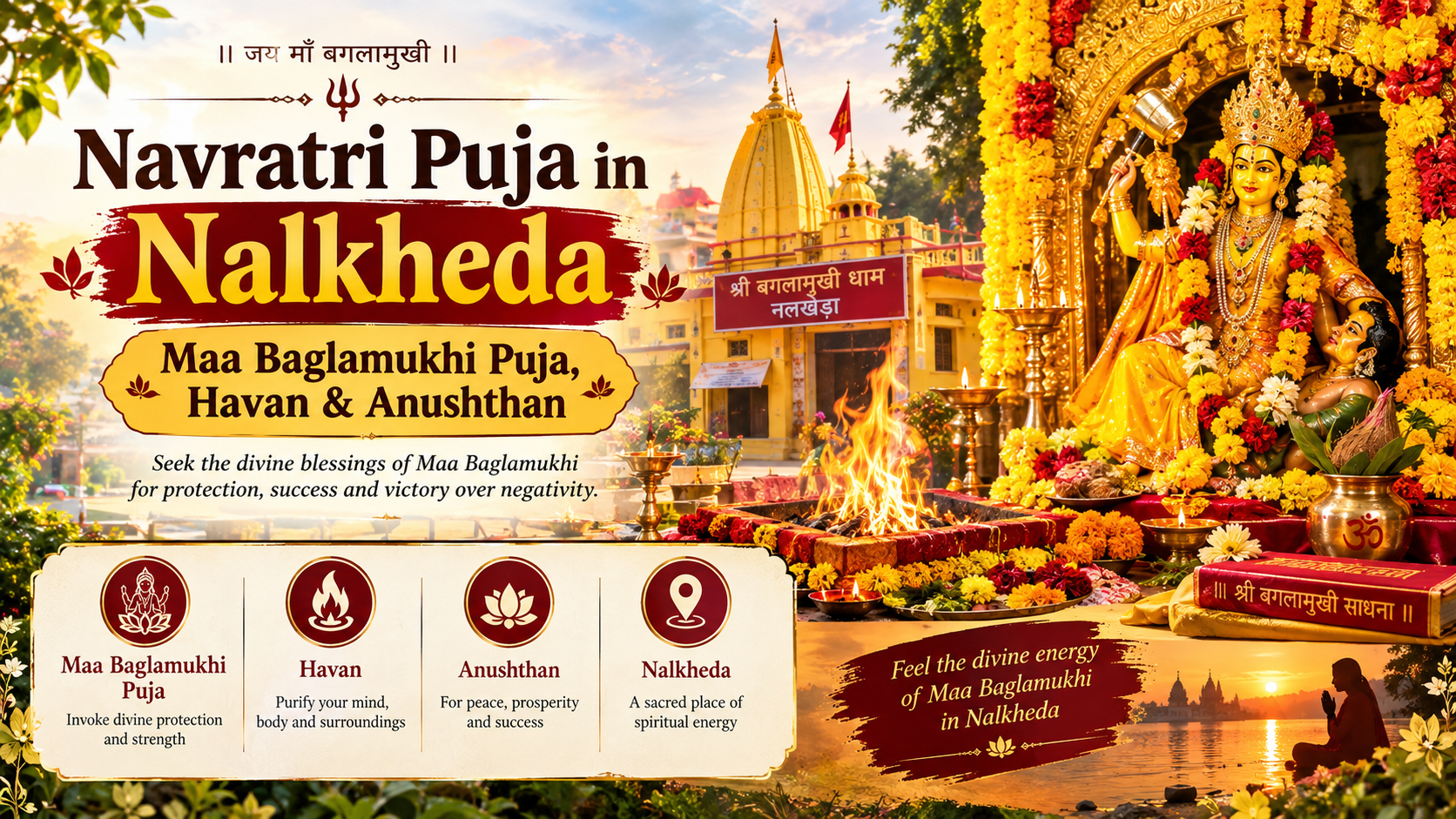
For devotees of Maa Baglamukhi, Navratri Puja in Nalkheda means combining the nine nights of Devi worship with focused prayer, Havan and, for some, a structured Anushthan at her ancient Siddha Peeth on the banks of the Lakhundar river. This guide explains what these practices involve, why Nalkheda holds this significance, and how devotees - whether visiting in person or unable to travel - can arrange them.
Quick Answer: Navratri Puja in Nalkheda
What it involves: Devotional worship of Maa Baglamukhi during Navratri, ranging from simple daily Puja to priest-guided Havan or a multi-day Anushthan, alongside the festival's central Navadurga worship.
Why Maa Baglamukhi: She is one of the ten Mahavidyas, not one of the nine Navadurga, and some devotees extend their Navratri devotional focus to her worship according to personal or family tradition.
Puja, Havan and Anushthan: A Puja is a standard worship ritual; a Havan adds a fire offering; an Anushthan is an extended, multi-day devotional practice - explained in detail below.
Why Nalkheda: Its Bagalamukhi Temple is one of three shrines in India historically recognised as significant Bagalamukhi worship centres, known as a Siddha Peeth for her devotees.
How to arrange it: In person at the temple, or through online Puja arrangements where a priest performs the ritual on the devotee's behalf.
What Is Navratri Puja in Nalkheda?
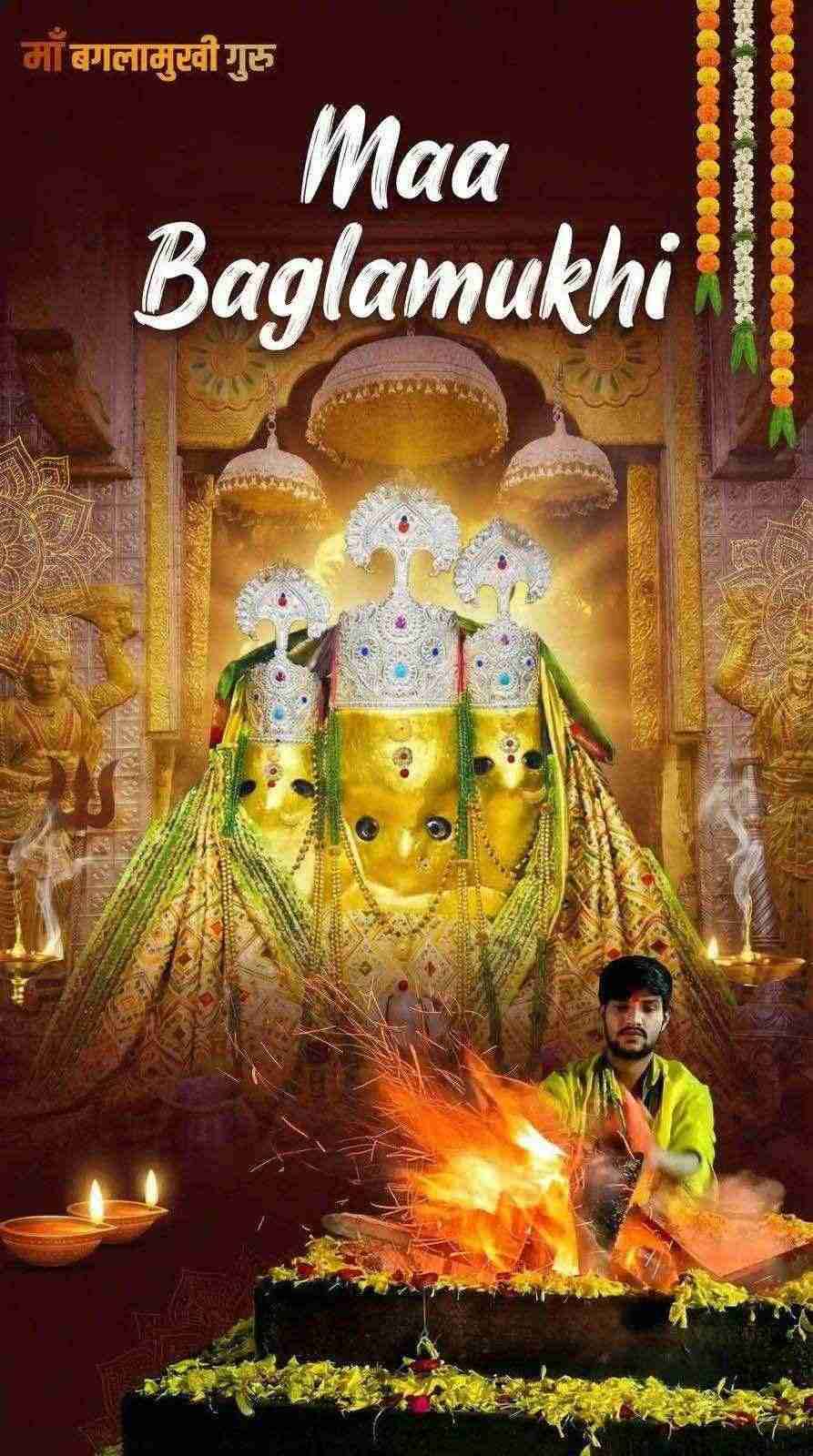
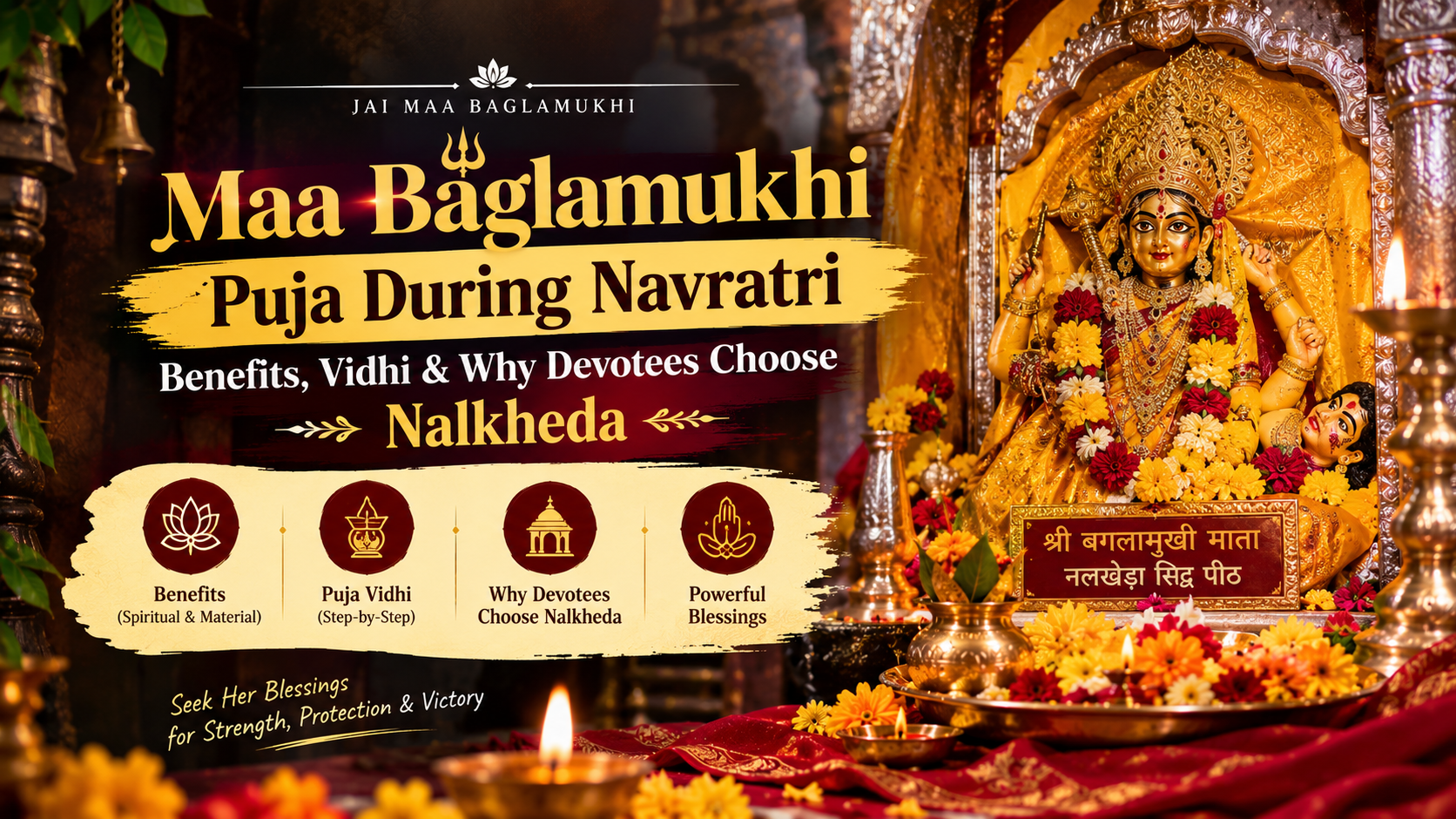
Navratri Puja in Nalkheda refers to the devotional activity that takes place at the Maa Baglamukhi Temple in Nalkheda, Madhya Pradesh, during the nine nights of Navratri. This includes the general Devi worship many households observe everywhere during the festival, alongside a more specific stream of devotional activity centred on Maa Baglamukhi, one of the ten Mahavidyas whose Siddha Peeth is located here.
Devotional activity at Nalkheda during this period can take several forms: a simple Puja performed by a visiting devotee or on their behalf, a Havan (fire ritual) for a more complete offering, or a longer Anushthan involving sustained mantra chanting over several days. All of these are, at their core, expressions of devotion, discipline and faith - this guide describes them factually, without presenting any of them as guaranteeing a specific outcome.
Why Is Nalkheda Associated with Maa Baglamukhi?
The Bagalamukhi Temple at Nalkheda sits on the banks of the Lakhundar river, a tributary of the Narmada, in the Agar Malwa district of Madhya Pradesh. It is one of three shrines in India historically recognised as significant centres of Bagalamukhi worship, the other two being at Datia and Bankhandi. The temple structure was restored in 1815, and its sanctum has a distinctive feature: a triad icon with Parvati at the centre.
Local tradition also connects the temple's deeper origins to the Dwapar Yuga, in devotional lore associated with the Pandavas - an account that belongs to the temple's traditional history rather than independently verifiable fact, and is presented here as such. What is well documented is the temple's long-standing recognition as a Siddha Peeth, meaning a seat regarded by devotees as spiritually accomplished, which is why it continues to draw devotees seeking priest-guided Puja, Havan and Anushthan, particularly during Navratri.
Navratri 2026 Dates for Devotees Planning Nalkheda Puja
Sharad Navratri 2026 begins on Sunday, 11 October, and concludes on Monday, 19 October, followed by Vijayadashami on Tuesday, 20 October 2026.
Maa Baglamukhi is not tied to any single day above, since she is not one of the Navadurga - devotees plan their Nalkheda Puja, Havan or Anushthan around their own or their family's tradition, whether that means a single day, a set number of days, or the full nine-day period. The complete Shardiya Navratri 2026 guide covers Ghatasthapana muhurat and day-wise Navadurga worship in more detail; exact muhurat timings vary by location, so confirm with a local Panchang or the officiating Acharya for Nalkheda-specific timing.
Maa Baglamukhi Puja During Navratri
Maa Baglamukhi Puja during Navratri generally follows the structure of Devi worship: a Sankalp stating the devotee's intention, invocation of the goddess, offerings, mantra japa, and a closing Aarti. Some devotees add a Havan to this sequence for a more complete ritual.
In Maa Baglamukhi worship traditions, this period is treated as an extension of the devotee's regular practice rather than a separate occasion, since Navratri already brings heightened Devi worship into daily life. Traditionally, devotees associate her worship with protection-oriented prayer, steadiness and clarity during difficult periods - understood as devotional belief rather than assured outcome. Looking for priest-guided Maa Baglamukhi Puja during Navratri? The available Puja services outline the options devotees can consider.
Maa Baglamukhi Puja Vidhi in Nalkheda
This is a general overview, not a specialised tantric manual. Specific Anushthans and advanced practices are performed under the guidance of a qualified, experienced Acharya rather than attempted independently.
Maa Baglamukhi Havan in Nalkheda
A Havan is a fire ritual in which specific offerings are made into a consecrated fire while mantras are recited, traditionally understood as a way of formally presenting prayers to the deity being invoked. At Nalkheda, Havan is commonly included as part of a more complete Puja, and offerings traditionally used include turmeric, ghee and mustard, offered into the fire while the priest chants the relevant mantra.
Because Havan involves precise sequencing and offerings, it is traditionally performed by, or under the direct guidance of, a trained priest rather than improvised. The Baglamukhi Havan guide on the website covers this ritual in more depth.
What Is Baglamukhi Anushthan?
An Anushthan is an extended devotional practice, typically involving sustained mantra chanting and ritual worship carried out over several consecutive days, rather than a single Puja or Havan session. At Nalkheda, Anushthans are commonly offered over 9, 21 or 41 days, though the appropriate duration for a given devotee's intention is generally determined by the officiating Acharya rather than fixed by a single universal rule.
An Anushthan typically opens with a detailed Sankalp, continues with daily mantra chanting and worship (often with regular updates shared with the devotee), and concludes with a Havan as a closing ceremony, followed by Prasad. Because an Anushthan involves sustained ritual discipline and precise mantra practice over many days, it is a priest-guided undertaking rather than something devotees are expected to perform independently. Durations and specific structures can vary by tradition and by the officiating priest, so devotees considering an Anushthan should confirm the specific format directly.
Traditional Benefits of Maa Baglamukhi Puja
These are devotional associations held within Shakta and Tantric tradition, not guaranteed outcomes. No form of worship described in this guide promises victory in legal, professional or personal matters, guaranteed wealth, or any other assured result - devotion, discipline and faith remain the emphasis.
Why Do Devotees Choose Nalkheda During Navratri?
Navratri brings a noticeable rise in devotional activity at Bagalamukhi temples generally, and Nalkheda is no exception. Devotees combine their Navadurga worship with a focused period of Baglamukhi Puja, Havan or Anushthan, often planning a family Sankalp around the nine days. Because the temple is recognised as a long-standing Siddha Peeth, some devotees specifically time a Havan or Anushthan to coincide with Navratri's heightened devotional atmosphere, alongside the priest-guided worship the temple regularly offers.
This is best understood as a period of collective devotional focus rather than a claim that worship performed during Navratri carries a different or amplified spiritual effect - a distinction that matters for keeping expectations grounded and respectful of the tradition. Planning your Navratri worship? The Shardiya Navratri 2026 guide covers the day-wise Navadurga worship alongside your Baglamukhi practice.
What Puja Options Can Devotees Consider?
Only the first three are offered as bookable services on the website; the latter two describe general devotional practice rather than a specific service.
Can You Perform Baglamukhi Puja in Nalkheda If You Cannot Visit?
Yes. Based on the website's own description of its process, devotees who cannot travel to Nalkheda can arrange a Puja, Havan or Anushthan to be performed by a priest on their behalf. This includes taking the devotee's Sankalp - typically with their name and gotra - through a video call before the ritual, allowing the devotee to participate via live video (commonly through WhatsApp or a similar video call) during the Puja or Havan itself, and sharing a recording of the ritual, along with photographs, afterward. Prasad and related items are described as being couriered to devotees, including internationally.
Devotees who wish to arrange Maa Baglamukhi Puja or Havan at Nalkheda can explore the available booking options.
How to Plan a Navratri Puja Visit to Nalkheda
Before visiting or booking:
Decide whether you want a simple Puja, a Havan, or a multi-day Anushthan.
Choose your preferred date or date range within the Navratri period.
Gather the Sankalp details you will need to provide - typically your name and gotra.
Reach out in advance to confirm scheduling, since Navratri is a high-demand period.
During planning:
Confirm whether the ritual will be performed at the temple or, where offered, at an alternative venue.
Ask the officiating priest about the appropriate muhurat for your specific dates, since exact timings depend on the Panchang and location.
If travelling in person, plan around the temple's general Navratri activity and expect a more active devotional atmosphere than on an ordinary day.
If arranging remotely, confirm how Sankalp, live participation and Prasad delivery will be handled for your booking.
This checklist reflects planning steps supported by the website's own description of its process; for hotel, transport or exact temple visiting-hour details, it is best to confirm directly with the temple or your travel arrangements, since this guide does not have verified specifics on those points.
Maa Baglamukhi Puja Samagri
For a priest-guided Puja, Havan or Anushthan at Nalkheda, the officiating priest typically arranges the required Samagri as part of the service; devotees performing a simple worship at home can use this table as a general guide.
Navratri Puja in Nalkheda for NRI Devotees
International devotees who cannot travel to Nalkheda during Navratri can explore the website's online arrangement, where the process described includes a video-call Sankalp with the devotee's name and gotra, live participation via video call during the ritual, a recording and photographs shared afterward, and Prasad couriered internationally. This allows devotees abroad to have a Puja, Havan or Anushthan performed on their behalf at the temple while remaining involved in the key devotional steps remotely.
For NRI devotees, the main practical consideration is coordinating dates and Sankalp details in advance, since the ritual itself takes place at Nalkheda on Indian Standard Time. The booking page and service page outline what is currently offered; devotees with specific scheduling or format questions are encouraged to enquire directly before booking.
Nalkheda Navratri Puja vs Home Navratri Puja
Neither option is presented as universally better - many devotees combine both, performing their own daily Navratri Puja at home while also arranging a specific Baglamukhi Puja, Havan or Anushthan at Nalkheda, whether in person or remotely.
How to Book Navratri Puja in Nalkheda
Based on the website's own booking flow, arranging a Navratri Puja, Havan or Anushthan in Nalkheda generally follows this structure:
Choose the relevant Puja - a standard Puja, Havan, or a 9/21/41-day Anushthan - from the service page.
Provide the required details, including your name, gotra and the intention or concern behind your request.
Confirm your booking, after which the website describes sharing details such as the date, time and Samagri involved.
Share your Sankalp via video call before the ritual begins.
The priest performs the Puja, Havan or Anushthan at Nalkheda, with the option to join live via video call.
Receive documentation, described as including a recording, photographs and, where applicable, Prasad couriered to your address.
Specific pricing, timelines and inclusions can vary by the type of Puja or Anushthan chosen, so review the booking page directly or ask the Acharya's team before confirming.
Plan Your Navratri Puja in Nalkheda
Navratri offers a natural, spiritually meaningful window for devotees drawn to Maa Baglamukhi's tradition of protection-oriented, steadying worship. Whether that means a simple Puja, a Havan, or a structured 9, 21 or 41-day Anushthan, Nalkheda's long-standing recognition as a Baglamukhi Siddha Peeth continues to bring devotees to its priest-guided rituals during this period, both in person and, for those who cannot travel, through the website's remote arrangement with video-documented Sankalp and participation.
Book Maa Baglamukhi Puja in Nalkheda
Explore Maa Baglamukhi Puja Services
Frequently Asked Questions
What is Navratri Puja in Nalkheda?
It refers to the devotional worship of Maa Baglamukhi at her Siddha Peeth in Nalkheda during the nine nights of Navratri, ranging from a simple Puja to Havan or a multi-day Anushthan.
Why is Nalkheda associated with Maa Baglamukhi?
Its Bagalamukhi Temple is one of three shrines in India historically recognised as significant Bagalamukhi worship centres, alongside Datia and Bankhandi, and is known to her devotees as a Siddha Peeth.
Where is Maa Baglamukhi Temple in Nalkheda?
The temple is located on the banks of the Lakhundar river, a tributary of the Narmada, in the Agar Malwa district of Madhya Pradesh.
What is Nalkheda Siddha Peeth?
It is the traditional name for the Bagalamukhi Temple at Nalkheda, recognised by devotees as a seat of spiritual accomplishment for her worship.
Why do devotees visit Nalkheda during Navratri?
Navratri brings heightened Devi worship generally, and devotees combine this with focused Baglamukhi Puja, Havan or Anushthan at a temple long recognised for her worship.
What is Maa Baglamukhi Puja?
It is the devotional worship of Maa Baglamukhi, typically including Sankalp, invocation, offerings, mantra japa and Aarti.
What is Baglamukhi Havan?
A fire ritual in which specific offerings, such as ghee, turmeric and mustard, are made into a consecrated fire while mantras are recited.
What is Baglamukhi Anushthan?
An extended devotional practice involving sustained mantra chanting and ritual worship over several consecutive days, commonly offered over 9, 21 or 41 days.
What is the difference between Puja, Havan and Anushthan?
A Puja is a standard worship ritual, a Havan adds a fire offering to that worship, and an Anushthan extends the practice over multiple consecutive days with sustained mantra discipline.
Can Maa Baglamukhi Puja be performed during Navratri?
Yes, some devotees choose to perform it during Navratri, alongside or independent of the festival's central Navadurga worship.
What are the traditional benefits of Baglamukhi Puja?
Traditionally, devotees associate her worship with protection-oriented prayer, courage, focused speech and clarity during difficult circumstances - understood as devotional belief rather than guaranteed outcome.
Can Baglamukhi Puja be arranged online?
Yes, the website describes an online process involving a video-call Sankalp, live participation during the ritual, and a recording shared afterward.
Can NRI devotees arrange Baglamukhi Puja?
Yes, based on the website's description, international devotees can arrange a Puja, Havan or Anushthan remotely, with Prasad couriered internationally.
What Samagri is used in Baglamukhi Puja?
Commonly used items include a yellow cloth, turmeric, yellow flowers, honey, kumkum, akshat, and, for Havan, ghee and mustard.
Can beginners participate in Baglamukhi Puja?
Yes, a simple devotional Puja is accessible to beginners; a Havan or Anushthan is generally priest-guided regardless of the devotee's experience level.
How long does Baglamukhi Anushthan take?
Nalkheda commonly offers Anushthans over 9, 21 or 41 days, though the appropriate duration for a specific intention is generally determined with the officiating Acharya.
Is Baglamukhi Puja one of the Navadurga Pujas?
No, Maa Baglamukhi is one of the ten Mahavidyas, a distinct tradition from the nine Navadurga forms worshipped during Navratri.
What are the 2026 Navratri dates?
Sharad Navratri 2026 runs from 11 to 19 October, with Vijayadashami on 20 October.
How can I book Navratri Puja in Nalkheda?
Through the booking page, where devotees choose a Puja, Havan or Anushthan, provide Sankalp details, and have a priest perform the ritual on their behalf.
Can Baglamukhi Havan be performed during Navratri?
Yes, Havan is commonly included in Baglamukhi observances during Navratri, generally performed by or under the guidance of a trained priest.