Wondering exactly when to break your Navratri fast in 2026? This guide explains the Navratri Parana 2026 date, the Panchang rules behind it, why different sources show different timings, and how to perform Parana correctly at home.
Quick Answer
What is Navratri Parana? Parana is the formal act of breaking the Navratri fast after completing the required Puja, following the Tithi (lunar day) rule your family or tradition follows.
When is Navratri Parana 2026? Shardiya Navratri 2026 concludes with Maha Navami on Monday, October 19, and Vijayadashami on Tuesday, October 20, 2026. Depending on the tradition followed, Parana is performed either on Navami itself (after Kanya Puja) or after Navami Tithi ends on Dashami, which begins in the early afternoon of October 20 in Delhi.
When should devotees break the fast? This depends on whether your family follows the Nirnaya Sindhu rule of breaking fast only after Navami Tithi ends, or the common North Indian practice of breaking fast on Ashtami/Navami itself after Kanya Puja.
What determines Parana timing? The exact moment Navami Tithi ends for your city, which shifts slightly from place to place.
What should be done before breaking the fast? Complete the day's Puja, Kanya Puja and Havan (if part of your observance), and offer Bhog before ending the fast.
What Is Navratri Parana?
Parana literally means "breaking a fast" in Hindu Vrat tradition. During Navratri, many devotees observe a nine-day fast (Vrat) from Pratipada to Navami, eating only vrat-appropriate food. Parana is the formal, ritual conclusion of that fast, not simply eating whenever one feels like it.
The timing of Parana matters in traditional practice because Hindu Vrat rules are based on Tithi, the lunar day, rather than the Gregorian calendar date. A Tithi can begin or end at any hour, so the "correct" moment to break a fast is tied to when a specific Tithi starts or ends for a given location, not a fixed clock time that applies everywhere.
This is different from simply finishing fasting. A devotee's fast effectively continues in spirit until the Sankalp (vow) taken at the start of Navratri is honoured through the closing rituals: the final day's Puja, Kanya Puja or Havan where practiced, and then Parana itself.
Navratri Parana 2026 Date and Time
The table below summarises the key Shardiya Navratri 2026 dates, based on the Drik Panchang calculation for New Delhi. Exact clock times shift by a few minutes for other cities because they depend on local sunrise and Tithi timing.
Important note: Exact Tithi start and end times shift by location. Always cross-check the precise minute against a reliable Panchang for your own city before performing a time-sensitive ritual like Parana.
When Should You Break the Navratri Fast?
There is a genuine, well-documented split in traditional practice on this question, and it is worth understanding rather than picking one answer blindly.
Rule 1: Parana after Navami Tithi ends (Dashami Tithi rule). According to the Nirnaya Sindhu, a classical Hindu text on Vrat and ritual timing that sources such as Drik Panchang follow, Navratri fasting should continue through the entire Navami Tithi, and Parana should be performed only once Navami Tithi is over and Dashami Tithi has begun. For Shardiya Navratri 2026, this points to Parana after Navami Tithi ends, which is expected in the early afternoon of Tuesday, October 20 in Delhi, though the exact minute varies by city.
Rule 2: Parana on Ashtami or Navami itself, after Kanya Puja. In practice, a very large number of devotees, especially in North India, break their fast on Ashtami or Navami itself, immediately after completing Kanya Puja. This is a widely followed family and regional custom rather than the strict Panchang-based rule, and it is equally valid within that tradition.
Sunrise consideration: As a general Panchang principle, if a Tithi is ending after sunset, related rituals are often shifted to the following day so that the observance is not cut short mid-ritual. This is one reason Parana dates can appear to differ across otherwise reliable sources.
What should you do if your family tradition differs from the Panchang rule? Follow your own family's established practice. Both approaches are recognised within Hindu tradition; the difference reflects two different but valid interpretations rather than one being incorrect. When in doubt, ask an elder in the family or a priest which convention your household follows.
Navratri Parana Rules
Complete the required Puja for the day before breaking the fast.
Follow the Tithi rule that your family or regional tradition observes, whether that is the Navami-day rule or the post-Navami-Tithi rule.
Avoid breaking the fast randomly before the appropriate time simply out of convenience.
Complete Kanya Puja first if it is part of your family's Navratri practice.
Complete Havan first if a Havan is part of your observance; see this site's guide to Navratri Havan for the ritual sequence.
Follow your own family or regional tradition where it differs from the general rule described here; these customs have been passed down for generations and are not incorrect simply because they differ from a Panchang-based calculation.
These are traditional and regional customs, not universal religious law that applies identically to every household.
How to Perform Navratri Parana at Home
Complete the final day's Puja for Maa Durga, including the usual Aarti and offerings.
Offer prayers of gratitude to Maa Durga for the nine days of worship.
Complete Kanya Puja if it is part of your family's Navratri observance.
Complete Havan if a Havan is part of your practice for the year.
Offer Bhog to the deity before it is shared or consumed by the family.
Take a moment to pray before formally ending the fast, expressing the intention to conclude the Vrat.
Break the fast according to the Parana rule your family follows, whether that is on Navami or after Navami Tithi ends.
Eat a simple, easily digestible meal rather than a large or rich one immediately after several days of fasting.
This sequence works well for beginners performing Navratri Puja at home for the first time; for the day-wise Puja steps leading up to this point, see the guide to Navratri Puja at Home.
What to Eat After Navratri Fast?
After several days of a light, vrat-appropriate diet, the body generally does better with a gentle transition back to regular food rather than a sudden heavy meal.
Foods many devotees find suitable:
Fresh fruits
Coconut water
Simple khichdi or a light rice-and-lentil preparation
Curd or yogurt, where it suits the individual
Easily digestible, home-cooked food
Adequate water and hydration throughout the day
What many devotees prefer to avoid immediately after breaking a prolonged fast:
Very oily or fried food
Very spicy dishes
Heavy, rich meals eaten all at once
Excessive sweets
Overeating in general, even of suitable foods
This is general, commonly followed guidance rather than medical advice. Anyone with a specific health condition, or observing a strict fast for the first time, should use their own judgement and consult a doctor if needed before and after an extended fast.
Navratri Parana After Kanya Puja
For many North Indian households, Kanya Puja and Parana are closely linked: the fast is broken only after the nine young girls representing the Navadurga have been worshipped, fed and given Dakshina. This is a widely followed family custom rather than a single universal sequence that applies to every tradition.
Some families perform Kanya Puja on Ashtami, others on Navami, and this choice itself varies by region and generation. Whichever day Kanya Puja is performed on, Parana generally follows immediately afterward in this style of observance. For a complete guide to the ritual, age guidelines and Bhog for the nine girls, see Navratri Kanya Puja.
Navratri Parana After Havan
Some households and communities perform a Havan on Ashtami or Navami as part of their Navratri closing rituals, offering Ahuti (oblations) into the sacred fire before the fast is broken. In this tradition, Havan is generally completed before Parana, since the Havan itself is considered part of the day's core worship.
This sequence is not observed by every family. Many households complete only Puja and Kanya Puja without a formal Havan, and that is equally complete within their own tradition. For Havan Vidhi, Samagri and Muhurat guidance, see Navratri Havan.
Navratri Parana on Navami or Dashami - Which Day?
This is the single most common point of confusion around Navratri Parana, so it is worth addressing directly.
Why the confusion happens: Navratri fasting rules are based on Tithi, not the Gregorian date. Depending on exactly when Navami Tithi begins and ends in a given year, the "ninth day" of the Moon can span two calendar dates, or Ashtami and Navami can even fall on the same calendar day. In 2026, Ashtami Tithi ends and Navami Tithi begins on the morning of October 19, and Navami Tithi itself continues into the early afternoon of October 20, which is why different websites list slightly different Parana dates.
How Tithi affects the answer: According to the Nirnaya Sindhu rule followed by Drik Panchang, Parana should happen only after Navami Tithi ends and Dashami Tithi begins, which places the "technically correct" Parana window in the early afternoon of Tuesday, October 20, 2026 in Delhi. According to the widespread North Indian family custom, Parana happens on Navami itself, October 19, right after Kanya Puja.
Why different calendars show different dates: Panchang calculations can differ slightly between publishers based on the exact astronomical reference point used, and different communities have historically followed different interpretations of the same classical texts. Neither approach is "wrong"; they reflect two genuinely different, long-standing traditions.
How to follow a reliable local Panchang: Check a Panchang calculated specifically for your own city, since Tithi start and end times shift with sunrise and longitude. A Panchang calculated for Delhi will not be exactly accurate for Chennai, Kolkata or a city outside India.
How family tradition may differ: If your family has always broken the fast on Navami after Kanya Puja, there is no need to change that practice based on a different rule followed elsewhere. Family and regional tradition carries its own legitimacy within Hindu practice.
Common Mistakes to Avoid During Navratri Parana
Breaking the fast too early, before completing the day's required Puja
Ignoring Tithi timing and relying only on the calendar date
Following an unverified timing shared on social media without checking a proper Panchang
Overeating immediately after several days of a light diet
Ignoring hydration during the final days of fasting
Confusing Kanya Puja with Parana itself; they are related but distinct rituals
Assuming every region or family follows the exact same Parana sequence
Not checking the Parana timing for one's own city before a time-sensitive ritual
Navratri Parana Checklist
Check the local Parana timing for your city
Complete the required Puja for the day
Complete Kanya Puja if it is part of your practice
Complete Havan if it is part of your practice
Offer Bhog before breaking the fast
Pray before formally ending the Vrat
Prepare a light, easily digestible meal in advance
Break the fast at the appropriate time for your tradition
Navratri Parana and Maa Baglamukhi Puja
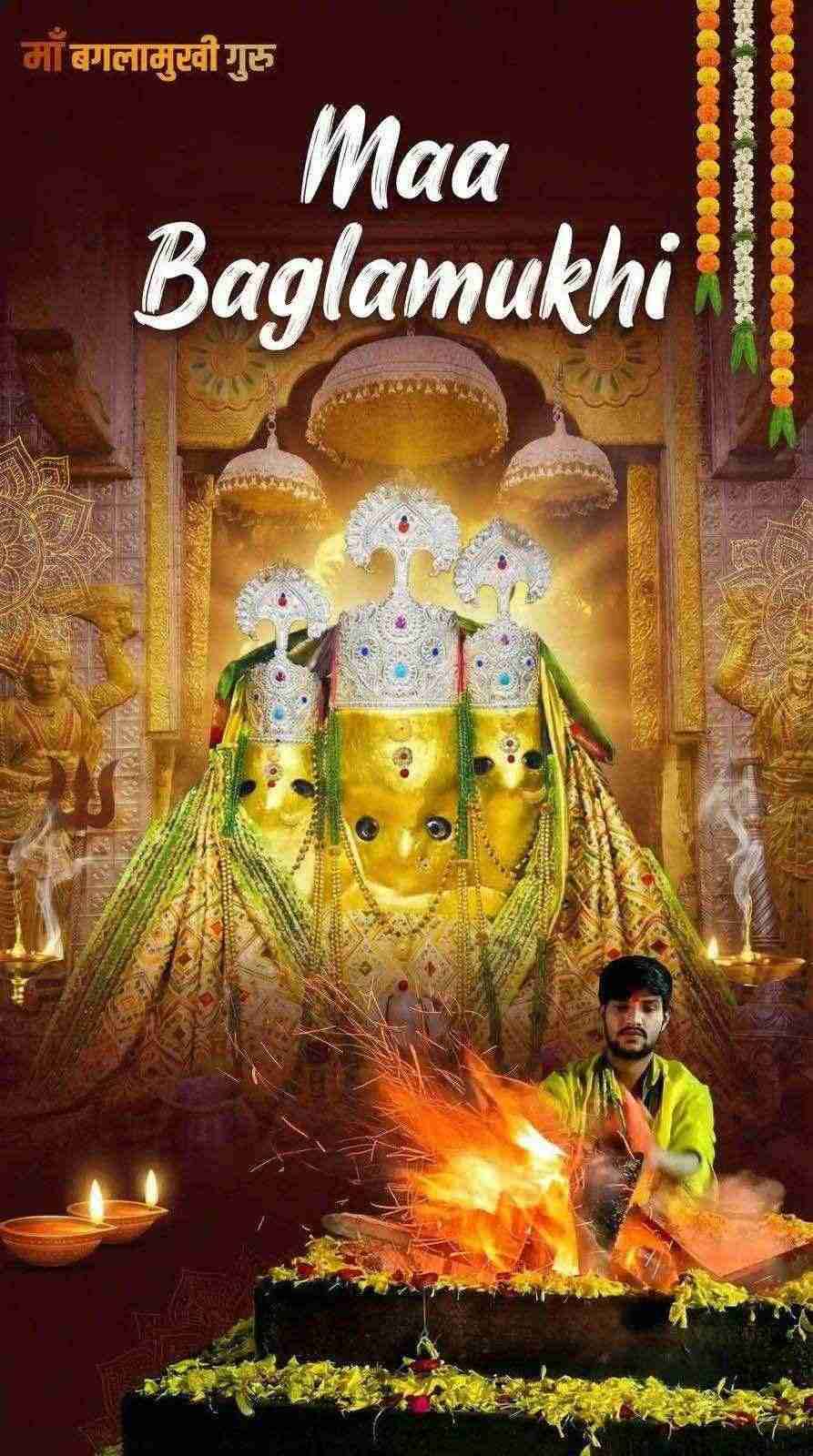
Maa Baglamukhi is one of the Dash Mahavidyas, the ten Mahavidya forms of the Divine Feminine, and her worship is a distinct devotional practice from the worship of the nine forms of Navadurga observed during Navratri. Navratri Parana itself relates specifically to the Navadurga fast; it is not a Baglamukhi ritual.
That said, some devotees choose to include Maa Baglamukhi Puja as part of their personal Navratri Sadhana, according to their own family tradition or spiritual guidance. Because Baglamukhi worship often involves specific and sometimes Tantric procedures, priest-guided worship is generally recommended for a formal Baglamukhi Puja, Havan or Anushthan rather than attempting it independently from a general checklist. You can read more about Maa Baglamukhi Puja and Baglamukhi Havan on this site if this is part of your practice.
If you are exploring a priest-guided Maa Baglamukhi Puja at the temple in Nalkheda, Madhya Pradesh during this Navratri, it is best to confirm the exact ritual requirements and timing directly with the priest or service provider, since these vary by the specific Puja or Anushthan chosen. You can enquire about arrangements for a Maa Baglamukhi Puja in Nalkheda if you would like guidance on this.
Frequently Asked Questions
When is Navratri Parana 2026?
Depending on the tradition followed, Parana falls either on Maha Navami, Monday, October 19, 2026, after Kanya Puja, or after Navami Tithi ends on Tuesday, October 20, 2026.
What is Navratri Parana?
Parana is the formal, ritual act of breaking the Navratri fast after completing the required Puja, following the Tithi rule one's family or tradition observes.
When should I break my Navratri fast?
Follow your family's established practice; some break the fast on Navami after Kanya Puja, others wait until Navami Tithi ends on Dashami.
Is Navratri Parana on Navami or Dashami?
Both are followed in different traditions. The Nirnaya Sindhu rule points to Dashami, while common North Indian family practice favours breaking fast on Navami after Kanya Puja.
Can I break my Navratri fast after Kanya Puja?
Yes, this is one of the most widely followed practices, especially in North Indian households.
Can I break Navratri fast after Havan?
Yes, in households where a Havan is part of the Navratri closing rituals, Parana generally follows the Havan.
What should I eat after Navratri fasting?
Light, easily digestible food such as fruits, coconut water, khichdi and curd is generally preferred over heavy or oily meals immediately after fasting.
Can I drink water before Parana?
Water is generally not considered to break a Vrat in most Navratri fasting traditions, though this can vary by the type of fast (Nirjala versus Phalahari) a devotee has taken; check your own family's practice.
What is the meaning of Parana in Hindu fasting?
Parana means the ritual conclusion of a Vrat or fast, marking the formal end of the vow taken at its start.
What happens if Navratri fast is broken early?
There is no single punitive outcome described uniformly across traditions; devotees generally aim to complete the required Puja first as a matter of respect for the Vrat taken.
Can I break Navratri fast at night?
Many traditional Parana rules favour daytime, particularly the morning or early afternoon, based on Tithi timing, though family customs vary.
Is Parana timing the same in every city?
No. Tithi start and end times shift by a few minutes to an hour or more depending on the city's location, so the exact Parana time differs from place to place.
Do I need to perform Puja before Parana?
Yes, completing the day's Puja, and Kanya Puja or Havan where practiced, is generally done before formally breaking the fast.
Can beginners perform Navratri Parana at home?
Yes. Following the step-by-step sequence in this guide, a simple and sincere Parana at home is entirely appropriate for beginners.
What should I avoid after breaking the Navratri fast?
Very oily, spicy or heavy food, along with overeating, is generally best avoided immediately after several days of light fasting.
When does Sharad Navratri fasting end in 2026?
Fasting concludes around Maha Navami, Monday, October 19, 2026, with Parana following either that day or on Tuesday, October 20, depending on the tradition followed.
What is the difference between Navratri fasting and Parana?
Fasting is the nine-day observance itself; Parana is the specific ritual act of formally ending that fast.
Should Parana be done after Navami Tithi ends?
According to the Nirnaya Sindhu rule, yes; according to common North Indian family practice, Parana is often done on Navami itself. Both are recognised traditions.
Can family traditions change the Parana procedure?
Yes, and this is normal. Family and regional custom carries real weight in how Navratri Parana is practiced across India.
Where can I check the correct local Parana timing?
A reliable Panchang calculated specifically for your own city is the best source; information here should be checked against the local Panchang for the devotee's city before performing time-sensitive rituals.