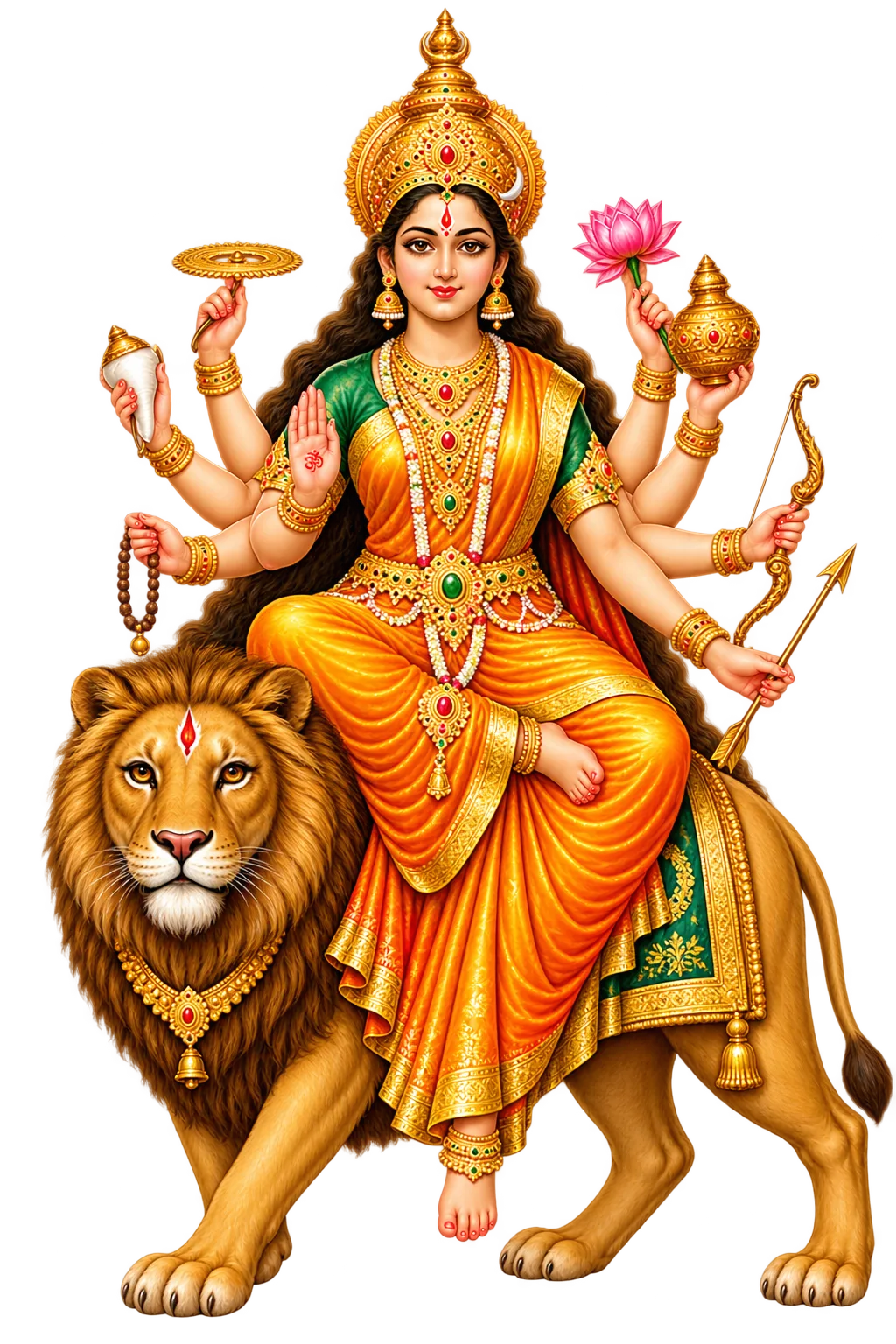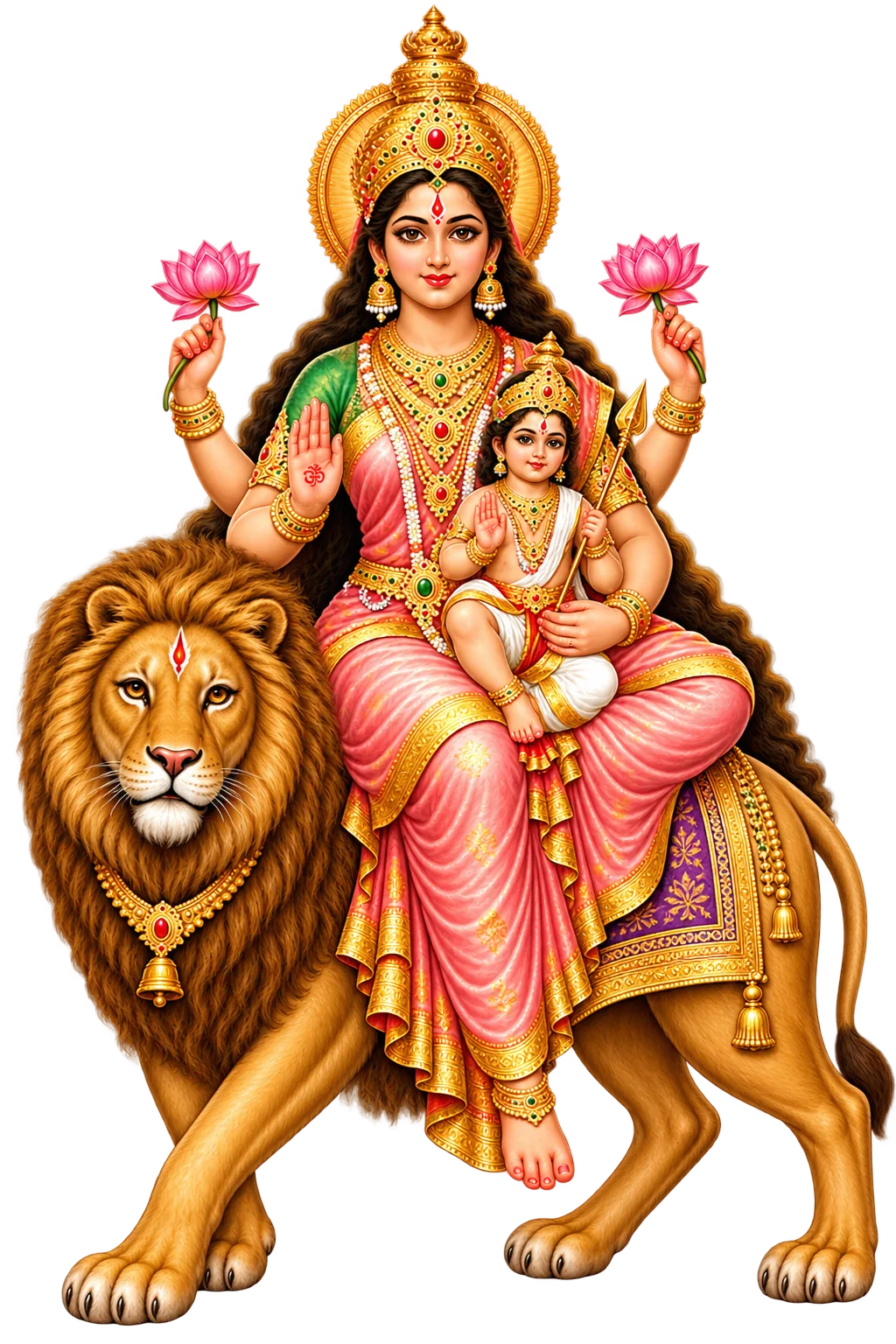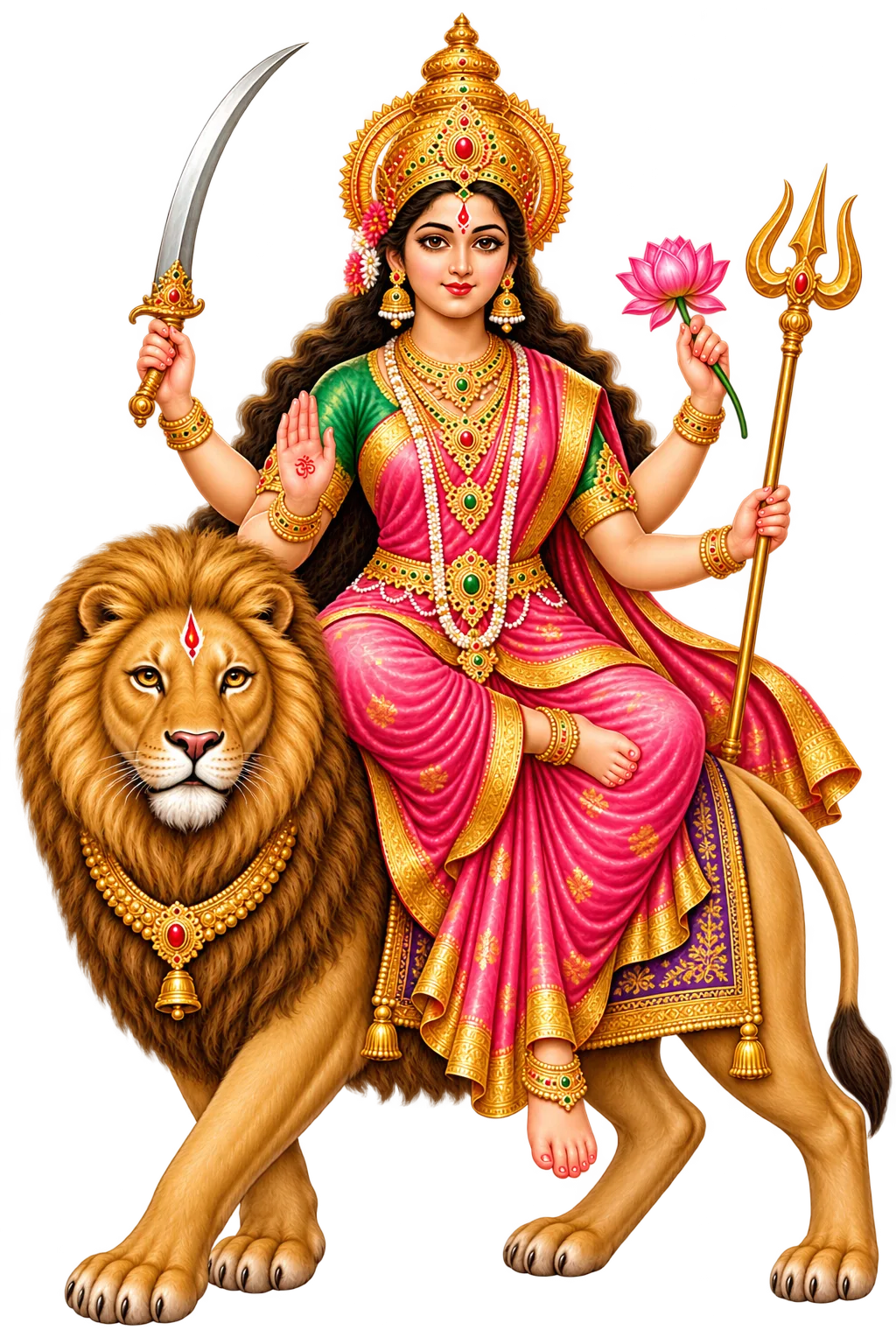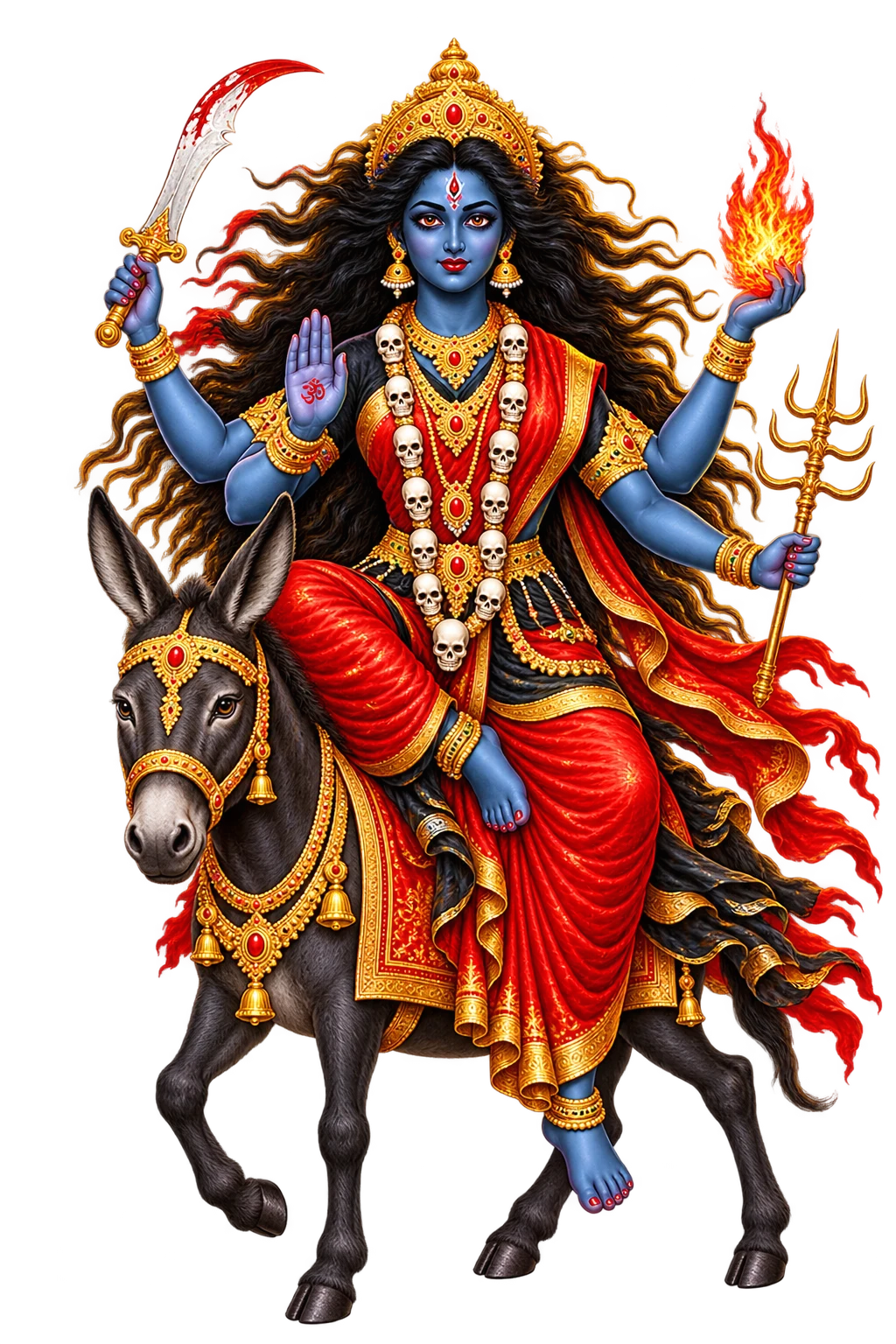
Quick Answer
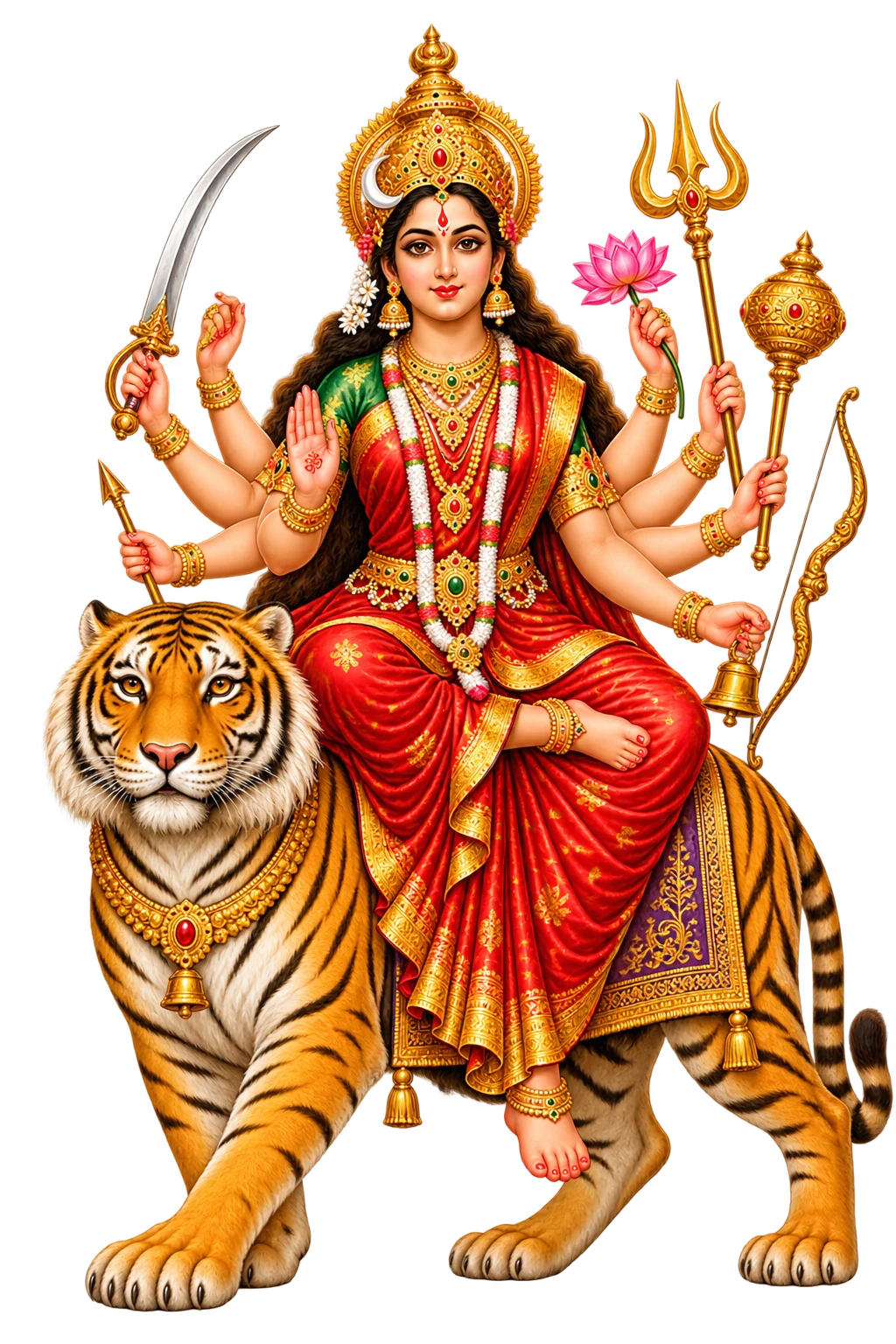
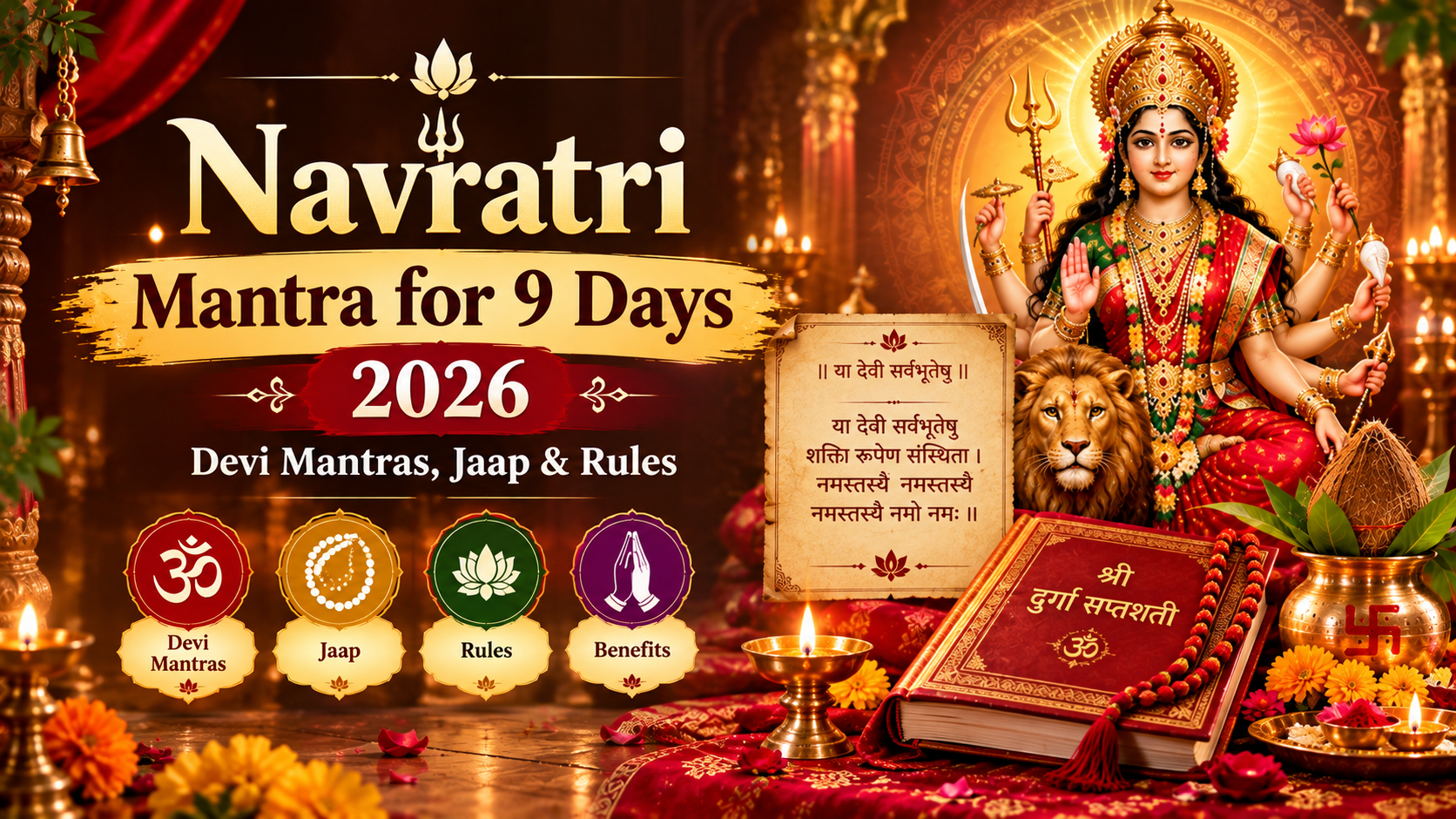
The 9 Navratri mantras for 2026 are the traditional Naam Mantras of the Navadurga: Day 1 Om Devi Shailaputryai Namah, Day 2 Om Devi Brahmacharinyai Namah, Day 3 Om Devi Chandraghantayai Namah, Day 4 Om Devi Kushmandayai Namah, Day 5 Om Devi Skandamatayai Namah, Day 6 Om Devi Katyayanyai Namah, Day 7 Om Devi Kalaratryai Namah, Day 8 Om Devi Mahagauryai Namah, and Day 9 Om Devi Siddhidatryai Namah. Devotees also chant the Navarna Mantra or a general Durga mantra on any day.
Navratri mantra jaap simply means chanting a chosen Devi mantra with focus and devotion during the nine nights of Navratri, usually one mantra for each form of the Navadurga worshipped that day. Devotees chant these mantras because each of the nine days is dedicated to a specific form of Maa Durga, and reciting her Naam Mantra is considered a simple, accessible way to connect with that day's worship, even for people who cannot perform an elaborate puja. This guide gives you the correct mantra for each day of Shardiya Navratri 2026, along with the Sanskrit, transliteration, meaning, suggested repetition counts and a practical jaap method you can follow at home, whether you are observing a full nine-day Vrat or simply want to chant with sincerity on the days you can manage. It is written for beginners, working professionals with limited time, and anyone looking for a clear, tradition-aware reference rather than a random list copied from social media. For the wider festival calendar, see the Sharadiya Navratri 2026 guide.
What Are Navratri Mantras?
Navratri mantras are short devotional chants, usually in Sanskrit, recited during the nine nights of Navratri to invoke and honor the different forms of Maa Durga. They range from very simple single-line Naam Mantras (a name of the Devi followed by "Namah") to longer stotras and the more esoteric Navarna Mantra used in certain Shakta traditions.
Most household worship during Navratri relies on the nine Naam Mantras, one for each Navadurga form, because they are short, easy to remember, and directly tied to the specific Devi worshipped on that day. More elaborate practitioners may combine these with the Navarna Mantra, verses from Durga Saptashati, or the Argala, Kilaka and Kavacha stotras, depending on their own family or Sampradaya practice.
Navratri 2026 Dates and 9-Day Devi Mantra List
Shardiya Navratri 2026 begins with Ghatasthapana on Sunday, 11 October 2026 and the nine days run through Monday, 19 October 2026, with Vijayadashami (Dussehra) on Tuesday, 20 October 2026. Exact Tithi transition timings can vary slightly depending on your location, so it is worth checking your local Panchang or your family priest if you want the precise Muhurat down to the minute.
For each Devi's fuller story, symbolism and dedicated puja details, see the day-wise pages linked in the sections below.
Day 1 - Maa Shailputri Mantra
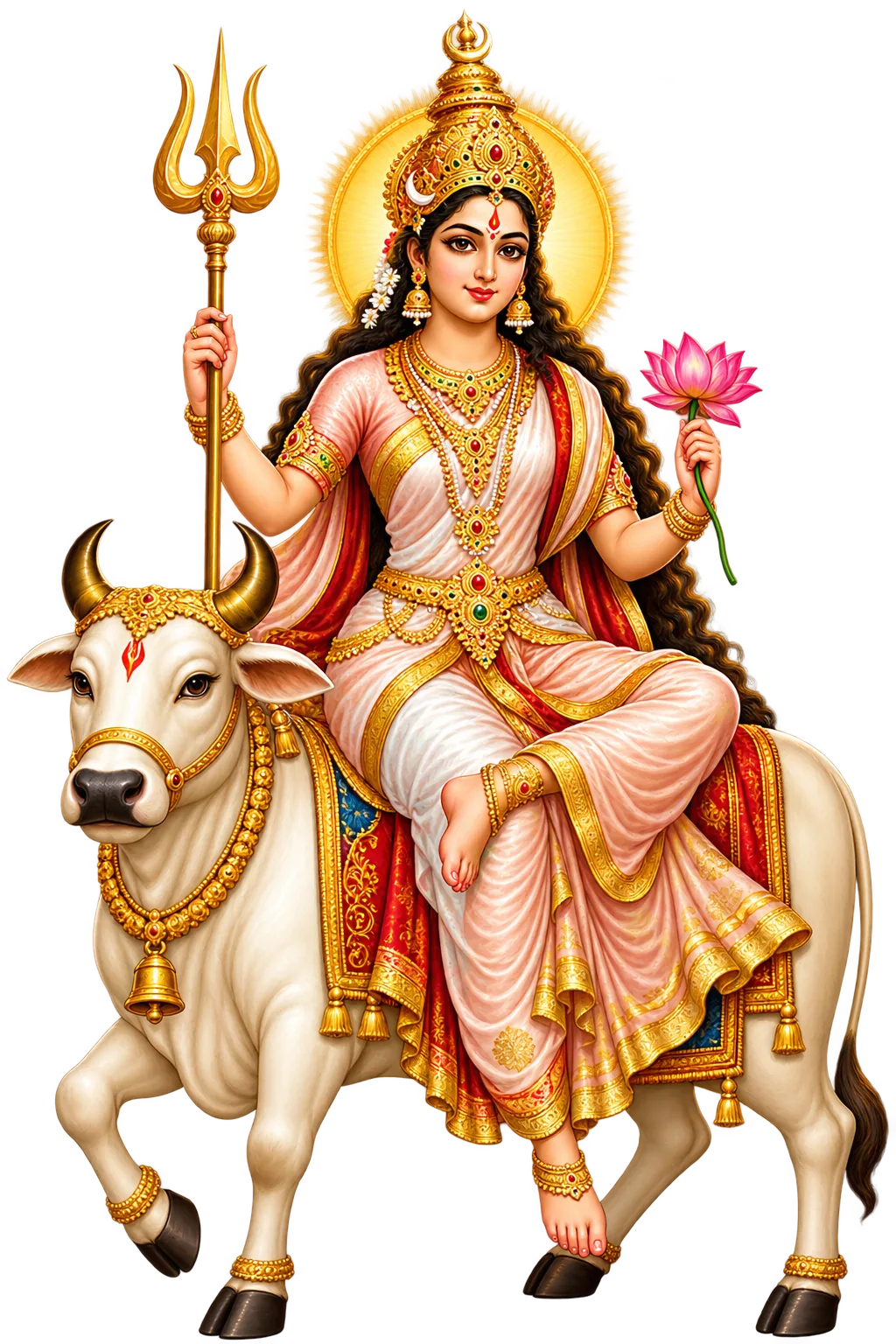
Date: 11 October 2026 Mantra (Devanagari): ॐ देवी शैलपुत्र्यै नमः Transliteration: Om Devi Shailaputryai Namah Meaning: Salutations to the Devi who is the daughter of the mountain (Himalaya).
Maa Shailputri is worshipped on the first day of Navratri, right after Ghatasthapana. Her mantra is commonly chanted in the morning after the Kalash Sthapana and the day's opening puja, though there is no strict rule against chanting it later in the day as well. A common approach is to repeat it 11, 21 or 108 times using a Tulsi or Rudraksha mala, sitting facing east or north. Simply sit calmly, take a short Sankalp, and repeat the mantra with attention rather than rushing the count. See the full Maa Shailputri and Navratri Day 1 page for the complete puja Vidhi for this day.
Day 2 - Maa Brahmacharini Mantra
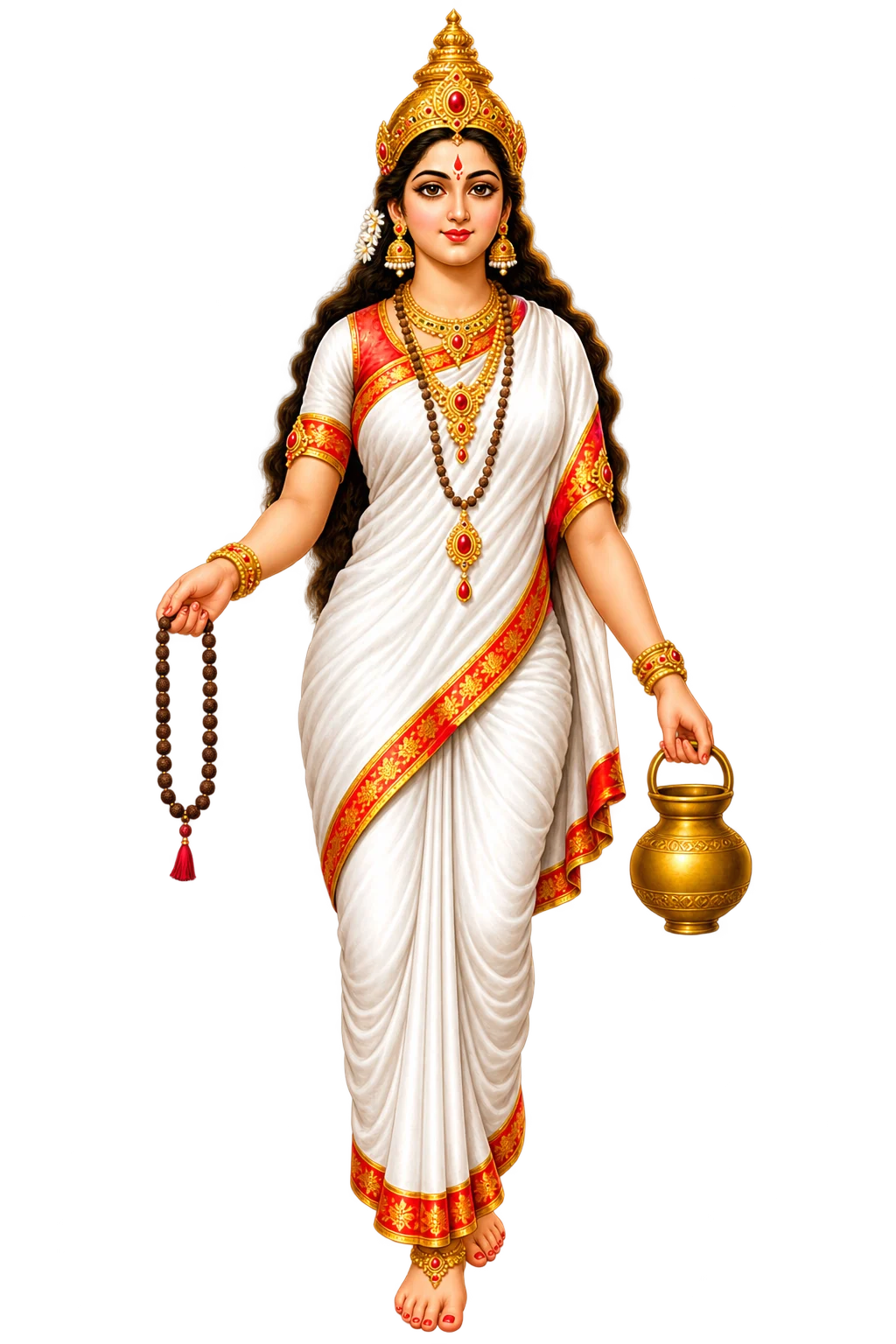
Date: 12 October 2026 Mantra (Devanagari): ॐ देवी ब्रह्मचारिण्यै नमः Transliteration: Om Devi Brahmacharinyai Namah Meaning: Salutations to the Devi who practices penance and austerity.
Maa Brahmacharini represents discipline and steady effort, so many devotees chant her mantra as part of a morning routine, often alongside a short period of quiet reflection. 21 or 108 repetitions are commonly used, though a shorter count is equally acceptable if that is what your schedule allows. Read more on Maa Brahmacharini on Day 2 for her full worship details.
Day 3 - Maa Chandraghanta Mantra
Date: 13 October 2026 Mantra (Devanagari): ॐ देवी चन्द्रघण्टायै नमः Transliteration: Om Devi Chandraghantayai Namah Meaning: Salutations to the Devi who bears the crescent moon like a bell on her forehead.
This mantra is traditionally associated with courage and protection, and some devotees chant it before starting an important task on this day. A count of 11, 51 or 108 is common. See Maa Chandraghanta on Day 3 for the day's complete puja guide.
Day 4 - Maa Kushmanda Mantra
Date: 14 October 2026 Mantra (Devanagari): ॐ देवी कूष्माण्डायै नमः Transliteration: Om Devi Kushmandayai Namah Meaning: Salutations to the Devi associated with cosmic creative radiance.
Maa Kushmanda is traditionally linked with the source of creative energy, and her mantra is often chanted in the morning with a lit Diya nearby. A repetition count of 21 or 108 is typical. Full details are on Maa Kushmanda on Day 4.
Day 5 - Maa Skandamata Mantra
Date: 15 October 2026 Mantra (Devanagari): ॐ देवी स्कन्दमातायै नमः Transliteration: Om Devi Skandamatayai Namah Meaning: Salutations to the Devi as the mother of Skanda (Kartikeya).
This mantra is traditionally chanted with a focus on nurturing protection and maternal grace, and can be recited at any comfortable time of day. 11 or 108 repetitions are common choices. Visit Maa Skandamata on Day 5 for the complete Vidhi.
Day 6 - Maa Katyayani Mantra
Date: 16 October 2026 Mantra (Devanagari): ॐ देवी कात्यायन्यै नमः Transliteration: Om Devi Katyayanyai Namah Meaning: Salutations to the Devi born in the lineage of Sage Katyayana.
Maa Katyayani's mantra is traditionally chanted with an emphasis on resolve and determination. Many devotees use 21 or 108 repetitions, ideally on a clean Asan and after a short invocation. See Maa Katyayani on Day 6 for the full day's worship.
Day 7 - Maa Kalaratri Mantra
Date: 17 October 2026 Mantra (Devanagari): ॐ देवी कालरात्र्यै नमः Transliteration: Om Devi Kalaratryai Namah Meaning: Salutations to the Devi who is the dark night that dispels negativity.
This mantra is traditionally chanted in the evening or at night, in keeping with Kalaratri's association with the night, though a morning chant is equally valid. 108 repetitions are common where time allows. Full guidance is available at Maa Kalaratri on Day 7.
Day 8 - Maa Mahagauri Mantra
Date: 18 October 2026 Mantra (Devanagari): ॐ देवी महागौर्यै नमः Transliteration: Om Devi Mahagauryai Namah Meaning: Salutations to the radiant, pure form of the Devi.
Ashtami is one of the most widely observed days of Navratri, often combined with Kanya Puja and Havan. The Mahagauri mantra is commonly chanted before or after these rituals, with 108 repetitions being a popular choice for this significant day. See Maa Mahagauri on Day 8 and the detailed Navratri Ashtami 2026 guide for the full Ashtami worship sequence.
Day 9 - Maa Siddhidatri Mantra
Date: 19 October 2026 Mantra (Devanagari): ॐ देवी सिद्धिदात्र्यै नमः Transliteration: Om Devi Siddhidatryai Namah Meaning: Salutations to the Devi who grants accomplishment and completion.
Navami marks the conclusion of the nine-day worship, and many devotees complete their full nine-day mantra jaap on this day, often alongside Havan and the closing Kanya Puja. Chanting 108 times is common as a way to conclude the sequence. See Maa Siddhidatri on Day 9 and Navratri Navami 2026 for the complete concluding rituals.
Important Mantra Distinctions
It helps to understand that "Navratri mantra" is not a single fixed phrase; it covers several distinct traditions:
9 Navadurga Naam Mantras: The simple, day-specific mantras listed above, each honoring the day's form of the Devi. These are the most commonly used mantras for home worship.
Navarna Mantra: "Om Aim Hreem Kleem Chamundaye Vichche", a nine-syllable mantra used across all nine days rather than a day-specific one. It is widely chanted in Shakta tradition, though some practitioners treat it as requiring more careful guidance on pronunciation and practice than a simple Naam Mantra.
General Maa Durga mantras: Broader invocations of Durga, such as "Om Dum Durgayai Namah", used independently of the day-wise Navadurga sequence.
Devi Mahatmya/Durga Saptashati verses: Full chapters or specific verses from the 700-verse text, which is a separate devotional practice from short mantra jaap; see the Durga Saptashati Path guide for how this fits alongside mantra chanting.
Durga Chalisa and other stotras: Devotional hymns that are recited rather than repeated like a mantra, often used as an additional part of daily worship.
Different traditions place different emphasis on these practices, and there is no requirement to use all of them together. Where a mantra is associated with a specific Tantric Sadhana or requires initiation (Diksha) in a particular Sampradaya, that is a separate, more advanced practice from simple devotional Naam Mantra chanting, and is best approached with guidance from someone experienced in that tradition rather than attempted independently from an online description.
How to Chant Navratri Mantras at Home
Clean the puja space so the area feels settled before you begin.
Maintain personal cleanliness, ideally bathing before your chosen chanting time.
Set up a Devi image or idol, even a small framed picture is sufficient.
Light a Diya using oil or ghee.
Offer flowers to the image as a simple gesture of devotion.
Sit comfortably on a clean Asan, facing east or north if convenient.
Take a simple Sankalp, stating your intention silently or aloud.
Chant the day's mantra, pronouncing it as clearly and steadily as you can.
Count repetitions with a mala if you are using one, moving one bead per repetition.
Complete with a short prayer or Aarti, thanking the Devi before closing.
This sequence works equally well for a five-minute chant or a longer 108-repetition session, and can be adapted to your own family's existing Navratri Puja at home routine.
Navratri Mantra Jaap Rules
Cleanliness: A clean body and a tidy puja space are commonly observed before chanting.
Regularity: Chanting at a similar time each day helps build a steady practice, though missing an occasional day is not treated as a serious lapse.
Pronunciation: Try to pronounce the Sanskrit as accurately as you reasonably can; reading from a transliteration is perfectly acceptable for beginners.
Concentration: Focused attention matters more than speed; chanting slowly with awareness is preferable to rushing through a count.
Respectful practice: Approach the chanting as a devotional act rather than a mechanical task.
Suitable place: A quiet corner of the home set aside for worship works well; a fixed spot is helpful but not compulsory.
Suitable time: Morning is commonly preferred, though evening chanting is equally valid; consistency matters more than the exact hour.
Mala usage: A mala helps with counting but is optional; you can chant without one.
Fasting: Not required for mantra jaap itself; see the fasting section below.
What beginners should avoid: Do not feel pressured to memorize long Sanskrit passages immediately, and avoid switching between unrelated mantras within the same sitting.
Silent chanting (Manasik Japa): Chanting silently, in the mind, is an accepted form of practice in most traditions, alongside audible (Vachik) chanting.
Imperfect pronunciation: A genuine, sincere effort at pronunciation is generally considered acceptable; this is not treated as a practice that causes harm if approached respectfully.
Formal initiation: Simple devotional Naam Mantras like the ones listed above do not require formal Diksha from a Guru; more advanced Tantric mantras and Sadhanas are where initiation becomes relevant in many traditions.
How Many Times Should You Chant a Navratri Mantra?
There is no single universal number that applies to everyone. Repetition counts are chosen based on personal capacity, time available and family tradition.
Chanting 108 times is a widely followed convention because it corresponds to a full round of a mala, but chanting 11 or 21 times with genuine attention is equally valid, especially for those new to this practice.
Morning or Evening - When Should You Chant?
Navratri mantras can be chanted in the morning, in the evening, or even before sleep; there is no single fixed time that applies to every tradition. Morning chanting, often after bathing and before the day's activities begin, is widely preferred because the mind tends to be calmer. Evening chanting works well for those with morning time constraints, and some devotees specifically chant Kalaratri's mantra at night given her association with the dark hours. A fixed time is helpful for building consistency but is not treated as a strict requirement.
Can Beginners and Women Chant Navratri Mantras?
Yes. There is no universal restriction preventing women or beginners from chanting the Navadurga Naam Mantras. These are simple devotional mantras, widely chanted across Indian households by people of all ages and backgrounds.
Beginners can start with a short, comfortable repetition count and gradually build familiarity with the pronunciation.
Women commonly chant these mantras as part of everyday Navratri worship; specific family customs regarding particular days can vary and are best clarified within your own tradition if you are unsure.
Children can chant simple Naam Mantras with guidance from an elder, since they are short and easy to learn.
Chanting without fasting is entirely acceptable; the mantra itself does not require a Vrat to be observed alongside it.
Chanting without an elaborate puja is also fine; a short, sincere mantra jaap is a complete practice on its own for those who cannot manage a full ritual sequence.
Navratri Mantra and Fasting
It helps to separate three related but distinct practices:
Vrat (fasting): A dietary discipline some devotees observe during Navratri, following their own family's specific rules about what is eaten or avoided.
Puja: The broader daily worship sequence, including Kalash worship, Aarti and offerings.
Mantra jaap: The specific act of chanting a Devi mantra, which can be practiced independently of both fasting and a full puja.
You do not need to be fasting to chant a Navratri mantra, and you do not need to complete an elaborate puja beforehand either, though many devotees naturally combine all three as part of their overall observance. If you are fasting and want guidance on food rules, see the Navratri fasting rules guide.
Navratri Mantra vs Navarna Mantra vs Durga Saptashati
These three are sometimes confused, so here is a simple comparison:
Navratri Naam Mantras are short, day-specific mantras honoring each Navadurga form; they are the simplest entry point for daily chanting.
Navarna Mantra is a single nine-syllable mantra used across all nine days rather than changing daily, and is often treated with slightly more care around pronunciation and practice context in Shakta tradition.
Durga Saptashati is a full 700-verse text read in chapters rather than repeated like a mantra, and represents a different, longer devotional commitment; you can read about it in detail in the Durga Saptashati Path During Navratri 2026 guide.
Both mantra jaap and Durga Saptashati Path can absolutely be part of the same Navratri observance; many devotees chant a short Naam Mantra daily while also reading a portion of Durga Saptashati. For beginners, the day-wise Naam Mantras are the simpler starting point, since they require no prior Sanskrit reading practice beyond a single short line.
Traditional Significance of Navratri Mantra Jaap
Navratri mantra chanting is traditionally associated with several devotional benefits, understood as matters of belief and practice rather than guaranteed outcomes:
A structured way to maintain focus during the nine days.
A simple daily act of prayer and devotion, even for those with limited time.
Traditional association with spiritual discipline and steady practice.
A direct, personal connection with the specific form of Devi worshipped each day.
Regularity that many devotees find grounding during a busy festival period.
A structured daily spiritual routine that can continue beyond Navratri itself if desired.
These are traditional devotional associations that devotees believe in, rather than claims that can be verified or guaranteed.
Maa Baglamukhi Puja During Navratri
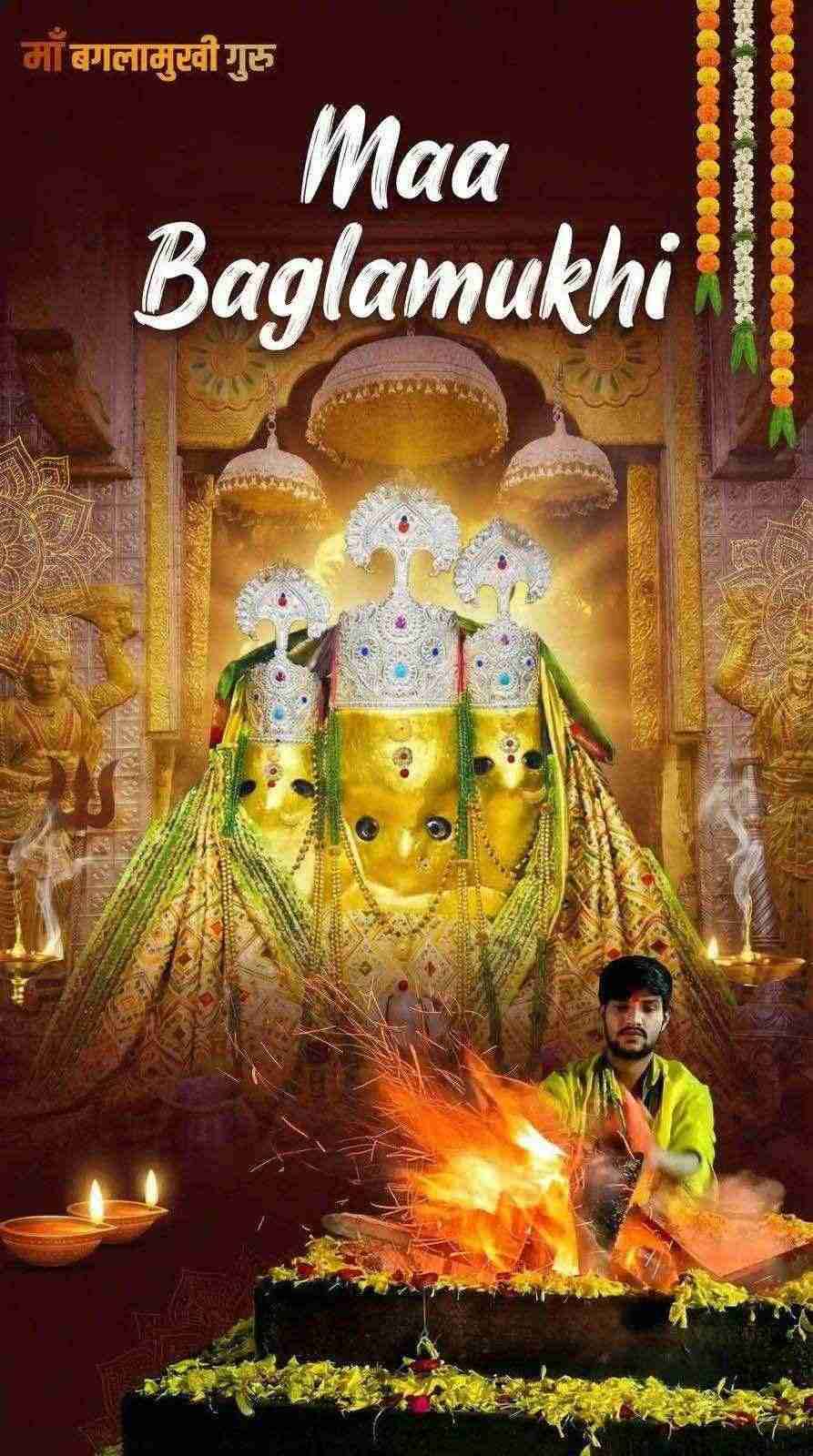
It is worth being clear about an important distinction: Maa Baglamukhi is one of the Dash Mahavidyas, a group of ten Tantric goddess forms, and she is not one of the nine Navadurga forms covered in the day-wise mantra list above. The nine-day Navadurga sequence and Dash Mahavidya worship are related through the broader tradition of Shakti worship, but they are distinct practices with their own mantras, procedures and occasions.
That said, some devotees who follow the Dash Mahavidya tradition choose to perform Maa Baglamukhi Puja, Mantra Jaap or Havan during Navratri, according to their own family or spiritual tradition, separate from the Navadurga mantras discussed in this article. Readers interested in this specific worship, including at the Nalkheda Siddha Peeth in Madhya Pradesh, can read more in Maa Baglamukhi Puja during Navratri and Navratri Puja in Nalkheda.
Quick 9-Day Navratri Mantra Chart
Day 1 (11 Oct): Om Devi Shailaputryai Namah
Day 2 (12 Oct): Om Devi Brahmacharinyai Namah
Day 3 (13 Oct): Om Devi Chandraghantayai Namah
Day 4 (14 Oct): Om Devi Kushmandayai Namah
Day 5 (15 Oct): Om Devi Skandamatayai Namah
Day 6 (16 Oct): Om Devi Katyayanyai Namah
Day 7 (17 Oct): Om Devi Kalaratryai Namah
Day 8 (18 Oct): Om Devi Mahagauryai Namah
Day 9 (19 Oct): Om Devi Siddhidatryai Namah
Save or bookmark this section for a quick daily reference through the nine days, alongside the Navratri Colours 2026 guide if you are also following the day-wise colour tradition.
Frequently Asked Questions About Navratri Mantras
What are the 9 Devi mantras for Navratri?
The 9 Devi mantras are the Naam Mantras of the Navadurga: Shailputri, Brahmacharini, Chandraghanta, Kushmanda, Skandamata, Katyayani, Kalaratri, Mahagauri and Siddhidatri, each chanted as "Om Devi [Name]ai Namah" on its corresponding day.
Which mantra should I chant on each day of Navratri?
Chant that day's specific Navadurga mantra, for example Om Devi Shailaputryai Namah on Day 1 and Om Devi Brahmacharinyai Namah on Day 2, following the 9-day table above.
What is the mantra for Navratri Day 1?
The Day 1 mantra is Om Devi Shailaputryai Namah, dedicated to Maa Shailputri, worshipped after the Ghatasthapana ritual on 11 October 2026.
What is the mantra for Navratri Day 9?
The Day 9 mantra is Om Devi Siddhidatryai Namah, dedicated to Maa Siddhidatri, marking the conclusion of the nine-day Navadurga worship on 19 October 2026.
Which mantra is best to chant during Navratri?
There is no single "best" mantra; the day-specific Navadurga Naam Mantra for whichever day you are observing is the most directly relevant, while the Navarna Mantra is a common alternative used across all nine days.
What is the main Durga mantra for Navratri?
Many devotees consider the Navarna Mantra, Om Aim Hreem Kleem Chamundaye Vichche, to be the central Durga mantra usable throughout Navratri, alongside the individual day-wise Naam Mantras.
Can I chant Navratri mantras at home?
Yes, chanting Navratri mantras at home is one of the most common ways devotees observe the festival, and it does not require a priest or a temple visit.
How many times should I chant a Navratri mantra?
Common counts include 11, 21, 51 or 108 repetitions; 108 is the traditional full mala count, but any consistent number chanted with focus is considered acceptable.
Can I chant a Navratri mantra 108 times?
Yes, chanting 108 times is a widely followed tradition corresponding to a full round of a japa mala, and is commonly used for daily Navratri mantra practice.
What are the rules for Navratri mantra jaap?
Basic rules include maintaining cleanliness, chanting with focus, trying for accurate pronunciation, sitting in a quiet space, and being consistent; there is no rule that a single mistake causes harm.
Can women chant Navratri mantras?
Yes, women commonly chant Navadurga Naam Mantras as part of everyday Navratri worship; specific family customs regarding particular days can vary and are best clarified within one's own tradition.
Can beginners chant Devi mantras during Navratri?
Yes, beginners can start with a short repetition count using the transliteration provided, since these are simple devotional mantras that do not require prior Sanskrit training.
Which mantra should I chant if I cannot perform a full Navratri puja?
A short Naam Mantra jaap for the day, even without a full puja, is considered a complete and valid form of worship on its own.
Can I chant the same mantra every day of Navratri?
Yes, some devotees choose to chant the Navarna Mantra or a general Durga mantra every day instead of switching mantras daily, which is an accepted alternative approach.
What is the difference between the 9 Devi mantras and the Navarna Mantra?
The 9 Devi mantras are day-specific Naam Mantras for each Navadurga form, while the Navarna Mantra is a single nine-syllable mantra used consistently across all nine days.
Can I chant Durga Saptashati mantras during Navratri?
Yes, reading portions of Durga Saptashati is a separate but complementary practice to short mantra jaap, and many devotees combine both during Navratri.
Which mantra is suitable for morning jaap during Navratri?
Any of the day-wise Naam Mantras work well in the morning, and morning chanting is widely preferred because the mind is generally calmer at that time.
Which mantra can be chanted at night during Navratri? The Kalaratri mantra on Day 7 is often specifically associated with night-time chanting, though any Navratri mantra can be chanted at night if that suits your schedule better.
What should I do before chanting a Devi mantra? A simple preparation includes cleaning the puja space, bathing, lighting a Diya, and taking a brief Sankalp before beginning the chant.
Can I chant Navratri mantras without fasting? Yes, mantra jaap does not require fasting; it is a separate practice from the Navratri Vrat and can be observed independently.
Final Takeaway
Whether you chant a single Naam Mantra for five minutes each morning or complete a full 108-repetition jaap alongside puja and fasting, what matters most in this tradition is consistency and sincere attention rather than a perfect ritual. Use the day-wise table above as your quick reference through Shardiya Navratri 2026, and adapt the practice to whatever time and tradition fits your household.
If you wish to observe Navratri with a traditional Maa Baglamukhi Puja, Havan or Anushthan at Nalkheda Siddha Peeth, you can explore the available Maa Baglamukhi Puja booking options and arrange a priest-guided service according to your own devotional needs.