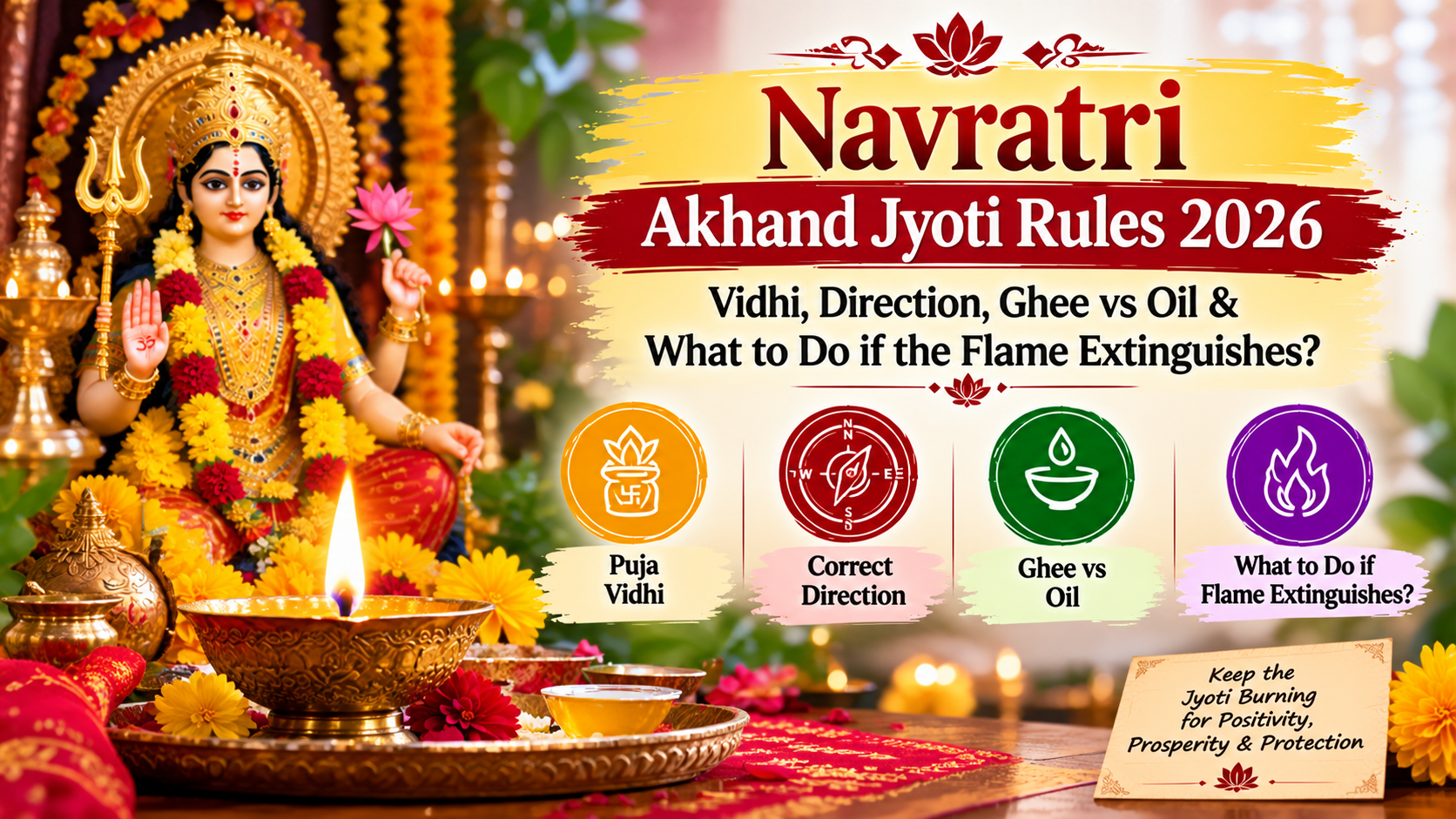
The sacred festival of Sharad Navratri is a period of intense spiritual awakening, intense prayer, and deep devotion to the Supreme Goddess Durga. Over these nine nights and ten days, devotees observe fasts, chant mantras, and invoke divine blessings for health, wealth, protection, and liberation. Among all the rituals performed during Navratri, lighting an Akhand Jyoti (the continuous, unbroken flame) holds the highest spiritual significance.
Unlike an ordinary daily prayer lamp that burns for a few minutes and subsides, an Akhand Jyoti is ignited on the very first day during the Ghatasthapana 2026 auspicious muhurat. It must remain illuminated non-stop, day and night, until the completion of Navratri Navami or Dashami.
In Vedic metaphysics, fire (Agni) is not merely a physical element; it is the living divine witness (Pratyaksha Devata) of your prayers, thoughts, and vows. Lighting an Akhand Jyoti is believed to eliminate poverty, banish fear, neutralize the evil eye, protect the household from negative psychic energies, and attract the direct grace of Goddess Mahalakshmi and Goddess Durga into the family.
However, lighting an eternal flame is a serious spiritual responsibility. An Akhand Jyoti requires strict discipline, continuous vigil, exact Vastu orientation, correct fuel selection, and specific knowledge of what to do if the flame accidentally flickers out.
This comprehensive guide covers every rule, scriptural guideline, step-by-step setup procedure, and corrective remedy for observing the Navratri Akhand Jyoti in 2026.
1. The Spiritual and Astrological Significance of the Akhand Jyoti
In ancient Hindu scriptures, including the Agni Purana and Skanda Purana, light is revered as the ultimate representation of the Supreme Divine consciousness. The famous Vedic verse proclaims:
"Deepo Jyoti Para Brahma, Deepo Jyoti Janardana,
Deepo Haratu Me Paapam, Sandhya Deepa Namostute."
(The flame of the lamp represents the Supreme Absolute; the flame destroys all sins and misfortunes; we bow before the sacred light.)
When you establish an Akhand Jyoti during your Navratri Puja at Home, it fulfills three major spiritual roles:
Continuous Purification of Home Energy: The uninterrupted burning of sacred fuel (pure desi cow ghee or cold-pressed sesame oil) purifies the indoor environment, removes stagnant heavy energies, and creates an impenetrable energetic protective shield (Raksha Kavach) over the residence.
The Living Witness of Your Vows: Whenever you sit before the deity to recite the sacred Durga Saptashati Path or perform daily japa from the Navratri Mantra Guide, the Akhand Jyoti acts as the conscious celestial witness that amplifies the spiritual power of your prayers tenfold.
Destruction of Internal and External Darkness: Darkness in Vedic thought symbolizes ignorance, depression, delays, poverty, and enemy interference. The rising golden flame symbolizes wisdom, life force, vitality, and victory over all adversaries.
2. Auspicious Muhurat for Lighting the Akhand Jyoti in Navratri 2026
The Akhand Jyoti cannot be lit at any arbitrary time. It must be formally established and consecrated during the auspicious Pratipada Tithi window of Sharad Navratri alongside the Kalash Sthapana ceremony.
Ghatasthapana & Akhand Jyoti Consecration Timings (2026)
Important Rule: Devotees must always light the Akhand Jyoti during the morning Muhurat (06:19 AM to 10:12 AM) or during the Abhijit Muhurat (11:44 AM to 12:31 PM). Never ignite the eternal flame during inauspicious hours like Rahu Kaal or late at night after sunset on Pratipada.
3. Vastu Shastra Guidelines: Best Direction and Placement for the Diya
According to Vastu Shastra, fire is one of the five core cosmic building blocks (Pancha Mahabhutas). Placing an eternal fire source in an incorrect direction can cause energetic friction, while placing it in the correct directional quadrant brings harmony, prosperity, and peace.
Directional Rules for Akhand Jyoti Placement
Rules for the Altar Base
Never on the Bare Floor: A sacred lamp must never be placed directly onto the cold floor.
The Sacred Grain Bed (Asana): The lamp must sit on a clean copper, brass, or bronze plate filled with a layer of unblemished raw rice grains dyed with turmeric (Haridra Akshat) or wheat grains. This grain bed stabilizes the energetic heat of the lamp and honors Mother Earth.
4. Pure Cow Ghee vs. Sesame (Til) Oil: Which One Should You Choose?
Devotees preparing their items from the Navratri Puja Samagri List often wonder whether they should use Pure Desi Cow Ghee or Sesame (Til) Oil. Both fuels are completely authentic and recognized in the Shastras, but they produce different spiritual vibrations.
Comparison: Pure Desi Cow Ghee vs. Sesame Oil vs. Mustard Oil
Summary Recommendation
Choose Pure Desi Cow Ghee if your primary goal is domestic happiness, spiritual growth, child welfare, and general family well-being. Place the lamp on the Goddess's right side.
Choose Cold-Pressed Sesame (Til) Oil if you are suffering from acute planetary doshas (such as Shani Sade Sati or Rahu affliction), legal disputes, negative energies, or business challenges. Place the lamp on the Goddess's left side.
5. Preparing the Sacred Wick (Akhand Baati): Material and Technique
A standard household cotton wick burns out in less than an hour. An Akhand Jyoti requires a custom-crafted, long, multi-strand wick capable of drawing continuous fuel without disintegrating or choking on carbon buildup.
The Ideal Material: Sacred Kalava (Moli Thread)
The most auspicious material for an Akhand Jyoti wick is pure raw cotton Raksha Sutra (Kalava / Moli) woven in sacred red and yellow strands. Red represents the dynamic power of Goddess Durga, while yellow represents the stabilizing grace of Goddess Baglamukhi.
How to Prepare the Wick
Length Measurement: Measure approximately one and a half arm's length (about 18 to 24 inches) of raw cotton moli thread.
Strand Density: Take 7 to 9 fine strands of thread and roll them gently between your palms to create a smooth, moderately dense cord.
Density Check: Do not twist the cord too tightly; if it is over-twisted, the capillary action fails and fuel cannot reach the top. If twisted too loosely, it drinks oil too quickly and produces heavy black soot.
Pre-Soaking: Immerse the finished wick into lukewarm melted ghee or sesame oil for at least 3 to 4 hours prior to Ghatasthapana. A fully pre-soaked wick catches fire smoothly and burns evenly from the very first minute.
6. Complete Step-by-Step Akhand Jyoti Sthapana Vidhi
Follow this precise Vedic sequence on the morning of Pratipada:
Step 1: Cleansing the Puja Space
Cleanse your home altar thoroughly. Sprinkle holy water mixed with Gangajal across the floor and altar table while chanting:
"Om Apavitrah Pavitro Va Sarvavastham Gato'pi Va, Yah Smaret Pundarikaksham Sa Bahyabhyantarah Shuchih."
Step 2: Preparing the Lamp Base (Asana)
Place a clean brass, bronze, or copper plate in the Southeast corner (or designated altar quadrant). Place a generous bed of unbroken rice grains mixed with turmeric (Akshat) on the plate in the shape of an eight-petaled lotus (Ashtadal Kamal).
Step 3: Consecrating the Lamp Vessel
Use a lamp made of solid Brass, Bronze, Silver, or high-density Clay. Never use iron, steel, or aluminum.
Apply a tilak of sandalwood paste (Chandan), vermilion (Kumkum), and turmeric to the body of the lamp.
Tie a sacred red thread (Moli) around the neck of the lamp vessel three times.
Step 4: Threading and Filling the Fuel
Carefully insert your pre-soaked long wick into the lamp's central nozzle or channel, leaving about one inch exposed at the top. Fill the reservoir to about 80% to 85% capacity with warm melted ghee or oil.
Step 5: Consecration & Lighting Prayer
Never light the Akhand Jyoti directly with a modern chemical matchstick. Strike a matchstick to light an auxiliary small earthen lamp or a piece of pure camphor on a brass spoon. Then, use that sacred auxiliary flame to ignite the wick of your Akhand Jyoti while chanting:
ॐ दीपज्योतिः परब्रह्म दीपज्योतिर्जनार्दनः।
दीपो हरतु मे पापं दीपज्योतिर्नमोऽस्तु ते॥
शुभं करोति कल्याणमारोग्यं धनसम्पदः।
शत्रुबुद्धिविनाशाय दीपज्योतिर्नमोऽस्तु ते॥
Step 6: Taking the 9-Day Akhand Sankalp
Take a spoonful of clean water, a few grains of unbroken rice, and a flower in your right hand. Recite your name, Gotra, and city of residence. State your sincere vow to Mother Durga:
"O Mother Jagadamba, to seek your divine shelter and blessings, I establish this unbroken flame in our home throughout these sacred nine days. Please protect this flame from wind and obstacles, dispel all darkness from our lives, and grant us peace, prosperity, and spiritual growth."
Gently release the water and flower at the base of the lamp.
7. 9 Sacred Rules to Follow Throughout the 9 Days
Maintaining an unbroken lamp requires complete dedication from the entire household. Make sure everyone follows these essential rules:
The House Must Never Be Left Empty: At least one adult family member must always remain at home. An Akhand Jyoti must never be locked in an unoccupied house.
Maintain Physical and Mental Purity: Observe complete celibacy (Brahmacharya), speak truthfully, avoid anger, and maintain a quiet, prayerful atmosphere in the home.
Strictly Sattvic Kitchen: No onions, garlic, non-vegetarian food, alcohol, or tobacco are allowed inside the house. Refer to our detailed guide on Navratri Fasting Rules for daily meal standards.
Use a Top-Vented Glass Chimney: Always place a heat-resistant, open-topped glass chimney over the lamp to shield the flame from ceiling fan breezes, open windows, and insects.
Regular Refills with Warm Fuel: Replenish the fuel reservoir twice daily—once in the morning and once at night. Always use lukewarm, melted ghee or oil so the reservoir's temperature remains stable.
Never Blow with Your Mouth: Never blow air or fan your breath near the sacred altar.
Personal Cleanliness: Always wash your hands and feet, or take a bath, before approaching or touching the lamp.
Sleep on the Floor: Traditionally, the devotee who undertakes the Akhand Jyoti vow sleeps on a clean mat on the floor rather than on an elevated bed during Navratri.
Twice-Daily Worship: Greet and worship the lamp every morning and evening during your Aarti or while performing your daily Navratri Havan.
8. What to Do if the Akhand Jyoti Accidentally Extinguishes?
The most terrifying moment for any devotee is discovering that their Akhand Jyoti has flickered out. People often panic, thinking it brings bad luck or divine anger.
The Truth from Vedic Shastras
Ancient scriptures such as the Nirnayasindhu and Dharmasindhu clearly state that unintentional accidents do not count as sins. If a sudden gust of wind, a clogged wick, or an unexpected drop in oil causes the flame to go out, it is NOT considered an inauspicious omen or curse. Mother Durga is Karunamayi—the embodiment of unconditional maternal compassion.
Follow this immediate step-by-step restoration procedure:
Action Steps to Relight the Flame
Once relit, continue your 9-day fast with complete peace of mind. Your sincere devotion is what truly matters to the Goddess.
9. How to Clean the Lamp and Advance the Wick Without Snuffing the Flame
Over 48 to 72 hours, carbon deposits will naturally form at the tip of the wick, causing the flame to dim or produce smoke. To clean and pull forward a fresh portion of the wick without breaking your vow, use the Sakshi Diya (Auxiliary Lamp) Bridge Technique:
Light a small secondary ghee lamp (Sakshi Diya) directly from the main flame of the Akhand Jyoti.
Place this auxiliary lamp right next to the main vessel. Spiritually, your continuous light offering is now sustained by this secondary lamp.
Using clean brass forceps or tweezers, gently snip the black, hardened carbon crust from the top of the main wick.
Carefully pull forward a fresh, oil-saturated section of the wick from the nozzle.
If the main flame subsided while cleaning, simply transfer the fire from the Sakshi Diya back onto the refreshed wick.
Allow the Sakshi Diya to burn out its remaining ghee naturally on the altar. Your unbroken vow remains completely intact.
10. Akhand Jyoti Visarjan Vidhi on Navami or Dashami
Just as establishing the lamp requires a formal invocation, concluding the ritual requires an auspicious retirement (Visarjan):
Never Blow Out the Flame: The flame must never be blown out by human breath or extinguished with water. Doing so cancels the merits of your 9-day worship.
Natural Conclusion (Shanti Hona): On the morning of Navratri Navami or Dashami (after completing your Navratri Kanya Puja), stop adding fresh fuel to the reservoir. Allow the remaining ghee or oil to burn down naturally until the flame quietly subsides on its own.
Collecting Sacred Kajal: When the flame is in its final phase, hold a clean bronze or silver plate above it to collect the pure soot (Kajal). Applying this sacred Kajal to the foreheads of family members on Vijayadashami protects them from psychic harm, jealousy, and negative energies for the coming year.
Disposing of the Spent Wick: Do not throw the spent cotton wick into regular household waste. Bury it under the roots of a sacred Tulsi plant or immerse it in a clean flowing river.
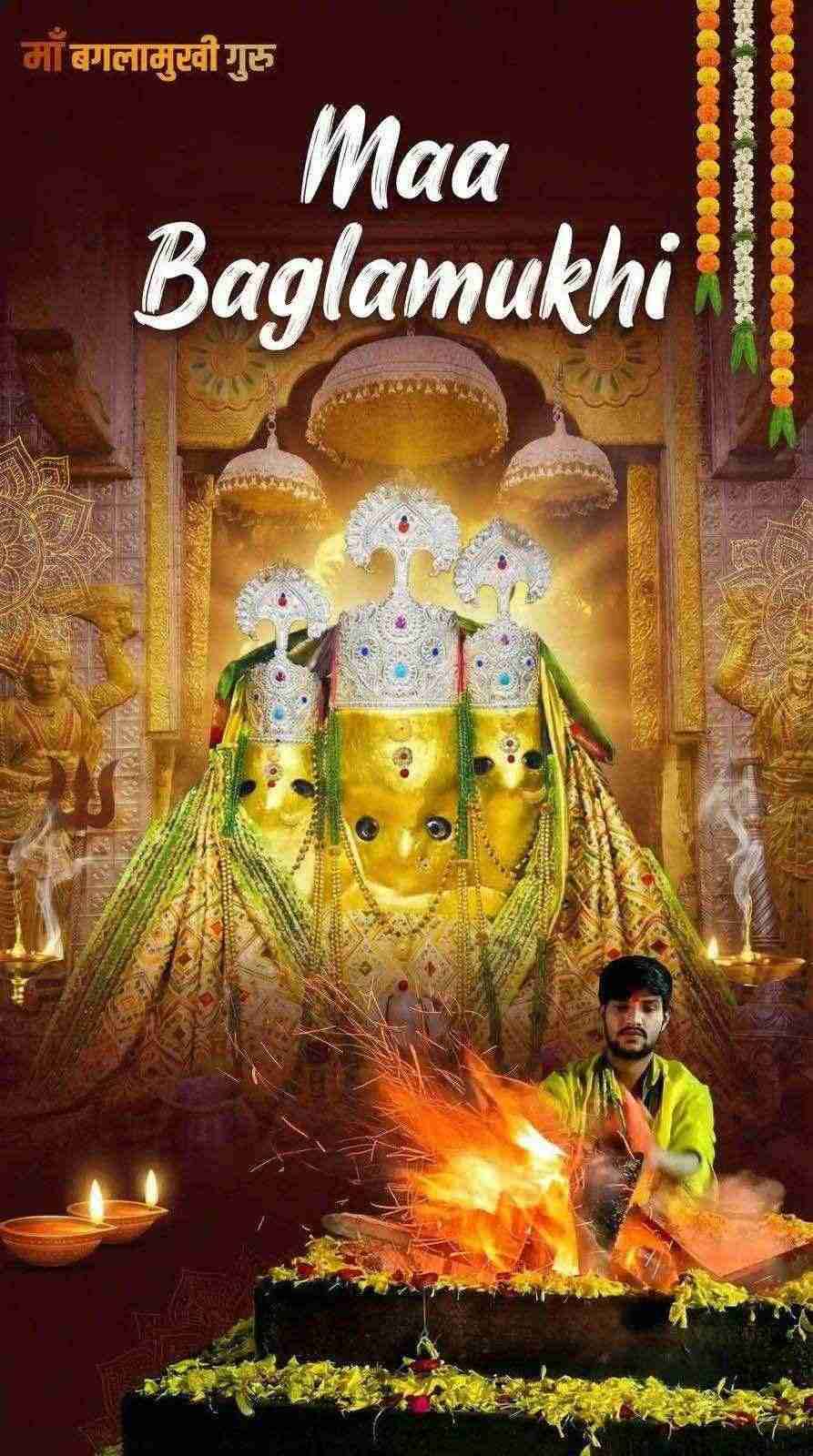
11. Sponsoring an Akhand Deep at Maa Baglamukhi Siddha Peeth, Nalkheda
While maintaining an Akhand Jyoti at home brings great blessings, keeping an unbroken 24/7 vigil—never leaving the house, strict celibacy, continuous physical cleaning, and fire safety—can be difficult for working couples, elderly devotees, and families living in apartments or overseas.
For this reason, thousands of devotees sponsor an Akhand Deep Sankalp at the sacred Maa Baglamukhi Siddha Peeth in Nalkheda, Madhya Pradesh.
🪔 Special Navratri 2026 Akhand Deep Sankalp at Nalkheda Siddha Peeth
If you cannot maintain the continuous 24/7 rules of an Akhand Jyoti at home, you can have an authentic, unbroken sacred Akhand Deep lit in your Name and Gotra at the ancient Nalkheda Siddha Peeth on the banks of the sacred Lakhundar river.
Maintained 24/7 by Experienced Acharyas: Kept continuously burning for all nine nights without interruption.
Personalized Video Sankalp: The ritual is initiated with your specific family details and prayers.
Daily Video Updates: Receive video verification of your burning lamp on WhatsApp.
Blessed Prasad Delivery: Energized Raksha Sutra, sacred Bhasma, and tirth prasad are dispatched to your home address worldwide.
To sponsor your Navratri Akhand Deep, connect directly with Acharya Pandit Vishnu Sharma:
Call/WhatsApp: +91 73895 67650
Book Your Navratri Puja Online
To learn more about combining your lamp offering with powerful fire rituals, explore our detailed guides on Maa Baglamukhi Puja During Navratri and the Navratri Baglamukhi Havan Cost & Vidhi.
12. Frequently Asked Questions (FAQ)
Q1: What should I do if the wick sinks into the oil reservoir?
Ans: Immediately light a backup diya using a matchstick. Use clean metal tweezers to pull the submerged wick back into place, trim the damp tip if necessary, and relight it using the flame from your backup lamp. Recite the Kshama Prarthana Mantra three times.
Q2: Can women maintain the Akhand Jyoti during their menstrual cycle?
Ans: A woman observing her monthly cycle should not directly touch the altar or manage the lamp during those days. Any other family member (such as her husband, brother, or mother) should take over the daily duty of refilling the fuel and maintaining the flame.
Q3: How much Ghee or Oil is needed for the entire 9 days?
Ans: A standard medium-sized brass Akhand Diya uses approximately 250 to 350 grams of Ghee or Oil every 24 hours. Over the nine days of Navratri, you will need approximately 2.5 to 3.5 kilograms of pure fuel. It is best to keep a small extra reserve on hand so you never run out unexpectedly.
Q4: Can an Akhand Jyoti be kept in a bedroom?
Ans: No. An Akhand Jyoti should only be placed in a dedicated prayer room, an altar corner, or the clean Northeast or Southeast quadrant of the living room. Placing it in an active bedroom violates spiritual cleanliness guidelines and poses a safety risk.
Q5: Can we use an electric or LED Akhand Diya instead?
Ans: While electric decorative lamps look attractive, they carry no spiritual value as a sacred Akhand Jyoti. An electric bulb does not represent the living element of Agni (Tejas), does not purify the air, and cannot act as the divine witness for your Navratri vow. If you cannot keep a real flame at home, it is spiritually better to sponsor an authentic oil lamp at a pilgrimage temple like Nalkheda.
Q6: Can NRI devotees living abroad maintain an Akhand Jyoti?
Ans: Yes. Devotees living in modern apartments across the USA, UK, Canada, Australia, and the Gulf can use a heavy brass lamp enclosed in a sturdy, heat-resistant glass chimney placed away from smoke alarms. Alternatively, they can arrange an online Navratri Puja booking performed with their Gotra Sankalp at Nalkheda Siddha Peeth.
13. Conclusion and Final Blessings
Lighting an Akhand Jyoti during Sharad Navratri is one of the most rewarding spiritual vows a devotee can undertake. While it requires patience, attentiveness, and devotion, the rewards—peace of mind, domestic harmony, divine protection, and the removal of life's obstacles—are boundless.
As you prepare your altar for Ghatasthapana 2026, let the bright flame of your lamp reflect the devotion in your heart. May the golden light of Goddess Durga fill your home with joy, health, and spiritual victory.
For personalized spiritual guidance or to book a Vedic ritual at Nalkheda, please contact our team or message Acharya Pandit Vishnu Sharma directly on WhatsApp.
॥ ॐ ऐं ह्रीं क्लीं चामुण्डायै विच्चे ॥
॥ जय माँ बगलामुखी पीताम्बरा ॥