Sharad Navratri is the nine-night period when Maa Durga is worshipped in nine distinct forms, collectively known as Navadurga. Each of the nine days belongs to one form of the Goddess, moving from Maa Shailputri on Day 1 to Maa Siddhidatri on Day 9. This guide covers the Maa Durga 9 forms in order, their names, meanings, mantras, and the 2026 Navratri dates on which each is worshipped, along with practical guidance on Puja, Samagri, Kanya Puja and Havan.
Maa Durga 9 Forms - Quick Answer
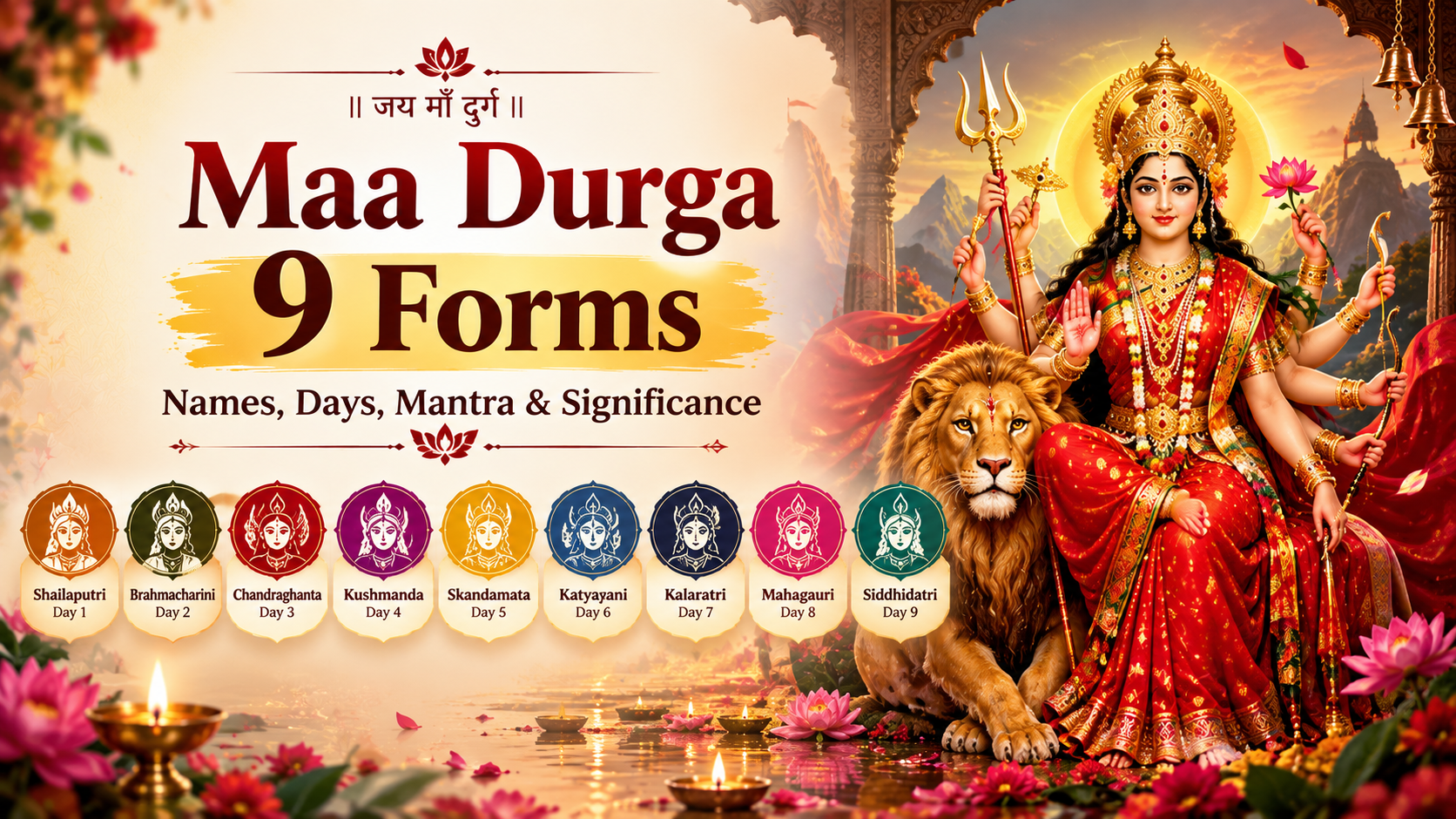
The 9 forms of Maa Durga, in order, are Shailputri, Brahmacharini, Chandraghanta, Kushmanda, Skandamata, Katyayani, Kalaratri, Mahagauri and Siddhidatri. Together they are called Navadurga, from "Nava" (nine) and "Durga." Each form is worshipped on one day of the nine days of Sharad Navratri, and each represents a distinct stage of spiritual growth, from grounding and discipline in the early days to courage, protection and ultimate fulfillment by Navami.
In 2026, Sharadiya Navratri begins with Ghatasthapana on 11 October and concludes with Maa Siddhidatri Puja on 19 October, followed by Vijayadashami on 20 October.
Tithi transitions can shift these dates by a day depending on your city's sunrise, so it is worth checking your local Panchang, especially around Ashtami and Navami.
What Are the 9 Forms of Maa Durga?
Navadurga is a simple idea once you see the pattern. Over nine nights, the same divine feminine energy, Shakti, is worshipped as she moves through nine stages, from a quiet, grounded beginning to a powerful, complete end. Traditionally, these nine forms are worshipped one after another during the nine days of Sharad Navratri:
Maa Shailputri
Maa Brahmacharini
Maa Chandraghanta
Maa Kushmanda
Maa Skandamata
Maa Katyayani
Maa Kalaratri
Maa Mahagauri
Maa Siddhidatri
Each name reflects an attribute, an event from Devi's story, or a stage of transformation. Devotees light a lamp, recite the day's mantra, and offer flowers and Bhog to that day's form, while the Kalash installed on Ghatasthapana stays in place through all nine days.
Navadurga 9 Forms and Navratri Days 2026
1. Maa Shailputri - Navratri Day 1
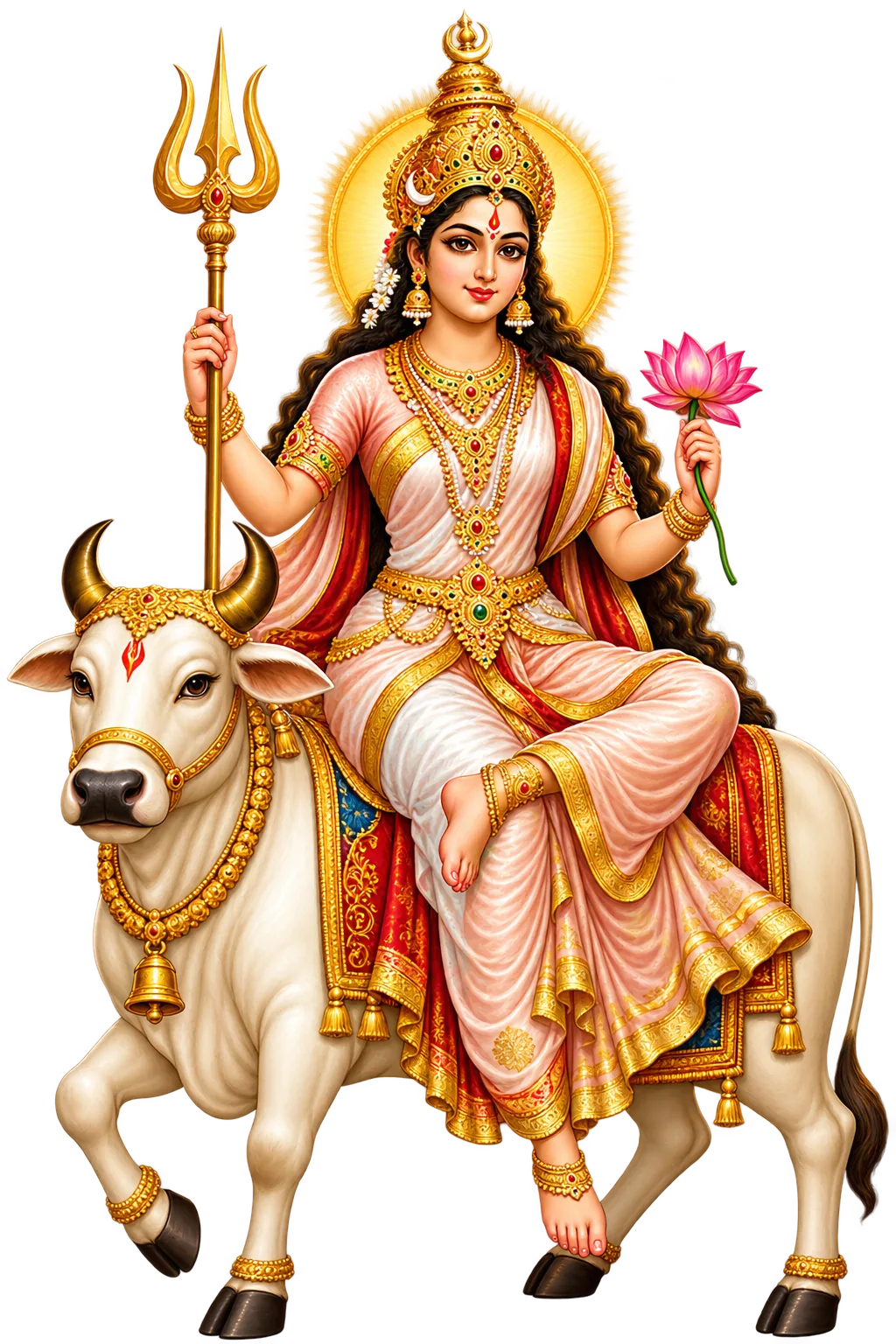
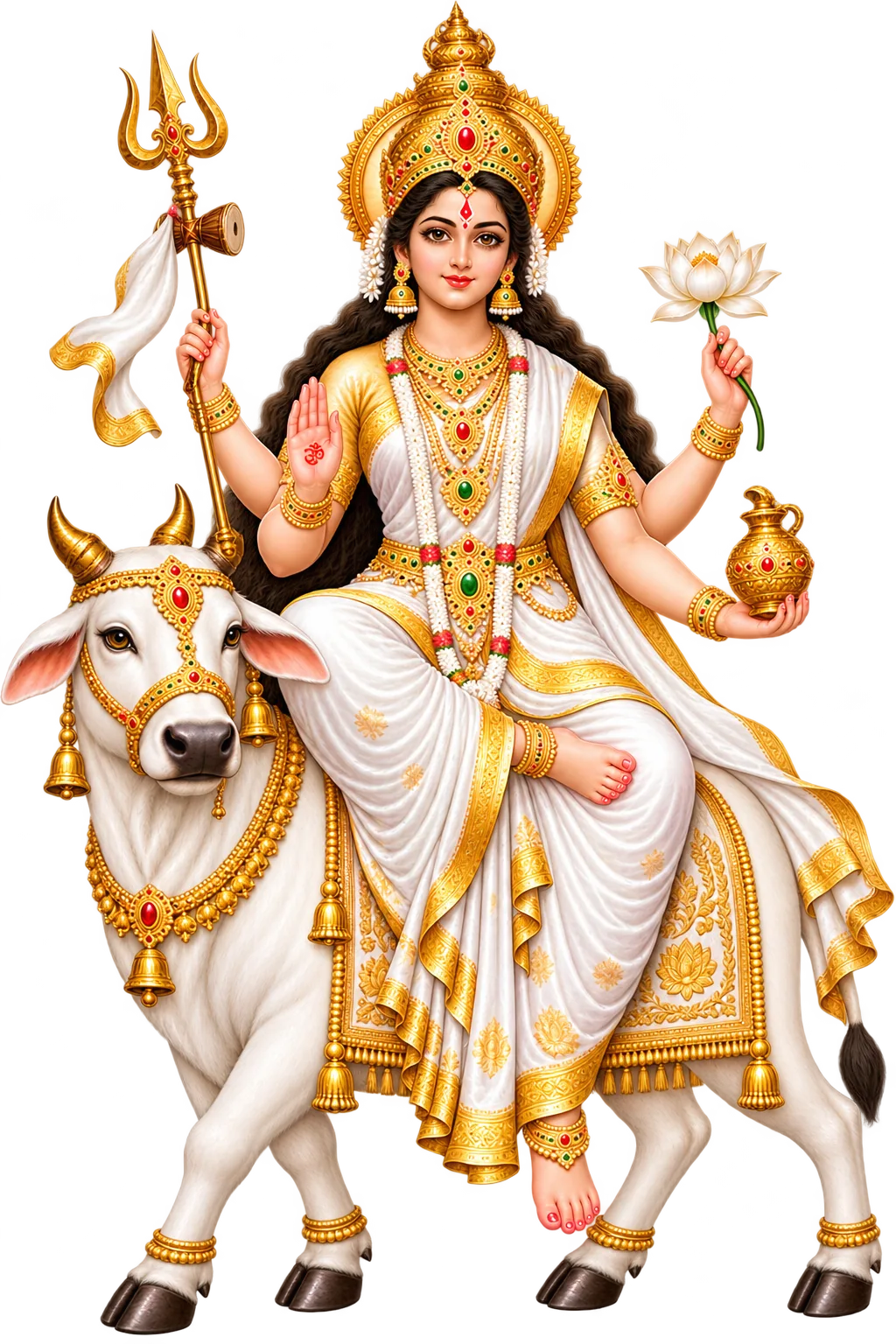
Maa Shailputri is the first form of Navadurga, worshipped on the opening day of Navratri alongside Ghatasthapana. Her name comes from "Shaila" (mountain) and "Putri" (daughter), since she is traditionally described as the daughter of the Himalayas. In devotional tradition, she is depicted riding a bull and holding a trident and a lotus, and is considered a continuation of Devi Sati, who was later reborn as Parvati.
Devotees begin Navratri worship by inviting her stability into the home, lighting a diya, and offering white or light-coloured flowers. Her mantra is chanted quietly at the start of the day's puja, and many families keep this day simple, focused on Sankalp and Kalash Sthapana rather than elaborate rituals.
Mantra: Om Devi Shailputryai Namah
2026 date: 11 October. For the complete opening-day ritual, see the Ghatasthapana and Kalash Sthapana guide.
2. Maa Brahmacharini - Navratri Day 2
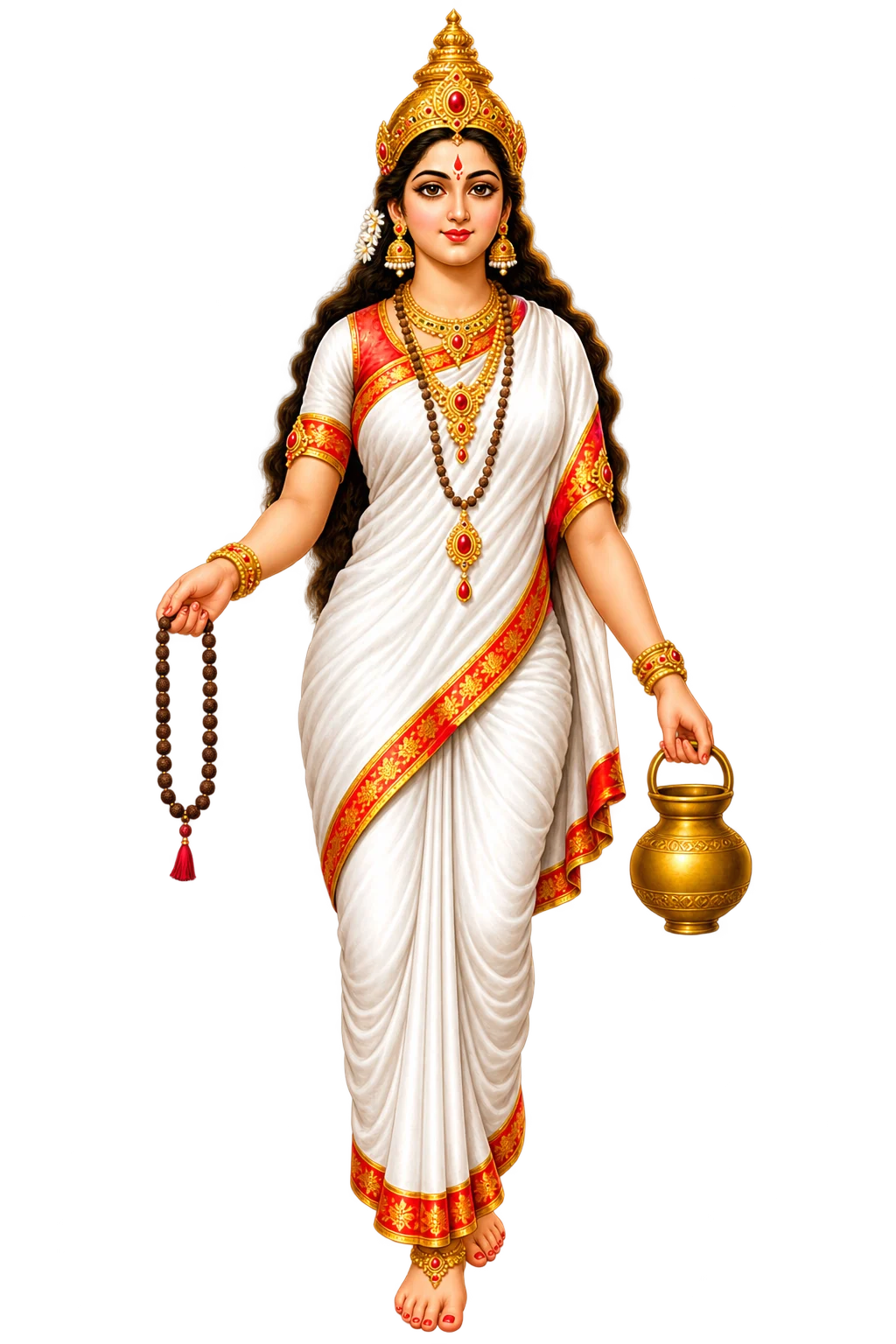
Maa Brahmacharini, worshipped on Day 2, represents penance and discipline. Her name means "one who practises Brahmacharya," or spiritual conduct through austerity. She is traditionally shown walking barefoot, carrying a rosary (japa mala) in one hand and a Kamandalu (water pot) in the other, reflecting a life of simplicity and focus.
This form is associated with patience and inner resolve, qualities devotees seek to cultivate as Navratri progresses. Worship on this day usually stays simple: a diya, white or light flowers, and quiet mantra recitation.
Mantra: Om Devi Brahmacharinyai Namah
2026 date: 12 October.
3. Maa Chandraghanta - Navratri Day 3
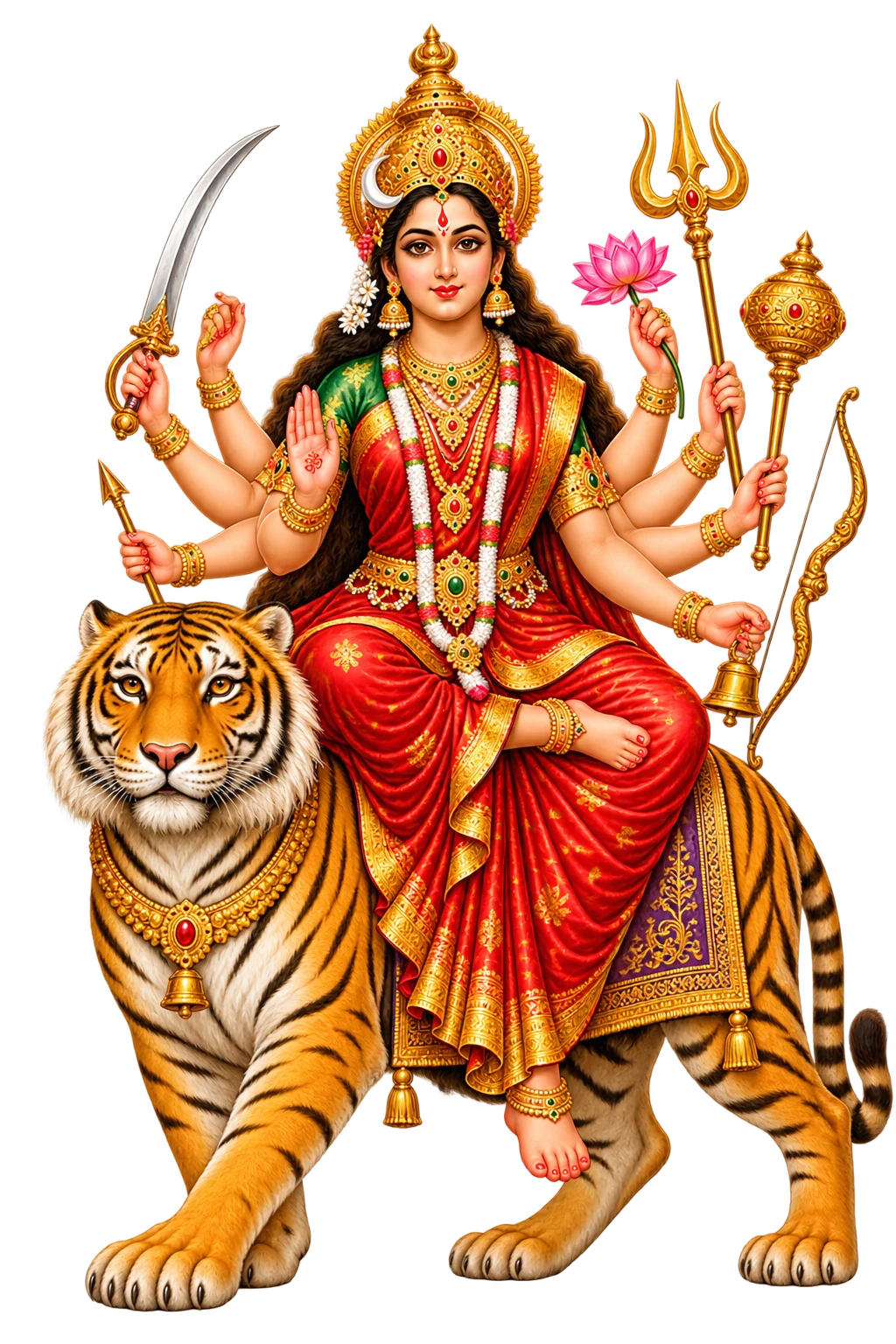
The third form, Maa Chandraghanta, takes her name from the crescent moon (Chandra) shaped like a bell (Ghanta) that she wears on her forehead. She is traditionally depicted with ten arms, riding a tiger or lion, carrying several weapons, and is associated with courage and the removal of obstacles and fear.
Many households offer red flowers and milk-based sweets on this day, and the sound of her bell is traditionally believed to ward off negative energies, making this a day devotees associate with protection and bravery.
Mantra: Om Devi Chandraghantayai Namah
2026 date: 13 October.
4. Maa Kushmanda - Navratri Day 4
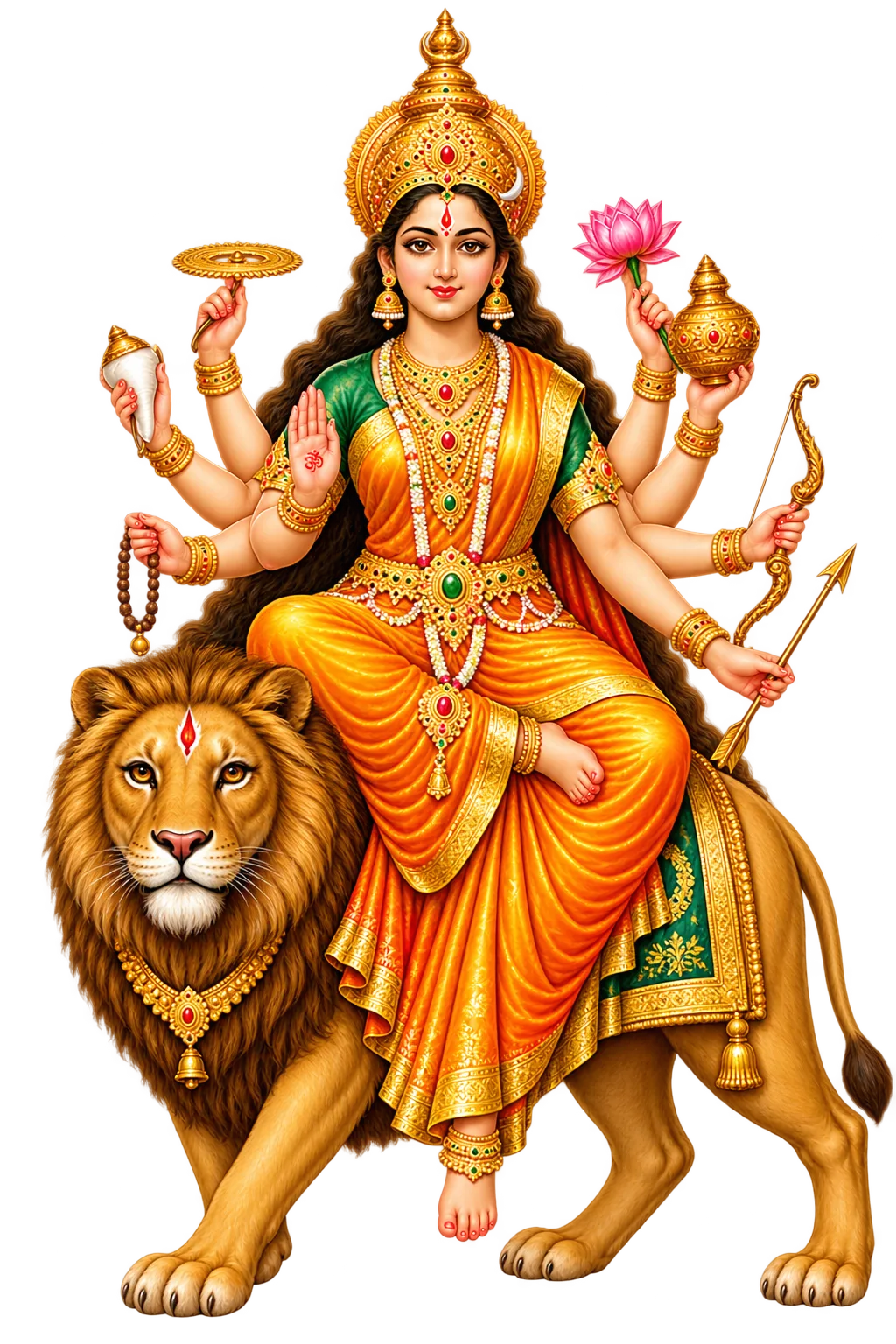
Maa Kushmanda is worshipped on Day 4. Her name is linked to "Kushmanda" or ash gourd, which is traditionally offered to her, and to the belief that she created the universe with her gentle smile, radiating divine energy in all directions. She is usually depicted with eight hands, holding a rosary, a bow, and other symbolic items, riding a lion.
This day is associated with vitality and creative energy, and devotees offer white flowers along with Kushmanda (ash gourd) or Malpua as Bhog where that tradition is followed.
Mantra: Om Devi Kushmandayai Namah
2026 date: 14 October.
5. Maa Skandamata - Navratri Day 5
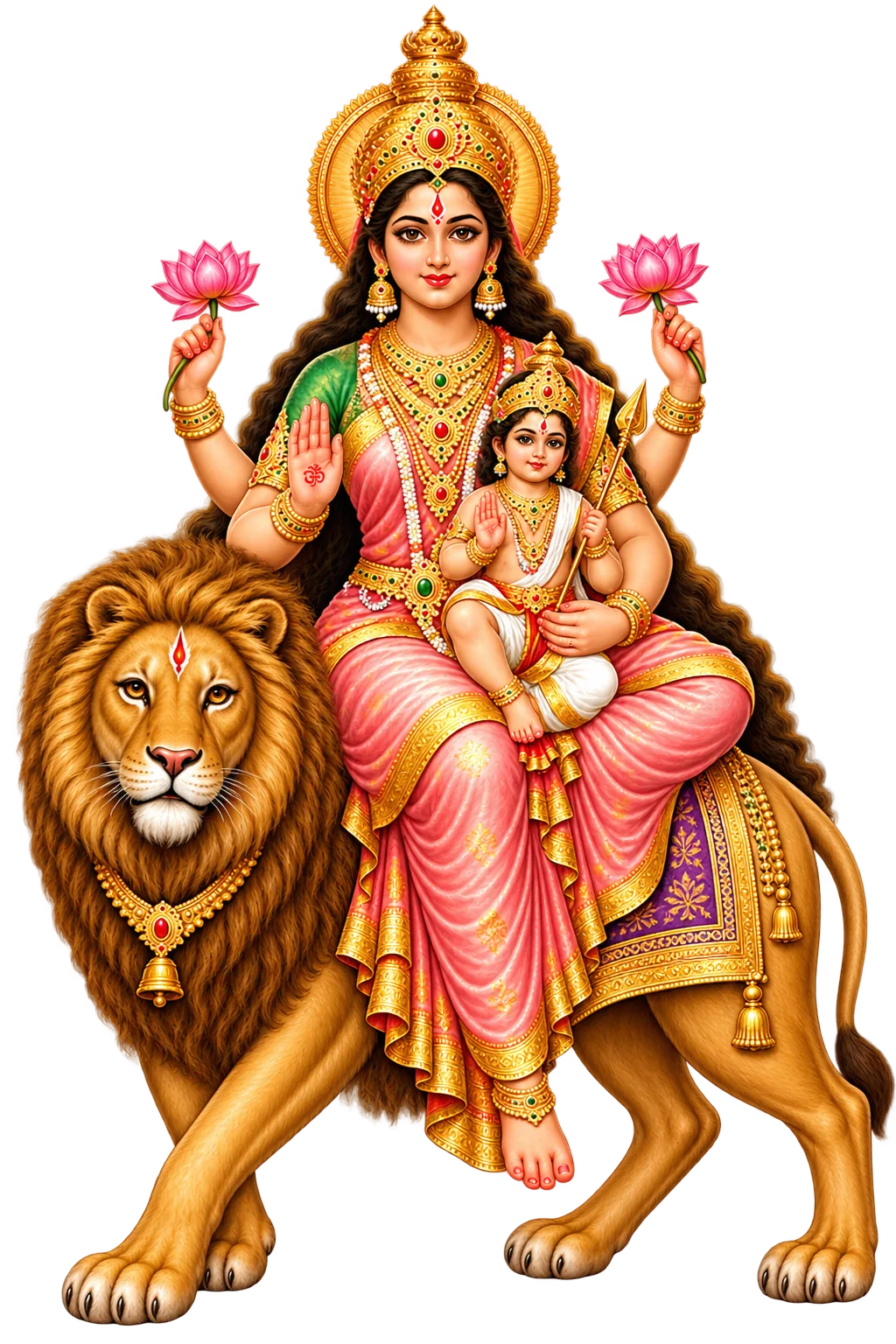
Day 5 belongs to Maa Skandamata, the mother of Skanda (Kartikeya). She is traditionally shown seated on a lotus or lion, holding baby Skanda on her lap, embodying maternal protection and nurturing strength. Worship of Skandamata on this day is associated with the wellbeing of family and children.
Bananas are commonly offered as Bhog on this day in many traditions, along with yellow flowers, reflecting the day's association with warmth and nourishment.
Mantra: Om Devi Skandamatayai Namah
2026 date: 15 October.
6. Maa Katyayani - Navratri Day 6
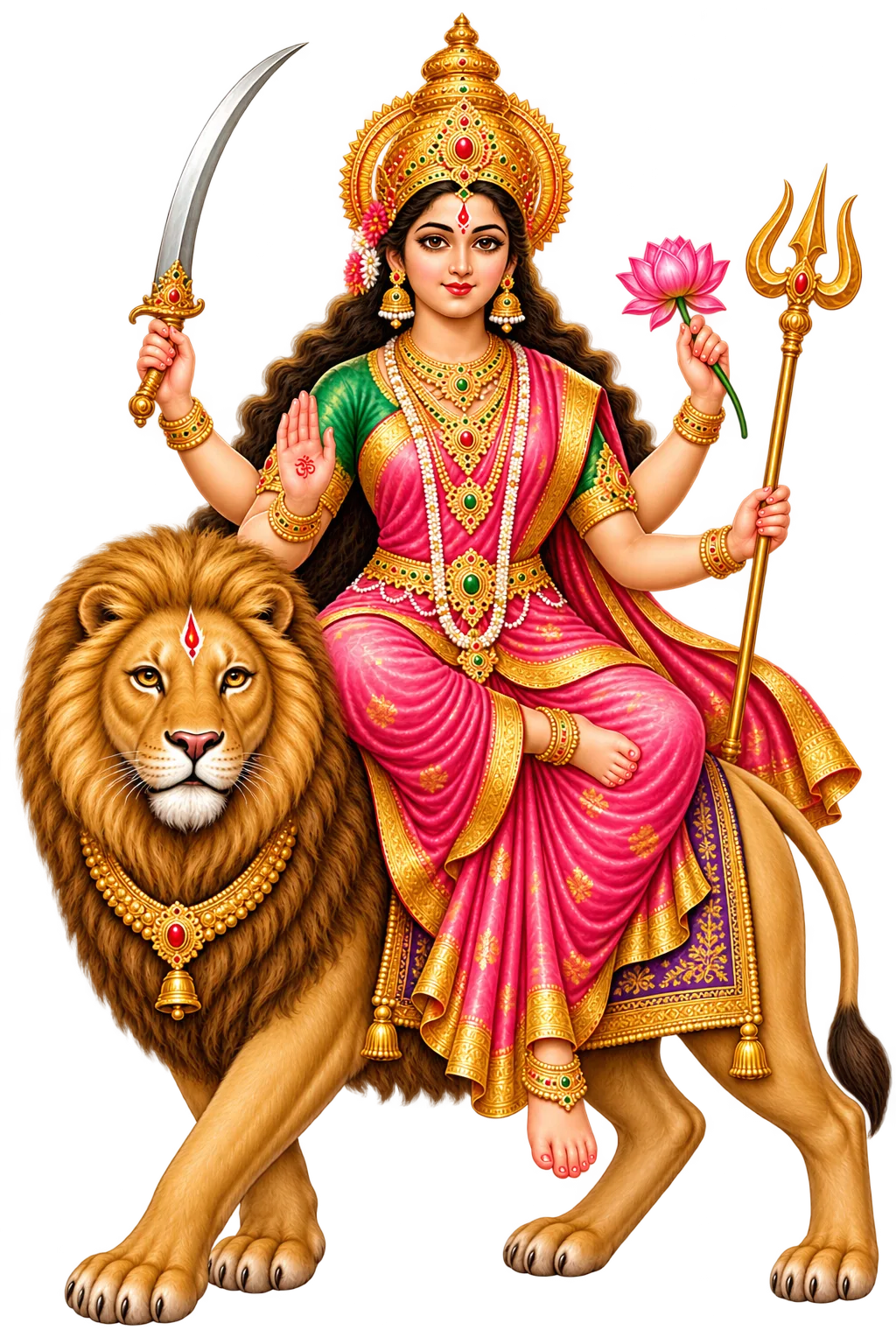
Maa Katyayani, worshipped on Day 6, is associated with the sage Katyayana and is traditionally depicted as a warrior form of the Goddess, riding a lion, with weapons in her multiple hands. She is worshipped for strength, determination, and the courage to overcome difficulties, and is also traditionally invoked by devotees seeking a harmonious marriage.
Red flowers and honey-based offerings are common on this day in several regional traditions, along with recitation of her mantra for strength and clarity of purpose.
Mantra: Om Devi Katyayanyai Namah
2026 date: 16 October.
7. Maa Kalaratri - Navratri Day 7
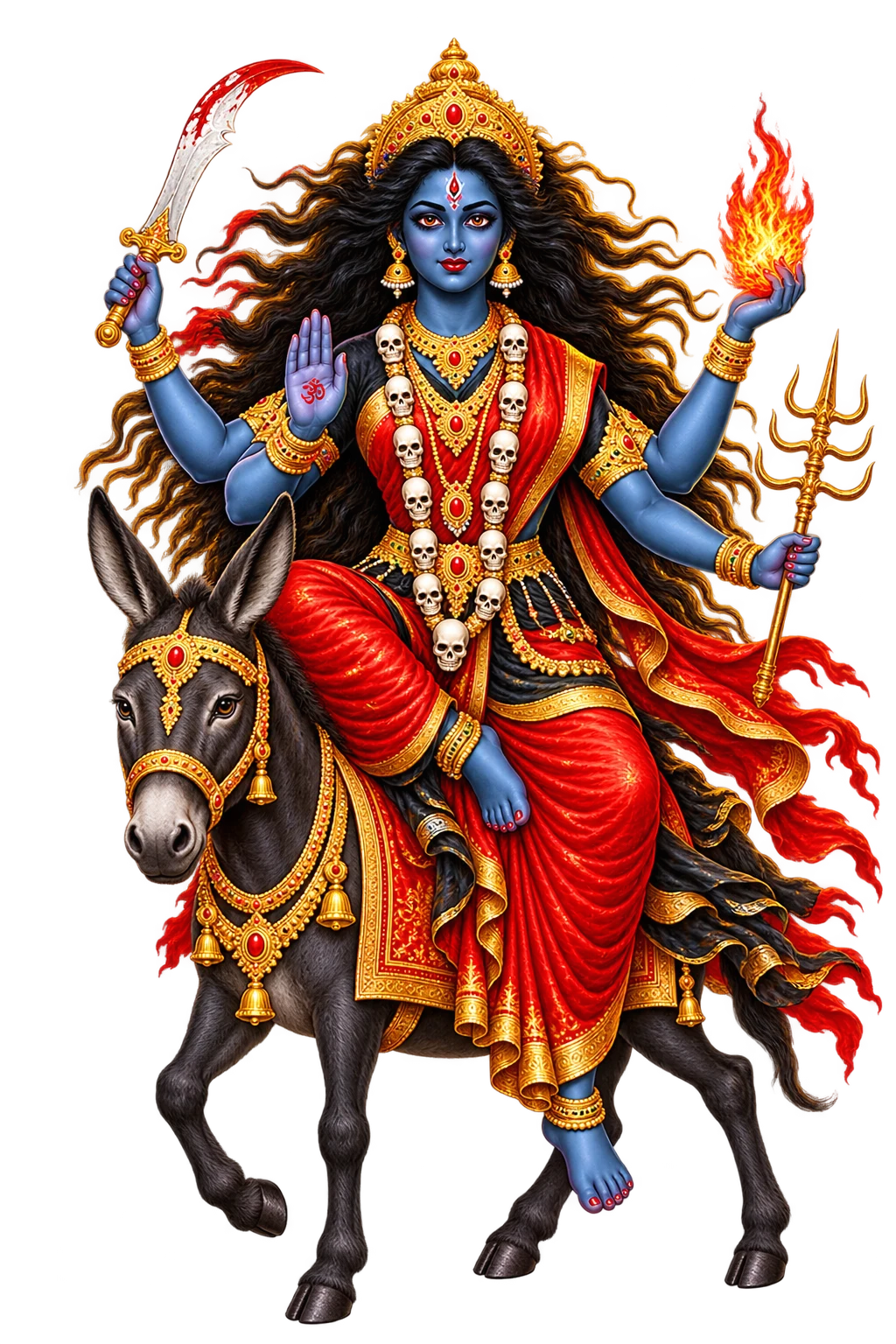
Day 7 is dedicated to Maa Kalaratri, the fiercest of the nine forms, believed to destroy darkness, fear, and negative forces. Despite her intense form, dark-complexioned and riding a donkey, she is also called Shubhankari, meaning "one who brings auspiciousness," because her fierceness exists to protect devotees.
Traditionally, deep red or dark-coloured flowers are offered, and this day is treated with particular seriousness by devotees observing a strict fast, focused on overcoming fear and inner darkness.
Mantra: Om Devi Kalaratryai Namah
2026 date: 17 October.
8. Maa Mahagauri - Navratri Day 8 (Maha Ashtami)
Maa Mahagauri is worshipped on Ashtami, the eighth day, traditionally regarded as one of the most significant days of Navratri. Her name means "extremely fair," and she is described as radiantly pure, dressed in white, riding a bull, symbolising compassion and serenity after the fierce energy of Kalaratri.
This is the day many families perform Kanya Puja and Havan, particularly where the household custom favours Ashtami over Navami. It is also, on this website, associated with a special focus for Baglamukhi Havan practices, a point covered further in the Baglamukhi section below.
Mantra: Om Devi Mahagauryai Namah
2026 date: 18 October (Maha Ashtami).
9. Maa Siddhidatri - Navratri Day 9 (Maha Navami)
The ninth and final form, Maa Siddhidatri, is worshipped on Maha Navami. Her name combines "Siddhi" (spiritual attainment or perfection) and "Datri" (giver), and tradition holds that she bestows the eight classical Siddhis. She is often depicted seated on a lotus and is associated, in some traditions, with the Ardhanarishvara form representing the union of Shiva and Shakti.
For most households, Navami is when Kanya Puja and Havan are completed, fasts are broken, and Navratri worship concludes before Vijayadashami the next day.
Mantra: Om Devi Siddhidatryai Namah
2026 date: 19 October (Maha Navami).
Navadurga Mantra Table
These "Om Devi ... Namah" mantras are the most widely used simple form across regional traditions. Longer dhyana verses and stotras for each Devi also exist, and some families follow slightly different verses depending on their lineage, so it is worth following whichever version your family or priest traditionally uses.
Significance of the 9 Forms
The devotional significance of Navadurga goes beyond nine separate stories. Traditionally, the nine forms are seen as one continuous journey of Shakti, the divine feminine energy, through different qualities: grounding, discipline, courage, creative power, nurturing, strength, protection, purity, and finally spiritual completion.
For many devotees, following the nine days in order becomes a personal reflection of inner growth, moving from steadiness in the early days toward confronting fear and negativity in the middle days, and arriving at compassion and fulfillment by the end. These are traditional and devotional interpretations rather than claims that can be independently verified, and different regional traditions emphasise different aspects of each form.
Which Goddess Is Worshipped on Each Navratri Day?
Day 1 - Maa Shailputri: opening day, Ghatasthapana, stability
Day 2 - Maa Brahmacharini: discipline and penance
Day 3 - Maa Chandraghanta: courage, removal of fear
Day 4 - Maa Kushmanda: creative and vital energy
Day 5 - Maa Skandamata: maternal protection
Day 6 - Maa Katyayani: strength and determination
Day 7 - Maa Kalaratri: destruction of negativity
Day 8 - Maa Mahagauri: purity, Maha Ashtami
Day 9 - Maa Siddhidatri: spiritual completion, Maha Navami
For the complete nine-day calendar, colours, and Ghatasthapana Muhurat, see the Shardiya Navratri 2026 hub page.
How to Worship the 9 Forms of Maa Durga at Home
Navadurga worship at home does not need to be elaborate. A simple, sincere routine followed consistently across the nine days matters more than an elaborate one-time ritual.
Prepare the Puja space: clean the altar area and place the Kalash installed on Ghatasthapana day where it will stay undisturbed for nine days.
Sankalp: take a short vow at the start of the nine days, stating your intention for the worship.
Light a diya: an Akhand Diya (continuously lit lamp) is followed by many households, though a fresh diya lit each day is equally acceptable.
Offer flowers: use the colour or type of flower associated with the day where that is your family custom, or simply fresh flowers.
Offer Bhog: prepare or offer the food item associated with that day's Devi where known, or a simple sattvic offering.
Chant the day's mantra: repeat the mantra for that day's form, traditionally in multiples such as 11, 21, or 108 times, though any sincere repetition is meaningful.
Perform Aarti: in the evening, most households perform a short Aarti to Maa Durga.
Distribute Prasad: share the offered food with family members after the puja.
Keep a daily rhythm: worshipping at roughly the same time each day helps maintain the devotional routine through all nine days.
Regional and family practices vary considerably, so treat this as a general framework rather than a fixed rulebook.
Navadurga Puja Samagri
A basic Samagri list covers most home Navadurga worship. Items marked optional are commonly used in some traditions but are not essential everywhere.
Commonly used:
Diya and cotton wicks
Ghee or mustard oil
Incense sticks (Agarbatti) or Dhoop
Fresh flowers, garlands
Fruits
Kumkum and Roli
Akshat (unbroken rice)
Water and a Kalash (copper or clay pot)
Coconut
Bhog or Prasad items for the day
Often included, but optional or regional:
Mango leaves, for the Kalash
Barley or wheat seeds, for the Akhand Jyot bed
Red or Mauli thread
Betel leaves and supari
Specific Havan Samagri, only if a Havan is planned
Keep the list simple in the first year of practice and expand it gradually based on your family's customs.
Navadurga and Navratri Fasting
Many devotees combine Navadurga worship with a Navratri Vrat (fast), though fasting practices vary widely by family, region, and individual health.
Common fasting foods include fruits, Sabudana (sago), Singhara flour (water chestnut flour), Kuttu flour (buckwheat), potatoes, and dairy, prepared with rock salt (Sendha Namak) instead of regular salt. Foods commonly avoided during a Navratri fast include regular grains, onion, garlic, and non-vegetarian food, though the exact list differs from household to household.
Some devotees keep a full fast for all nine days, others fast only on specific days such as the first, the eighth, or the ninth, and some observe a partial fast with one sattvic meal a day. There is no single correct approach. Follow your own family's customary practice, and anyone with a health condition should consult a doctor before undertaking an extended fast, since this article does not offer medical advice.
Navadurga and Kanya Puja
Kanya Puja, also called Kanjak Puja, is one of the most anticipated Navratri rituals. Young girls, traditionally understood to represent the nine forms of Navadurga, are invited home, their feet are washed as a mark of respect, and they are offered food, typically Halwa, Puri, and Chana, along with Tilak, a Mauli thread, and small gifts or Dakshina.
Kanya Puja is commonly associated with Ashtami and Navami, since these are considered especially auspicious days linked to Maa Mahagauri and Maa Siddhidatri, though some families perform it on other days depending on their custom. The number of girls, their age range, and the exact ritual sequence vary by region and family tradition, so there is no single mandatory format.
Navadurga and Havan
A Havan (fire ritual) is traditionally performed during Navratri as an offering to the Goddess through Agni, the fire deity, usually timed around Ashtami or Navami, depending on family and regional custom.
Common elements include a Havan Kund, Havan Samagri (a mix of herbs, wood, and ghee), and the recitation of mantras while offerings are made into the fire. Because a Havan involves an open flame, it is generally recommended for beginners to have it guided by an experienced priest, in a well-ventilated space, with basic fire safety precautions in place, rather than attempting a large Havan without guidance. Those seeking a priest-guided Havan can explore Hawan services performed according to traditional Vedic procedure.
Maha Ashtami and Maha Navami Connection
Day 8 and Day 9 of Navratri carry particular weight in most households. Maha Ashtami is dedicated to Maa Mahagauri, and Maha Navami to Maa Siddhidatri, the final and completing form of Navadurga. Kanya Puja may be performed on either Ashtami or Navami, and in some families on both days, depending on regional custom. Havan is similarly performed on Ashtami by some households and on Navami by others.
Because these are tithi-based observances, the exact date can shift slightly depending on the Panchang and your city's sunrise, so it is worth confirming the Ashtami and Navami timing for your own location before finalising your Kanya Puja and Havan plans.
Maa Durga's 9 Forms and Maa Baglamukhi - What Is the Difference?
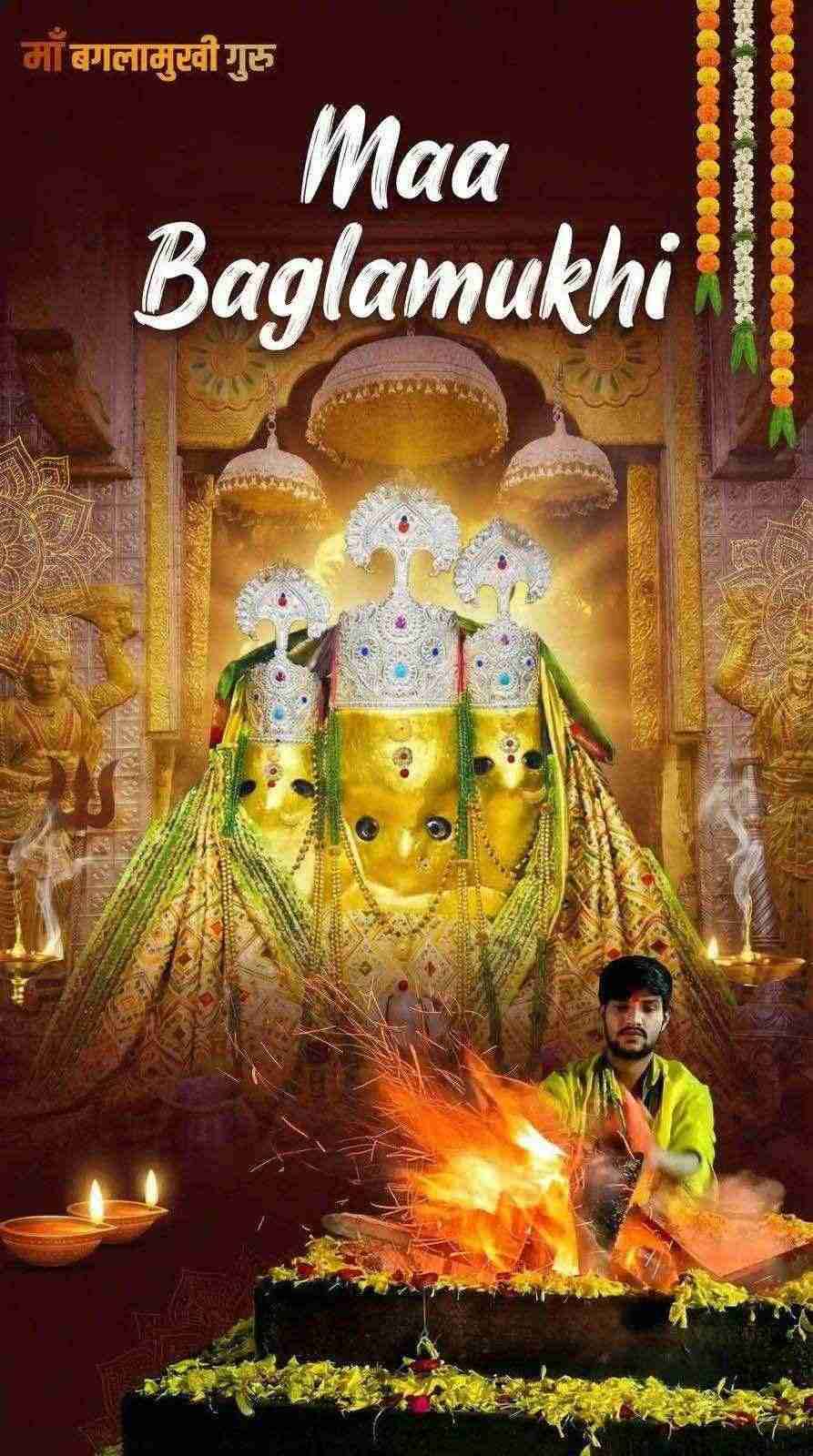
This is an important distinction to make clearly, since this website is centred on Maa Baglamukhi worship at Nalkheda. Navadurga refers specifically to the nine forms of Maa Durga worshipped across the nine days of Navratri, from Shailputri to Siddhidatri, as covered throughout this article.
Maa Baglamukhi is not one of these nine forms. She belongs to a separate devotional framework, the Dash Mahavidyas, the ten great forms of wisdom-Shakti, where she is traditionally revered as the eighth Mahavidya. Both Navadurga and the Dash Mahavidyas belong to the broader tradition of Shakti worship, the reverence of the divine feminine, but they represent distinct groupings with their own names, iconography, and worship traditions. Maa Baglamukhi should not be presented as one of the nine Navadurga.
That said, many devotees choose to combine their Navratri observance with Maa Baglamukhi Puja, Havan, or Anushthan, according to their own family or devotional tradition, since Navratri as a whole is considered a highly auspicious period for Shakti worship in general. You can read more about her worship in the overview of Maa Baglamukhi's significance and in the Gupt Navratri guide, which explains her place among the Dash Mahavidyas in more detail.
Navratri Puja and Maa Baglamukhi Worship in Nalkheda
Nalkheda, in Madhya Pradesh, is home to an ancient and well-known Maa Baglamukhi temple, and it is one of several places in India where devotees gather during Navratri for both general Navadurga worship and dedicated Baglamukhi rituals. It is not presented here as the only place to worship Navadurga, since Navratri is observed across the country in homes, temples, and pandals in countless traditions.
At Nalkheda, priest-guided Puja, Havan, and Anushthan are conducted through the nine days, and many devotees combine their Navadurga worship at home with a Sankalp-based Puja or Havan performed on their behalf by Acharyas at the temple, where travel is not possible. Services such as Anushthan and priest-guided Havan are available for those who wish to include a Baglamukhi-focused ritual within their broader Navratri observance. If you would like to arrange a Sankalp Puja or Havan at Nalkheda for this Navratri, you can explore the full range of Puja services or proceed directly to book online.
Common Questions About Maa Durga's 9 Forms
What are the 9 forms of Maa Durga? Shailputri, Brahmacharini, Chandraghanta, Kushmanda, Skandamata, Katyayani, Kalaratri, Mahagauri and Siddhidatri.
Which Goddess is worshipped on Day 1? Maa Shailputri, alongside Ghatasthapana.
Which Goddess is worshipped on Day 9? Maa Siddhidatri, on Maha Navami.
Is Maa Baglamukhi one of the Navadurga? No, she is one of the ten Mahavidyas, a separate devotional framework.
Can Navadurga Puja be performed at home? Yes, a simple daily routine of lamp, flowers, mantra, and Bhog is traditionally sufficient.
Frequently Asked Questions
What are the 9 forms of Maa Durga?
The 9 forms of Maa Durga, known as Navadurga, are Shailputri, Brahmacharini, Chandraghanta, Kushmanda, Skandamata, Katyayani, Kalaratri, Mahagauri and Siddhidatri, worshipped in this order across the nine days of Navratri.
What are the names of Navadurga in order?
In order: Shailputri (Day 1), Brahmacharini (Day 2), Chandraghanta (Day 3), Kushmanda (Day 4), Skandamata (Day 5), Katyayani (Day 6), Kalaratri (Day 7), Mahagauri (Day 8), and Siddhidatri (Day 9).
Which Goddess is worshipped on Day 1 of Navratri?
Maa Shailputri is worshipped on Day 1, which coincides with Ghatasthapana, the ritual of installing the sacred Kalash.
Which Goddess is worshipped on Day 9 of Navratri?
Maa Siddhidatri is worshipped on Day 9, known as Maha Navami, marking the completion of Navadurga worship.
What is Navadurga?
Navadurga refers to the nine traditional forms of Maa Durga worshipped across the nine days of Navratri, each representing a distinct quality such as stability, courage, or purity.
What is the mantra of Maa Shailputri?
The commonly used mantra is "Om Devi Shailputryai Namah," chanted on Day 1 of Navratri.
What is the mantra of Maa Siddhidatri?
The commonly used mantra is "Om Devi Siddhidatryai Namah," chanted on Day 9, Maha Navami.
Which Devi is worshipped on Ashtami?
Maa Mahagauri, the eighth form of Navadurga, is worshipped on Maha Ashtami, the eighth day of Navratri.
Which Devi is worshipped on Navami?
Maa Siddhidatri, the ninth and final form, is worshipped on Maha Navami, the ninth day of Navratri.
Are the 9 forms of Durga the same as the Dash Mahavidyas?
No. Navadurga is a set of nine forms worshipped during Navratri, while the Dash Mahavidyas are a separate group of ten forms of wisdom-Shakti. Some names may overlap in broader Shakti tradition, but the two frameworks are distinct.
Is Maa Baglamukhi one of the Navadurga?
No, Maa Baglamukhi is not one of the nine Navadurga forms. She is traditionally revered as the eighth of the ten Mahavidyas.
Can Navadurga Puja be performed at home?
Yes. A simple home routine of Kalash worship, daily mantra chanting, flower and Bhog offerings, and evening Aarti is a traditional and accepted way to observe Navadurga Puja.
What Samagri is needed for Navadurga Puja?
Basic items include a diya, incense, flowers, fruits, kumkum, roli, akshat, water, a Kalash, coconut, and Bhog, with items such as Havan Samagri needed only if a Havan is planned.
What is the significance of the nine forms?
Traditionally, the nine forms represent a journey through different aspects of Shakti, from grounding and discipline to courage, protection, purity, and spiritual completion, observed as a personal devotional and spiritual practice.
When is Ghatasthapana in 2026?
Ghatasthapana for Sharad Navratri 2026 falls on 11 October, the same day Maa Shailputri is worshipped, marking the start of the nine days.
When is Maha Ashtami in 2026?
Maha Ashtami, dedicated to Maa Mahagauri, falls on 18 October 2026.
When is Maha Navami in 2026?
Maha Navami, dedicated to Maa Siddhidatri, falls on 19 October 2026.
Can Baglamukhi Puja be performed during Navratri?
Yes. While Maa Baglamukhi is not one of the Navadurga, many devotees combine her worship, including Havan and Anushthan, with their broader Navratri observance according to their own tradition.
Do the 9 forms have specific colours?
Many traditions associate a colour with each Navratri day, though the exact sequence can vary between regional customs and calendars, so it is best to follow your family's usual colour tradition or your local calendar.
Is Kanya Puja compulsory during Navadurga worship?
No single practice is universally compulsory. Kanya Puja is a widely followed custom, commonly performed on Ashtami or Navami, but families follow their own regional and personal traditions.