Quick Answer: What Should You Do and Avoid During Pitru Paksha 2026?
Pitru Paksha 2026 runs from 26 September to 10 October. During this fortnight, many Hindu families perform Shradh and Tarpan, remember their ancestors, and give charity, while avoiding new ventures, celebrations, and disrespectful conduct. These customs are followed to honour ancestors and repay the pitru rin (ancestral debt). Practices vary by family, region, and sampradaya, so specifics should be confirmed with your local priest or elders.
What Is Pitru Paksha?
According to Hindu tradition, Pitru Paksha is a 15–16 day period in the lunar calendar set aside for remembering one's ancestors (pitrs). It falls in the waning fortnight between Bhadrapada Purnima and Ashwin Amavasya, and in 2026 it spans 26 September to 10 October, ending on Sarva Pitru Amavasya. Many devotees believe that during this window, the departed remain closer to their living family, and rituals performed with sincerity bring them peace.
This piece focuses on a question that comes up constantly during the fortnight - what should you actually do, and what should you hold off on - rather than the tithi calendar itself. For the full day-by-day Shradh date list, see our detailed guide: Pitru Paksha 2026 Shradh dates, tithi and puja vidhi.
Why Are Rules Followed During Pitru Paksha?
In Vedic and religious traditions, the customs observed during Shradh Paksha are not arbitrary restrictions - they serve a purpose rooted in remembrance and discipline:
Remembrance - pausing regular celebration keeps attention on ancestors rather than personal milestones.
Devotion - Shradh, Tarpan and Pind Daan are acts of gratitude toward those who came before.
Purity - many families maintain simple, sattvic routines during the fortnight as a mark of respect.
Charity - daan in the ancestors' names is considered a way to transfer merit to them.
Discipline - avoiding indulgence or new beginnings is traditionally seen as a way of keeping the mind focused on duty rather than desire.
None of this is presented as a scientifically verified rule - it is a set of customs many Hindu families follow out of faith and family tradition, and the exact list differs from household to household.
What to Do During Pitru Paksha 2026
Perform Shradh on the appropriate tithi. Traditionally, Shradh is observed on the lunar date matching the ancestor's death, not a fixed Gregorian date - this is why the tithi calendar shifts every year.
Perform Tarpan according to your family's tradition. Offering water mixed with black sesame, usually facing south, is one of the most widely practised daily rituals of the fortnight.
Offer Pind Daan where it is part of your family's practice. Some families perform this at home; others travel to sites like Gaya, Prayagraj, or Kashi, which are traditionally associated with this rite.
Remember and pray for your ancestors by name. Many families begin the day with a short prayer or moment of remembrance before regular activities.
Prepare food according to family tradition and offer it before the meal is served. A portion is typically set aside symbolically for the ancestors, then shared as prasad or given to those in need.
Donate in the names of your ancestors. Food, clothing, or money given as charity during this period is widely believed to reach the departed as merit.
Feed the needy, and - in many traditions - crows, cows, and dogs, which are considered symbolically connected to the ancestors.
Maintain cleanliness and basic ritual discipline at home during the fortnight, particularly around the puja space and kitchen.
Follow your own family and regional tradition rather than someone else's. Shradh customs differ significantly between North and South India, between communities, and even between families in the same town - there is no single "correct" version for everyone.
Consult a qualified priest when you are unsure about the exact tithi, muhurat, or procedure for your family, especially for Pind Daan or a formal Shradh ceremony.
What Not to Do During Pitru Paksha 2026
Avoid disrespect toward ancestors or the rituals themselves. Rushing through Tarpan or Shradh without attention is generally discouraged, as the intent behind the act matters as much as the act.
Avoid performing Shradh casually or on the wrong tithi without checking. If you're unsure which date applies to your ancestor, it's better to confirm with a priest or use Sarva Pitru Amavasya as the fallback (covered below) than to guess.
Avoid ignoring your family's own tradition in favour of something you read online. A ritual detail that applies to one region or sampradaya may not apply to yours.
Avoid conflict, harsh words, or harmful behaviour during the fortnight - many families treat this period as a time for restraint and reflection, not confrontation.
Avoid wasting food offered during Shradh. Food prepared for the ritual is traditionally treated with care, whether it's offered, shared, or given away.
Avoid treating Pitru Paksha as a period of fear. It is traditionally understood as a time of remembrance and gratitude, not dread - this applies equally to Pitru Dosh, discussed later in this article.
Avoid unsupported claims about Pitru Dosh, such as attributing every family problem to it without a proper horoscope reading by a qualified astrologer.
Avoid blindly copying rituals that conflict with your own family's customs just because you saw them described somewhere else.
Avoid trusting anyone who promises a guaranteed spiritual outcome. Traditional remedies are approached with faith and sincerity, not certainty of result.
Common Questions: New Purchases, Celebrations, Food, and Travel
These are among the most frequently searched questions during Pitru Paksha every year. Each answer distinguishes between widespread traditional practice and an absolute universal rule — because the two are often confused.
The pattern across all of these: widely followed customs exist, but very few of them are treated as an absolute rule binding every Hindu family everywhere. When in doubt, ask your family elders or a priest rather than assuming a blanket restriction applies to you.
What Food Is Traditionally Eaten or Avoided During Pitru Paksha?
Food practices during Pitru Paksha vary considerably, but some patterns are common across many households:
Vegetarian food is generally preferred, particularly by family members actively performing daily Tarpan or Shradh.
Onion and garlic are avoided by some families during the ritual days, in line with broader sattvic-food customs observed during other religious periods too - though this is not observed universally.
Certain pulses and grains are sometimes excluded from the specific Shradh meal itself, depending on regional custom; this is a ritual-specific practice rather than a fortnight-long restriction for every meal.
Food prepared for Shradh typically includes items like rice, kheer, puris, and seasonal vegetables cooked without excessive spice, though the exact menu is entirely family and region-specific.
What is offered usually includes a small portion served on a leaf plate or plate set aside before the family eats, along with food for crows, cows, or Brahmins depending on tradition.
On non-Shradh days within the fortnight, most families eat their regular diet normally — the stricter food rules typically apply on the specific day the ancestor's Shradh is performed, or throughout the fortnight only for those actively observing it closely.
No scientific or medical claim is being made about any of these food customs - they are followed as a matter of tradition and personal faith.
Shradh vs Tarpan vs Pind Daan
These three terms are often used loosely, but they refer to distinct parts of the same broader ritual.
For the complete step-by-step procedure and the 2026 tithi-wise date list, refer to our dedicated guide: Pitru Paksha 2026 Shradh dates, tithi and puja vidhi. For guidance specifically on ancestral rites tied to Pitru Dosh, see our Pitru Dosh Nivaran Puja page.
What If You Do Not Know the Ancestor's Death Tithi?
This is one of the most common questions during Pitru Paksha. Traditionally, when the exact death tithi of an ancestor is not known, or a family is unable to perform Shradh on the correct day, Sarva Pitru Amavasya - also called Mahalaya Amavasya - is used instead. In 2026, this falls on 10 October, the final day of the fortnight.
This day is traditionally understood as a collective remembrance day for all ancestors, known and unknown. It is not necessarily the only option in every tradition - some families have their own alternative customs for this situation - but it is the most widely followed fallback across Hindu communities.
Is Pitru Paksha Related to Pitru Dosh?
According to Vedic astrology, Pitru Dosh is a condition read in a birth chart, traditionally associated with an afflicted Sun (the significator of father and ancestors), or an afflicted 9th house, often linked to Rahu, Ketu, or Saturn. Dharmic traditions associate this dosh with the neglect of ancestral rites or unresolved ancestral karma.
Pitru Paksha is traditionally considered an especially suitable period for ancestral rites of any kind - which is why many families who have been advised of Pitru Dosh by an astrologer choose to perform their remedial rituals specifically during this fortnight, rather than at another time of year. The fortnight itself does not create or diagnose Pitru Dosh; it is simply regarded as an auspicious window for the remedies associated with it.
For a full explanation of what Pitru Dosh is, its traditional indicators, and detailed remedies, see our dedicated page: Pitru Dosh Nivaran Puja and traditional remedies. Related reading from our blog: what is Pitra Dosh — signs and remedies and Pitra Dosh Pooja vidhi, benefits and remedies.
Pitru Dosh Nivaran During Pitru Paksha
For those who have been advised that Pitru Dosh appears in their chart, Pitru Paksha is traditionally treated as a favourable time to undertake remedial rites. Commonly followed approaches include:
Performing Shradh on the ancestor's tithi, or on Sarva Pitru Amavasya if the tithi is unknown
Daily or fortnight-long Tarpan
Pind Daan, particularly at sites traditionally associated with this rite
Amavasya-specific observances, such as lighting a lamp for the ancestors
Charity given specifically in the ancestors' names
Chanting the traditional Pitru mantra with sincerity
Seeking guidance from a qualified priest or astrologer before undertaking a formal Pitru Dosha Nivaran Puja
None of these remedies are presented as guaranteed to resolve every family difficulty - they are traditional practices undertaken in good faith, alongside ordinary effort and, where relevant, appropriate medical or professional guidance for unrelated issues. Full details on the ritual itself are available on our Pitru Dosh Nivaran Puja page.
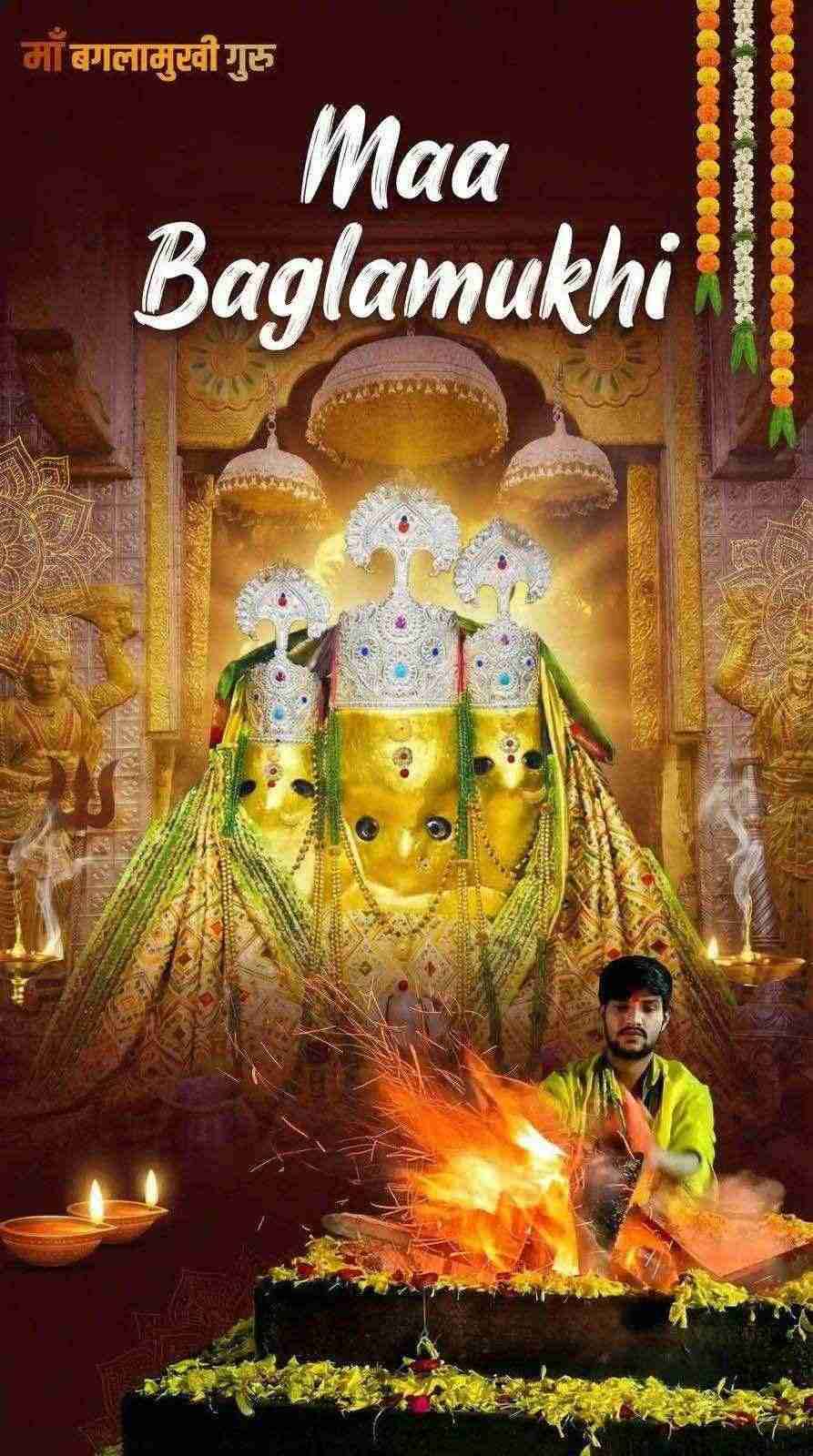
Can Maa Baglamukhi Puja Be Performed During Pitru Paksha?
Maa Baglamukhi is one of the ten Dash Mahavidyas in Shakta tradition, revered as the goddess of stambhan shakti - the power to still obstacles and difficulties. Some devotees, after completing their family's Shradh and Tarpan obligations for the day, also perform Maa Baglamukhi Puja during Pitru Paksha, seeking her grace for the removal of obstacles and for peace within the family.
It's worth being clear about how this fits together: Maa Baglamukhi worship is not a substitute for Shradh, Tarpan, or Pind Daan. Ancestral rites remain an independent and important duty in their own right. Devotees who wish to combine both typically complete their ancestral obligations first, and then separately seek Maa Baglamukhi's grace - whether through personal prayer or a formal Maa Baglamukhi Havan or Baglamukhi Puja - for wider protection and stability.
This is a matter of personal faith and family tradition, not a rule that applies to everyone. Devotees seeking a combined approach - ancestral rites together with Maa Baglamukhi's grace, specifically for easing Pitru Dosh - can read more on our Pitru Dosh Nivaran Puja page, which explains this connection in detail. For families wanting a fuller, structured remedial process, a personalised Graha Shanti Puja based on the horoscope may also be worth discussing with an astrologer. You can also read more about Maa Baglamukhi and her significance in Shakta tradition.
Pitru Paksha 2026 Daily Checklist
☐ Maintain cleanliness at home and around the puja space
☐ Remember your ancestors, even briefly, each day
☐ Follow the tithi that matches your ancestor's death date
☐ Perform Tarpan if it is part of your family's tradition
☐ Offer food or charity in your ancestors' names as appropriate
☐ Avoid disrespectful, careless, or harmful behaviour
☐ Follow your own family's tradition rather than a generic online rule
☐ Seek priestly guidance whenever you're unsure of the correct procedure
Frequently Asked Questions About Pitru Paksha 2026
1. What should we do during Pitru Paksha 2026?
Traditionally, families perform Shradh on the ancestor's tithi, offer Tarpan and Pind Daan where practised, remember their ancestors, and give charity in their names. The exact combination of rituals depends on family and regional tradition.
2. What should we avoid during Pitru Paksha?
Common practices to avoid include starting new ventures, scheduling celebrations, and performing rituals carelessly or without understanding the correct tithi. Disrespect toward the rituals or toward family members is also discouraged throughout the fortnight.
3. Can we buy new things during Pitru Paksha?
Many families postpone major purchases like property, gold, or vehicles until after Sarva Pitru Amavasya, treating the fortnight as unsuitable for new beginnings. This is a widely followed custom, not a universal rule observed by every community.
4. Can we start a new business during Pitru Paksha?
It is commonly deferred, similar to other major "shubh" starts, though this varies by family and region. If timing is urgent, consulting a priest about your specific situation is more useful than following a blanket rule.
5. Can we get married during Pitru Paksha?
Weddings are typically not scheduled during this fortnight in most North Indian traditions, as it is considered a period of remembrance rather than celebration. Always confirm against your family's community calendar and priest's guidance.
6. Can we cut hair during Pitru Paksha?
This restriction mainly applies to close family members formally observing Shradh for a recently deceased relative, rather than as a general rule for everyone during the fortnight.
7. Can we travel during Pitru Paksha?
There is no general prohibition on travel. Some families prefer to stay close to home to be present for daily rituals, but this is a matter of personal and family convenience rather than a fixed restriction.
8. Can we eat non-vegetarian food during Pitru Paksha?
Many families switch to vegetarian food during the fortnight, particularly those actively performing daily rituals, though this practice varies significantly by community and household.
9. What food should be avoided during Shradh?
Onion, garlic, and certain grains are avoided by some families specifically on the day of the Shradh ritual, following broader sattvic-food customs. This is more a ritual-day practice than a fortnight-long restriction on every meal.
10. What should be donated during Pitru Paksha?
Food, clothing, and money are commonly donated in the names of ancestors, along with feeding the needy, crows, cows, and dogs in traditions where this is practised. Charity is considered one of the most meaningful observances of the fortnight.
11. What is the importance of Tarpan?
Tarpan is the offering of water mixed with black sesame to one's ancestors, traditionally believed to bring them peace and satisfaction. It is one of the simplest and most widely practised daily rituals of Pitru Paksha.
12. What is the difference between Shradh and Tarpan?
Shradh is the complete ceremony - including sankalp, offerings, and prayer - while Tarpan is one specific ritual within it, focused on the water offering. Pind Daan is a separate, food-based offering, distinct from both.
13. What if I do not know my ancestor's death tithi?
Sarva Pitru Amavasya - 10 October 2026 - is traditionally used for collective remembrance when the exact tithi is unknown. This is the most widely followed fallback, though some families follow their own alternative custom.
14. Is Pitru Paksha good for Pitru Dosh remedies?
Pitru Paksha is traditionally considered a favourable window for ancestral rites, including remedies associated with Pitru Dosh. Many families who have been advised of this dosh in their horoscope choose to perform Shradh, Tarpan, and related remedies specifically during this fortnight.
15. Can Maa Baglamukhi Puja be performed during Pitru Paksha?
Yes, some devotees perform Maa Baglamukhi Puja during this period after completing their ancestral obligations, seeking her grace for removing obstacles and bringing peace to the family. It is undertaken alongside, not instead of, traditional Shradh and Tarpan.
16. What is Sarva Pitru Amavasya?
Sarva Pitru Amavasya, also called Mahalaya Amavasya, is the final day of Pitru Paksha - 10 October 2026. It is traditionally regarded as the most important day of the fortnight, used for honouring all ancestors together.
17. What are the most important Pitru Paksha rituals?
Shradh, Tarpan, and Pind Daan are considered the core rituals of the fortnight, alongside daily remembrance and charity given in the ancestors' names. The exact emphasis on each varies by family tradition.
A note on tradition and accuracy: Hindu rituals during Pitru Paksha can vary meaningfully by region, family lineage, and sampradaya - there is no single version of these practices that applies identically to every household. Exact tithi and muhurat timings should always be confirmed with your family priest or a local Panchang, since they depend on your location. All spiritual remedies described here are traditional practices based on faith; none are presented as scientifically guaranteed outcomes.
— Acharya Pandit Vishnu Sharma, Maa Baglamukhi Siddha Peeth, Nalkheda
If You're Unsure Which Rituals Apply to Your Family
Every family's Pitru Paksha observance looks a little different, and that's normal. If you're unsure which rituals apply to your situation - or if a priest or elder has mentioned Pitru Dosh in your horoscope - it helps to speak with a qualified priest or astrologer before proceeding. Acharya Pandit Vishnu Sharma at Maa Baglamukhi Siddha Peeth, Nalkheda offers guidance on Shradh, Tarpan, and Pitru Dosha Nivaran Puja, both online and in person.
Consult Acharya Ji for Guidance · Book a Pitru Dosha Nivaran Puja
Quick Answer: What Should You Do and Avoid During Pitru Paksha 2026?
Pitru Paksha 2026 runs from 26 September to 10 October. During this fortnight, many Hindu families perform Shradh and Tarpan, remember their ancestors, and give charity, while avoiding new ventures, celebrations, and disrespectful conduct. These customs are followed to honour ancestors and repay the pitru rin (ancestral debt). Practices vary by family, region, and sampradaya, so specifics should be confirmed with your local priest or elders.
What Is Pitru Paksha?
According to Hindu tradition, Pitru Paksha is a 15–16 day period in the lunar calendar set aside for remembering one's ancestors (pitrs). It falls in the waning fortnight between Bhadrapada Purnima and Ashwin Amavasya, and in 2026 it spans 26 September to 10 October, ending on Sarva Pitru Amavasya. Many devotees believe that during this window, the departed remain closer to their living family, and rituals performed with sincerity bring them peace.
This piece focuses on a question that comes up constantly during the fortnight - what should you actually do, and what should you hold off on - rather than the tithi calendar itself. For the full day-by-day Shradh date list, see our detailed guide: Pitru Paksha 2026 Shradh dates, tithi and puja vidhi.
Why Are Rules Followed During Pitru Paksha?
In Vedic and religious traditions, the customs observed during Shradh Paksha are not arbitrary restrictions - they serve a purpose rooted in remembrance and discipline:
Remembrance - pausing regular celebration keeps attention on ancestors rather than personal milestones.
Devotion - Shradh, Tarpan and Pind Daan are acts of gratitude toward those who came before.
Purity - many families maintain simple, sattvic routines during the fortnight as a mark of respect.
Charity - daan in the ancestors' names is considered a way to transfer merit to them.
Discipline - avoiding indulgence or new beginnings is traditionally seen as a way of keeping the mind focused on duty rather than desire.
None of this is presented as a scientifically verified rule - it is a set of customs many Hindu families follow out of faith and family tradition, and the exact list differs from household to household.
What to Do During Pitru Paksha 2026
Perform Shradh on the appropriate tithi. Traditionally, Shradh is observed on the lunar date matching the ancestor's death, not a fixed Gregorian date - this is why the tithi calendar shifts every year.
Perform Tarpan according to your family's tradition. Offering water mixed with black sesame, usually facing south, is one of the most widely practised daily rituals of the fortnight.
Offer Pind Daan where it is part of your family's practice. Some families perform this at home; others travel to sites like Gaya, Prayagraj, or Kashi, which are traditionally associated with this rite.
Remember and pray for your ancestors by name. Many families begin the day with a short prayer or moment of remembrance before regular activities.
Prepare food according to family tradition and offer it before the meal is served. A portion is typically set aside symbolically for the ancestors, then shared as prasad or given to those in need.
Donate in the names of your ancestors. Food, clothing, or money given as charity during this period is widely believed to reach the departed as merit.
Feed the needy, and - in many traditions - crows, cows, and dogs, which are considered symbolically connected to the ancestors.
Maintain cleanliness and basic ritual discipline at home during the fortnight, particularly around the puja space and kitchen.
Follow your own family and regional tradition rather than someone else's. Shradh customs differ significantly between North and South India, between communities, and even between families in the same town - there is no single "correct" version for everyone.
Consult a qualified priest when you are unsure about the exact tithi, muhurat, or procedure for your family, especially for Pind Daan or a formal Shradh ceremony.
What Not to Do During Pitru Paksha 2026
Avoid disrespect toward ancestors or the rituals themselves. Rushing through Tarpan or Shradh without attention is generally discouraged, as the intent behind the act matters as much as the act.
Avoid performing Shradh casually or on the wrong tithi without checking. If you're unsure which date applies to your ancestor, it's better to confirm with a priest or use Sarva Pitru Amavasya as the fallback (covered below) than to guess.
Avoid ignoring your family's own tradition in favour of something you read online. A ritual detail that applies to one region or sampradaya may not apply to yours.
Avoid conflict, harsh words, or harmful behaviour during the fortnight - many families treat this period as a time for restraint and reflection, not confrontation.
Avoid wasting food offered during Shradh. Food prepared for the ritual is traditionally treated with care, whether it's offered, shared, or given away.
Avoid treating Pitru Paksha as a period of fear. It is traditionally understood as a time of remembrance and gratitude, not dread - this applies equally to Pitru Dosh, discussed later in this article.
Avoid unsupported claims about Pitru Dosh, such as attributing every family problem to it without a proper horoscope reading by a qualified astrologer.
Avoid blindly copying rituals that conflict with your own family's customs just because you saw them described somewhere else.
Avoid trusting anyone who promises a guaranteed spiritual outcome. Traditional remedies are approached with faith and sincerity, not certainty of result.
Common Questions: New Purchases, Celebrations, Food, and Travel
These are among the most frequently searched questions during Pitru Paksha every year. Each answer distinguishes between widespread traditional practice and an absolute universal rule — because the two are often confused.
The pattern across all of these: widely followed customs exist, but very few of them are treated as an absolute rule binding every Hindu family everywhere. When in doubt, ask your family elders or a priest rather than assuming a blanket restriction applies to you.
What Food Is Traditionally Eaten or Avoided During Pitru Paksha?
Food practices during Pitru Paksha vary considerably, but some patterns are common across many households:
Vegetarian food is generally preferred, particularly by family members actively performing daily Tarpan or Shradh.
Onion and garlic are avoided by some families during the ritual days, in line with broader sattvic-food customs observed during other religious periods too - though this is not observed universally.
Certain pulses and grains are sometimes excluded from the specific Shradh meal itself, depending on regional custom; this is a ritual-specific practice rather than a fortnight-long restriction for every meal.
Food prepared for Shradh typically includes items like rice, kheer, puris, and seasonal vegetables cooked without excessive spice, though the exact menu is entirely family and region-specific.
What is offered usually includes a small portion served on a leaf plate or plate set aside before the family eats, along with food for crows, cows, or Brahmins depending on tradition.
On non-Shradh days within the fortnight, most families eat their regular diet normally — the stricter food rules typically apply on the specific day the ancestor's Shradh is performed, or throughout the fortnight only for those actively observing it closely.
No scientific or medical claim is being made about any of these food customs - they are followed as a matter of tradition and personal faith.
Shradh vs Tarpan vs Pind Daan
These three terms are often used loosely, but they refer to distinct parts of the same broader ritual.
For the complete step-by-step procedure and the 2026 tithi-wise date list, refer to our dedicated guide: Pitru Paksha 2026 Shradh dates, tithi and puja vidhi. For guidance specifically on ancestral rites tied to Pitru Dosh, see our Pitru Dosh Nivaran Puja page.
What If You Do Not Know the Ancestor's Death Tithi?
This is one of the most common questions during Pitru Paksha. Traditionally, when the exact death tithi of an ancestor is not known, or a family is unable to perform Shradh on the correct day, Sarva Pitru Amavasya - also called Mahalaya Amavasya - is used instead. In 2026, this falls on 10 October, the final day of the fortnight.
This day is traditionally understood as a collective remembrance day for all ancestors, known and unknown. It is not necessarily the only option in every tradition - some families have their own alternative customs for this situation - but it is the most widely followed fallback across Hindu communities.
Is Pitru Paksha Related to Pitru Dosh?
According to Vedic astrology, Pitru Dosh is a condition read in a birth chart, traditionally associated with an afflicted Sun (the significator of father and ancestors), or an afflicted 9th house, often linked to Rahu, Ketu, or Saturn. Dharmic traditions associate this dosh with the neglect of ancestral rites or unresolved ancestral karma.
Pitru Paksha is traditionally considered an especially suitable period for ancestral rites of any kind - which is why many families who have been advised of Pitru Dosh by an astrologer choose to perform their remedial rituals specifically during this fortnight, rather than at another time of year. The fortnight itself does not create or diagnose Pitru Dosh; it is simply regarded as an auspicious window for the remedies associated with it.
For a full explanation of what Pitru Dosh is, its traditional indicators, and detailed remedies, see our dedicated page: Pitru Dosh Nivaran Puja and traditional remedies. Related reading from our blog: what is Pitra Dosh — signs and remedies and Pitra Dosh Pooja vidhi, benefits and remedies.
Pitru Dosh Nivaran During Pitru Paksha
For those who have been advised that Pitru Dosh appears in their chart, Pitru Paksha is traditionally treated as a favourable time to undertake remedial rites. Commonly followed approaches include:
Performing Shradh on the ancestor's tithi, or on Sarva Pitru Amavasya if the tithi is unknown
Daily or fortnight-long Tarpan
Pind Daan, particularly at sites traditionally associated with this rite
Amavasya-specific observances, such as lighting a lamp for the ancestors
Charity given specifically in the ancestors' names
Chanting the traditional Pitru mantra with sincerity
Seeking guidance from a qualified priest or astrologer before undertaking a formal Pitru Dosha Nivaran Puja
None of these remedies are presented as guaranteed to resolve every family difficulty - they are traditional practices undertaken in good faith, alongside ordinary effort and, where relevant, appropriate medical or professional guidance for unrelated issues. Full details on the ritual itself are available on our Pitru Dosh Nivaran Puja page.
Can Maa Baglamukhi Puja Be Performed During Pitru Paksha?
Maa Baglamukhi is one of the ten Dash Mahavidyas in Shakta tradition, revered as the goddess of stambhan shakti - the power to still obstacles and difficulties. Some devotees, after completing their family's Shradh and Tarpan obligations for the day, also perform Maa Baglamukhi Puja during Pitru Paksha, seeking her grace for the removal of obstacles and for peace within the family.
It's worth being clear about how this fits together: Maa Baglamukhi worship is not a substitute for Shradh, Tarpan, or Pind Daan. Ancestral rites remain an independent and important duty in their own right. Devotees who wish to combine both typically complete their ancestral obligations first, and then separately seek Maa Baglamukhi's grace - whether through personal prayer or a formal Maa Baglamukhi Havan or Baglamukhi Puja - for wider protection and stability.
This is a matter of personal faith and family tradition, not a rule that applies to everyone. Devotees seeking a combined approach - ancestral rites together with Maa Baglamukhi's grace, specifically for easing Pitru Dosh - can read more on our Pitru Dosh Nivaran Puja page, which explains this connection in detail. For families wanting a fuller, structured remedial process, a personalised Graha Shanti Puja based on the horoscope may also be worth discussing with an astrologer. You can also read more about Maa Baglamukhi and her significance in Shakta tradition.
Pitru Paksha 2026 Daily Checklist
☐ Maintain cleanliness at home and around the puja space
☐ Remember your ancestors, even briefly, each day
☐ Follow the tithi that matches your ancestor's death date
☐ Perform Tarpan if it is part of your family's tradition
☐ Offer food or charity in your ancestors' names as appropriate
☐ Avoid disrespectful, careless, or harmful behaviour
☐ Follow your own family's tradition rather than a generic online rule
☐ Seek priestly guidance whenever you're unsure of the correct procedure
Frequently Asked Questions About Pitru Paksha 2026
1. What should we do during Pitru Paksha 2026?
Traditionally, families perform Shradh on the ancestor's tithi, offer Tarpan and Pind Daan where practised, remember their ancestors, and give charity in their names. The exact combination of rituals depends on family and regional tradition.
2. What should we avoid during Pitru Paksha?
Common practices to avoid include starting new ventures, scheduling celebrations, and performing rituals carelessly or without understanding the correct tithi. Disrespect toward the rituals or toward family members is also discouraged throughout the fortnight.
3. Can we buy new things during Pitru Paksha?
Many families postpone major purchases like property, gold, or vehicles until after Sarva Pitru Amavasya, treating the fortnight as unsuitable for new beginnings. This is a widely followed custom, not a universal rule observed by every community.
4. Can we start a new business during Pitru Paksha?
It is commonly deferred, similar to other major "shubh" starts, though this varies by family and region. If timing is urgent, consulting a priest about your specific situation is more useful than following a blanket rule.
5. Can we get married during Pitru Paksha?
Weddings are typically not scheduled during this fortnight in most North Indian traditions, as it is considered a period of remembrance rather than celebration. Always confirm against your family's community calendar and priest's guidance.
6. Can we cut hair during Pitru Paksha?
This restriction mainly applies to close family members formally observing Shradh for a recently deceased relative, rather than as a general rule for everyone during the fortnight.
7. Can we travel during Pitru Paksha?
There is no general prohibition on travel. Some families prefer to stay close to home to be present for daily rituals, but this is a matter of personal and family convenience rather than a fixed restriction.
8. Can we eat non-vegetarian food during Pitru Paksha?
Many families switch to vegetarian food during the fortnight, particularly those actively performing daily rituals, though this practice varies significantly by community and household.
9. What food should be avoided during Shradh?
Onion, garlic, and certain grains are avoided by some families specifically on the day of the Shradh ritual, following broader sattvic-food customs. This is more a ritual-day practice than a fortnight-long restriction on every meal.
10. What should be donated during Pitru Paksha?
Food, clothing, and money are commonly donated in the names of ancestors, along with feeding the needy, crows, cows, and dogs in traditions where this is practised. Charity is considered one of the most meaningful observances of the fortnight.
11. What is the importance of Tarpan?
Tarpan is the offering of water mixed with black sesame to one's ancestors, traditionally believed to bring them peace and satisfaction. It is one of the simplest and most widely practised daily rituals of Pitru Paksha.
12. What is the difference between Shradh and Tarpan?
Shradh is the complete ceremony - including sankalp, offerings, and prayer - while Tarpan is one specific ritual within it, focused on the water offering. Pind Daan is a separate, food-based offering, distinct from both.
13. What if I do not know my ancestor's death tithi?
Sarva Pitru Amavasya - 10 October 2026 - is traditionally used for collective remembrance when the exact tithi is unknown. This is the most widely followed fallback, though some families follow their own alternative custom.
14. Is Pitru Paksha good for Pitru Dosh remedies?
Pitru Paksha is traditionally considered a favourable window for ancestral rites, including remedies associated with Pitru Dosh. Many families who have been advised of this dosh in their horoscope choose to perform Shradh, Tarpan, and related remedies specifically during this fortnight.
15. Can Maa Baglamukhi Puja be performed during Pitru Paksha?
Yes, some devotees perform Maa Baglamukhi Puja during this period after completing their ancestral obligations, seeking her grace for removing obstacles and bringing peace to the family. It is undertaken alongside, not instead of, traditional Shradh and Tarpan.
16. What is Sarva Pitru Amavasya?
Sarva Pitru Amavasya, also called Mahalaya Amavasya, is the final day of Pitru Paksha - 10 October 2026. It is traditionally regarded as the most important day of the fortnight, used for honouring all ancestors together.
17. What are the most important Pitru Paksha rituals?
Shradh, Tarpan, and Pind Daan are considered the core rituals of the fortnight, alongside daily remembrance and charity given in the ancestors' names. The exact emphasis on each varies by family tradition.
A note on tradition and accuracy: Hindu rituals during Pitru Paksha can vary meaningfully by region, family lineage, and sampradaya - there is no single version of these practices that applies identically to every household. Exact tithi and muhurat timings should always be confirmed with your family priest or a local Panchang, since they depend on your location. All spiritual remedies described here are traditional practices based on faith; none are presented as scientifically guaranteed outcomes.
— Acharya Pandit Vishnu Sharma, Maa Baglamukhi Siddha Peeth, Nalkheda
If You're Unsure Which Rituals Apply to Your Family
Every family's Pitru Paksha observance looks a little different, and that's normal. If you're unsure which rituals apply to your situation - or if a priest or elder has mentioned Pitru Dosh in your horoscope - it helps to speak with a qualified priest or astrologer before proceeding. Acharya Pandit Vishnu Sharma at Maa Baglamukhi Siddha Peeth, Nalkheda offers guidance on Shradh, Tarpan, and Pitru Dosha Nivaran Puja, both online and in person.
Consult Acharya Ji for Guidance · Book a Pitru Dosha Nivaran Puja