
Quick Answer: Can Pitru Dosh Nivaran Be Done During Pitru Paksha 2026?
Yes. According to Hindu tradition, Pitru Paksha (26 September – 10 October 2026) is considered the most favourable annual window for traditional Pitru Dosh remedies, because Shradh, Tarpan, Pind Daan, and charity - the very rites recommended for easing Pitru Dosh - are already the central observances of this fortnight. Pitru Dosh itself is a concept from Vedic astrology, not a scientifically proven diagnosis, and no ritual guarantees a specific outcome.
What Is Pitru Dosh?
In Vedic astrology, Pitru Dosh is understood as an affliction connected to one's ancestors that shows up in the birth chart. Astrologers traditionally read it through the Sun - the karaka of father and forefathers - when it is afflicted by Rahu, Ketu, or Saturn, or through a weakened ninth house, the house of father and fortune. Dharmic belief holds that the dosha can arise when the departed have not been duly honoured, when death rites were left incomplete, or through karma carried across generations.
A full chart, read by a qualified astrologer, is what tradition calls for here - not a single symptom matched against a list found online. Persistent obstacles, delayed marriage, financial strain, or family disharmony are sometimes linked to Pitru Dosh in astrological practice, but each of these has many possible causes, and jumping to a conclusion from one sign alone is exactly the self-diagnosis that traditional guidance cautions against. It bears repeating plainly: Pitru Dosh is a traditional Vedic astrology concept and is not a scientifically proven medical diagnosis.
What Is the Connection Between Pitru Paksha and Pitru Dosh?
Pitru Paksha is, at its core, dedicated to ancestral remembrance - the fifteen-day fortnight when Hindu families traditionally perform Shradh and Tarpan for their pitrs. Pitru Dosh, by contrast, is a chart-based astrological reading. The two ideas are distinct, but tradition connects them closely: since Pitru Dosh is said to arise from neglect of ancestral duty, and Pitru Paksha exists precisely to fulfil that duty, most practitioners consider the fortnight a natural, sanctioned window for Pitru Dosh remedies.
It is worth being precise about what this connection does and doesn't mean. Performing Shradh during Pitru Paksha does not "prove" that Pitru Dosh exists in anyone's chart, nor does skipping it create the dosha where none existed. The rites are undertaken as acts of devotion and duty in their own right - for every family, whether or not Pitru Dosh has been identified - and they are simply understood, within astrological tradition, to carry particular weight when performed during this specific fortnight.
Is Pitru Paksha the Best Time for Pitru Dosh Nivaran?
Many priests and astrologers describe Pitru Paksha as the most auspicious period of the year for this purpose, precisely because Shradh, Tarpan, Pind Daan, and ancestral charity are already concentrated here. That said, "best" should not be read as "only" - a family that identifies Pitru Dosh in November or February is not without options; special rites such as a Graha Shanti Puja or a dedicated Pitru Dosha Nivaran Puja can be undertaken at a muhurat suited to the horoscope at any time of year.
What Pitru Paksha offers is convenience and concentration: the rituals, the priestly availability, and the collective spiritual focus of the season all align. Exact practice still varies by family, region, sampradaya, and the individual horoscope - there is no single "correct" version of these rites that applies to every household, and a family's own tradition should take priority over a generic online description.
9 Traditional Pitru Dosh Nivaran Remedies During Pitru Paksha 2026
1. Perform Shradh on the appropriate ancestral Tithi. Shradh is traditionally observed on the lunar day matching the ancestor's death, not a fixed calendar date. It is the umbrella ceremony - sankalp, offerings, and prayer - through which the pitru rin (ancestral debt) is repaid.
2. Perform Tarpan. This is the offering of water, usually mixed with black sesame, made facing south - the direction traditionally associated with the ancestors. It can be done daily through the fortnight or specifically on the matching tithi.
3. Perform Pind Daan where traditionally appropriate. Distinct from Tarpan, Pind Daan involves offering consecrated portions of rice or barley. Families sometimes perform a home version, while others travel to sites long associated with this rite, such as Gaya, Prayagraj, or Kashi.
4. Observe Sarva Pitru Amavasya. The final day of the fortnight is treated as the single most important date, especially when a family does not know the exact death tithi of an ancestor.
5. Offer food according to family tradition. A simple meal, prepared with care and offered before it is served to the family, remains one of the most widely practised parts of Shradh.
6. Donate in the ancestors' name. Charity - food, clothing, or money - given specifically in a departed relative's name is considered one of the most direct ways to transfer merit to them.
7. Feed the needy. Feeding crows (a practice known as Kagwal, since crows are traditionally linked to the pitrs), cows, dogs, and people in need is treated as an extension of the offering made to the ancestors.
8. Chant appropriate Pitru mantras. The traditional Pitru mantra of salutation - Om Devtabhyah Pitrbhyashcha Mahayogibhya Eva Cha, Namah Swadhayai Swahayai Nityameva Namo Namah - is chanted with a heart of remembrance, ideally at Brahma Muhurta or during Tarpan.
9. Seek guidance from a qualified priest or astrologer. Where the correct tithi is unclear, where Pind Daan or a special rite such as Narayan Bali or Tripindi Shraddha may be needed, or where the chart itself needs reading, a qualified acharya's guidance matters more than following an unverified checklist.
None of these remedies is presented as a guaranteed cure. They are undertaken as acts of faith and duty, alongside continued sincere effort in one's own life and, where relevant, qualified medical or professional care for unrelated matters.
Can Shradh Help With Pitru Dosh?
Within Vedic tradition, Shradh is understood as an act of remembrance that honours the departed and eases the burden of the pitru rin. Because Pitru Dosh is traditionally linked to unfulfilled ancestral duty, performing Shradh sincerely - on the correct tithi, or on Sarva Pitru Amavasya if the tithi is unknown - is considered a meaningful step toward easing the dosha. It should not, however, be described as a guaranteed "cure" for anything a family may be experiencing. Shradh is a duty fulfilled in good faith; outcomes remain a matter of belief, not certainty.
How Is Tarpan Performed for Pitru Dosh?
Tarpan literally means "to satisfy." It involves offering water, usually mixed with black sesame, to one's ancestors with their name or gotra recalled where known, generally after a morning bath and facing south. During Pitru Paksha, Tarpan can be repeated daily or performed specifically on the matching tithi, and it holds particular significance on Sarva Pitru Amavasya. Exact mantras, sequence, and regional custom vary meaningfully, which is why a priest's guidance - especially the first few times a family performs this rite - matters more than trying to reconstruct the procedure from a generic description.
Is Pind Daan Recommended for Pitru Dosh?
Pind Daan is a food-based offering, distinct from the water offering of Tarpan. It is often considered one of the more significant rites of the fortnight, particularly for families seeking a fuller ancestral remedy, and is traditionally associated with pilgrimage sites such as Gaya, though simplified home versions are also performed through a local priest. Pind Daan is not mandatory for every person who has been told they have Pitru Dosh - whether it is needed, and where it should be performed, is a question best discussed with a qualified priest who understands the family's specific tradition and circumstances.
Pitru Dosh Remedies on Sarva Pitru Amavasya 2026
Sarva Pitru Amavasya - also called Mahalaya Amavasya - falls on 10 October 2026, the closing day of Pitru Paksha. It is traditionally regarded as the single most important date of the fortnight, set aside for honouring all ancestors collectively, known and unknown. Families who cannot identify an exact death tithi, or who missed the correct day earlier in the fortnight, traditionally use this Amavasya as the fallback for Shradh.
On this day, families commonly perform Tarpan and, where practised, Pind Daan; light a lamp for the ancestors; give charity in their names; and feed crows, cows, and the needy. Because it is the busiest day of the season for priests across India, booking a purohit or a formal Pitru Dosha Nivaran Puja slot well in advance is worth doing rather than leaving it to the last moment.
Pitru Dosh Nivaran Checklist
☐ Confirm the correct ancestral Tithi with a family priest or local Panchang ☐ Perform Shradh according to family tradition ☐ Offer Tarpan, ideally facing south each morning ☐ Consider Pind Daan if traditionally appropriate for your family ☐ Donate or feed the needy in the ancestors' names ☐ Remember ancestors respectfully, by name where known ☐ Observe Sarva Pitru Amavasya (10 October 2026) if the tithi is unclear ☐ Consult a qualified priest or astrologer if a formal Pitru Dosha Nivaran Puja is required
What Should You Avoid When Performing Pitru Dosh Remedies?
Approaching these rites from fear or guilt runs against their spirit; Pitru Paksha is traditionally a season of remembrance and gratitude, not dread. Self-diagnosing Pitru Dosh from a single life difficulty or an unverified online quiz is discouraged - a full chart reading by a qualified astrologer is the traditional starting point. Random remedies picked up from scattered sources, without understanding what they involve or why, are best avoided in favour of a family's own tradition or a priest's guidance.
It is equally important not to treat Pitru Dosh as the explanation for every setback a family faces, and never to let ritual replace medical or professional help where health, fertility, legal, or financial matters are genuinely involved - the two are traditionally undertaken alongside each other, not as substitutes. Finally, be wary of anyone promising a guaranteed spiritual outcome; traditional remedies are approached with sincerity and faith, not certainty of result.
Can Maa Baglamukhi Puja Be Performed During Pitru Paksha?
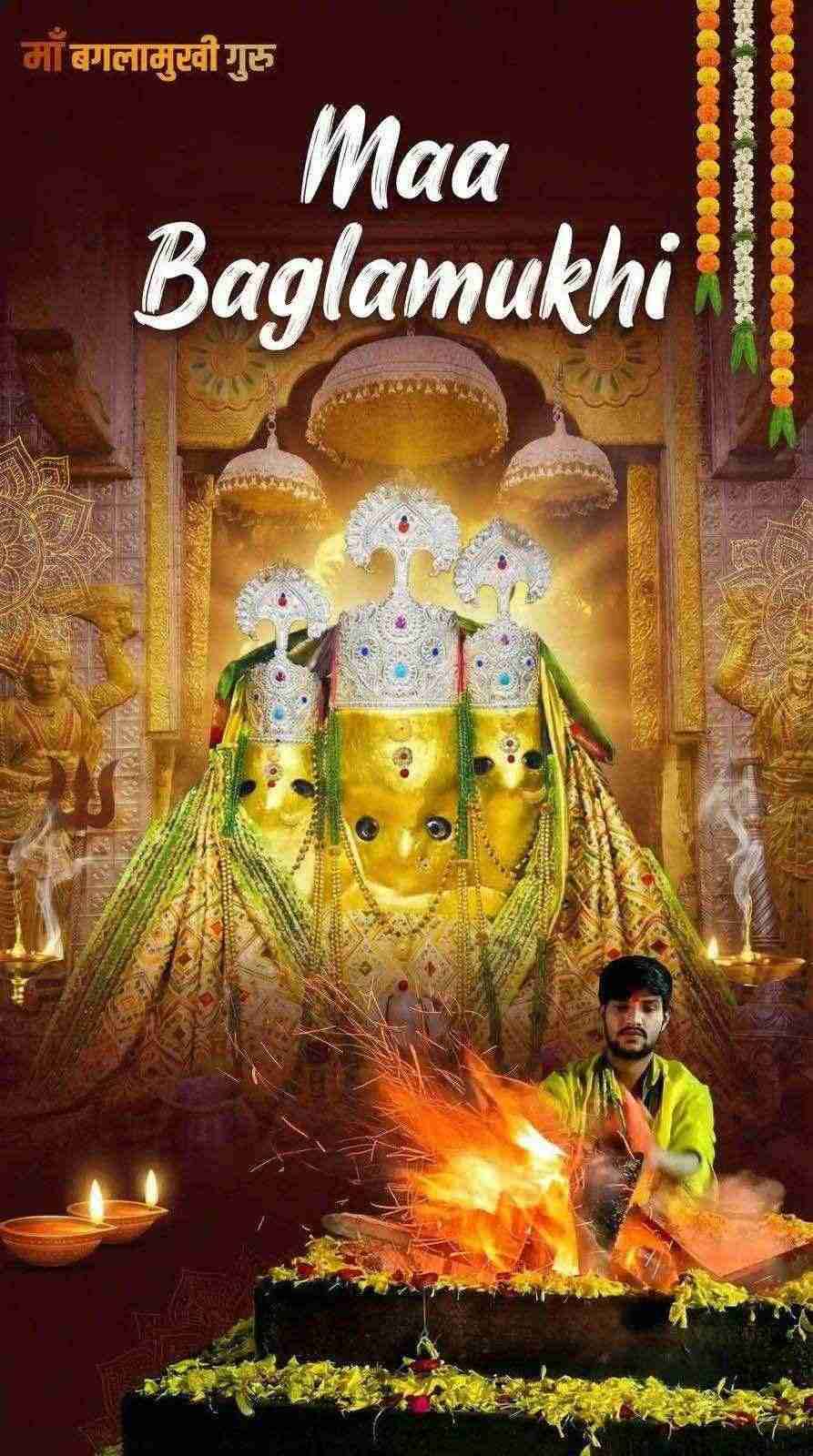
Maa Baglamukhi is revered as the eighth of the ten Dasha Mahavidyas, worshipped for her Stambhan Shakti - the power to still obstacles and difficulties. Ancestral rites such as Shradh, Tarpan, and Pind Daan remain independently important through Pitru Paksha and are never replaced by any other worship. Within tradition, many devotees who have completed their family's ancestral obligations for the day also seek Maa Baglamukhi's grace, alongside these rites, for the removal of the hindrances traditionally associated with a difficult Pitru Dosh.
This is a matter of personal faith and family tradition rather than a rule binding on everyone. Devotees who wish to combine both typically complete Shradh and Tarpan first, and then separately turn to Maa Baglamukhi's worship for wider protection and steadiness. At Maa Baglamukhi Guru's Pitru Dosh page, this connection - and the traditional Pitru Dosha Nivaran Puja that combines ancestral rites with a Maa Baglamukhi Hawan - is explained in fuller detail.
The Pitru Dosha Nivaran Puja Approach
At Maa Baglamukhi Guru, the Pitru Dosha Nivaran Puja is described as a ceremony that unites the ancestral rites - Sankalp, Tarpan, and Pind Daan offered with the appropriate mantras — with a subsequent Maa Baglamukhi Puja and Hawan, followed by charity in the ancestors' names. Acharya Pandit Vishnu Sharma, based at the Nalkheda Siddha Peeth in Madhya Pradesh, offers this guidance both in person and online for devotees across India and abroad, with a full horoscope assessment recommended before undertaking any formal remedy. No specific outcome, cost, or timeline is promised here beyond what devotees can confirm directly when they reach out - this remains a matter of personalised guidance, faith, and family tradition.
Frequently Asked Questions
1. Can Pitru Dosh Nivaran be done during Pitru Paksha? Yes. Pitru Paksha is traditionally considered the most suitable annual window for Pitru Dosh remedies, since Shradh, Tarpan, and Pind Daan - the recommended remedies - are already the central rites of the fortnight.
2. Is Pitru Paksha good for Pitru Dosh remedies? Most priests and astrologers treat it as the most favourable time, though remedies can also be undertaken at other points in the year at a muhurat suited to the individual horoscope.
3. What is the best remedy for Pitru Dosh during Pitru Paksha? There is no single "best" remedy for every family; Shradh on the correct tithi, Tarpan, Pind Daan where appropriate, and charity together form the traditional core, with the right combination depending on family custom and astrological guidance.
4. Which Puja is performed for Pitru Dosh? A Pitru Dosha Nivaran Puja typically combines the ancestral rites (Shradh, Tarpan, Pind Daan) with worship of a chosen deity, such as Maa Baglamukhi, for the removal of obstacles, concluding with a hawan and charity.
5. Can Shradh remove Pitru Dosh? Shradh is traditionally understood to ease the dosha by fulfilling ancestral duty sincerely, but it is not described as a guaranteed cure - it is an act of devotion undertaken in faith.
6. Can Tarpan help with Pitru Dosh? Yes, within tradition; Tarpan is one of the core remedies, offered with water and sesame, ideally under a priest's guidance for the correct procedure.
7. Can Pind Daan help with Pitru Dosh? Traditionally, yes, particularly where a family's Pitru Dosh is considered significant; Pind Daan is not mandatory for everyone, and its necessity is best discussed with a priest.
8. What should I do for Pitru Dosh during Pitru Paksha? Confirm the correct tithi, perform Shradh and Tarpan, consider Pind Daan if appropriate, give charity in the ancestors' names, and consult a priest or astrologer for a formal Nivaran Puja if needed.
9. What should I do on Sarva Pitru Amavasya for Pitru Dosh? Sarva Pitru Amavasya (10 October 2026) is used for Tarpan, Pind Daan where practised, lighting a lamp, and charity - especially when the exact death tithi is unknown.
10. What is the difference between Shradh and Pitru Dosh Nivaran Puja? Shradh is the general ancestral remembrance ceremony performed by most Hindu families every year; a Pitru Dosh Nivaran Puja is a more specific, often astrologer-recommended ritual combining ancestral rites with additional worship, typically for families where Pitru Dosh has been identified in the chart.
11. What is the difference between Tarpan and Pind Daan? Tarpan is a water offering, usually with sesame; Pind Daan is a food offering using shaped rice or barley portions, often performed at pilgrimage sites like Gaya.
12. Can Pitru Dosh Puja be performed without knowing the ancestor's death Tithi? Yes - Sarva Pitru Amavasya exists precisely for this situation, serving as the traditional fallback date for all ancestors, known and unknown.
13. What if I do not know my ancestor's Shradh Tithi? Perform the rites on Sarva Pitru Amavasya (10 October 2026), the day set aside for collective ancestral remembrance.
14. Can Maa Baglamukhi Puja be performed during Pitru Paksha? Yes, many devotees perform it after completing their ancestral obligations for the day, seeking her grace for the removal of obstacles alongside - never instead of - Shradh and Tarpan.
15. Which mantra is traditionally used for Pitru Dosh? The Pitru mantra of salutation to the ancestors is chanted, often alongside an ishta devata mantra such as the Baglamukhi Beej Mantra, with sincerity and remembrance.
16. Can Pitru Dosh be removed permanently? No specific or permanent outcome is promised by any tradition or ritual; these remedies are undertaken as ongoing acts of devotion and duty, not one-time fixes.
17. How do I know if I have Pitru Dosh? Only a full birth chart reading by a qualified astrologer can determine this - not a single symptom, an online quiz, or a self-diagnosis.
18. Is Pitru Dosh scientifically proven? No. Pitru Dosh is a traditional Vedic astrology concept rooted in faith and scripture, not a scientifically established or medically recognised diagnosis.
19. Can Pitru Dosh remedies be performed at home? Simple Tarpan, remembrance, charity, and mantra chanting can be done at home; Shradh, Pind Daan, and special rites such as Narayan Bali are best performed through a qualified priest.
20. When should I consult a priest or astrologer for Pitru Dosh? When the family tithi is unclear, when a formal Nivaran Puja or special rite is being considered, or before assuming that a life difficulty is linked to Pitru Dosh at all.
Important Note
Hindu rituals vary meaningfully by family, region, and sampradaya - there is no single version of Shradh, Tarpan, or a Pitru Dosha Nivaran Puja that applies identically to every household. Exact Tithi and Muhurat should always be confirmed locally with a family priest or Panchang, since these can shift by city and sunrise. Pitru Dosh is a Vedic astrology concept, not a scientifically established diagnosis, and the remedies described here are traditional spiritual practices based on faith. They should not replace medical, legal, financial, or other professional advice where such matters are genuinely involved.
Looking for Guidance for Pitru Dosh Nivaran During Pitru Paksha?
Getting the tithi, the vidhi, and the right combination of rites correct matters more than doing everything at once - and that is exactly where personalised guidance helps. If Pitru Dosh has been identified in your chart, or you simply want to understand your family's own tradition better before Sarva Pitru Amavasya arrives, Acharya Pandit Vishnu Sharma at Maa Baglamukhi Guru, Nalkheda offers guidance on Shradh, Tarpan, Pind Daan, and the traditional Pitru Dosha Nivaran Puja, both in person and online.