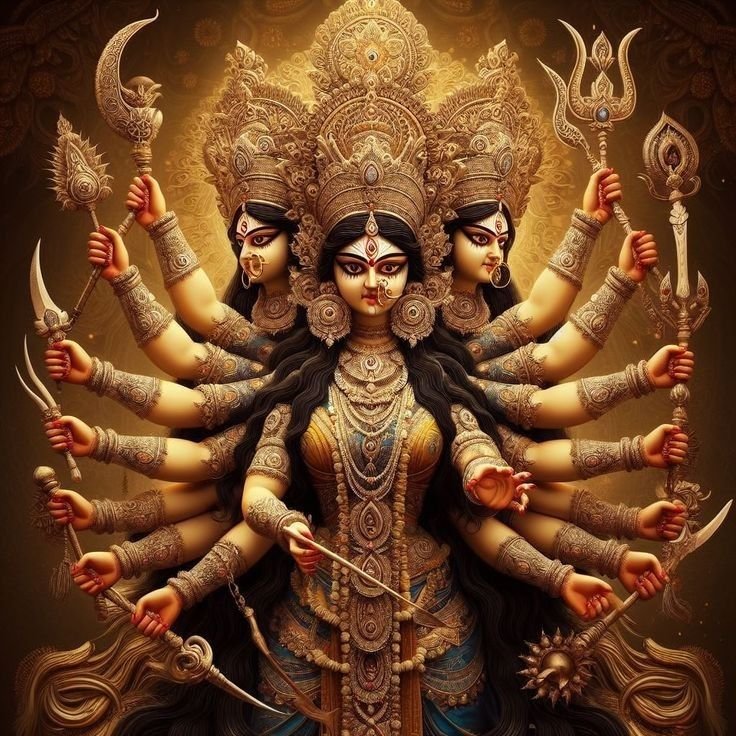

No subject attracts more curiosity - and more misinformation - than tantra sadhana during Gupt Navratri. Some people imagine something dark and dangerous. Others are handed a mantra online with a promise of quick power and no word of caution. Both pictures are wrong, and both do real harm: the first frightens sincere devotees away, the second sends them into practices they are not prepared for.
Let me set the matter straight, as it was taught to me. In 2026, Gupt Navratri runs from 15 July to 23 July. This guide explains what tantra sadhana actually means in this tradition, the Baglamukhi mantra chanted during these nights, the strict rules that govern serious practice, and - most importantly - where the line falls between what a devotee may safely do alone and what genuinely requires a guru.
Wherever a belief is described, it is presented as tradition holds it, not as a guaranteed outcome.
Table of Contents
What is tantra sadhana, truthfully?
Five myths about Gupt Navratri tantra sadhana
Why Gupt Navratri is the season for sadhana
The Gupt Navratri Baglamukhi mantra
The three levels of sadhana
What you may safely practise at home
What requires a guru - and why
The rules of serious sadhana (niyam)
Warning signs of a false guru
The role of havan in sadhana
Quick summary
Frequently asked questions
What is tantra sadhana, truthfully?
Tantra sadhana is a disciplined system of spiritual practice - mantra, yantra, ritual and meditation - aimed at inner transformation and the realisation of divine energy (Shakti). In the authentic tradition it is a path of rigour and purity, not of harm, and its texts emphasise discipline, secrecy and a qualified teacher.
The word tantra simply means a system or method. What distinguishes it is its structure: precise mantras, exact procedures, strict conduct, and transmission from guru to disciple. It has been misrepresented for so long that many devotees are surprised to learn how demanding - and how ethical - the real thing is.
Five myths about Gupt Navratri tantra sadhana
Why Gupt Navratri is the season for sadhana
Gupt Navratri is considered the finest season for sadhana because these nine nights are dedicated to the ten Mahavidyas and are inward by nature - quiet, disciplined and undistracted. The word gupt itself points to the privacy that serious practice requires.
Unlike Chaitra and Sharad Navratri, which are outward and festive, this season suits solitary japa, restraint and concentration. Sadhaks undertake their most serious practice now precisely because the atmosphere of the festival supports it. To understand the deity at the centre of this sadhana, read about Maa Baglamukhi.
The Gupt Navratri Baglamukhi mantra
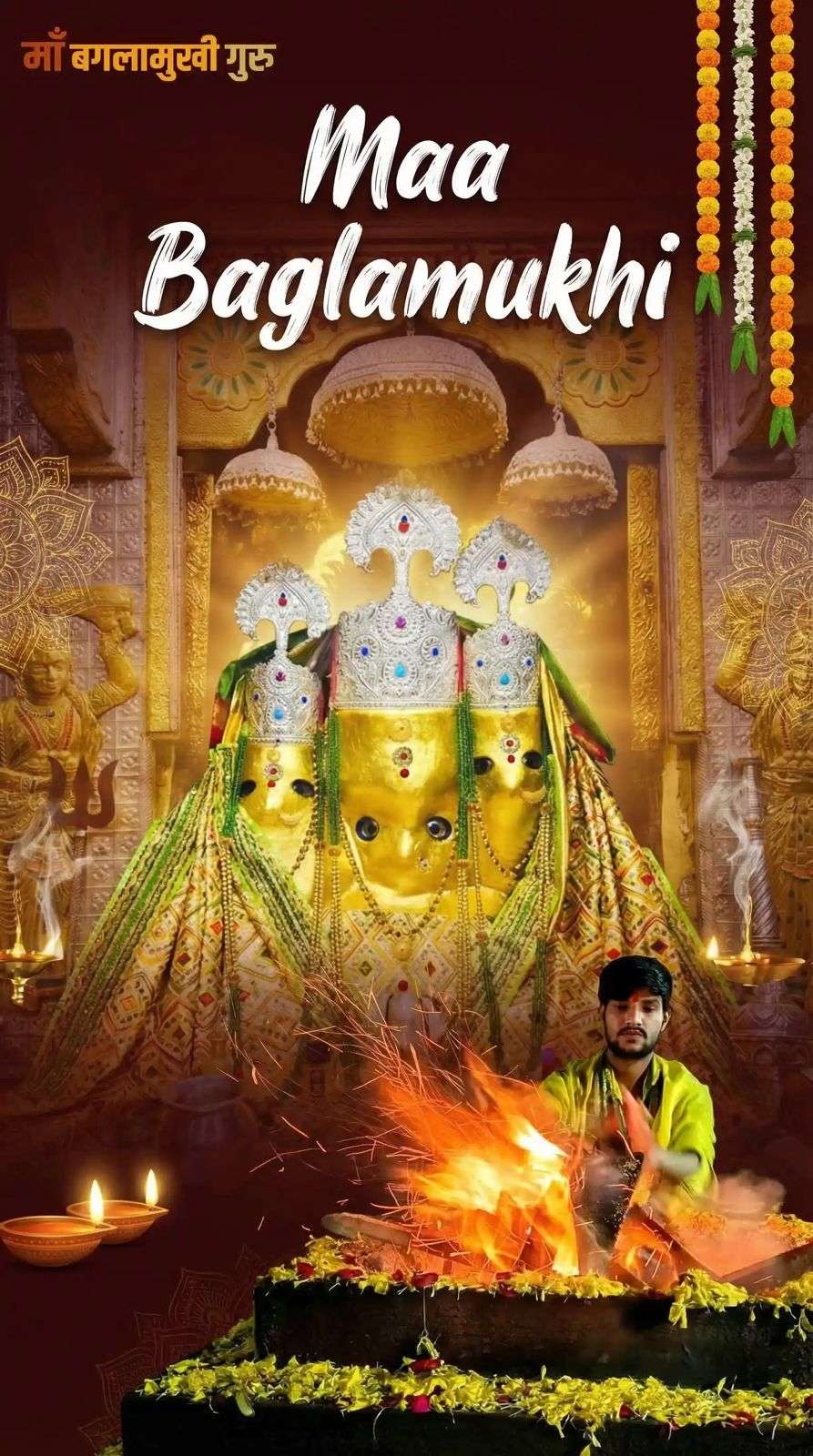
The mantra chanted through these nine nights is Maa Baglamukhi's own. Her beej (seed) mantra is Hleem, the concentrated sound-form of her energy, and her longer mool (root) mantra begins and ends with that same seed.
Japa is performed on a turmeric (haldi) mala, seated calmly before her image or yantra, with clear pronunciation and steady attention. In this tradition the meaning lives in the sound, which is why pronunciation is treated so seriously - a mantra recited carelessly does not carry the same intention.
You will find the full mantra with its meaning and method in our Baglamukhi mantra guide and the dedicated Baglamukhi beej mantra page. Learn the pronunciation from a knowledgeable person before undertaking serious japa.
The three levels of sadhana
Understanding these levels prevents both needless fear and genuine harm:
Most devotees who ask about "tantra sadhana" are really asking about levels one and two - and there the answer is a confident yes, practise freely and sincerely.
What you may safely practise at home
There is no danger whatsoever in the following, provided your intention is honest:
Lighting a daily lamp before the Goddess
Offering turmeric, yellow flowers, gram and jaggery
Chanting Hleem or the mool mantra on a turmeric mala, a modest daily count
Reading the Durga Saptashati, the Baglamukhi Chalisa or the aarti
Keeping a sattvic diet, cleanliness and truthful conduct
Taking a sincere sankalp for protection, clarity or peace
Begin modestly - one or a few malas a day - and build gradually rather than committing at once to a high count you cannot sustain.
What requires a guru - and why
The following should not be attempted alone: fixed high-count purashcharana (the lakhs of repetitions some texts prescribe), fire-based prayogs and havan at anushthan scale, the ritual energising of yantras, and any rite with prescribed vows of conduct over many days.
The reason is practical rather than mysterious. These practices bind the sadhaka to exact counts, proportions, timings and conduct - a tenth of the japa count offered as ahutis, further fractions for tarpan and marjan, unbroken continuity, strict diet and restraint. A single serious lapse in count, pronunciation or conduct is held in the tradition to weaken or distort the result of the entire undertaking. That is why a Baglamukhi Anushthan is carried out by those trained in it, while the devotee provides the sankalp.
The rules of serious sadhana (niyam)
Where sadhana deepens, these rules apply without exception:
Unbroken continuity - the daily practice is completed without a break.
Fixed count, time and place - the same daily total, hours and seat.
Strict purity - daily bathing, clean clothes, purified space, turmeric mala.
Sattvic diet and restraint - no onion, garlic, meat, alcohol or intoxicants.
Truth and calm - no anger, deceit, quarrels or idle talk.
Privacy - the sadhana and its sankalp are kept quiet.
Right intention - protection, resolution and inner steadiness; never harm to an innocent person.
Warning signs of a false guru
Because this subject attracts exploitation, a few honest cautions. Be wary of anyone who:
Guarantees results - no authentic practitioner promises outcomes.
Demands very large sums, or escalates fees with "urgent" additional rites.
Creates fear - claims of curses, doom or hexes used as pressure.
Offers to harm someone for you - contrary to the tradition and a clear warning sign.
Refuses transparency about what will be performed, when, and by whom.
Discourages doctors, lawyers or family - a serious red flag.
Authentic guidance is transparent, proportionate to your need, and never exploitative. A responsible acharya will sometimes tell you that a simple puja is enough.
The role of havan in sadhana
The havan completes and seals a sadhana. Where japa accumulates, the fire offers - which is why an anushthan concludes with a havan whose ahutis are proportionate to the japa count completed.
During Gupt Navratri, devotees commonly perform or book a Baglamukhi Havan on Ashtami (22 July) or Navami (23 July) to conclude their nine nights of practice. A small home havan is possible with care and fire safety; full-scale havans belong to trained priests.
Quick summary
Tantra sadhana is a disciplined spiritual system - not black magic, and not harmful by nature.
Gupt Navratri 2026 (15–23 July) is the finest season for it, being inward and Mahavidya-focused.
Mantra: beej Hleem and the mool mantra, on a turmeric mala, pronounced correctly.
Levels: daily devotion (safe at home) → sankalp japa → purashcharana/anushthan (guru required).
Rules: continuity, purity, sattvic conduct, privacy, honest and protective intention.
Beware: guaranteed results, fear tactics, huge fees, offers to harm someone.
Practise safely - and let the deeper rites be done correctly
Simple, sincere sadhana at home is always open to you, and it is enough for most devotees. But where your need is serious, or the practice calls for high-count anushthan and havan, it should be carried out by those trained in its discipline. The priests of Maa Baglamukhi Guru at Nalkheda Siddha Peeth perform authentic Gupt Navratri Baglamukhi Puja, havan and anushthan in your name and gotra - with proper sankalp, correct mantra counts, live video, and prasad couriered worldwide. We will always advise you proportionately, and tell you honestly when a simple puja will serve. 📞 +91 73895 67650 · Jai Maa Baglamukhi.
FAQ Section
1. What is Gupt Navratri tantra sadhana?
It is disciplined spiritual practice - mantra, yantra, ritual and meditation - undertaken during the secret nine nights dedicated to the ten Mahavidyas. In the authentic tradition it is a path of rigour and purity, not of harm.
2. Is tantra sadhana the same as black magic?
No. Authentic tantra sadhana is a structured spiritual system aimed at inner transformation. Harming others is contrary to the tradition and is not part of genuine practice.
3. Which mantra is chanted in Gupt Navratri tantra sadhana?
For Baglamukhi devotees, her beej mantra Hleem and her mool mantra, chanted on a turmeric mala with correct pronunciation.
4. Can I do tantra sadhana at home without a guru?
Simple devotional sadhana - a lamp, offerings, gentle mantra japa - is safe at home for anyone. Advanced purashcharana, fire rites and energised yantras require a qualified guru.
5. Is Gupt Navratri tantra sadhana dangerous?
Simple devotion carries no danger. The caution applies to advanced, rule-bound practices, where errors in count, pronunciation or conduct are held to weaken the result.
6. Why is Gupt Navratri considered best for sadhana?
Because these nine nights are dedicated to the ten Mahavidyas and are inward and private by nature - conditions that suit solitary, disciplined practice.
7. What are the rules of serious sadhana?
Unbroken continuity, a fixed count/time/place, strict purity, a sattvic diet with restraint, truthfulness, privacy, and an honest, protective intention.
8. How do I recognise a false guru?
Be wary of guaranteed results, very large or escalating fees, fear tactics about curses, offers to harm someone, lack of transparency, and anyone discouraging doctors, lawyers or family.
9. Do I need a havan to complete my sadhana?
A havan seals and completes a sadhana, and an anushthan traditionally concludes with one. Simple home devotion is complete in itself without a large havan.
10. Can women practise Gupt Navratri sadhana?
Yes. Simple devotional sadhana is open to women and men alike, with sincerity, cleanliness and correct pronunciation.