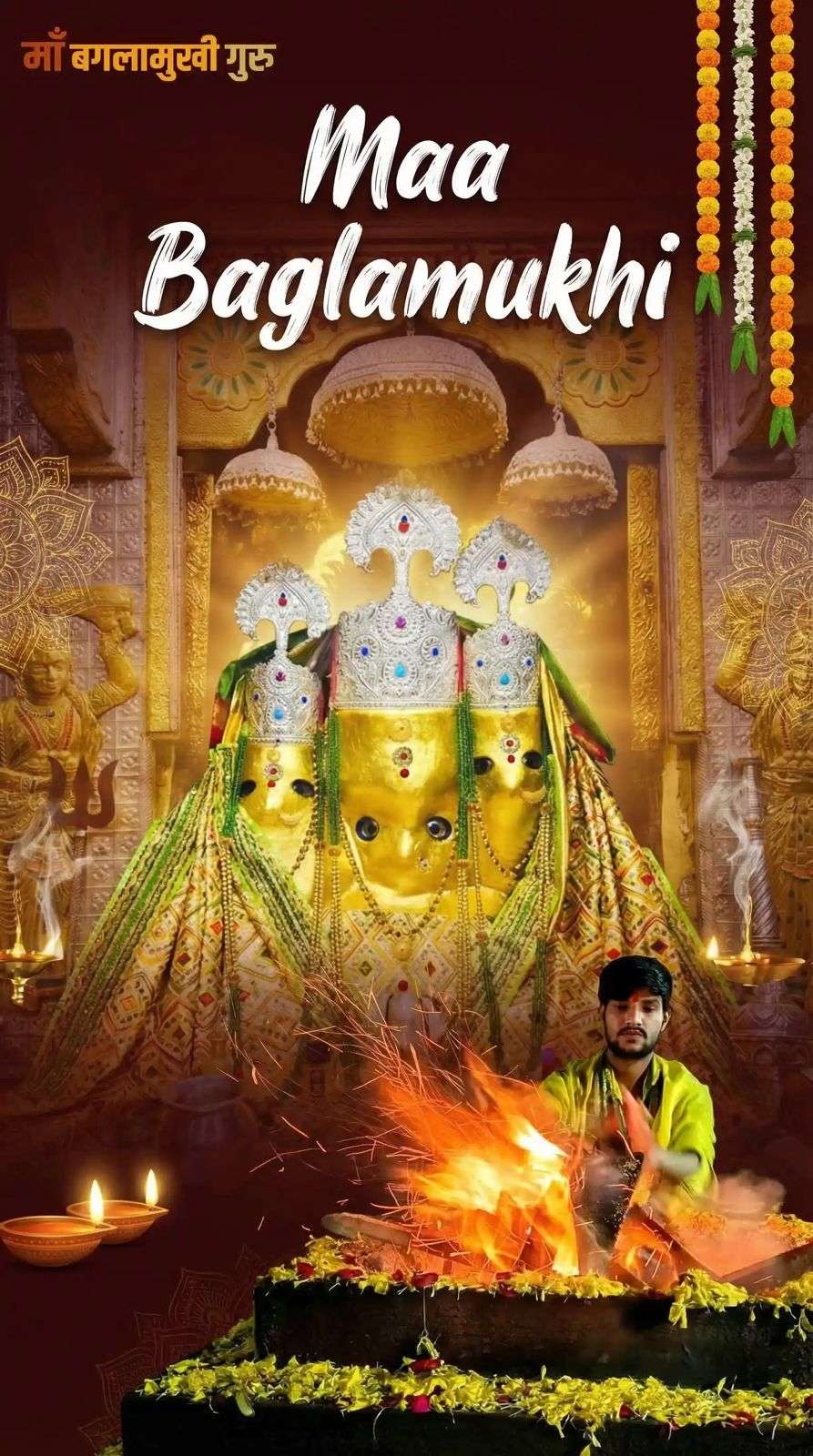

The strength of Gupt Navratri lies not in one grand day but in nine steady ones. Each morning of the festival, the devotee returns to the same altar, the same lamp, the same mantra - and it is that daily continuity, more than any single ritual, that gives the season its power. For those who wish to observe the Gupt Navratri 2026 Baglamukhi puja at home, this is a day-by-day vidhi built to be followed exactly, from Ghatasthapana on 15 July to the closing worship on 23 July.
This guide sets out the daily muhurat, the step-by-step vidhi, and a simple plan for each of the nine days, so a householder can keep the worship correctly and without confusion. Wherever a belief is described, it is presented as tradition holds it, not as a guaranteed outcome.
Gupt Navratri 2026 dates & daily muhurat
Ashadha Gupt Navratri 2026 runs from 15 July to 23 July. Ghatasthapana is performed on the morning of 15 July, and each day's main worship is best done in the Brahma Muhurta or early morning, with a shorter evening session.
Confirm the exact muhurat for your city with a reliable panchang, as timings shift with local sunrise.
Before you begin - preparation & samagri
Prepare everything before Day 1 so the nine days flow without interruption. Keep your samagri ready and your altar space clean and fixed.
To understand the deity you are worshipping, read who Maa Baglamukhi is.
Day 1: Ghatasthapana & sankalp
On the first morning (15 July), the festival opens with Ghatasthapana - the installation of the kalash - and the sankalp. This anchors the entire nine-day worship.
Bathe early and purify the space with Gangajal.
Place Maa Baglamukhi's image or yantra on yellow cloth, facing east.
Install the kalash: fill the pot with clean water, place mango leaves and a coconut on top.
Light the lamp - many keep an Akhand Jyoti burning through the nine days where it can be tended safely.
Take sankalp: state your name, gotra and sincere intention for the nine days.
Perform the first full puja (as in the core vidhi below).
The core daily puja vidhi (Days 1–9)
Each day of the festival follows the same essential vidhi. Repeating it faithfully is the heart of the practice.
Purify. Bathe, wear clean clothes, clean the altar and your seat.
Light the lamp. Light the ghee or sesame-oil lamp and incense.
Invoke. Recall the sankalp and invite Maa Baglamukhi with devotion.
Offer. Offer turmeric, kumkum, akshat, yellow flowers, gram and jaggery.
Chant. Perform japa of the Baglamukhi mantra on a turmeric mala with steady focus.
Recite. Read from the Durga Saptashati or Devi Mahatmya if you are able.
Naivedya. Offer fruit or sattvic prasad.
Aarti. Close with the Maa Baglamukhi aarti and a moment of gratitude.
Day-by-day plan across the nine nights
While the core vidhi stays the same each day, devotees often shape a gentle arc across the festival - opening, building, peak and closing.
Ashtami and Navami are considered especially powerful; many devotees perform or book a Baglamukhi havan on these days to seal the nine-day worship.
The mantra and japa method
The mantra chanted is Maa Baglamukhi's own - her beej mantra Hleem and her mool mantra - on a turmeric mala, with correct pronunciation and steady focus. Consistency across all nine days matters more than a high single-day count.
Begin with a comfortable number of malas each day and keep it constant through the festival if you are observing a fixed count. You will find the mantra with its meaning and method in our Baglamukhi mantra guide and the beej mantra page. Learn the pronunciation correctly before serious japa, and reserve high-count purashcharana for a guru or experienced priest.
Fasting, do's and don'ts
Fasting is observed according to capacity - a sattvic fast once a day, or a partial phalahaar of fruits and milk. Devotion never requires harming the body.
Common mistakes to avoid
Inconsistency. Missing days defeats the purpose; the nine-day continuity is the practice.
Skipping the sankalp. The Day 1 intention anchors the whole festival.
Careless mantra. Wrong pronunciation weakens the japa; learn it first.
Neglecting purity. Diet, cleanliness and truthfulness are part of the worship.
Over-committing the count. Choose a daily japa number you can truly sustain for nine days.
If you cannot keep the full nine days
Not everyone can observe all nine days, and the deeper havan and anushthan are in any case best performed by experienced priests. If your schedule or circumstances do not allow a full observance, you can have the Gupt Navratri Baglamukhi Puja performed in your name at Nalkheda, with your sankalp taken correctly and the worship done across the festival.
Our priests maintain the daily rhythm, perform the concluding havan on an auspicious day, share the video, and courier the tirth prasad to your home - anywhere in the world.
📞 Speak with Acharya Vishnu Sharma: +91 73895 67650, or message on WhatsApp for guidance. Book before 15 July 2026 to align with the festival.
Quick summary
Gupt Navratri 2026: 15–23 July, nine days of daily Baglamukhi puja.
Day 1 (15 July): Ghatasthapana and sankalp anchor the worship.
Daily vidhi: purify, light lamp, offer, chant on a turmeric mala, recite Saptashati, aarti.
Ashtami & Navami (22–23 July): especially powerful; ideal for a concluding havan.
Key discipline: consistency, purity, correct mantra, an honest sankalp.
Short on time? Have the nine-day puja performed for you at Nalkheda.
Conclusion
A nine-day worship is a quiet act of devotion repeated until it becomes strength. Follow the daily vidhi of Gupt Navratri 2026 with sincerity - the same altar, the same lamp, the same mantra, each morning from 15 to 23 July - and let the steadiness of the practice do its work. Whether you keep it fully at home or have it performed in your name, may these nine nights bring you the protection and steadiness of Maa Baglamukhi. Jai Maa Baglamukhi.
FAQ Section
1. What are the Gupt Navratri 2026 puja dates?
Ashadha Gupt Navratri 2026 runs from 15 to 23 July. Ghatasthapana is on the morning of 15 July, and the puja is observed daily across all nine days.
2. How do I perform the Gupt Navratri Baglamukhi puja at home?
Each day: bathe and purify the space, light the lamp, offer turmeric and yellow flowers, chant the Baglamukhi mantra on a turmeric mala, recite the Saptashati, and close with the aarti.
3. What is the Ghatasthapana muhurat for Gupt Navratri 2026?
Ghatasthapana is on the morning of 15 July 2026, approximately 05:33–10:09 AM IST. Confirm the exact window for your city with a reliable panchang.
4. Do I have to observe all nine days?
Ideally yes - the daily continuity is the heart of the practice. If you cannot, you may have the nine-day puja performed in your name by priests at Nalkheda.
5. Which mantra is chanted during the Gupt Navratri puja?
Maa Baglamukhi's beej mantra Hleem and her mool mantra, chanted on a turmeric mala with correct pronunciation and steady daily focus.
6. What offerings are made in the daily puja?
Yellow offerings are traditional: turmeric, kumkum, yellow flowers, gram, jaggery and a ghee or sesame-oil lamp, placed on yellow cloth before the image or yantra.
7. Which days of the festival are most important?
Day 1 (Ghatasthapana, 15 July), and Ashtami and Navami (22–23 July), are especially powerful - many devotees perform or book a havan on Ashtami or Navami.
8. What are the fasting rules during Gupt Navratri?
Fast according to capacity - sattvic food once a day, or a partial phalahaar of fruits and milk. Avoid onion, garlic, meat and intoxicants; those with health conditions should fast only as able.
9. Can I do the puja if I don't know the full vidhi?
Yes - a simple, sincere daily puja is valid. Follow the core vidhi here, keep it consistent, and let devotion guide you. For a full ritual, have it performed by priests.
10. Can I book the nine-day puja online from abroad?
Yes. The puja is performed in your name at the correct Indian muhurta, with sankalp by name and gotra, live video, and prasad couriered to your address worldwide.
11. Should I perform a havan during the festival?
A havan on Ashtami or Navami is a powerful way to seal the nine-day worship. Simple home devotion is complete on its own; a havan is best performed by experienced priests.
12. Does the puja guarantee results?
No. The benefits are traditional and scriptural beliefs, not guarantees. Serious legal, medical or financial matters also require proper worldly effort and counsel.