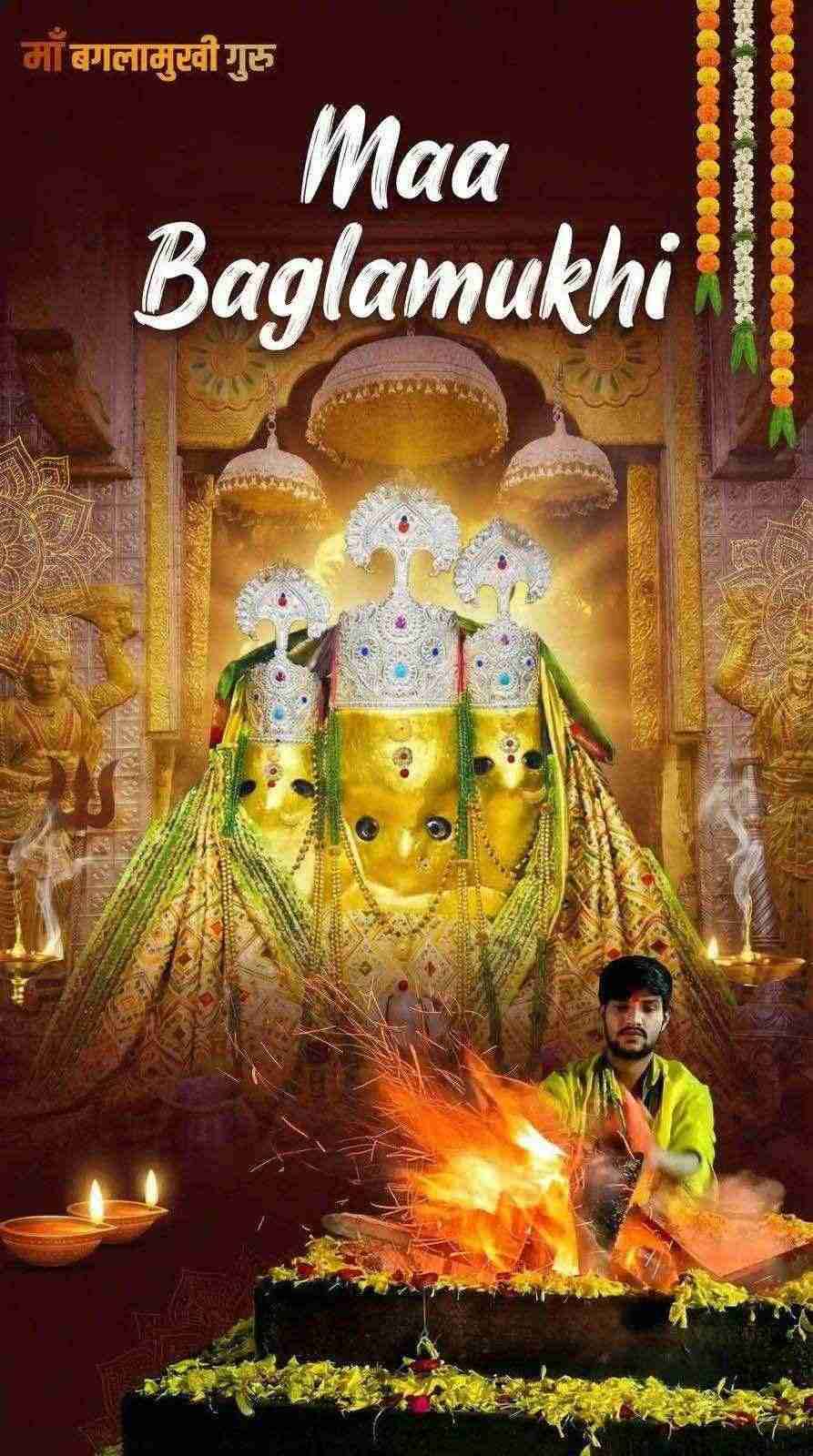

Among the two Gupt Navratris of the year, the tradition holds few times more powerful for a Baglamukhi havan than these secret nine nights. The energy of Gupt Navratri is inward and intense, dedicated to the ten Mahavidyas - and a fire ritual offered to Maa Baglamukhi during this window is considered the most complete way to seek her protection. In 2026, that window is 15 July to 23 July, and devotees plan their havan around it well in advance.
This guide focuses squarely on the Gupt Navratri 2026 Baglamukhi havan - why the festival is so favoured for it, the day-wise muhurat, the benefits and samagri, and how to have an authentic havan performed at Nalkheda. Wherever a belief is described, it is presented as tradition holds it, not as a guaranteed outcome.
Why perform a Baglamukhi havan during Gupt Navratri?
Gupt Navratri is considered one of the most powerful times for a Baglamukhi havan because these nine nights are specifically dedicated to the ten Mahavidyas, of whom Maa Baglamukhi is the eighth. The tradition holds that her Stambhan Shakti - the power to still hostility and obstacles - is most readily invoked during this inward, intense season.
A Baglamukhi havan offers, through the sacred fire, the energy that mantra japa builds. Performing it during Gupt Navratri aligns the ritual with a period the scriptures reserve for Mahavidya sadhana, which is why devotees facing serious difficulty - disputes, enemies, blocked prosperity - so often plan their havan for these very dates rather than an ordinary day.
Gupt Navratri 2026 havan dates & muhurat
Ashadha Gupt Navratri 2026 runs from 15 July to 23 July. A Baglamukhi havan may be performed on any of the nine days, with Ghatasthapana day (15 July), Ashtami and Navami considered especially auspicious.
For a specific need or a devotee's birth chart, acharyas calculate a determined Siddha muhurta within the festival rather than relying on a general time.
Benefits of the Gupt Navratri havan
In the devotional tradition, a Baglamukhi havan performed during Gupt Navratri is believed to bring the following - described as fruits of faith and correctly performed ritual, not guaranteed outcomes:
Strong protection from enemies, conspiracy and harmful intent
Support and steadiness in legal disputes and court matters
Removal of obstacles in business, career and finances
Relief from negativity and the effects of black magic, in traditional belief
Purification of the home and its atmosphere
Courage, confidence and freedom from fear
Deep spiritual strength aligned with the festival's energy
Which havan to choose during the festival
The right havan depends on the seriousness of your need. Simple protection and blessings suit a single-day havan; deep or long-standing problems suit a multi-day anushthan concluded by a havan across the festival.
Day-wise havan planning across the nine nights
While a havan can be performed on any single day, devotees observing the full festival often plan a rhythm across the nine nights - daily puja and mantra japa building toward a concluding havan.
For those having the ritual performed on their behalf, our acharyas maintain this rhythm through the festival and perform the concluding havan on the most auspicious day for your sankalp.
Samagri for the havan
A Baglamukhi havan uses yellow-themed and traditional samagri, in keeping with Pitambara Devi's association with the colour yellow.
When the havan is booked with us, all authentic samagri is arranged - you need only provide your sankalp.
How the havan is performed
A Baglamukhi havan follows a clear sequence: purification, Ganesha and kalash sthapana, sankalp, invocation of Maa Baglamukhi, kindling of the sacred fire, oblations (ahuti) with the mantra ending in Swaha, the final full oblation (purnahuti), aarti, and distribution of prasad and bhasma. During Gupt Navratri this is set within the festival's daily worship.
The mantra used is Maa Baglamukhi's own - her beej mantra Hleem and her mool mantra. You can read the mantra in our Baglamukhi mantra guide. Because correct pronunciation and proportionate counts matter, the havan mantra is best chanted by experienced acharyas.
Booking your Gupt Navratri 2026 havan
Gupt Navratri is a busy season, and auspicious days fill quickly, so devotees are encouraged to book early - ideally before the festival begins on 15 July. Our acharyas at Nalkheda Siddha Peeth perform the Baglamukhi Havan with proper sankalp, authentic samagri and the correct festival muhurta.
When you book, we take your sankalp by name and gotra, perform the havan on the auspicious day chosen for your need, share the video, and courier the tirth prasad, bhasma and raksha sutra to your home.
📞 Book your Gupt Navratri 2026 havan: +91 73895 67650, or message on WhatsApp. Auspicious slots are limited - please book before 15 July 2026.
Devotees abroad - booking from outside India
Devotees in the USA, UK, Canada, Australia, UAE, Singapore, Nepal and Mauritius can book the Gupt Navratri havan entirely online. The havan is performed in your name at the correct Indian muhurta, so there is no need to align with your own timezone. You receive the live sankalp, the havan video, and the prasad couriered to your address - a full participation from wherever you are.
Do's and don'ts
Quick summary
Gupt Navratri 2026: 15–23 July - among the most powerful times for a Baglamukhi havan.
Auspicious days: Ghatasthapana (15 July), Ashtami, Navami; morning muhurta favoured.
Benefits (traditional belief): protection, legal support, obstacle removal, negativity relief.
Choose: single-day havan for blessings; anushthan-plus-havan for deep problems.
Book early - auspicious festival slots fill fast; before 15 July is best.
Abroad: full online booking with sankalp, video and worldwide prasad delivery.
Conclusion
Gupt Navratri gives the Baglamukhi havan its most powerful setting - nine nights devoted to the Mahavidyas, when the fire ritual aligns with the very energy of the season. In 2026, that setting opens on 15 July. Whether you seek protection, resolution of a difficult matter, or simply the blessing of the Mother during her secret nights, plan your havan with care, book early, and let it be performed with the authenticity the tradition asks. May the sacred fire of these nine nights carry your prayers. Jai Maa Baglamukhi.
FAQ Section
1. When is Gupt Navratri 2026 for the Baglamukhi havan?
Ashadha Gupt Navratri 2026 runs from 15 to 23 July. A Baglamukhi havan can be performed on any of these nine days, with Ghatasthapana day, Ashtami and Navami especially auspicious.
2. Why is Gupt Navratri good for a Baglamukhi havan?
Because the nine nights are dedicated to the ten Mahavidyas, including Maa Baglamukhi. The tradition holds her Stambhan Shakti is most readily invoked during this intense, inward season.
3. Which day of Gupt Navratri is best for the havan?
Ghatasthapana (15 July), Ashtami and Navami are especially favoured. For a specific need, acharyas calculate a determined Siddha muhurta within the festival.
4. What are the benefits of a Gupt Navratri Baglamukhi havan?
Traditionally, protection from enemies, support in legal disputes, removal of business obstacles, relief from negativity, and spiritual strength - described as fruits of faith, not guarantees.
5. Can I have the havan performed on my behalf during Gupt Navratri?
Yes. Acharyas at Nalkheda perform the havan in your name with your sankalp, on the auspicious day chosen for your need, and send you the video and prasad.
6. What samagri is used in the Gupt Navratri havan?
Havan kund and wood, pure ghee, sesame, barley, rice, turmeric, herbs, yellow flowers, gram, jaggery and ritual items. When booked, all samagri is arranged for you.
7. Can I book a Baglamukhi havan online from abroad for Gupt Navratri?
Yes. Devotees worldwide can book online; the havan is performed at the correct Indian muhurta, with sankalp by name and gotra, live video, and prasad couriered to your address.
8. When should I book my Gupt Navratri 2026 havan?
As early as possible - ideally before 15 July - since auspicious festival days fill quickly.
9. What is the difference between the Gupt Navratri havan and anushthan?
The havan is the fire ritual, often single-day. An anushthan is a multi-day discipline of mantra japa across the festival, concluded by a havan - chosen for deeper, persistent problems.
10. Is a single havan enough, or do I need the full nine days?
For general protection and blessings, a single-day havan is enough. Deep or long-standing matters are better served by an anushthan across the nine nights, sealed by a havan.
11. Do I need to fast during the Gupt Navratri havan?
Fasting is observed according to capacity. A sattvic diet and disciplined conduct during the festival support the worship; those with health conditions should fast only as their body allows.
12. Does the havan guarantee results?
No. The benefits are traditional and scriptural beliefs, not guarantees. Serious legal, medical or financial matters also require proper worldly effort and counsel.